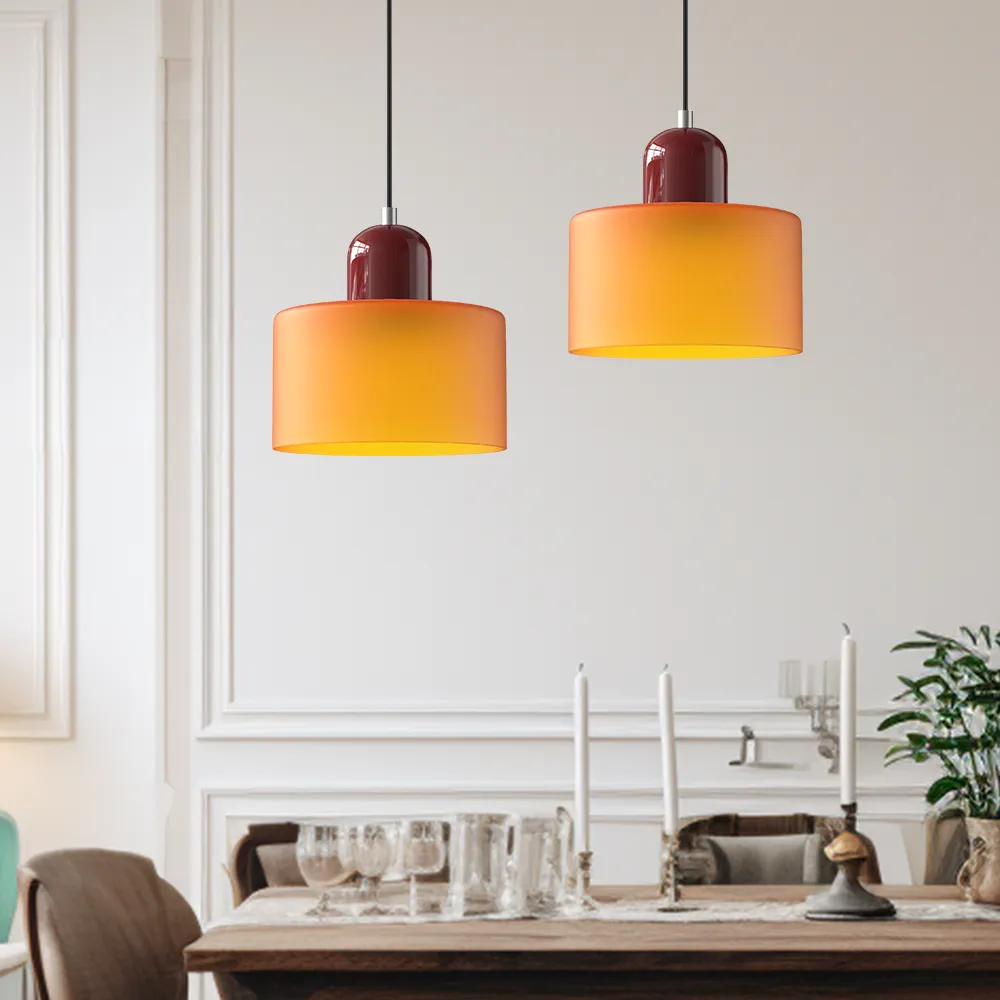
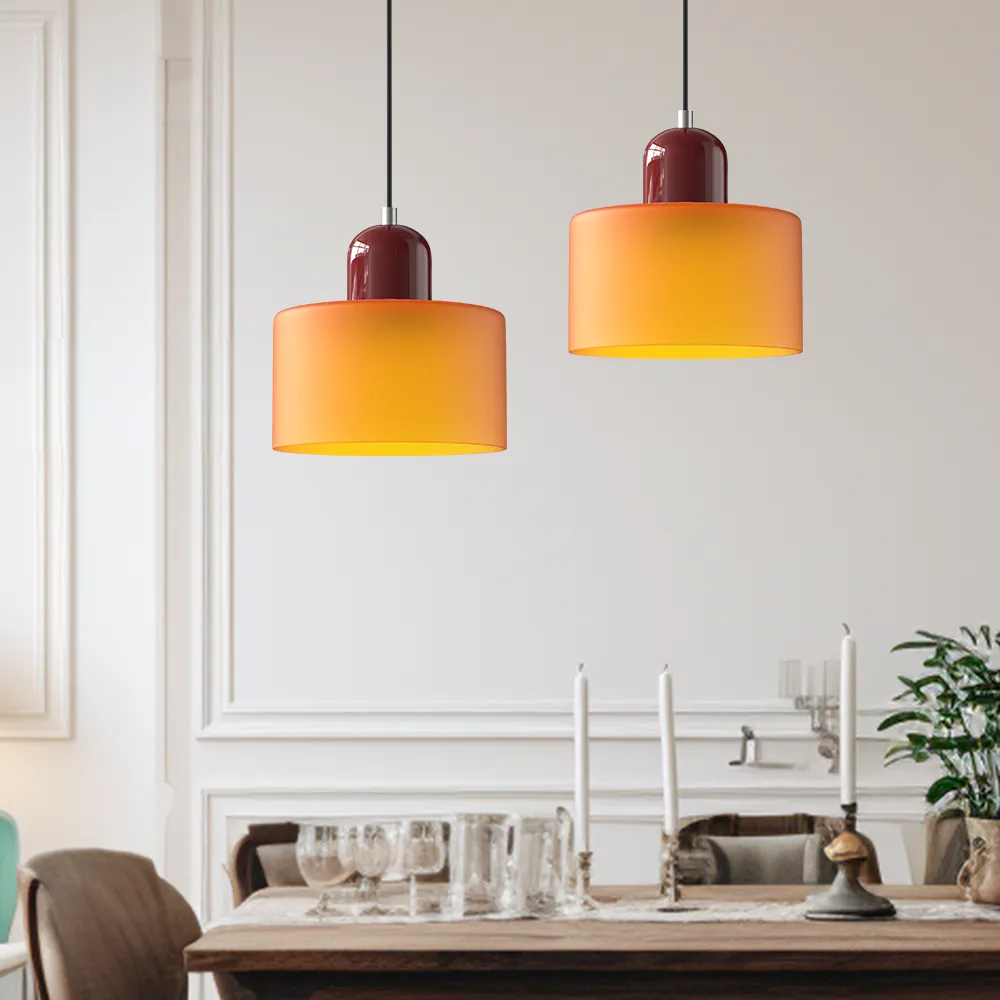
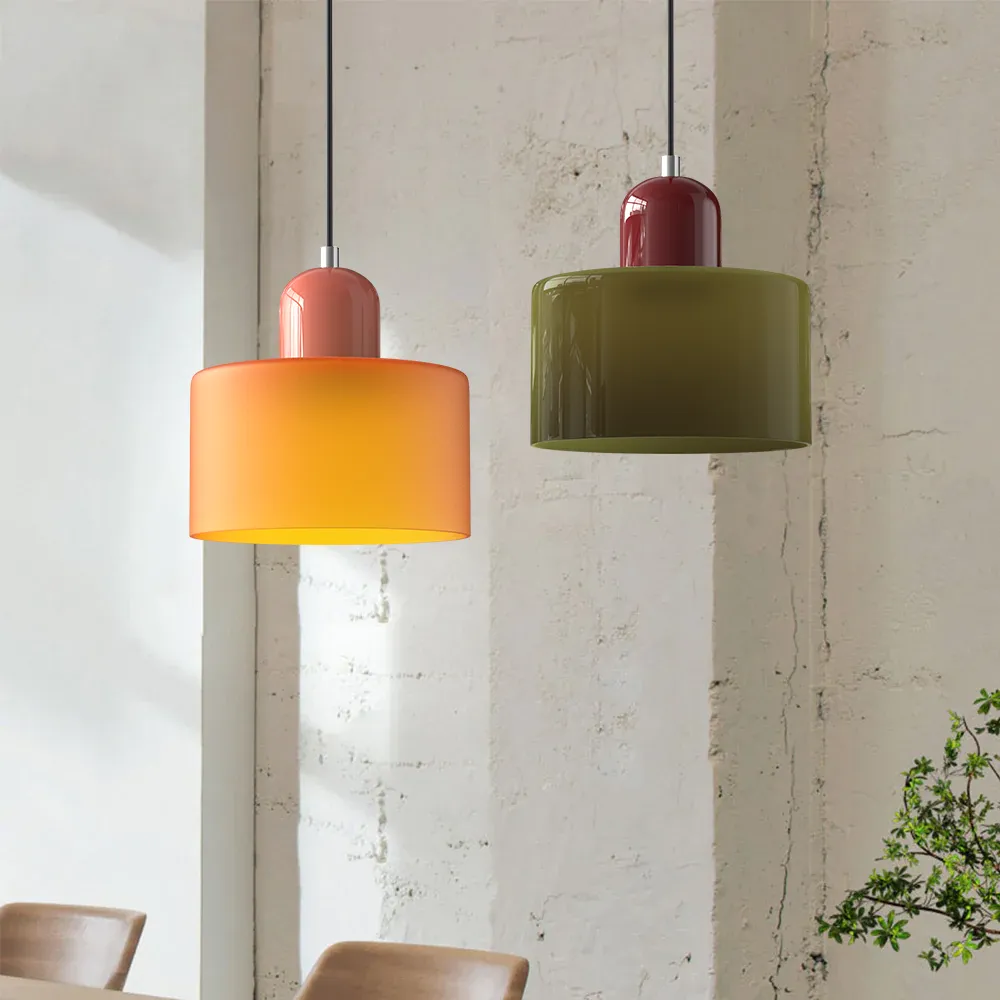
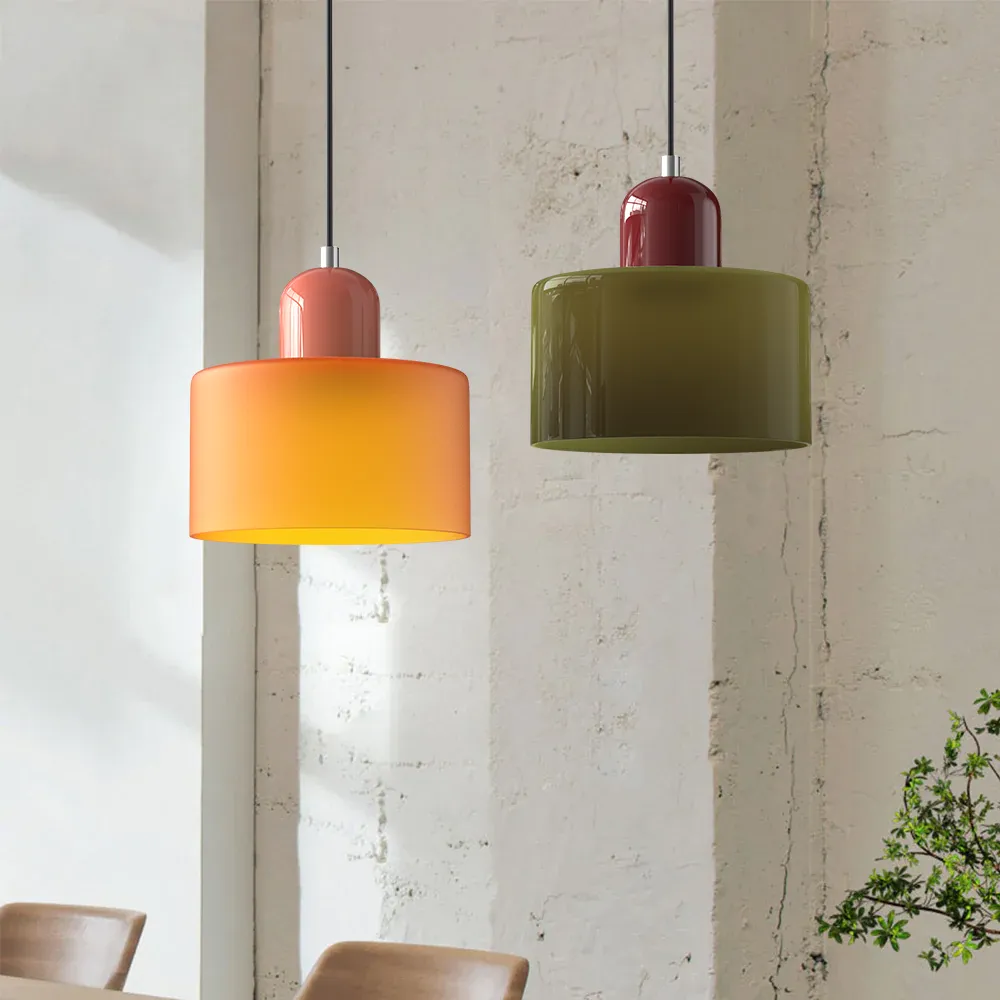
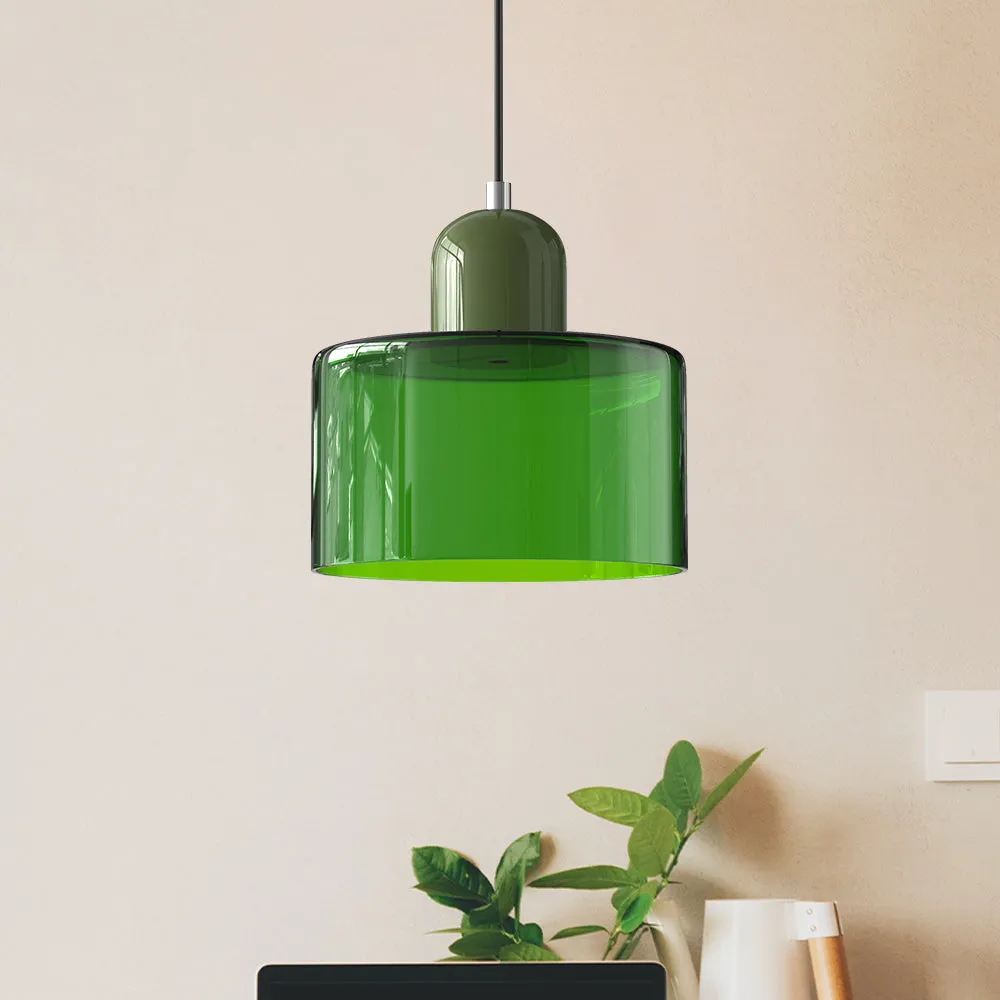
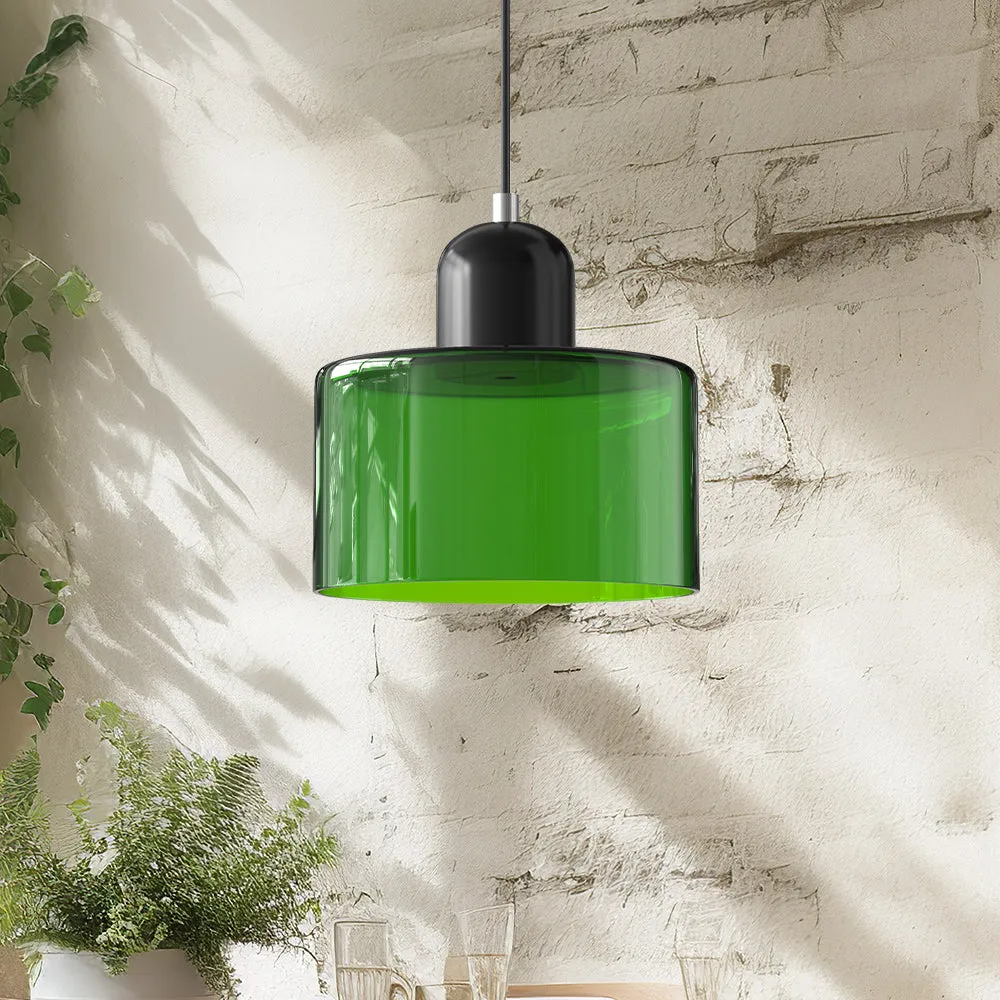
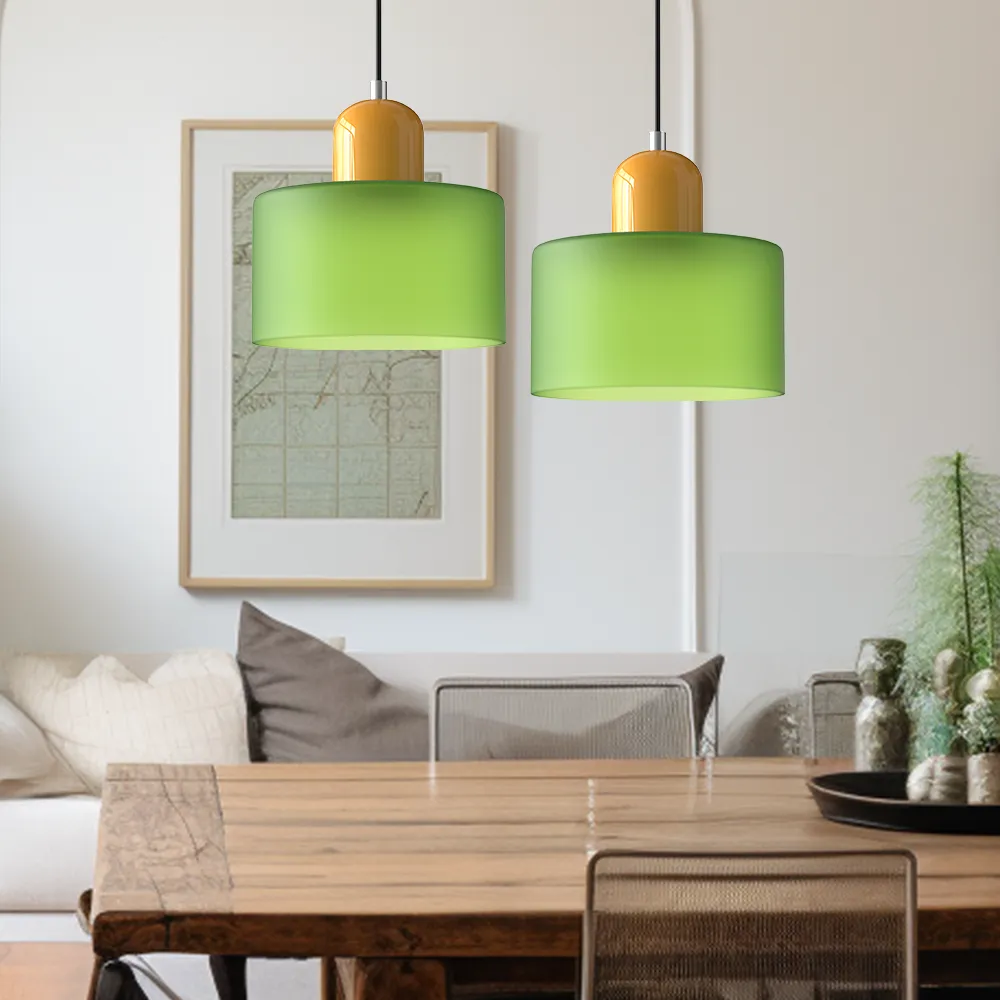
Comparação de tonalidades de vidro
Vidro colorido ou fosco? Escolha o pendente mais suave sem precisar adivinhar.
Veredito rápido: se seu objetivo principal é esconder uma lâmpada visível e suavizar um ponto de luz concentrado, o vidro fosco é a melhor opção inicial, pois dispersa a luz. O vidro colorido altera a tonalidade da luz e pode reduzir um pouco a luz transmitida, mas uma cúpula colorida lisa ainda permite que a lâmpada fique bem visível. Para obter cor e difusão, escolha uma cúpula que seja colorida e fosca e, em seguida, teste-a com a lâmpada desejada.
A comparação se torna confusa porque "luz suave" pode descrever três experiências diferentes: uma aparência mais quente ou colorida, uma fonte de luz difusa ou um menor contraste entre o pendente e o ambiente. Vidros coloridos e foscos podem contribuir para essas experiências de maneiras diferentes, mas nenhum dos rótulos informa a potência da lâmpada, a transmissão exata da luz da cúpula ou a vista a partir dos seus bancos de cozinha.
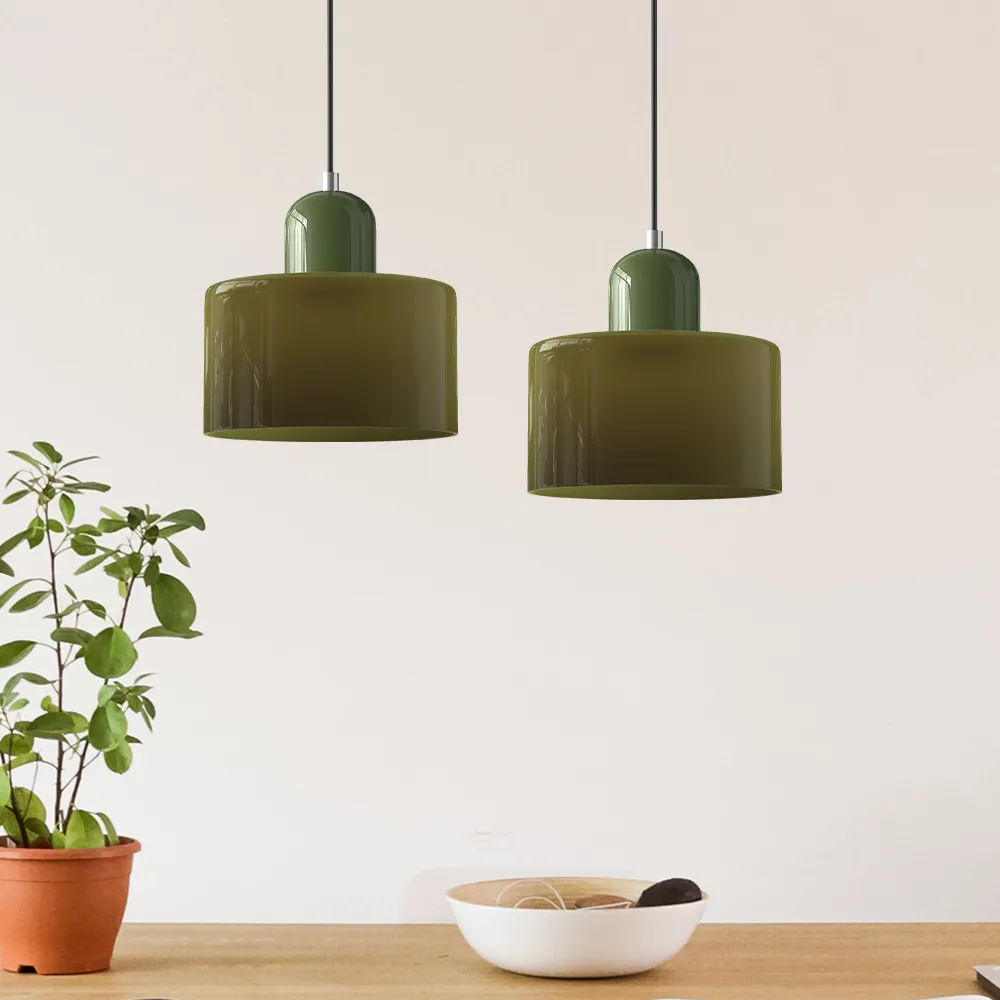
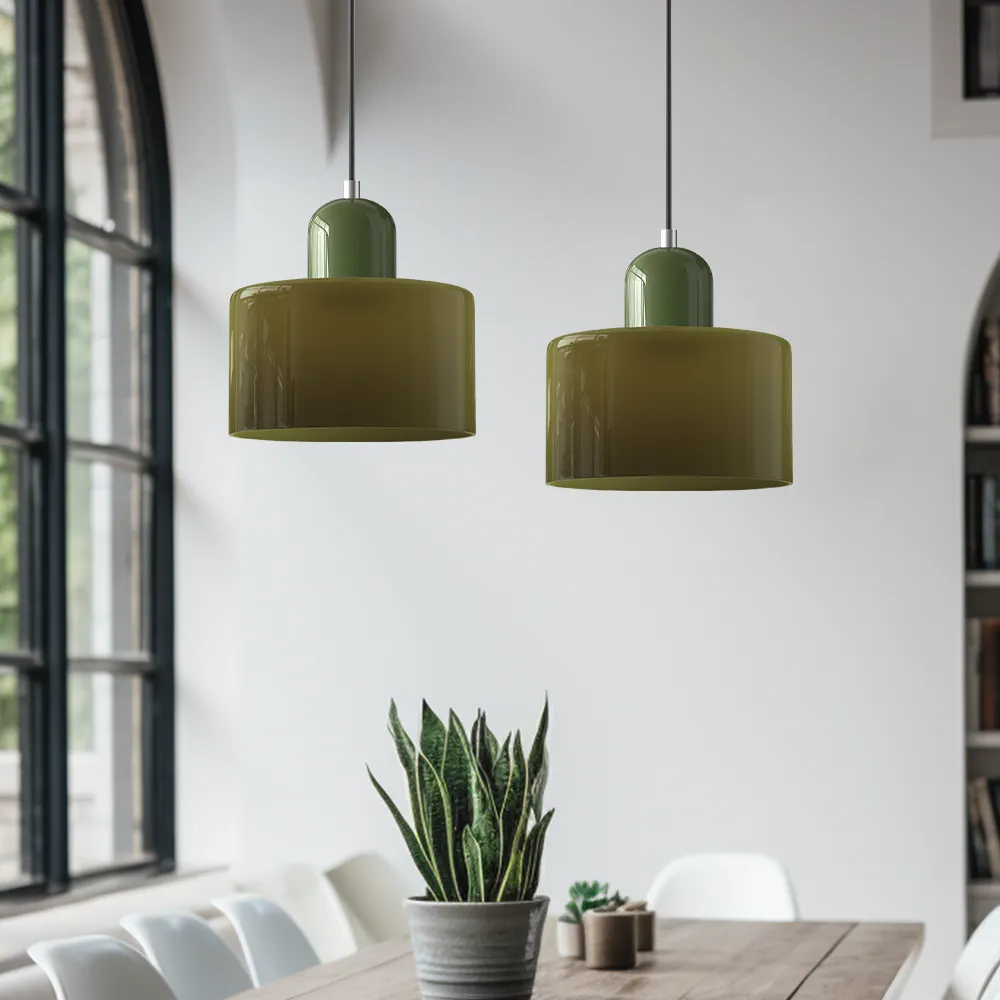
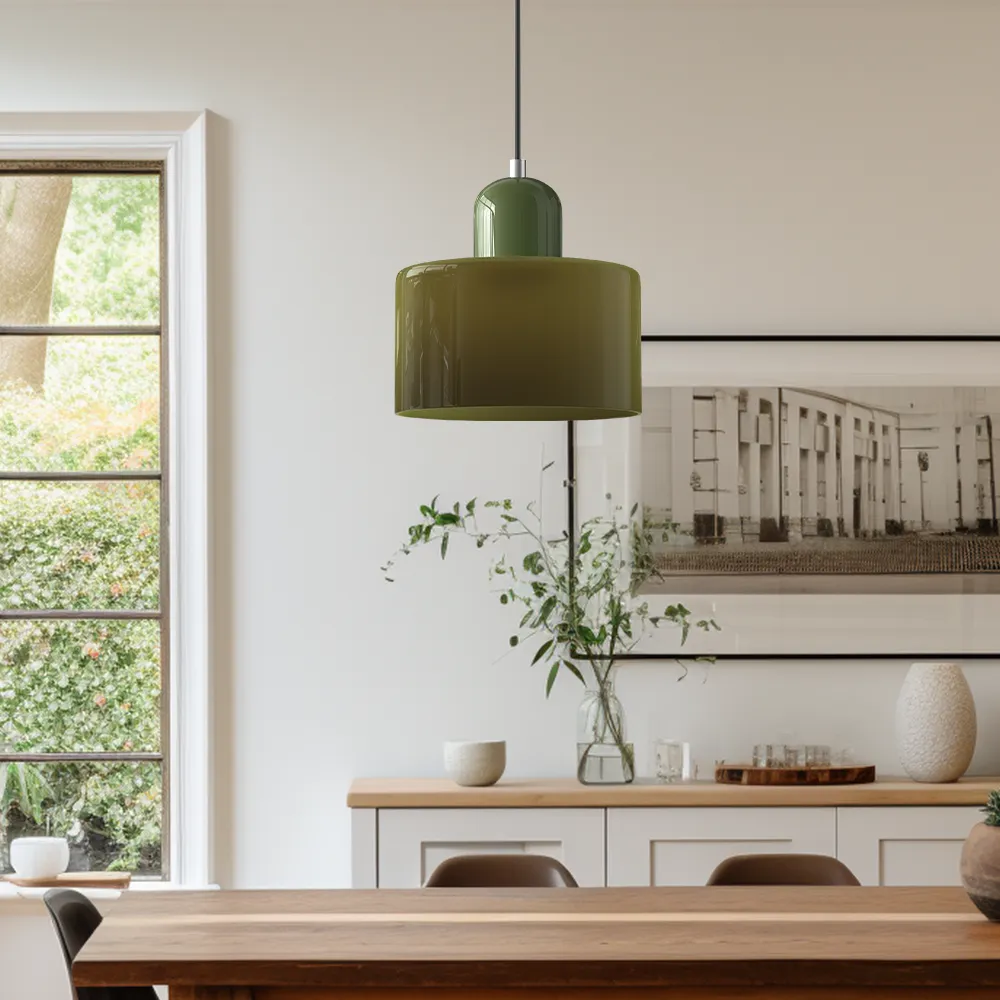
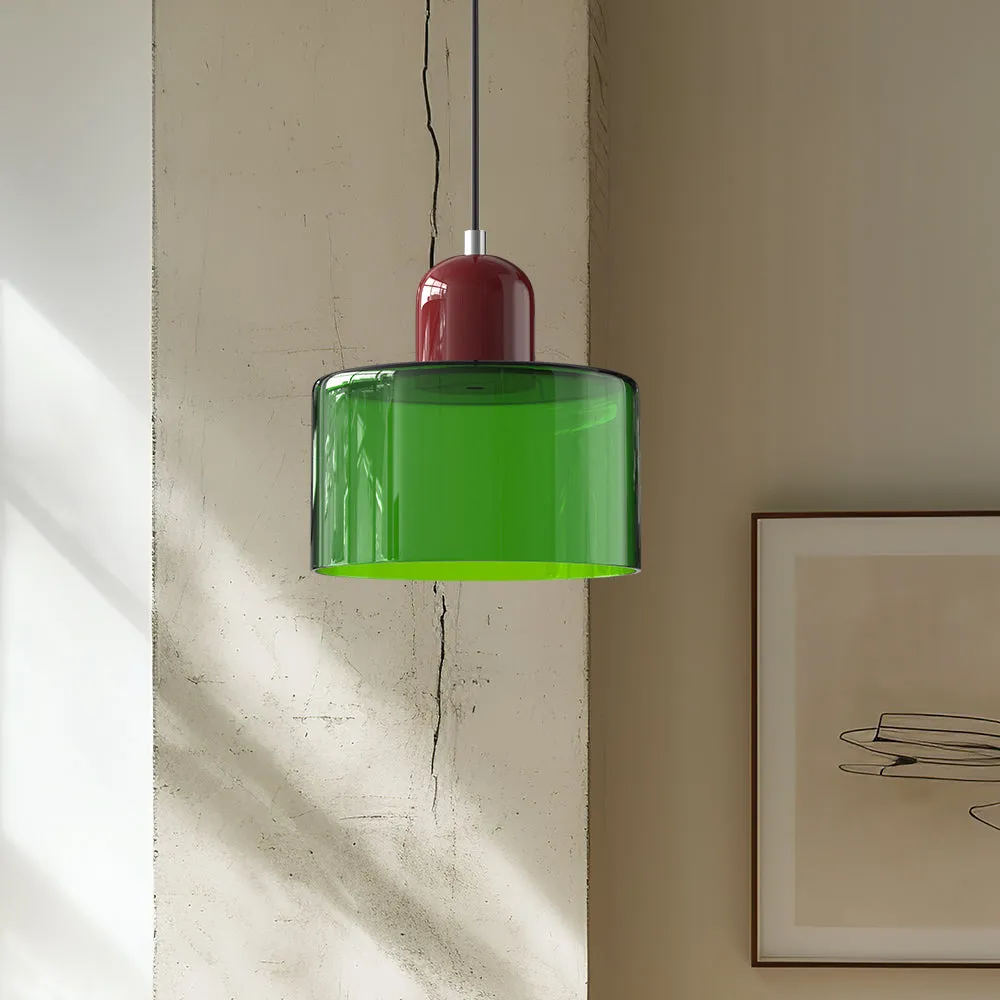
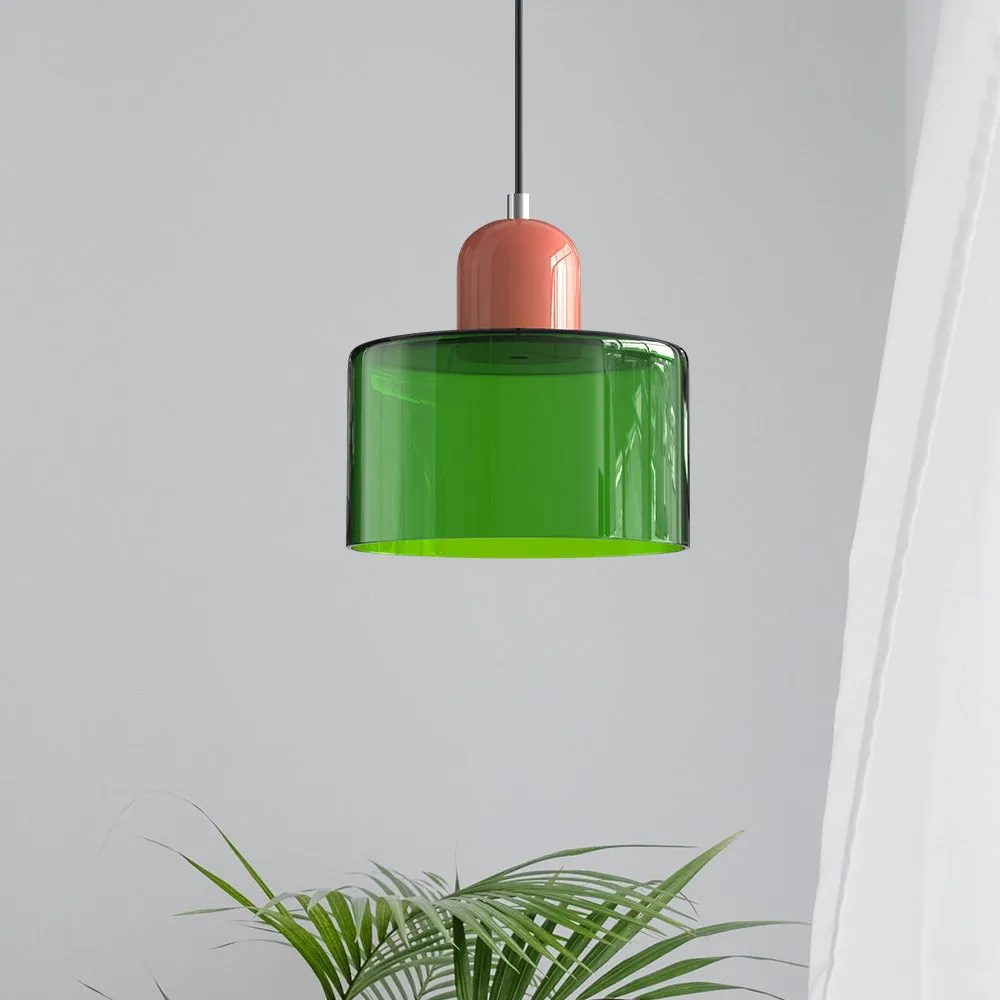
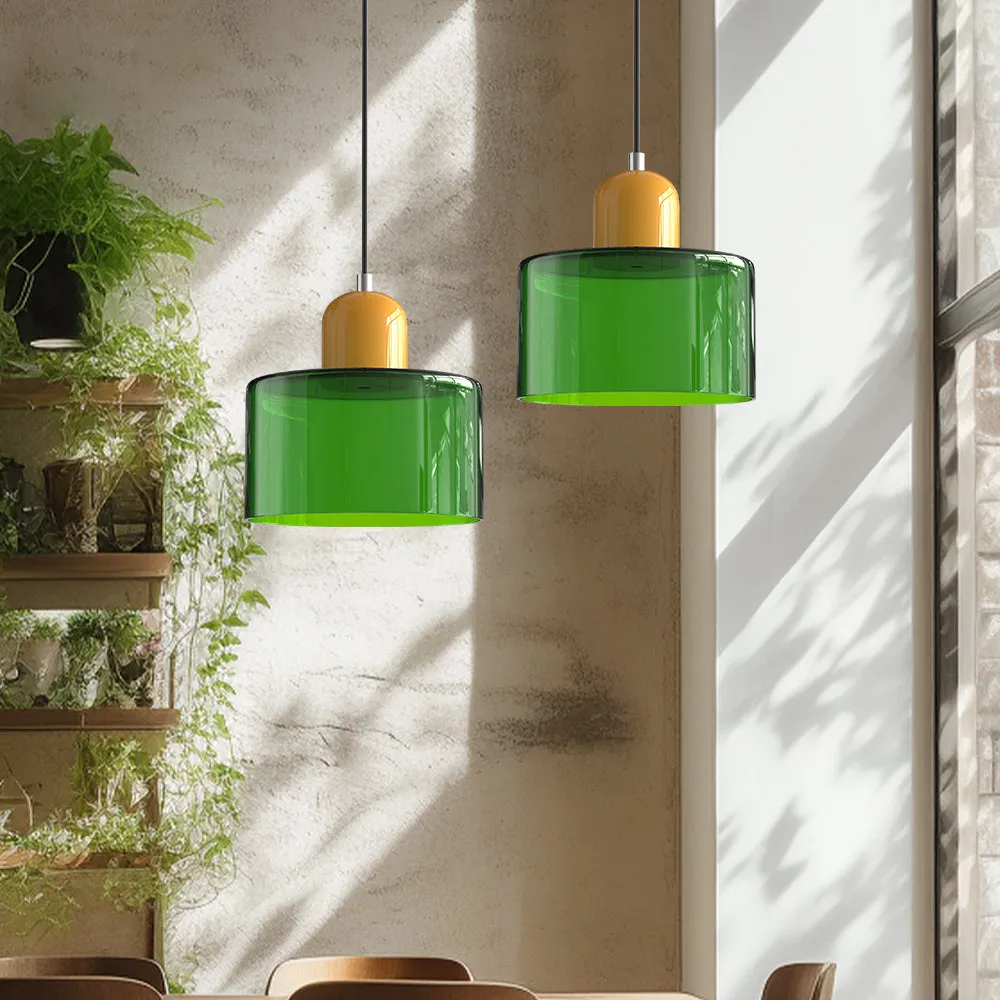
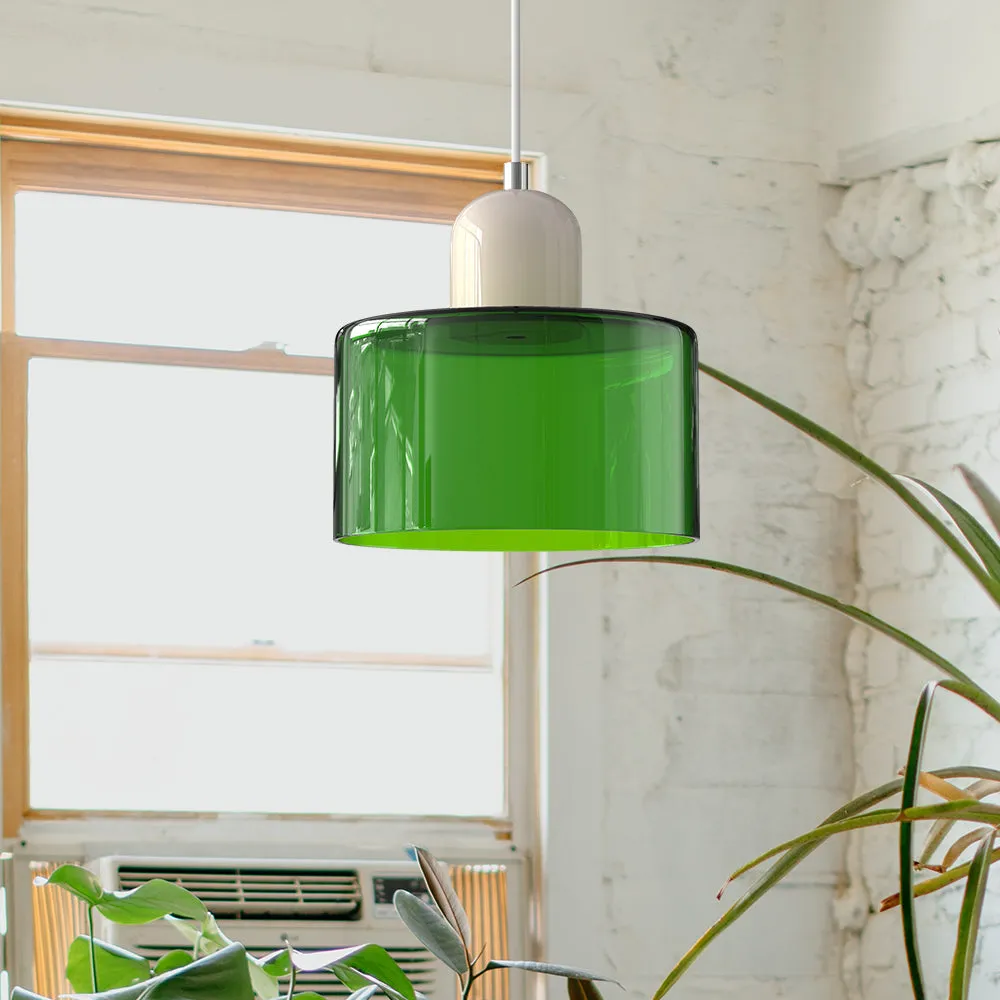
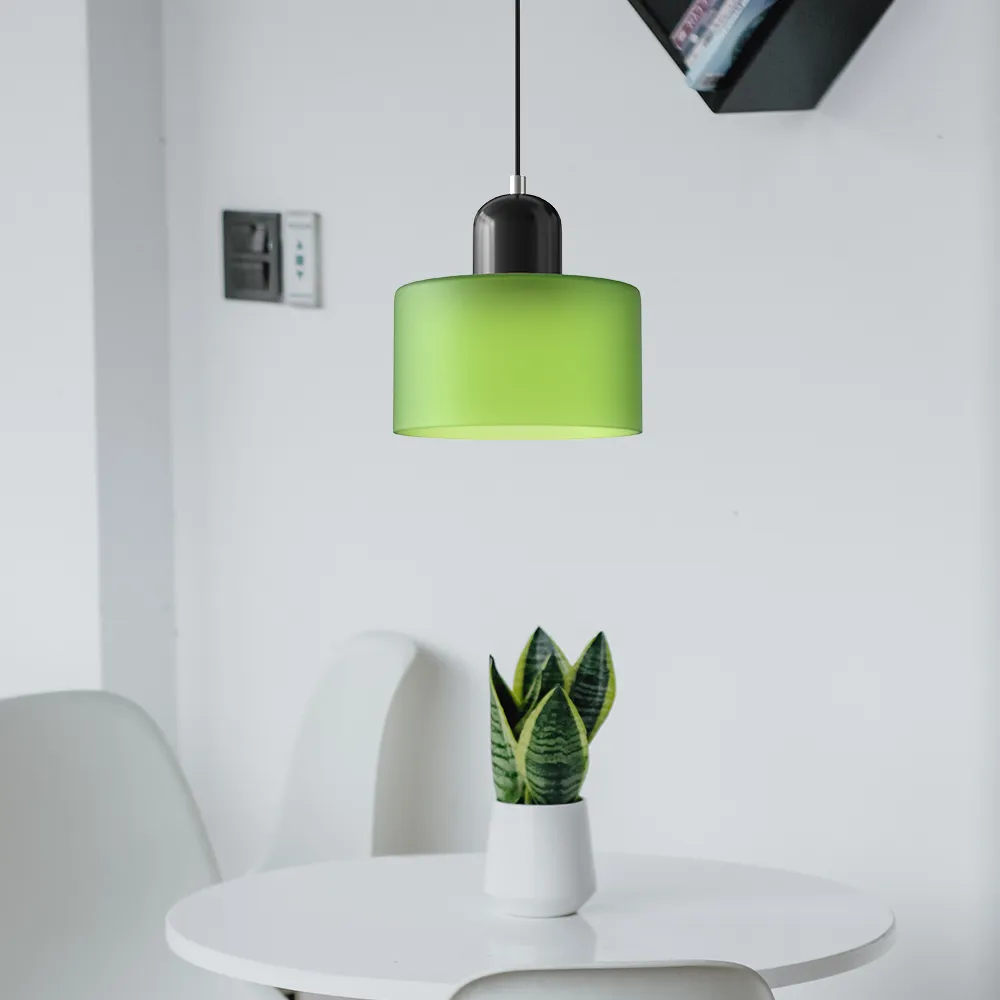
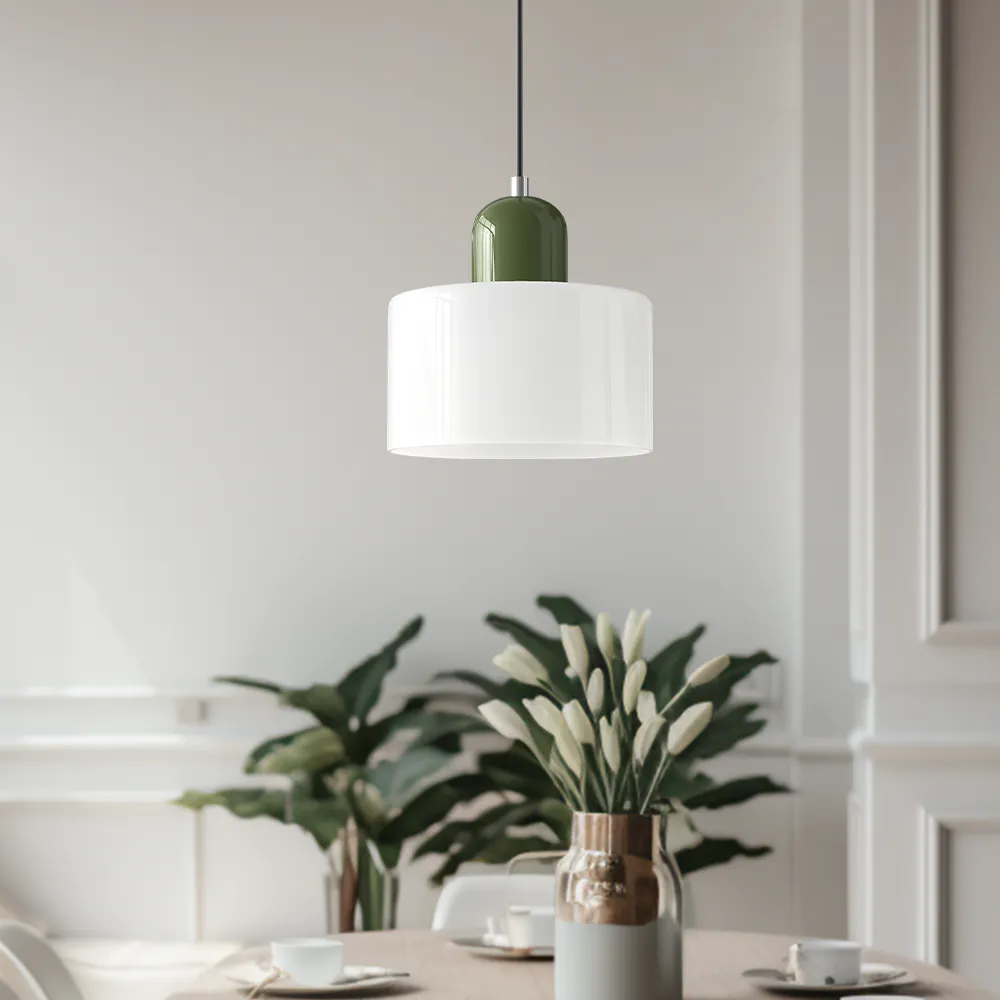
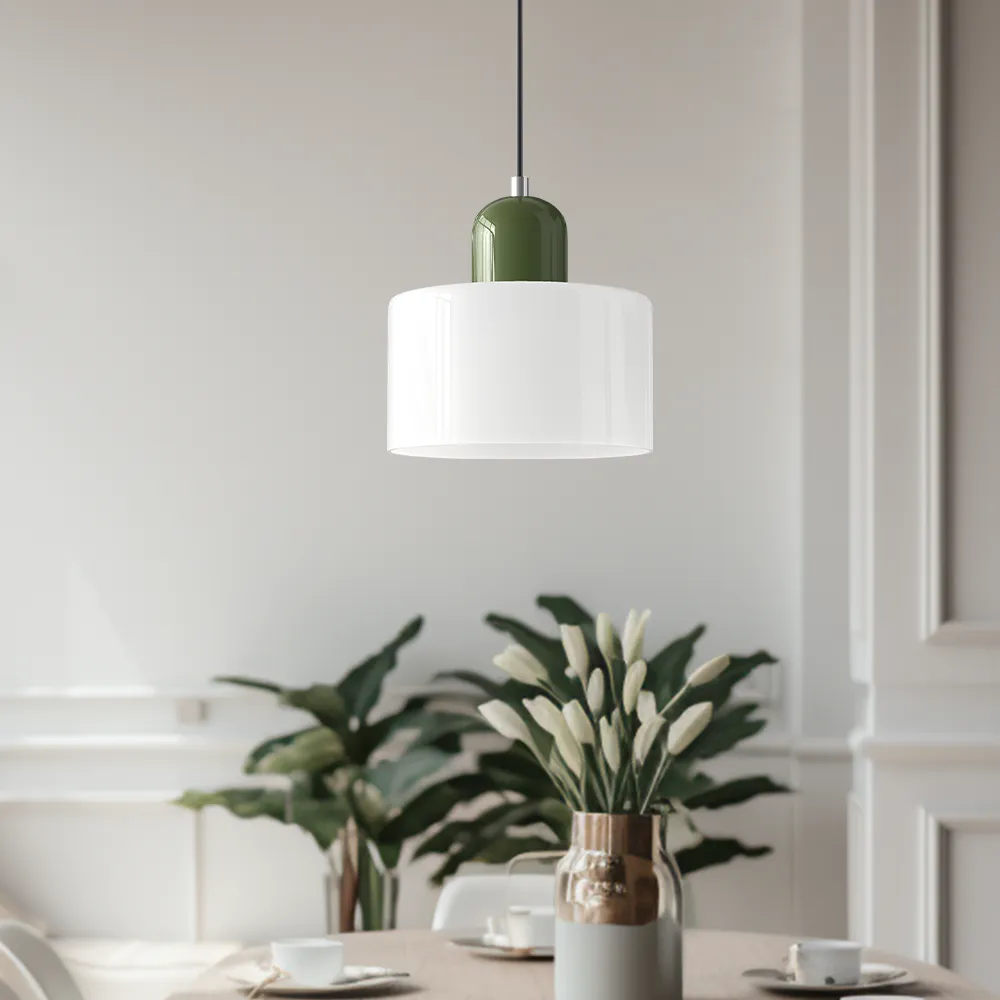
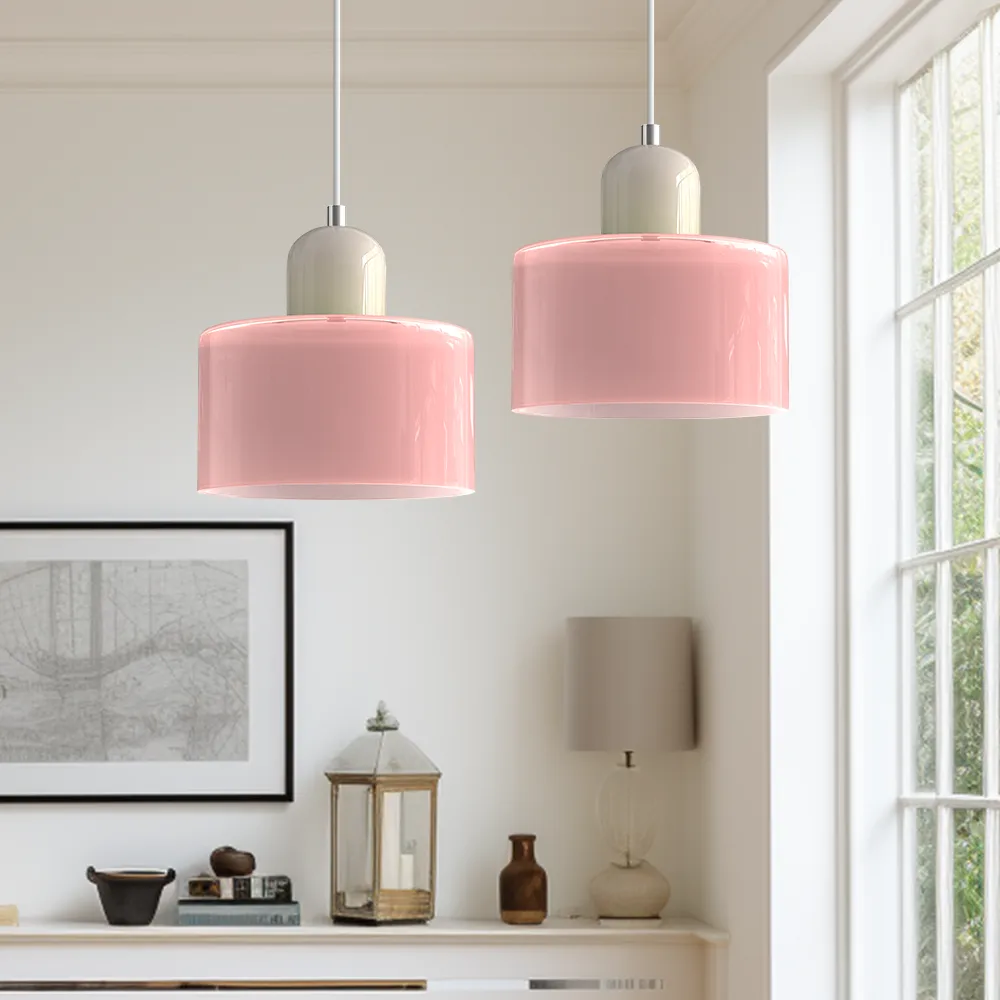
A luminária pendente cilíndrica de vidro Bauhaus Nordic Morandi oferece opções de cores suaves e uma opção verde fosco. Sua variedade é um lembrete prático de que cor e acabamento da superfície devem ser avaliados como propriedades separadas, mesmo quando ambos aparecem em uma mesma tonalidade.
1. O vidro colorido filtra a luz.
Um abajur colorido é seletivo quanto à luz que transmite. A CIE define um filtro de cor como um filtro seletivo que altera significativamente a cromaticidade da radiação. Simplificando, a luz que sai de um abajur laranja, verde ou rosa pode assumir essa direção de cor porque o vidro altera o equilíbrio da emissão da lâmpada.
Essa mudança pode fazer com que um pendente pareça visualmente mais quente, mais frio ou mais decorativo, mas a cor por si só não indica se a fonte de luz está oculta. Se o vidro for liso e a lâmpada permanecer bem visível, o olho ainda poderá encontrar um pequeno ponto brilhante. Uma tonalidade mais escura também não é um indicador preciso de ofuscamento. Sem dados de transmissão medidos, não é possível inferir quanta luz é perdida ou o quão confortável uma determinada lâmpada será. 
2. O vidro fosco dispersa a luz.
O efeito fosco altera a trajetória da luz, em vez de apenas conferir-lhe uma tonalidade. A CIE descreve um difusor como um dispositivo que utiliza predominantemente a dispersão para alterar a distribuição espacial da radiação . Em uma luminária pendente, essa dispersão pode espalhar o brilho visível por uma área maior da cúpula, tornando o contorno da lâmpada menos nítido.
Por isso, o vidro fosco costuma ser a melhor opção inicial quando uma lâmpada incandescente ou um ponto de LED exposto causa desconforto na altura dos olhos quando se está sentado. Isso não significa que a luminária seja automaticamente mais escura, nem que o brilho desapareça de todos os ângulos. A lâmpada, o formato da cúpula, a posição de instalação e a luminosidade do ambiente continuam influenciando o resultado final.
quando a cor da cúpula durante o dia e a tonalidade à noite são elementos essenciais do design, e a lâmpada escolhida já apresenta uma luminosidade confortável quando vista através do vidro.
Quando obscurecer a fonte de luz e reduzir um ponto de brilho concentrado são mais importantes do que ver uma lâmpada nítida ou reflexos brilhantes.
Compare as opções de cores e o acabamento verde fosco da lâmpada Morandi como duas decisões ópticas: a tonalidade afeta a cor transmitida, enquanto a superfície fosca afeta a nitidez com que a lâmpada é vista.
3. “Menos ofuscante” depende da perspectiva.
A definição de ofuscamento da CIE centra-se no desconforto ou na redução da visibilidade causados por uma distribuição de luminância inadequada, alcance ou contraste extremo. Isto explica por que não se pode avaliar uma luminária pendente apenas olhando para ela num showroom bem iluminado. Em casa, depois do pôr do sol, a mesma luminária pode estar contra um teto escuro e tornar-se o objeto de maior contraste na divisão.
Olhe através da ilha, em vez de olhar diretamente para baixo dela. Um abajur pode distribuir a luz útil sobre a bancada e ainda assim expor a lâmpada para uma pessoa sentada. Verifique a distância entre os olhos do adulto mais baixo, a posição de preparo em pé e a perspectiva a partir do cômodo adjacente. Em seguida, procure por reflexos em janelas e superfícies polidas.
Se uma tonalidade lisa e colorida criar um ponto de distração, uma lâmpada com acabamento mais suave pode ajudar sem alterar a aparência da luminária durante o dia. Se toda a área iluminada parecer muito dominante, reduza a potência da fonte de luz ou aumente a iluminação ao redor. Mover a luminária muito para cima pode alterar sua relação com a ilha da cozinha, portanto, considere a altura como uma variável e não como a solução definitiva.
4. Compare as opções por função.
| Pergunta | Vidro liso colorido | Vidro fosco |
|---|---|---|
| Efeito óptico primário | Altera o equilíbrio e a cor aparente da luz transmitida. | Dispersa a luz e desfoca a visão direta da fonte. |
| visibilidade da lâmpada | Pode permanecer distinto, dependendo da tonalidade e do vidro. | Geralmente menos distinto através da superfície difusora |
| Melhor uso inicial | Cor decorativa e uma aparência de fonte de luz mais vibrante | Visibilidade reduzida dos pontos quentes e uma superfície brilhante mais uniforme. |
| O que não pode prometer | Uma redução conhecida de lúmen ou visão sem reflexos. | Um resultado específico de brilho, cor ou reflexo. |
| Opção combinada | O vidro fosco colorido pode filtrar o espectro e dispersar a luz simultaneamente. | |
5. Combine a lâmpada com a cúpula adequada.
A luminária Morandi utiliza uma lâmpada E27, não a inclui e tem uma potência máxima de 40W. A página do produto não informa a transmissão de luz, a emissão de lúmens ou as especificações de dimerização. Escolha uma lâmpada considerando o encaixe físico, a emissão de lúmens, a aparência da cor e o acabamento da superfície, respeitando os limites da luminária.
A análise do Departamento de Energia dos EUA sobre a qualidade da luz LED distingue entre aparência da cor, fidelidade da cor e distribuição da luz. Mantenha essas dimensões separadas. Uma lâmpada com aparência quente ainda pode ser ofuscante. Uma lâmpada fosca dentro de um vidro fosco pode esconder bem a fonte de luz, mas produzir uma textura visual diferente de uma lâmpada transparente. Um alto índice de reprodução de cor (IRC) descreve a fidelidade da cor sob a fonte de luz; não é uma promessa de que uma tonalidade fortemente colorida deixará todas as superfícies inalteradas. 
Utilize as especificações do produto Morandi para confirmar o soquete E27, a potência máxima de 40W e o acabamento da cúpula escolhido antes de comprar as lâmpadas para todo o conjunto.
6. Realize um teste noturno com três cenas.
- Preparação da cena: acenda a outra iluminação de tarefa e verifique se a superfície da ilha permanece livre de fontes de luz que possam causar distração.
- Cena de jantar: sente-se em cada banqueta e olhe para as pessoas do outro lado, não para o balcão.
- Cenário de fundo: diminua ou apague as luzes ao redor e verifique o contraste do pendente a partir do cômodo ao lado.
Use o mesmo tipo de lâmpada e potência ao comparar tonalidades. Caso contrário, você estará testando duas variáveis ao mesmo tempo. Se possível, fotografe cada cena com a mesma exposição da câmera, mas confie mais na sua percepção visual do que na imagem do celular: as câmeras processam as altas luzes de forma diferente da visão humana. 
Recomendação final
Escolha vidro fosco quando a prioridade for ocultar a fonte de luz. Escolha vidro colorido liso quando a cor visível e uma aparência mais clara e vibrante da lâmpada forem intencionais e confortáveis. Escolha vidro fosco colorido quando desejar ambos os efeitos, lembrando que a lâmpada e o ponto de vista ainda determinarão o resultado final. "Fosco" é apenas um ponto de partida útil, não uma garantia de laboratório.
Se a cor Verde Gelado ou um dos tons mais suaves se adequar a essa decisão, revise as combinações atuais da Morandi e faça o pedido somente após verificar a lâmpada escolhida e as condições de iluminação.
Perguntas frequentes
O vidro colorido reduz o brilho tanto quanto o vidro fosco?
Não necessariamente. A cor altera a luz transmitida, enquanto a cobertura a dispersa e é mais diretamente útil para obscurecer uma fonte brilhante.
O vidro fosco diminui a intensidade da luz de um pendente?
Isso altera a distribuição da luz e pode reduzir a transmissão, mas o rótulo sozinho não revela a emissão final de lúmens. Teste a cúpula e a lâmpada reais.
É possível que uma tonalidade seja colorida e fosca ao mesmo tempo?
Sim. A opção Frosted Green da Morandi combina um efeito de filtro colorido com uma superfície difusora.
Posso usar uma lâmpada transparente atrás de um vidro fosco?
Pode funcionar, mas avalie o ponto de luz visível a partir de posições normais de assento. O formato da lâmpada, a potência e a área de cobertura da sombra são fatores importantes.
Qual opção é a mais segura para uma lâmpada próxima à altura dos olhos?
O vidro fosco é um bom ponto de partida, mas confirme o conforto em todos os assentos, em vez de confiar apenas no nome do acabamento.