Guide des échelles pour pendentifs
Votre suspension est-elle trop petite ? Un test d’échelle visuelle pour les îlots de cuisine
Commencez par observer la silhouette complète, et non par vous baser sur un diamètre. Une petite suspension n'est pas forcément trop petite simplement parce que son abat-jour est étroit. Elle le devient lorsque l'ensemble ne parvient pas à se démarquer visuellement au-dessus de l'îlot, se fond dans le décor à côté d'éléments de cuisine plus imposants, ou nécessite une ampoule trop puissante pour compenser un défaut d'esthétique. Testez le rendu d'un abat-jour et de l'ensemble avant de faire votre choix.
Les formules de dimensionnement génériques sont tentantes car elles réduisent un choix visuel à un simple chiffre. Elles ne tiennent cependant pas compte des spécificités de chaque élément : un luminaire sculptural ou trois cylindres compacts ? Les abat-jour sont-ils transparents ou opaques ? L’îlot se trouve-t-il sous une grande hotte ou dans une pièce ouverte et aérée ? La question pertinente n’est pas « Quel diamètre est autorisé ? » mais plutôt « Cette composition lumineuse trouve-t-elle sa place à l’échelle de ma cuisine ? »
1. Choisir entre un point focal et un rythme répété
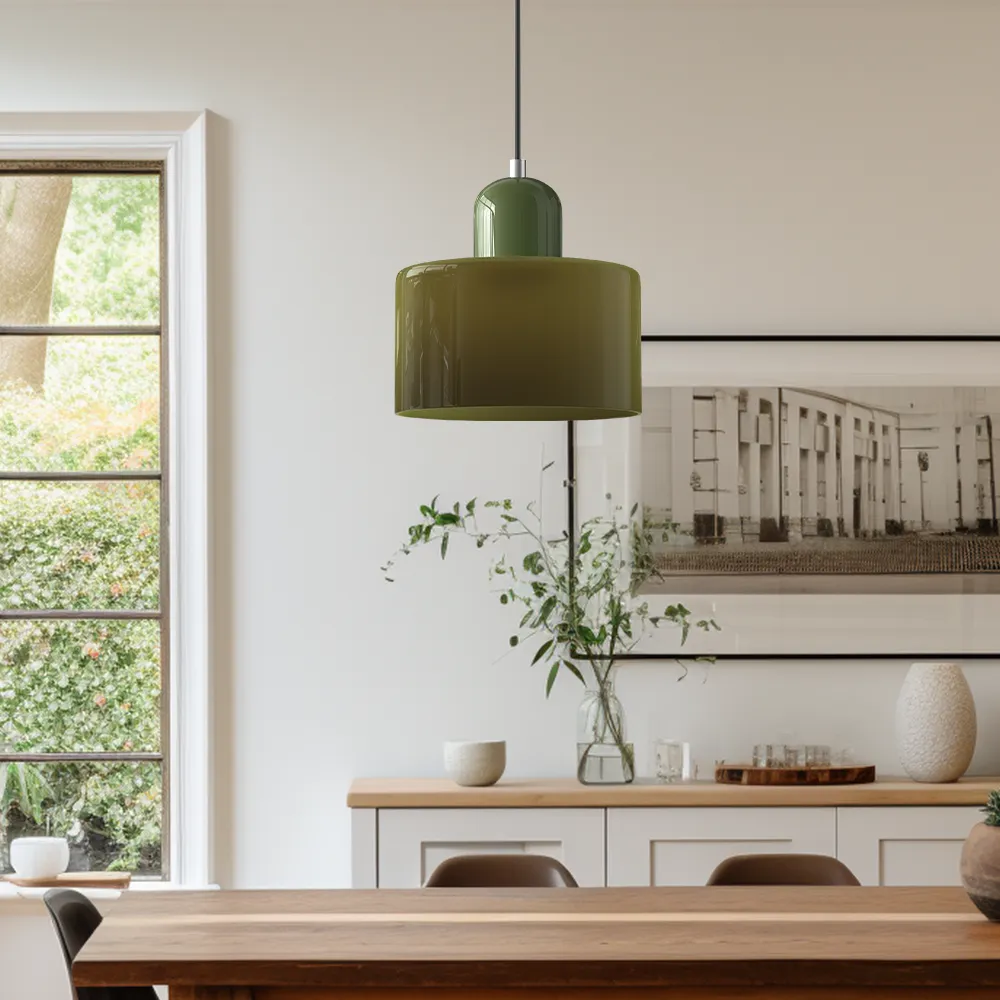
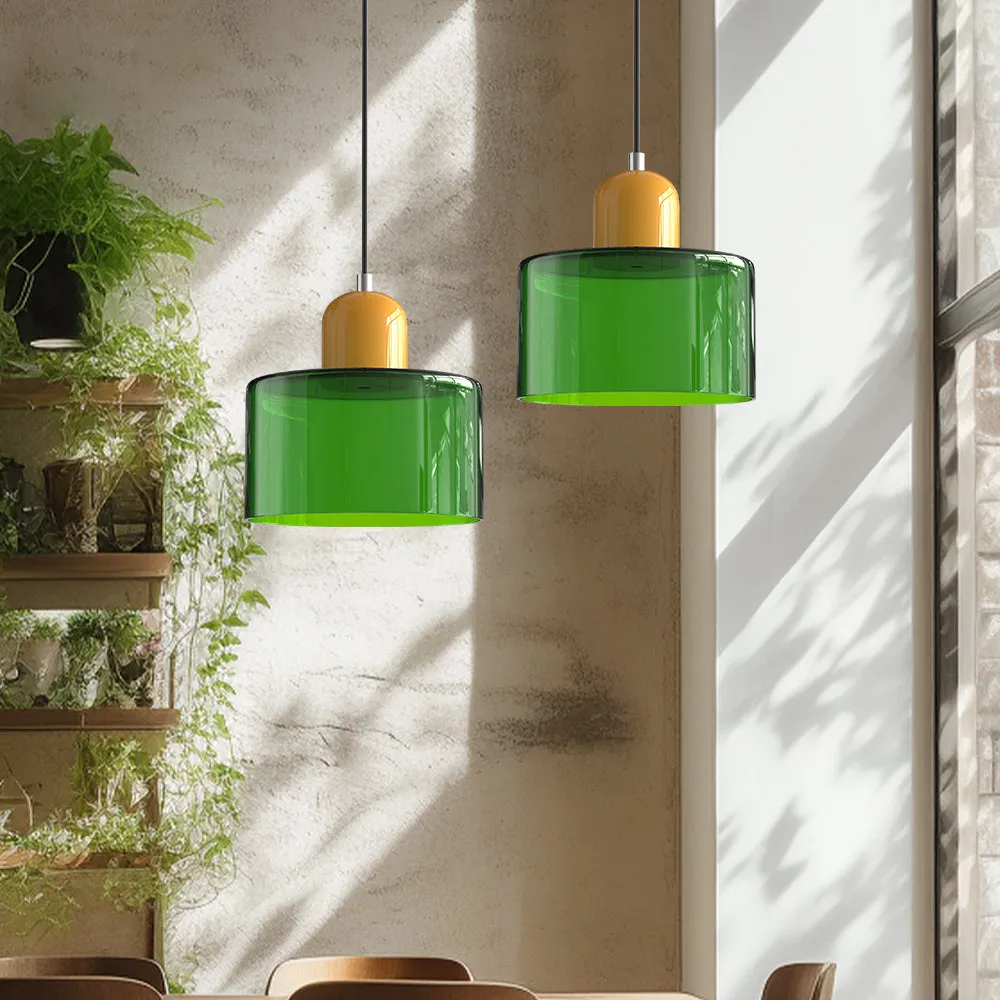
Une suspension isolée et une rangée de suspensions remplissent des fonctions visuelles différentes. Un luminaire unique doit avoir une forme et une présence suffisantes pour devenir le point focal de l'îlot. Plusieurs petites suspensions se partagent cette responsabilité : la répétition et les espaces entre les gouttes créent la composition. C'est pourquoi un cylindre de 15 cm peut paraître discret seul, mais s'intégrer harmonieusement dans une séquence soigneusement agencée.
Avant de prendre vos mesures, formulez une phrase : « L’éclairage de l’îlot doit constituer l’élément visuel principal » ou « L’éclairage de l’îlot doit être un éclairage d’accentuation léger et régulier ». Si la première phrase est vraie, comparez le petit luminaire avec un luminaire unique plus grand avant de faire votre choix. Si la seconde est vraie, évaluez l’ensemble de la ligne, et non l’abat-jour individuellement. 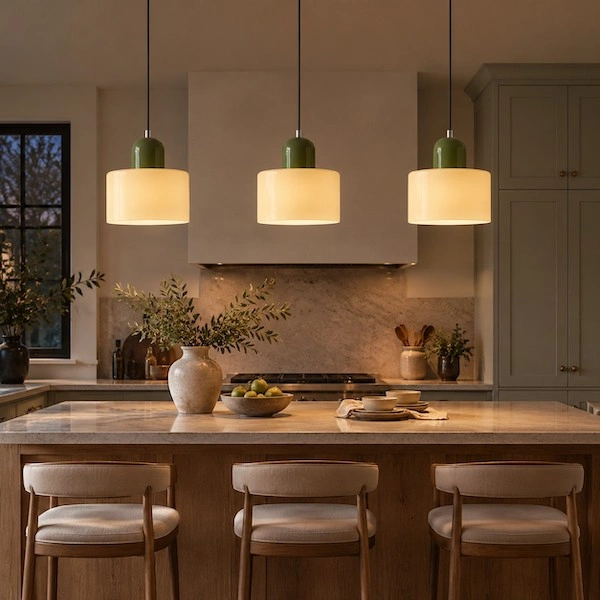
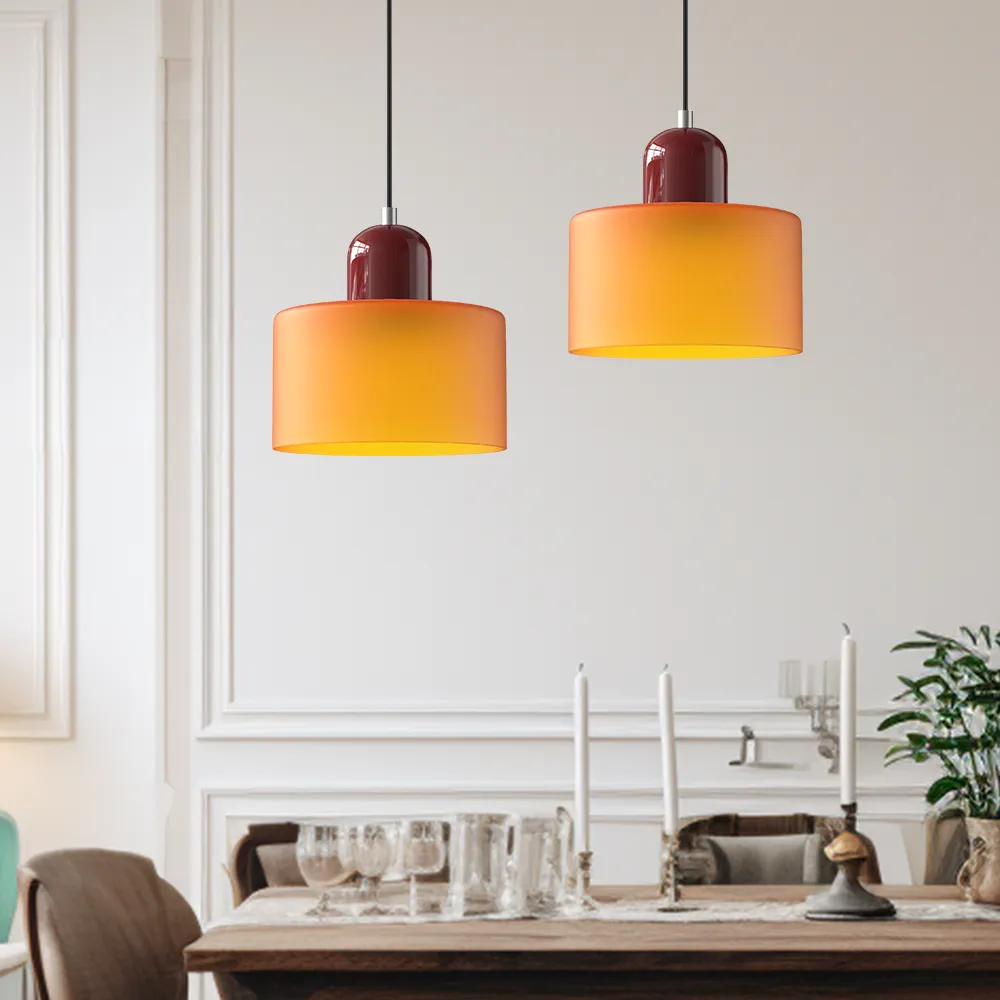
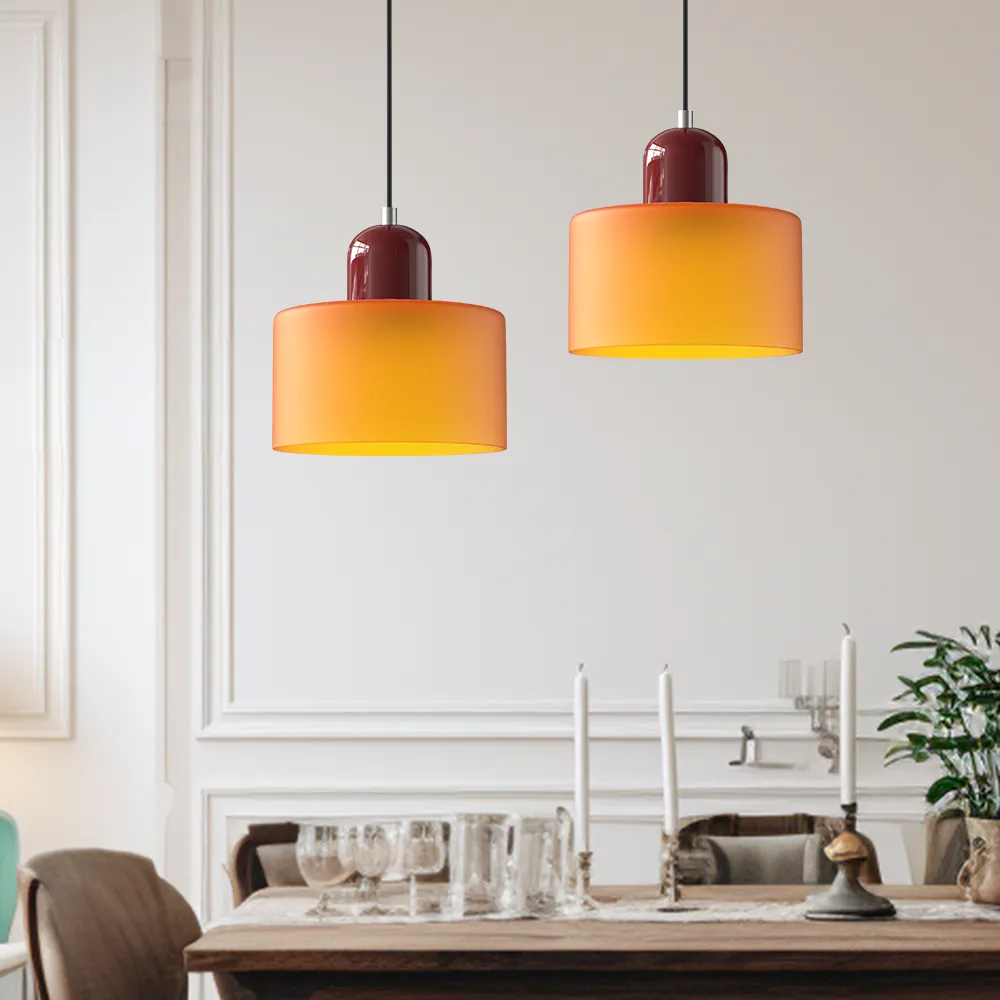
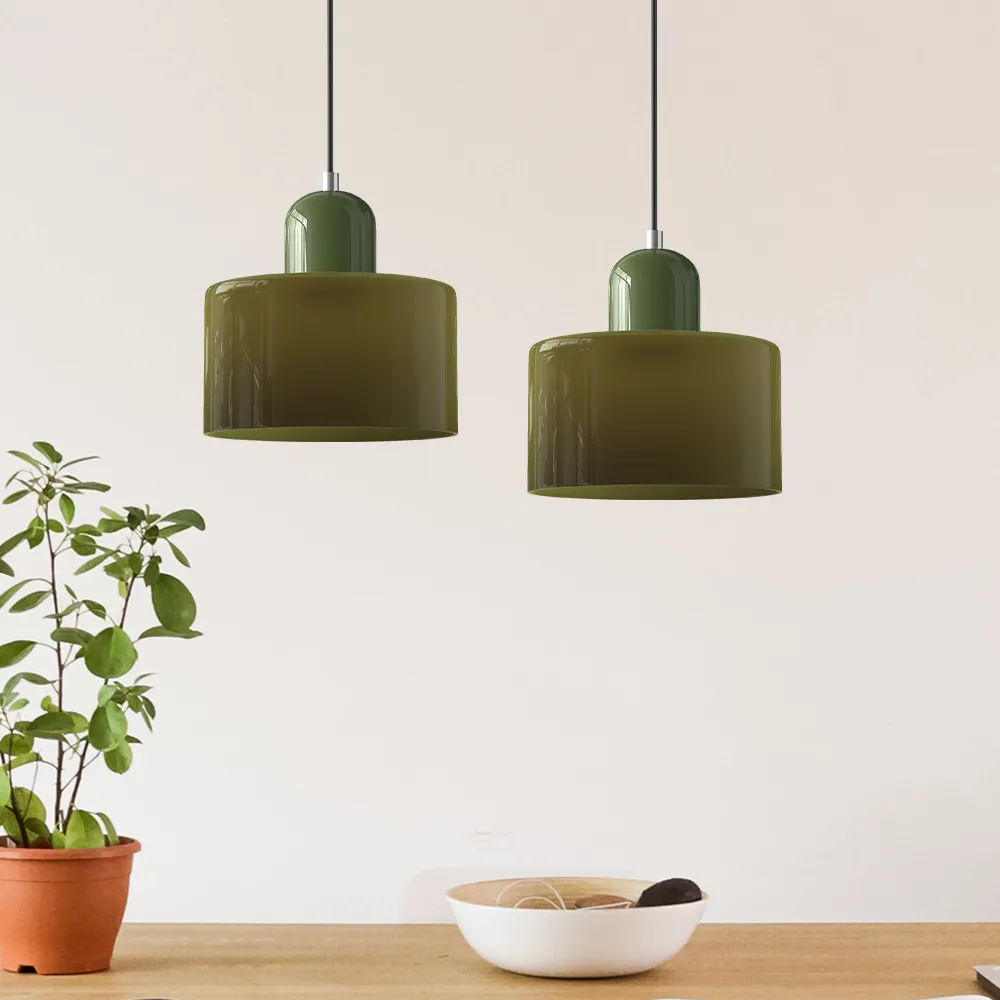
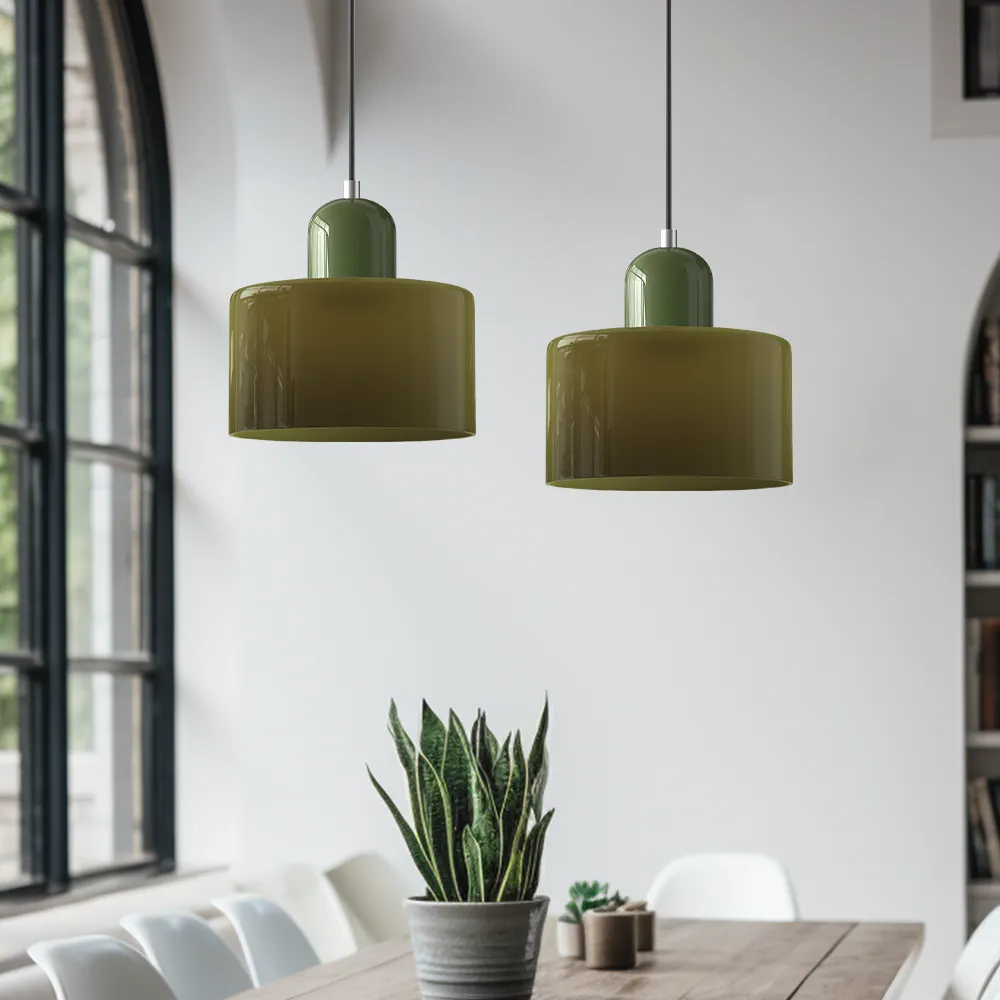
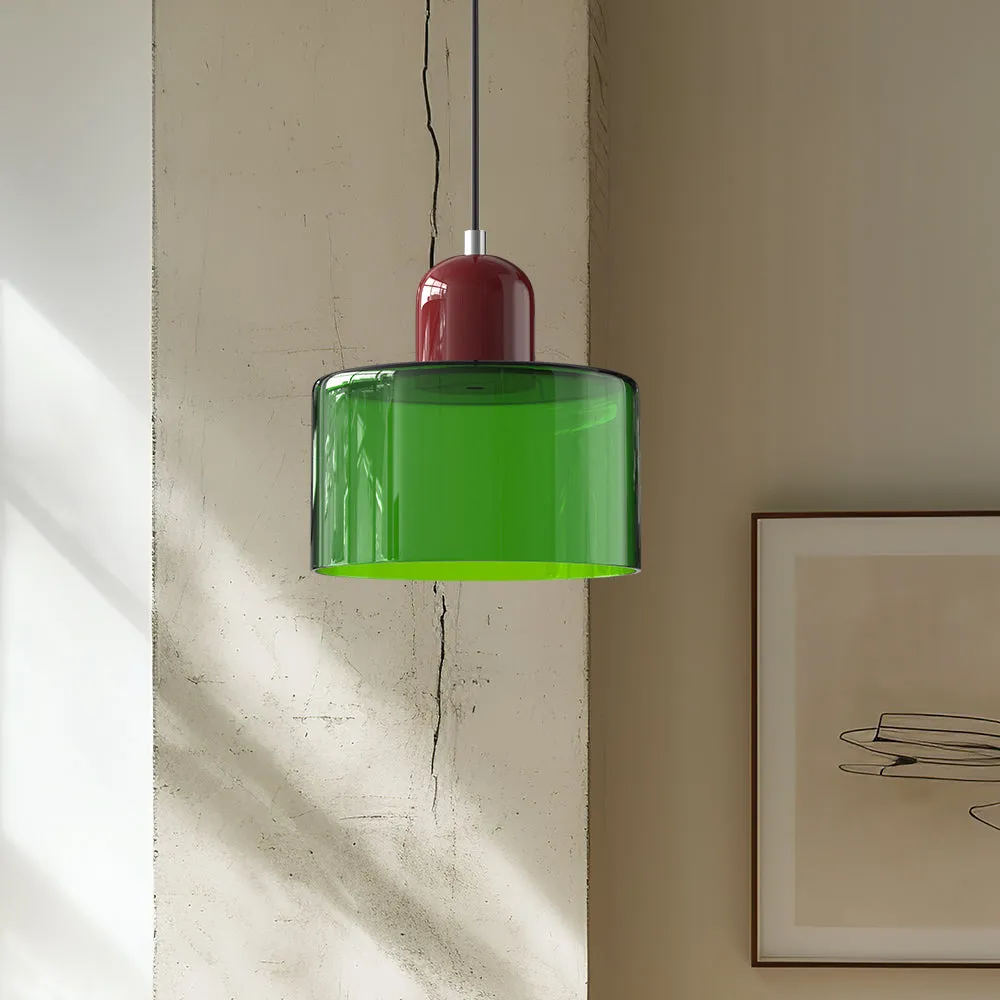
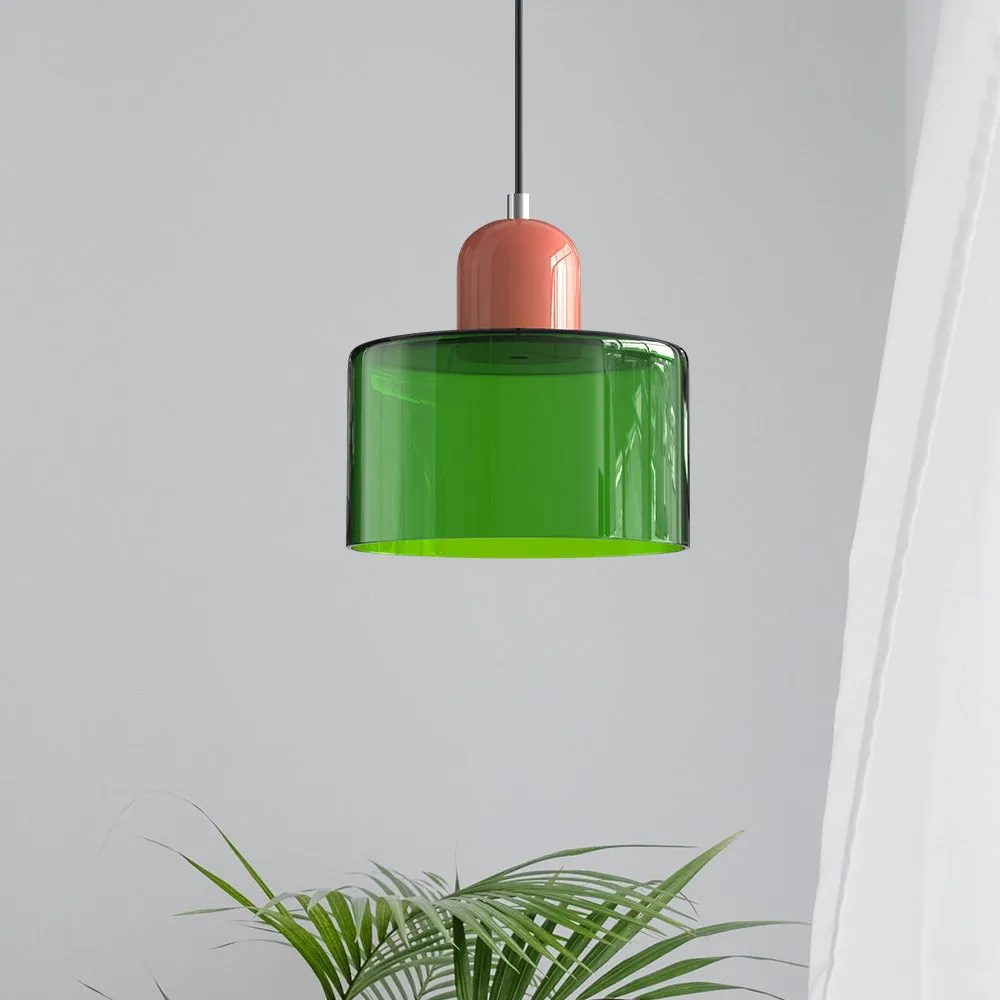
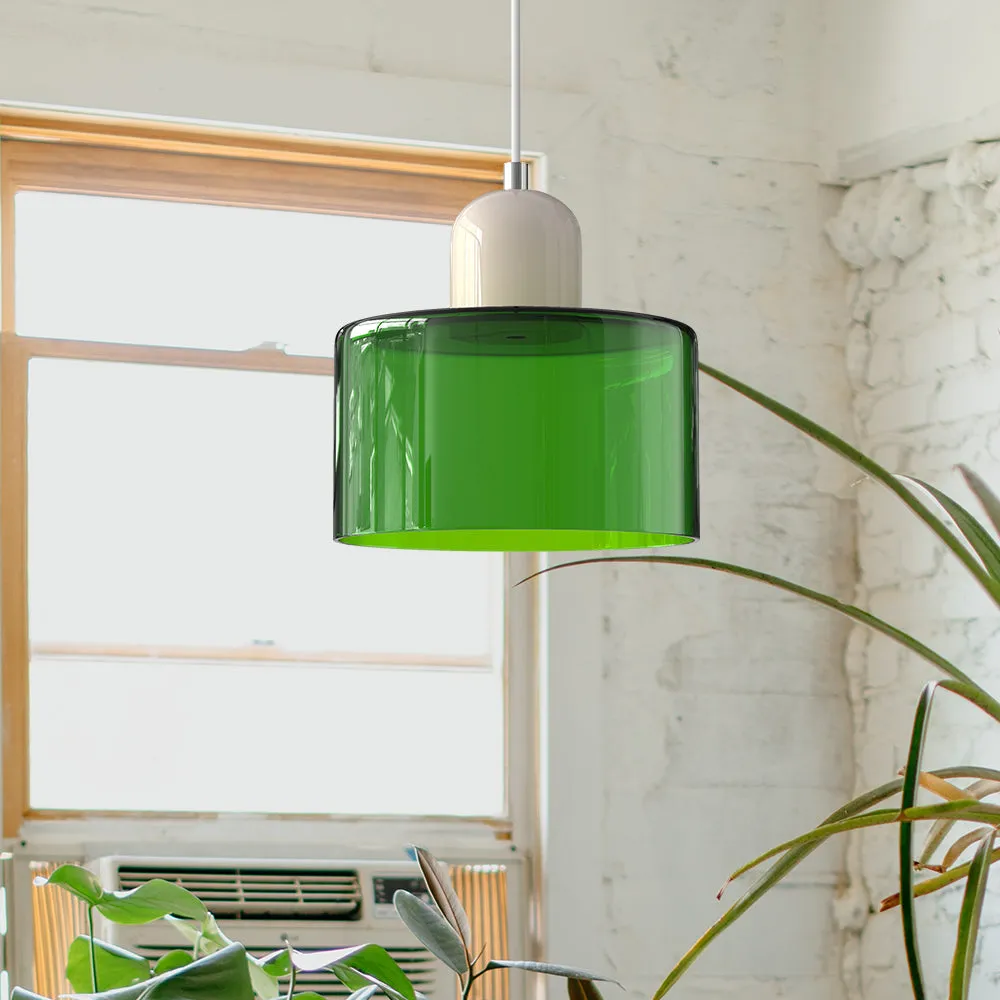
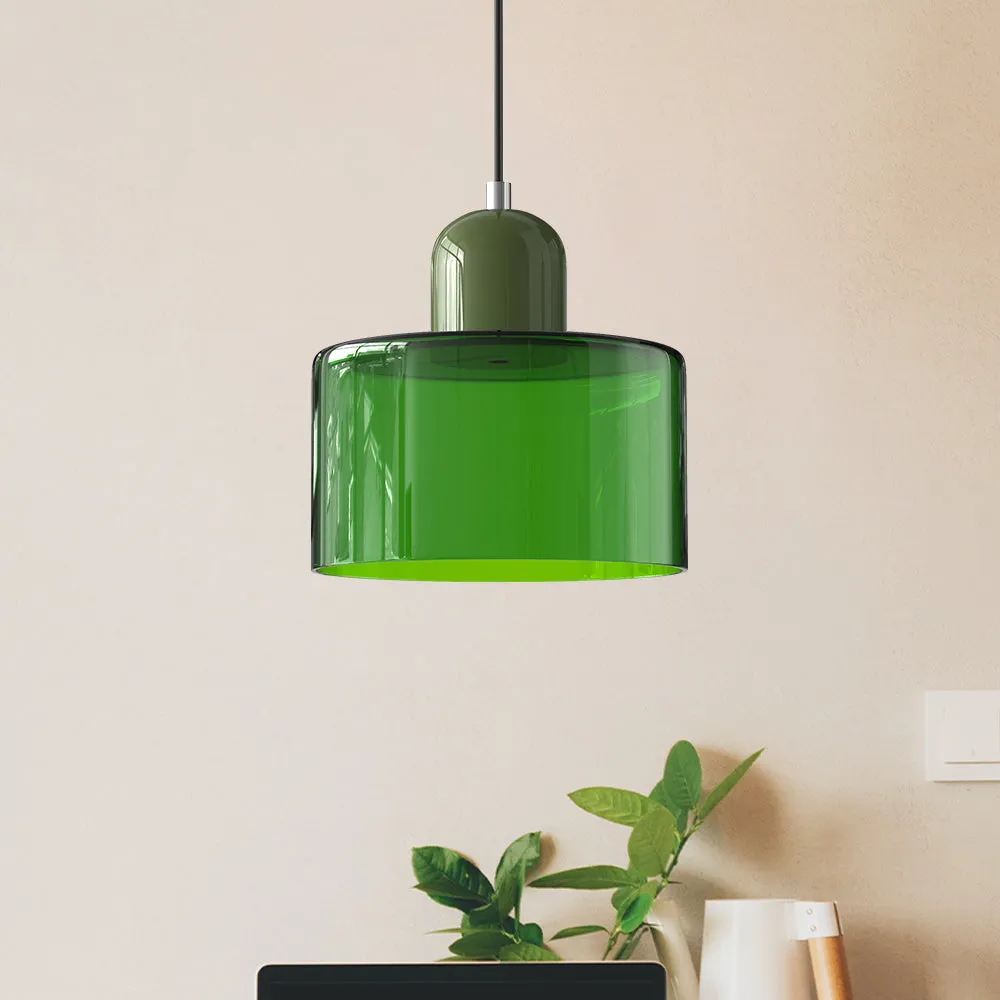
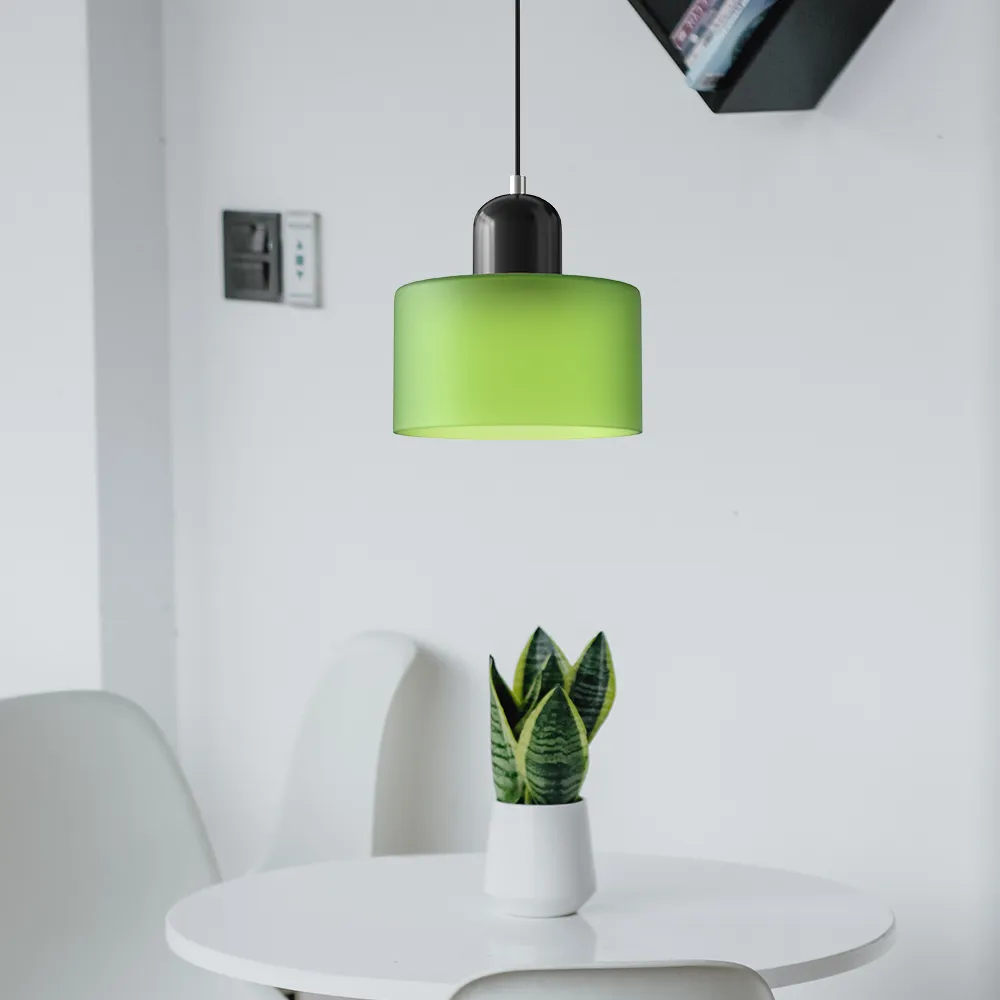
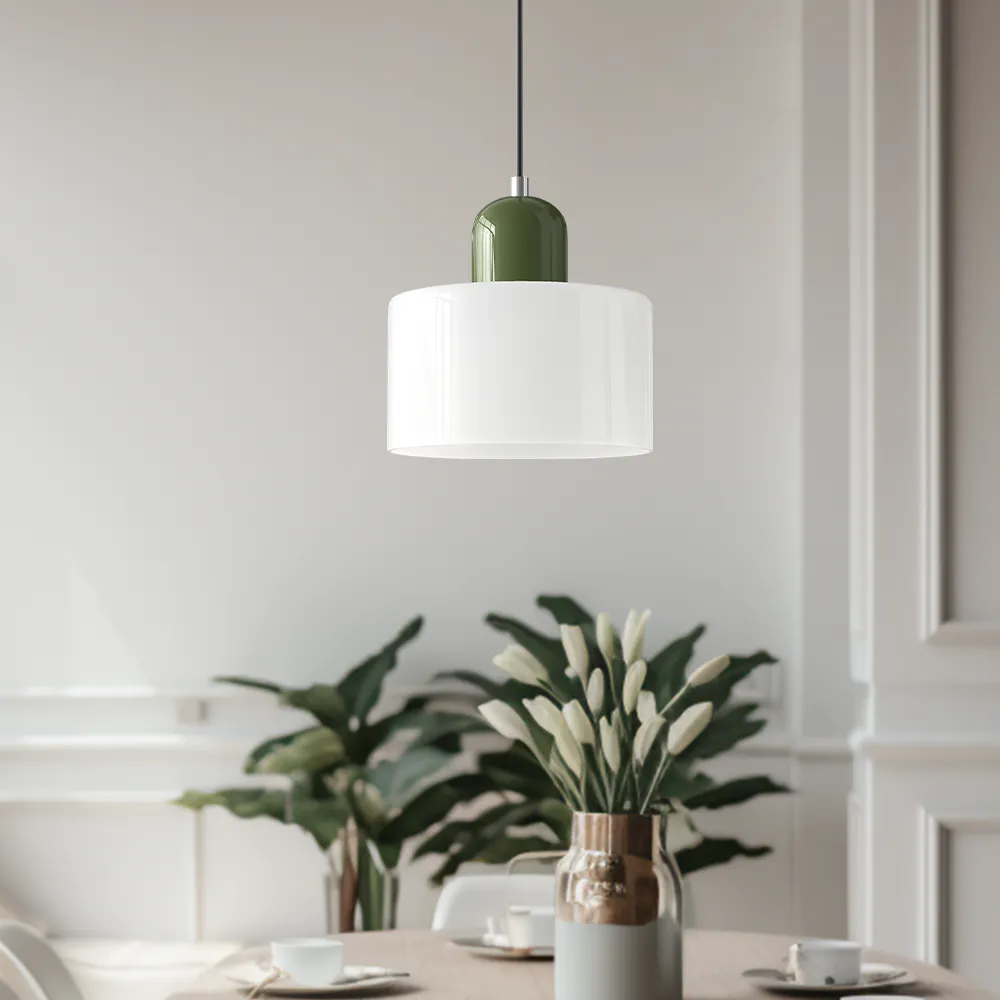
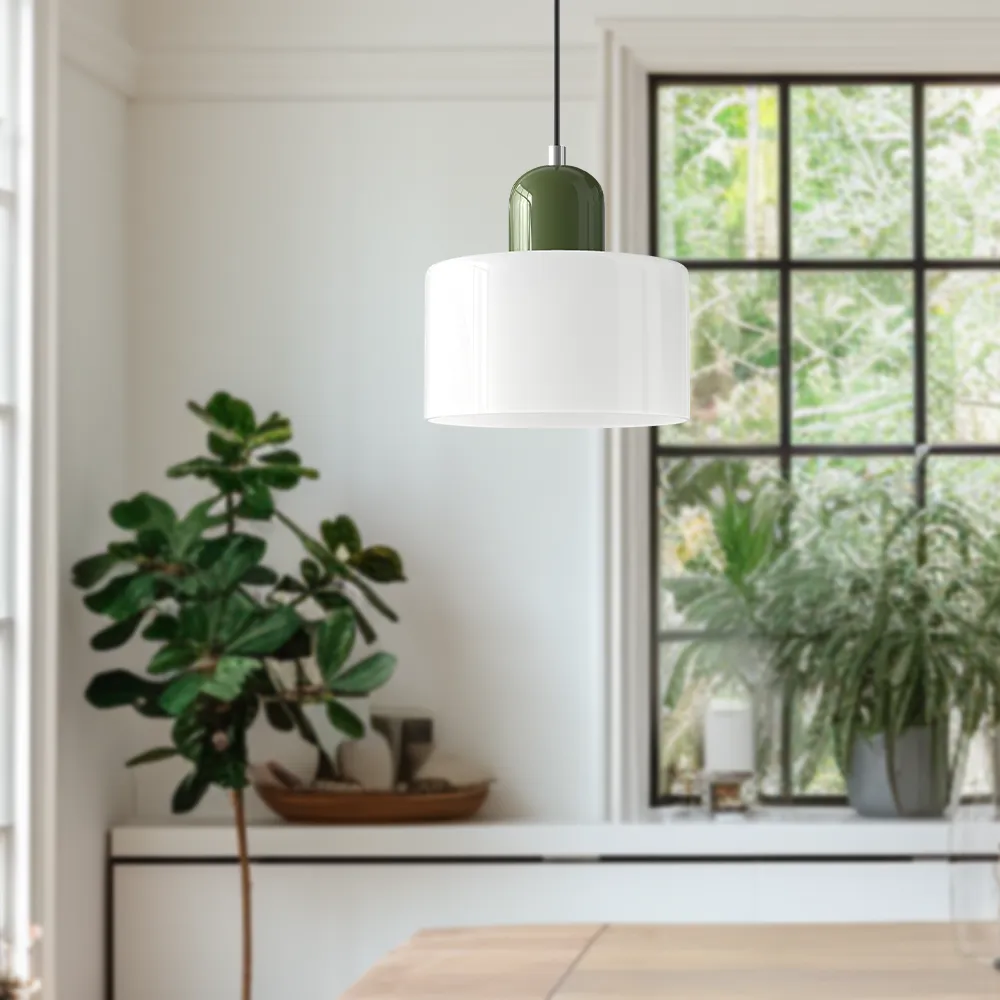
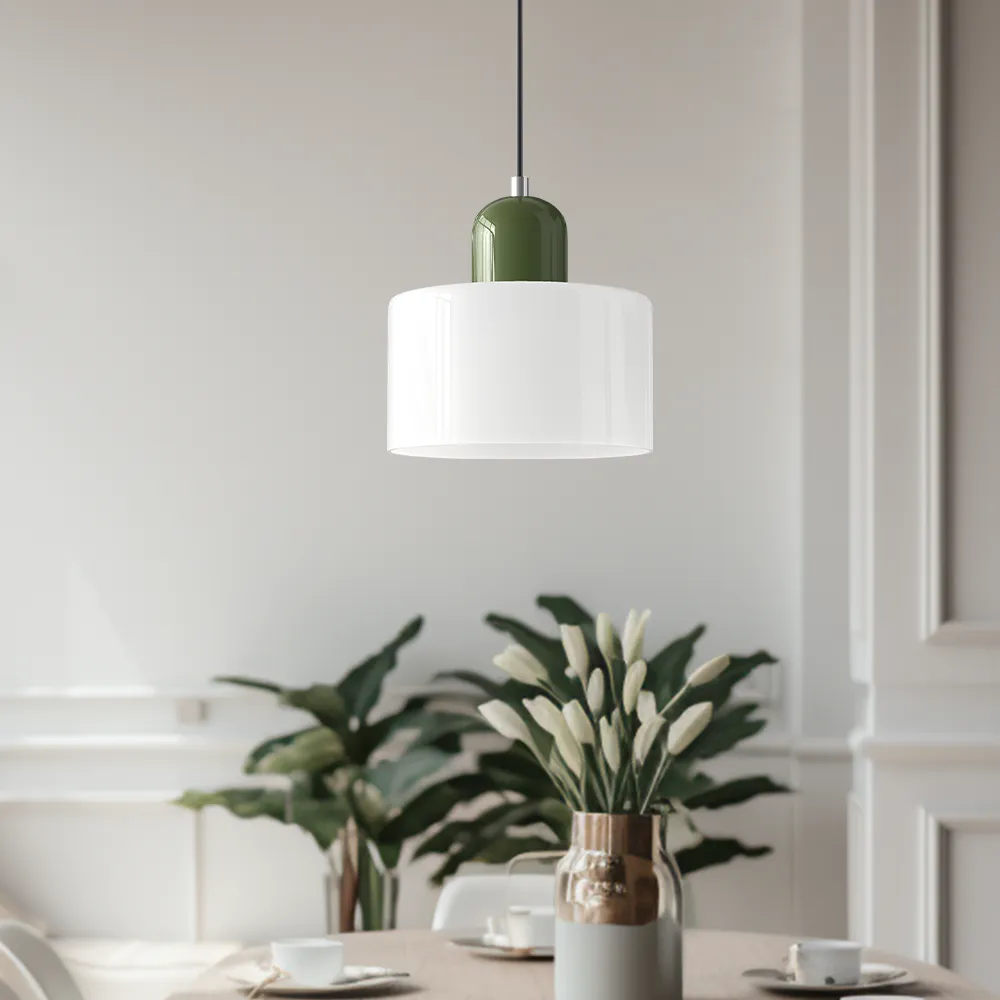
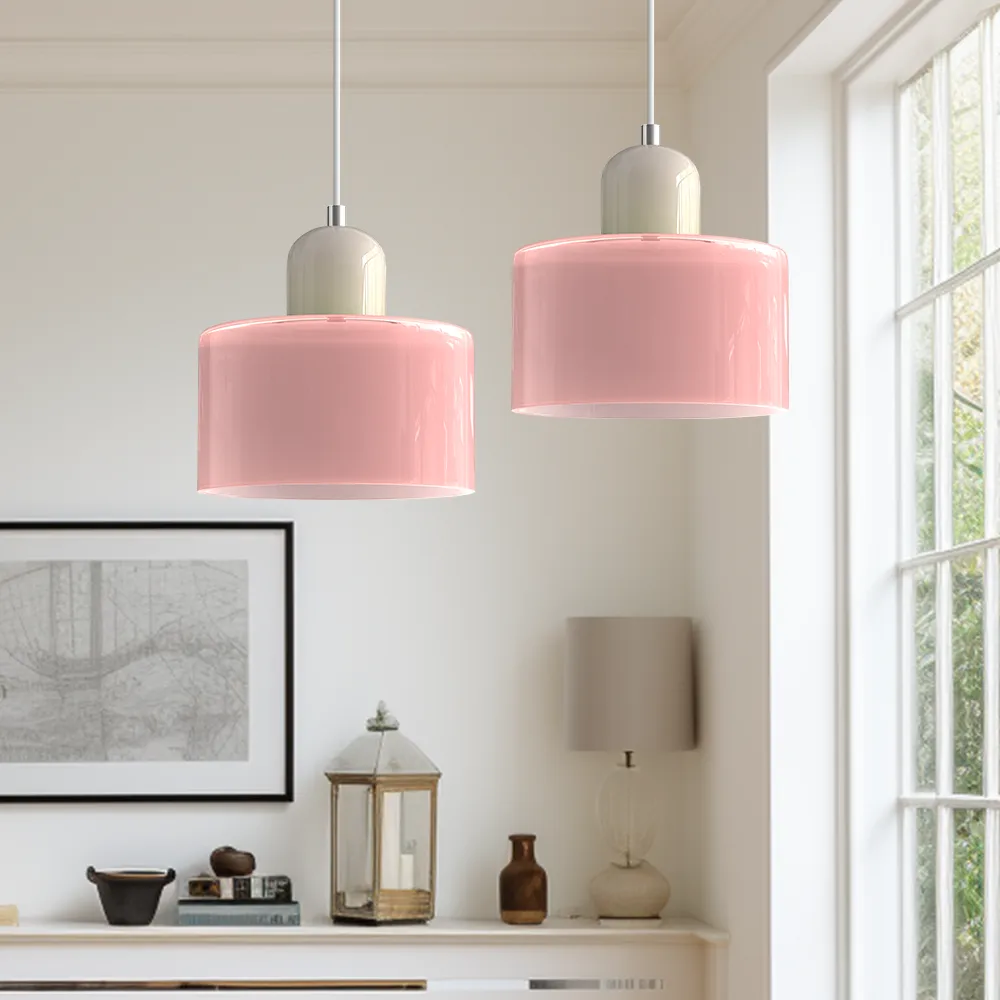
Le pendentif cylindrique en verre Morandi mesure environ 15 cm de diamètre et 17 cm de hauteur. Mesurez précisément ce profil à taille réelle afin d'évaluer les dimensions réelles du produit et non l'échelle apparente d'une photo.
2. Mesurer l'empreinte visuelle du groupe
L'encombrement physique d'un groupe de suspensions s'étend du bord extérieur du premier abat-jour au bord extérieur du dernier. Pour des abat-jour ronds assortis, on peut le décrire comme suit :
group span = distance between the first and last centers + one shade diameter
Il s'agit d'un outil de visualisation, et non d'une règle d'installation. Il indique la proportion de la ligne horizontale de l'îlot occupée par le groupe d'éléments. Un groupe peut paraître peu esthétique malgré un espacement régulier si sa silhouette totale est bien plus petite que celle de l'îlot, ou au contraire encombré s'il est gêné par une hotte, un robinet haut ou des meubles hauts.
Utilisez le guide existant de hauteur, de quantité et d'espacement pour l'agencement de l'installation. Lors de cette vérification des dimensions, concentrez-vous uniquement sur l'aspect du groupe depuis l'entrée de la cuisine, le point d'accès principal et la pièce adjacente. 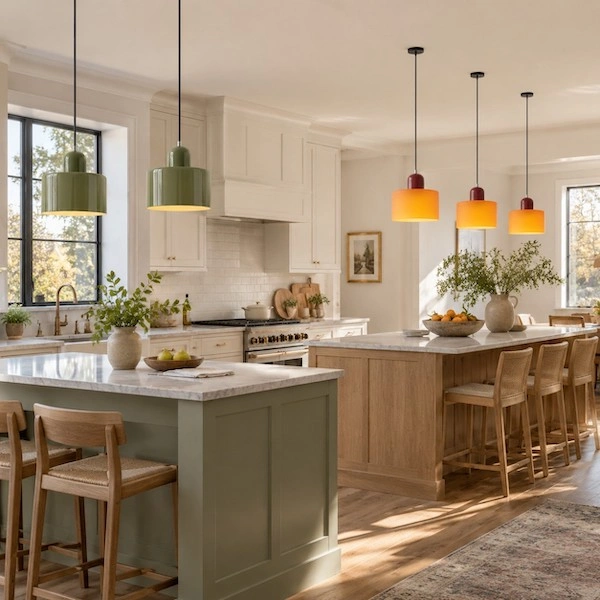
3. Recherchez trois signes indiquant que la petite taille est intentionnelle.
L'œil perçoit une séquence conçue, et non des gouttes de plafond isolées.
Les stores ne sont pas masqués par une hotte surdimensionnée, des poutres profondes ou de très grands tabourets.
D'autres luminaires de cuisine peuvent assurer l'éclairage général et l'éclairage ciblé, évitant ainsi de surcharger visuellement ou électriquement les suspensions.
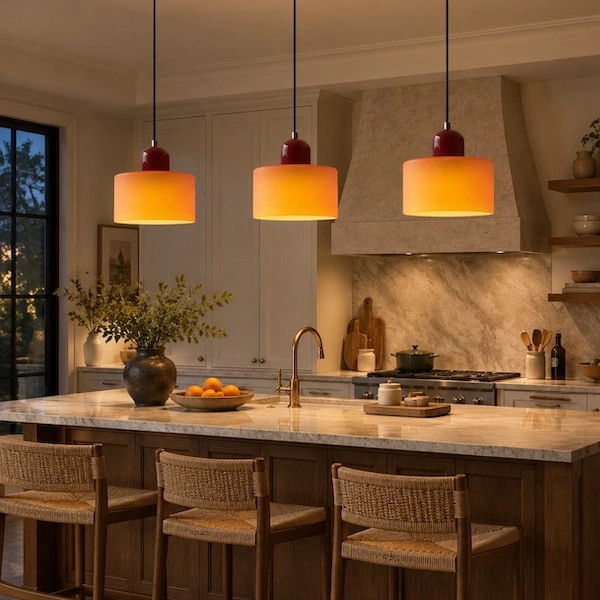
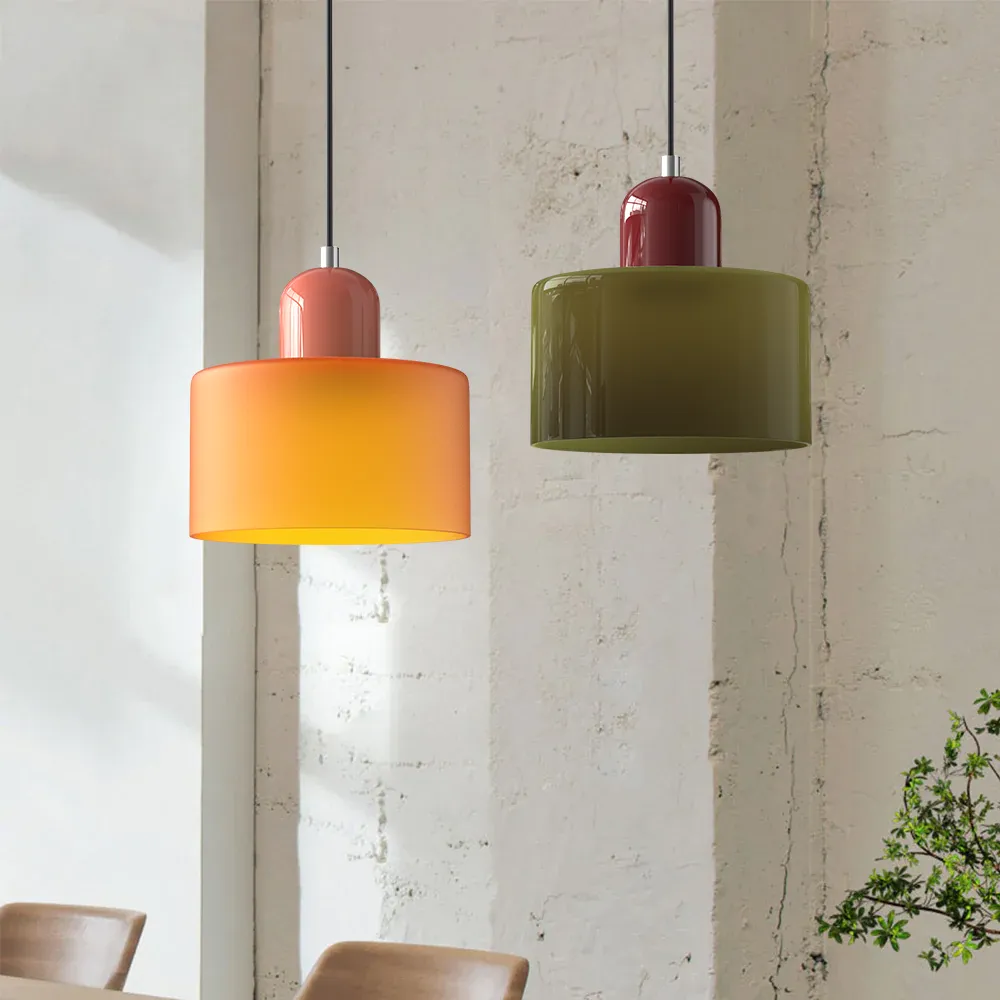
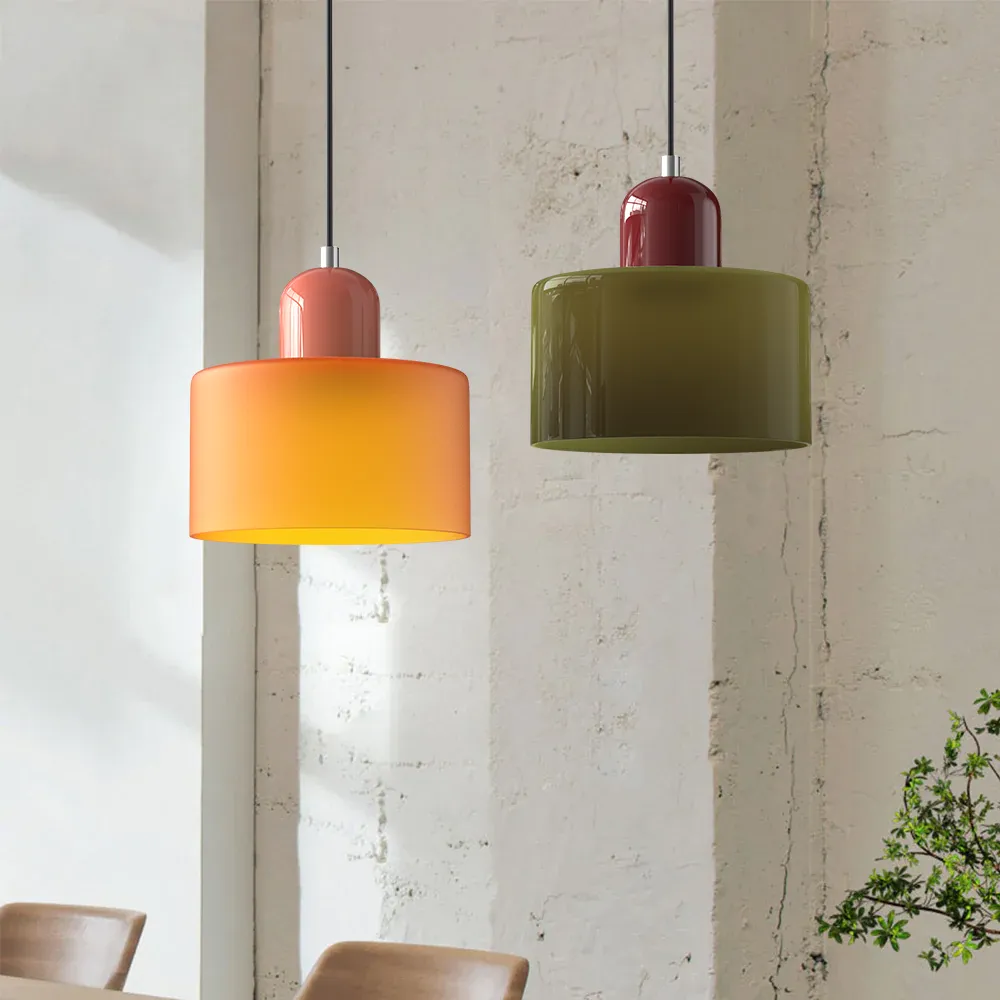
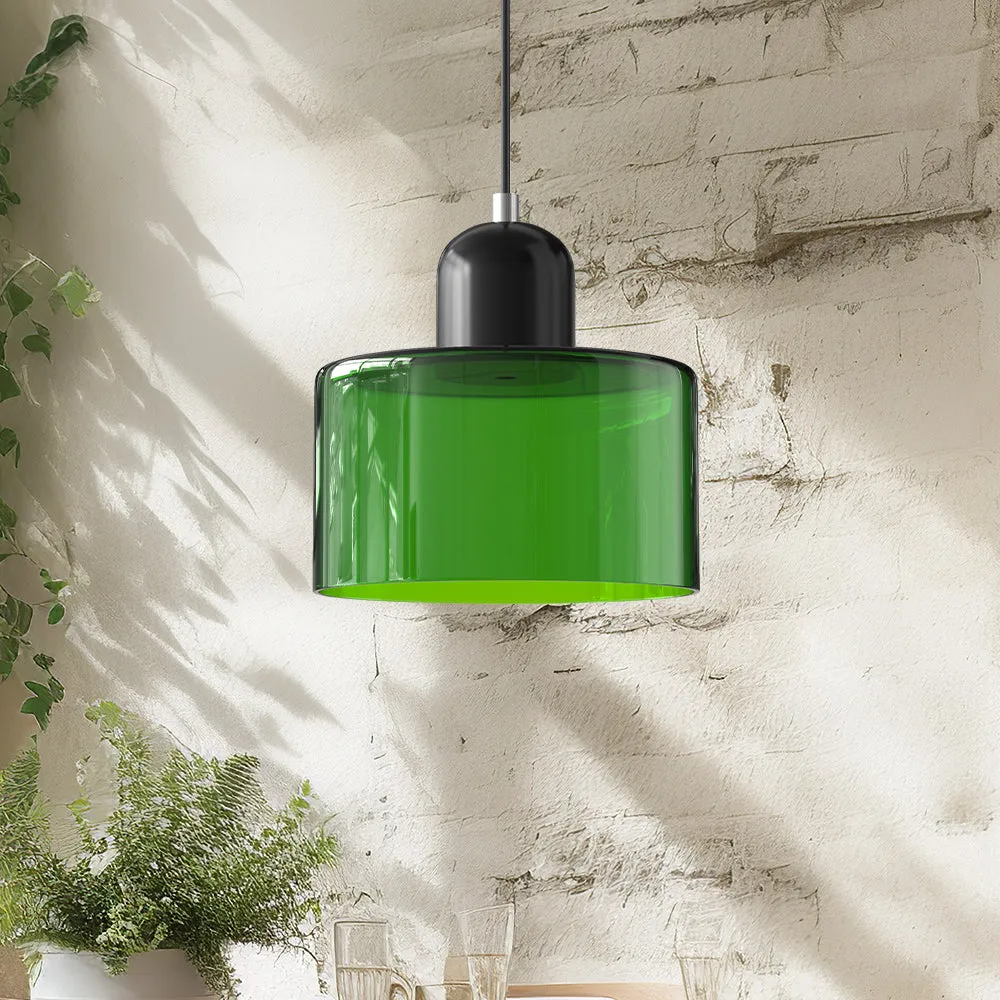
Le verre transparent et légèrement coloré a également une masse visuelle moindre qu'un verre opaque de mêmes dimensions. Cela peut contribuer à donner une impression d'espace dans une petite cuisine, mais peut aussi rendre un petit luminaire encore plus léger sur un plafond clair. Un contraste de couleurs marqué peut redonner de la présence à un objet sans en augmenter la taille physique. Par exemple, un verre orange ou vert sur un fond clair sera plus visible qu'un verre blanc sur un mur blanc.
4. Savoir reconnaître quand le pendentif est vraiment trop petit
Un luminaire est probablement sous-dimensionné si l'on remarque les câbles mais pas les abat-jour, si l'ensemble semble flotter sans lien avec l'îlot, ou si la composition n'est réussie que sur une photo très rapprochée. Il est également possible qu'il soit trop petit pour l'éclairage prévu si vous choisissez une ampoule de plus en plus puissante simplement pour que l'îlot paraisse correctement éclairé.
L'intensité lumineuse ne saurait corriger les proportions. Le ministère de l'Énergie souligne que la conception des luminaires et le contrôle optique influent sur la qualité de la lumière diffusée ; son rapport sur les performances et la qualité de la lumière des LED distingue également le flux lumineux, la distribution et les caractéristiques colorimétriques. Commencez par déterminer si la suspension est esthétiquement appropriée, puis vérifiez si l'éclairage global de la cuisine fournit une lumière utile suffisante.
Une petite source lumineuse plus intense peut engendrer un second problème. Selon la définition de l'éblouissement de la CIE , une inconfort peut résulter d'une répartition inadaptée de la luminance ou d'un contraste extrême. Si l'ampoule se transforme en un point lumineux aigu à hauteur des yeux en position assise, augmenter sa puissance aura dégradé l'expérience au lieu d'agrandir visuellement l'ombre.
5. Réaliser un test sur papier à taille réelle
- Découpez une forme en papier ou en carton uni correspondant au profil avant complet de l'abat-jour.
- Créez un gabarit pour chaque pendentif prévu ; ne testez pas un seul gabarit.
- Suspendez les gabarits à la ficelle lumineuse aux emplacements prévus sans laisser apparaître les fils électriques.
- Photographiez le groupe depuis l'entrée, chaque tabouret et la pièce adjacente.
- Répétez l'opération avec un contour plus grand ou une quantité différente, en conservant le même point de vue.
Comparez les photographies à leur taille normale, sans zoomer. La photo retenue doit être lisible sans dominer la pièce, offrir une vue dégagée sur l'île et laisser suffisamment d'espace autour du groupe. Indiquez la hauteur du Morandi (17 cm) ainsi que son diamètre ; un simple cercle plat ne rend pas compte de la présence verticale d'un cylindre.
Après le test sur papier , examinez attentivement la teinte et les couleurs de base du luminaire Morandi . Une combinaison à contraste élevé peut donner l'impression que ses dimensions compactes sont plus affirmées, tandis qu'une combinaison discrète peut le rendre visuellement discret.
6. Comparer deux et trois sans réutiliser la règle de trois
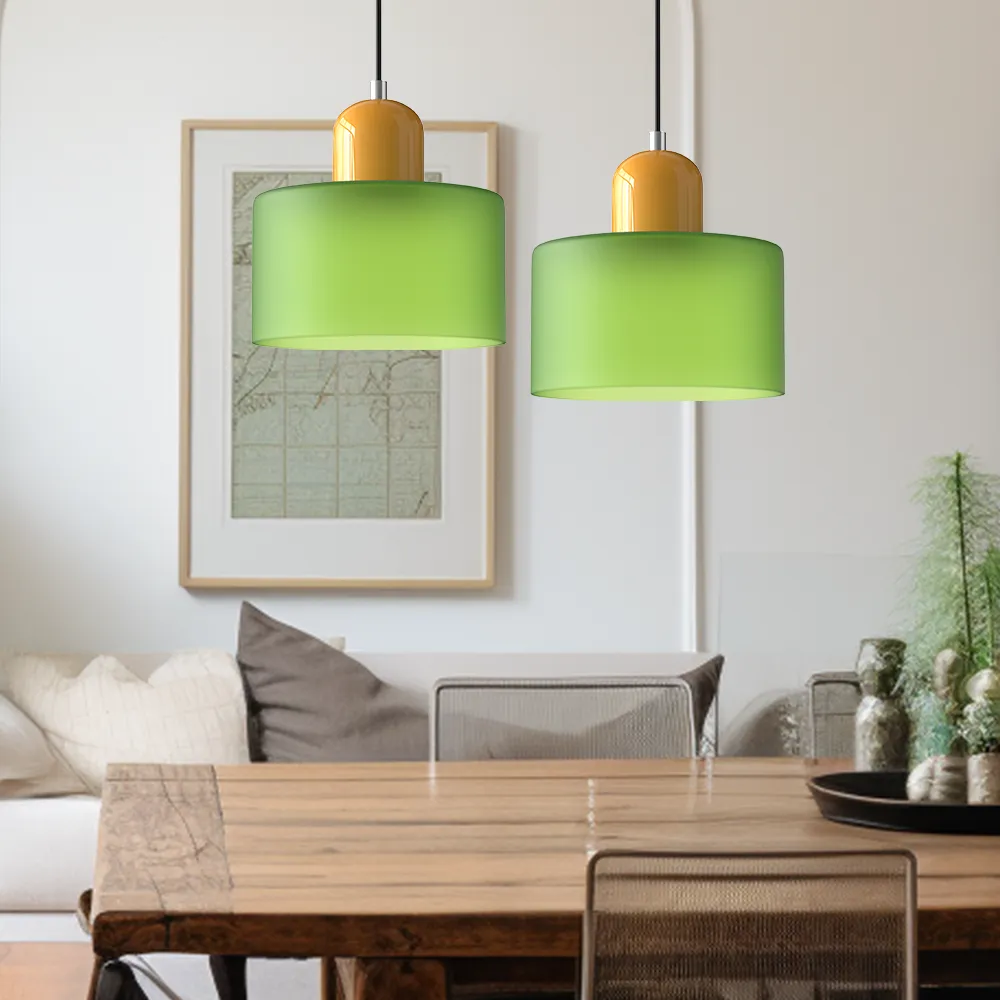
Ne partez pas du principe qu'un nombre impair est forcément plus esthétique. Deux petites suspensions créent un cadre plus apaisant et symétrique, et laissent un centre plus dégagé. Trois, en revanche, instaurent une répétition plus marquée et peuvent donner à un abat-jour compact une présence plus affirmée. Le résultat optimal dépend des zones de travail de l'îlot, des points de jonction avec le plafond, des éléments environnants et du rôle visuel que vous avez initialement défini.
Placez les deux versions du gabarit sur les mêmes photos. Ne retenez que trois éléments si la nuance supplémentaire renforce la ligne sans créer un effet de surcharge. Ne retenez que deux éléments si les espaces les plus larges restent cohérents avec l'îlot. Ce choix concerne la silhouette générale ; le positionnement final des éléments centraux dépend du plan d'installation.
7. Terminer par la vérification du produit et de l'installation
- Veuillez vérifier que le diamètre indiqué (15 cm) et la hauteur (17 cm) correspondent bien au gabarit de la pièce.
- Vérifiez que l'ampoule E27 prévue s'adapte physiquement et reste dans la limite de 40W maximum.
- N'oubliez pas que l'ampoule n'est pas incluse et que la page produit n'indique pas la valeur du flux lumineux.
- Tenez compte des variations de couleur et de dimensions indiquées pour le verre soufflé à la main.
- Conservez les spécifications à la disposition de l'installateur.
Les travaux électriques fixes sont distincts de la maquette visuelle. La Fondation internationale pour la sécurité électrique recommande fortement de faire appel à un électricien qualifié et agréé pour les travaux électriques à domicile . N'utilisez pas de gabarits provisoires en papier pour vérifier que le support de plafond, le câblage ou l'emplacement des jonctions sont adéquats.
Si le test grandeur nature montre qu'un accent compact répété convient à la pièce, confirmez la configuration et les spécifications actuelles de Morandi avant de commander chaque unité du groupe.
Recommandation finale
Choisissez une petite suspension pour son rythme, son aspect aéré et la légèreté de la ligne de plafond, et non parce qu'une image la fait paraître plus grande qu'elle ne l'est. Un test comparatif avec des modèles grandeur nature est plus fiable qu'un simple rapport de diamètre. Si, après avoir testé le contraste et la quantité de couleurs, le contour de la porte reste flou, optez pour un luminaire plus grand plutôt que d'essayer de compenser par la luminosité.
FAQ
Un pendentif de 15 cm est-il trop petit pour un îlot de cuisine ?
Il peut servir d'élément décoratif répété. Testez l'ensemble à sa taille réelle ; un luminaire de 15 cm peut paraître petit s'il doit constituer le point focal principal.
Trois petits pendentifs paraissent-ils plus grands que deux ?
Elles créent une présence et un rythme plus marqués, mais peuvent aussi paraître chargées. Comparez les deux dispositions selon un point de vue identique.
Une ampoule plus puissante peut-elle donner l'impression qu'une petite suspension est à la bonne échelle ?
Non. La luminosité modifie le flux lumineux, pas les proportions physiques, et un contraste excessif peut augmenter l'éblouissement.
Le diamètre du pendentif doit-il être déterminé uniquement par la largeur de l'îlot ?
Non. Tenez compte de la hauteur de l'abat-jour, de sa quantité, de la portée totale du groupe, de sa transparence, des luminaires environnants et de la vue depuis le reste de la pièce.
Quelles dimensions dois-je prévoir pour le Morandi ?
Utilisez un contour d'environ 15 cm de large et 17 cm de haut pour chaque pendentif prévu.