How to Mix Ceiling Lights and Wall Lamps for a Stately Entrance
Imagine stepping through the front door of a home after a long, exhausting day. The moment the door swings open, what greets you? Is it the sterile, piercing glare of cold recessed spotlights that makes you feel like you have just stepped into a clinical examination room? Or is it a harsh, dark cavern where you have to fumble blindly along the wall just to find a place to drop your keys?
The entryway is the architectural handshake of your home. It is the very first spatial volume that a guest experiences, and it sets the energetic tone for the entire interior narrative. Designing a "stately" entrance, however, is a concept that is frequently misunderstood. A grand entrance does not require a cavernous double-height foyer or a sprawling crystal chandelier that aggressively demands attention. Instead, true architectural grandeur is an exercise in restraint, achieved through the masterful layering of light and the strategic curation of organic materials.
To create a threshold that feels simultaneously majestic, grounded, and deeply welcoming, you must look beyond singular light sources. The secret lies in orchestrating a seamless, tactile dialogue between your high-level ambient light—your ceiling fixtures—and your eye-level accent lighting—your wall lamps. When these two layers are selected not just for their illumination, but for how their physical materials interact with light, the entryway transforms from a mere passageway into an immersive residential gallery.
1. Redefining "Stately" for the Modern Foyer
Historically, an entryway designed to look "stately" relied on high-shine finishes, heavily polished surfaces, and ornate metallic fixtures. Polished marble, brass filigree, and faceted glass were the traditional markers of luxury. However, modern high-end design has undergone a massive paradigm shift. True luxury has moved away from loud, reflective glitz and has firmly anchored itself in the realm of "quiet luxury" and organic texture.
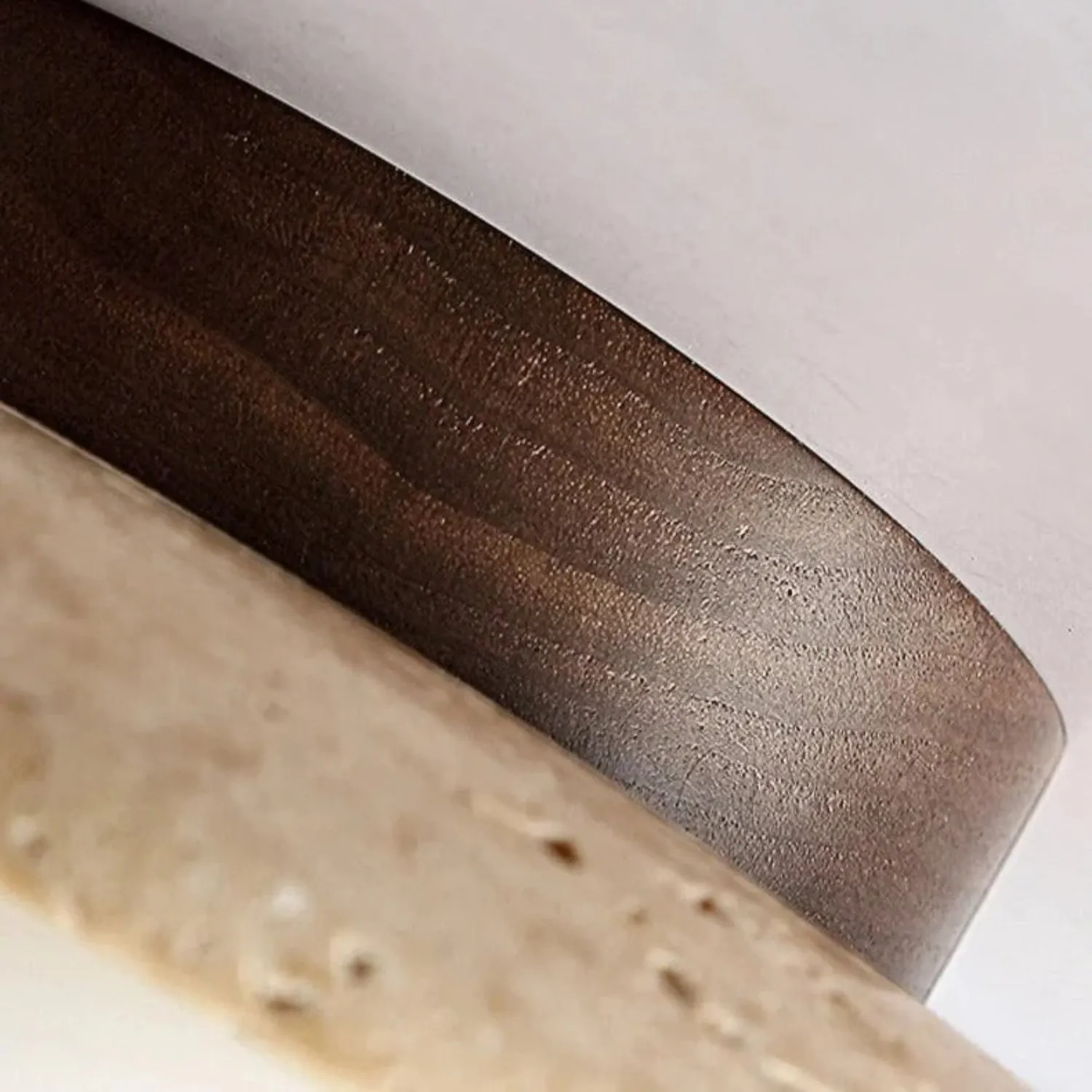
Today, a stately atmosphere is achieved by introducing materials that possess an inherent sense of permanence, weight, and history. Natural stones, particularly travertine, along with sustainably sourced solid timber, have become the definitive mediums for sophisticated spaces. Travertine, with its signature cream-to-beige color palette and unique geological pitting, carries an old-world architectural gravity while remaining clean and minimalist enough for contemporary layouts.
To properly understand how this stone can be preserved in your home infrastructure, you can review our A Guide to the Unique Aesthetics and Care of Natural Travertine in Home Lighting.
When you bring these tactile materials into your lighting plan, something magical happens. Instead of light simply bouncing off a cold, flat surface, it interacts with the physical depth of the fixture itself. The natural variations in stone absorb and diffuse light, casting a soft, painterly glow rather than a harsh, uniform beam. To execute this beautifully in an entrance, you must split your lighting strategy into two distinct heights: the high-altitude anchor and the human-scale accent.
2. The Ambient Anchor: Crafting Overhead Soft Glow
The foundational layer of any entryway lighting scheme is the ambient layer. Its functional purpose is simple: to flood the space with enough generalized light to ensure safe passage, clear visibility, and a sense of openness. Yet, this is where most homeowners make their first critical mistake by relying entirely on utilitarian recessed "can" lights. A ceiling punctured by rows of small downlights creates what designers call the "Swiss cheese effect"—it looks sterile and pushes light straight down, creating unflattering vertical shadows.
To establish a grand sense of arrival, your primary overhead source should be a statement flush mount or semi-flush mount ceiling light that behaves like a sculptural anchor. It needs to occupy the upper volume of the space with a dignified physical presence, even when the switch is turned off.
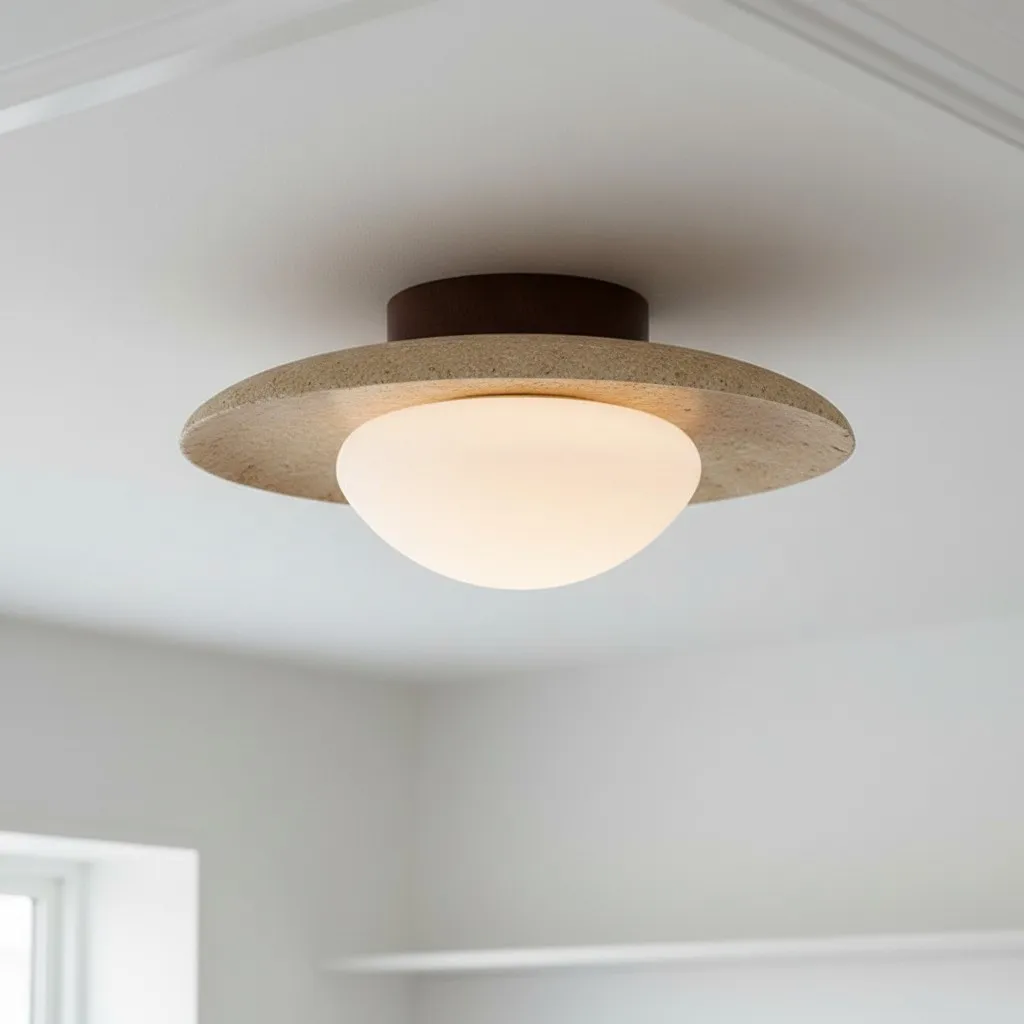
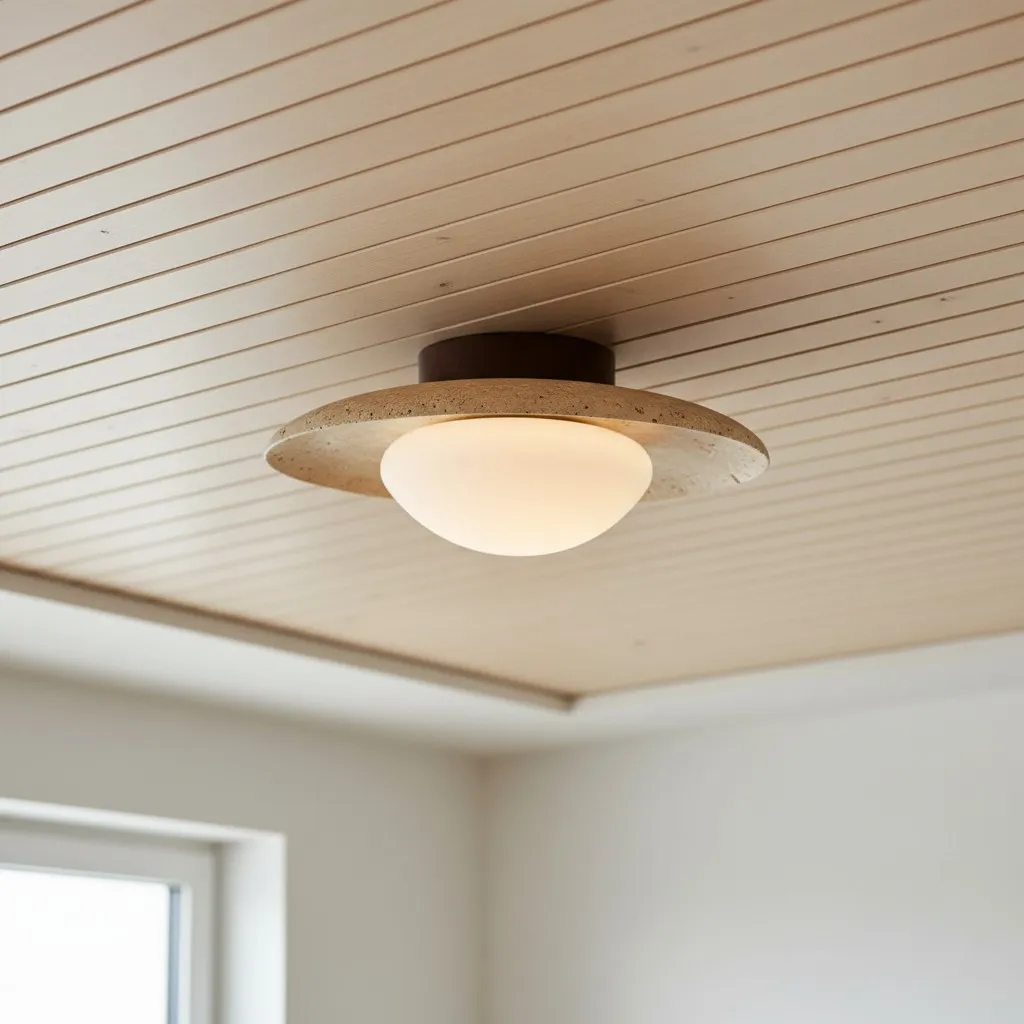
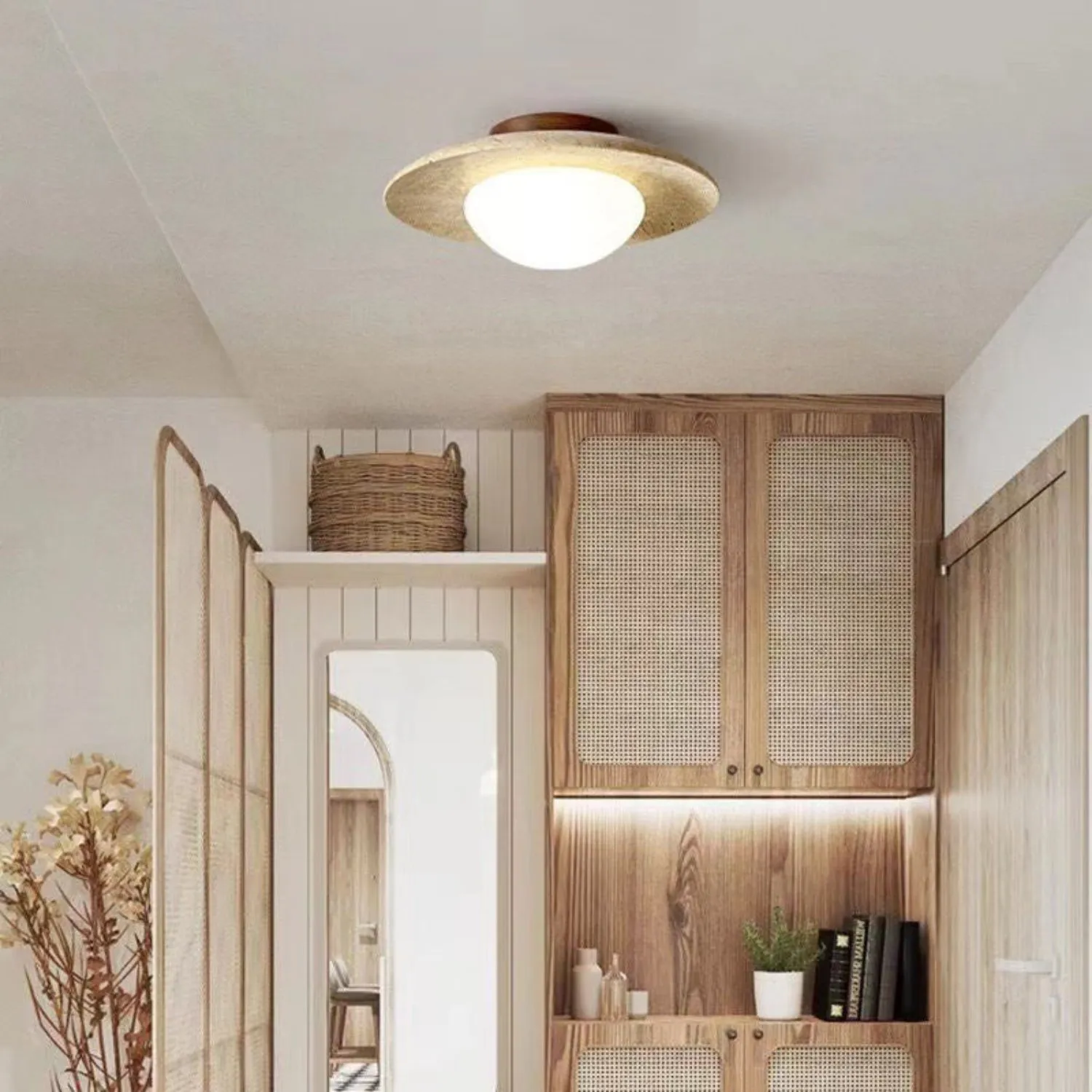
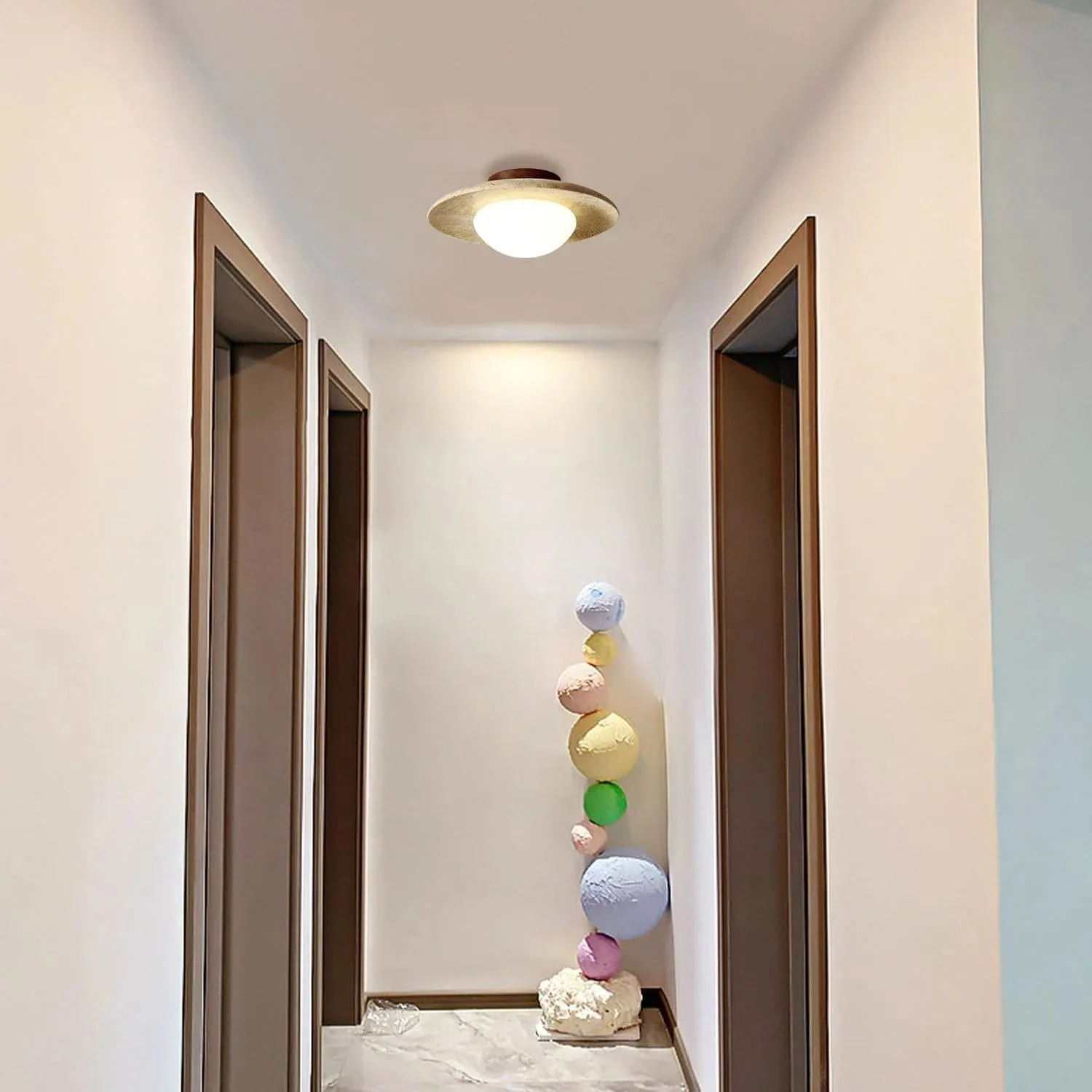
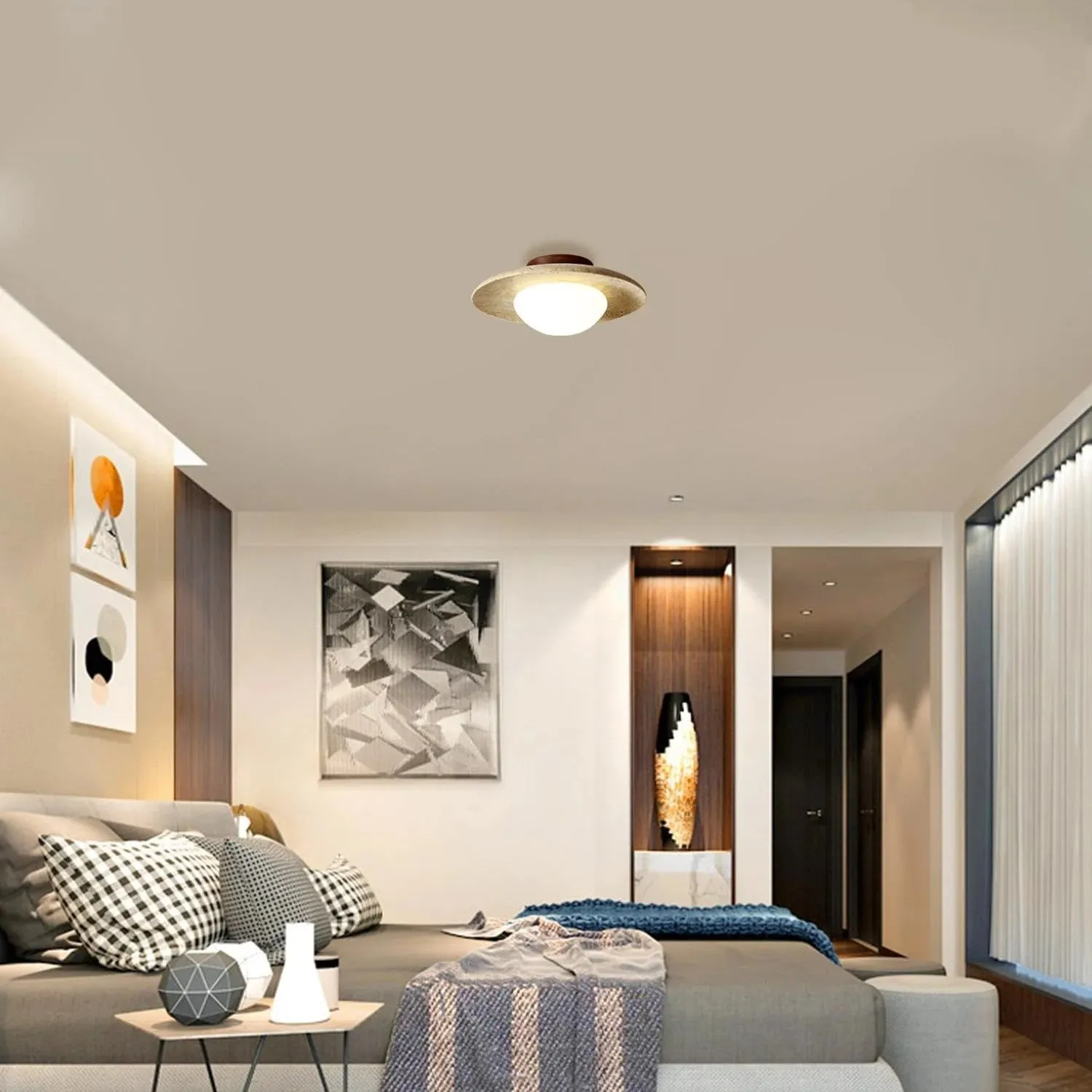
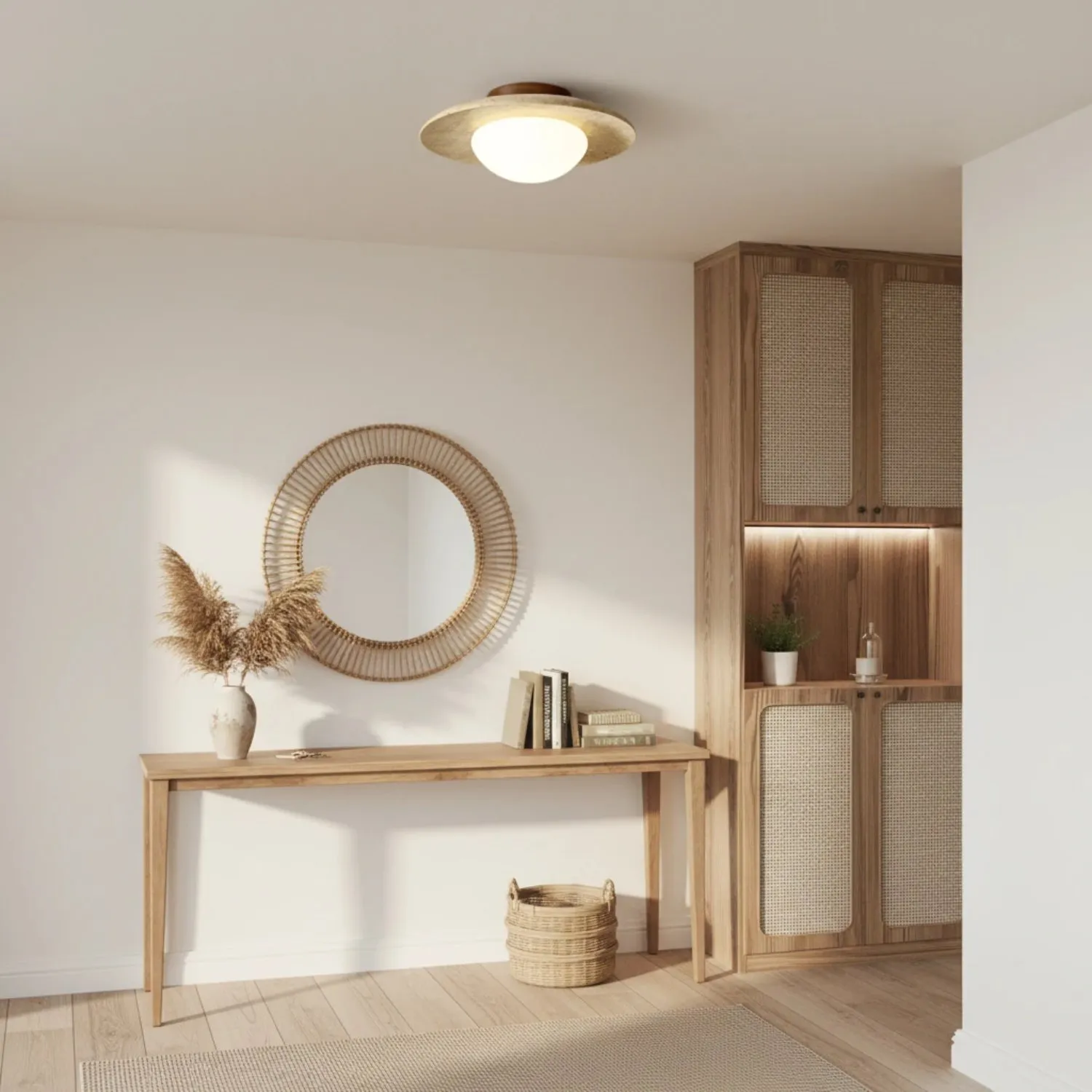
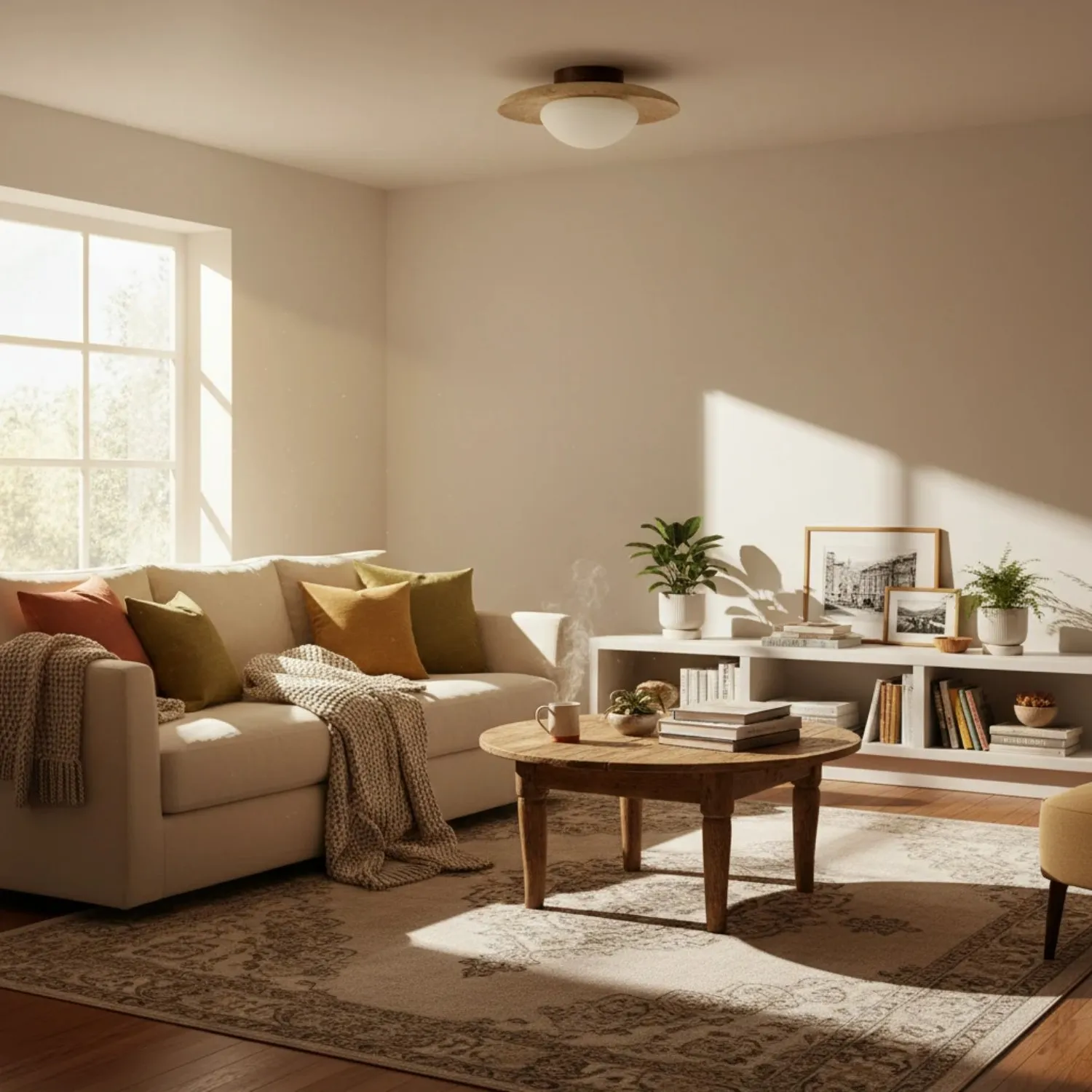
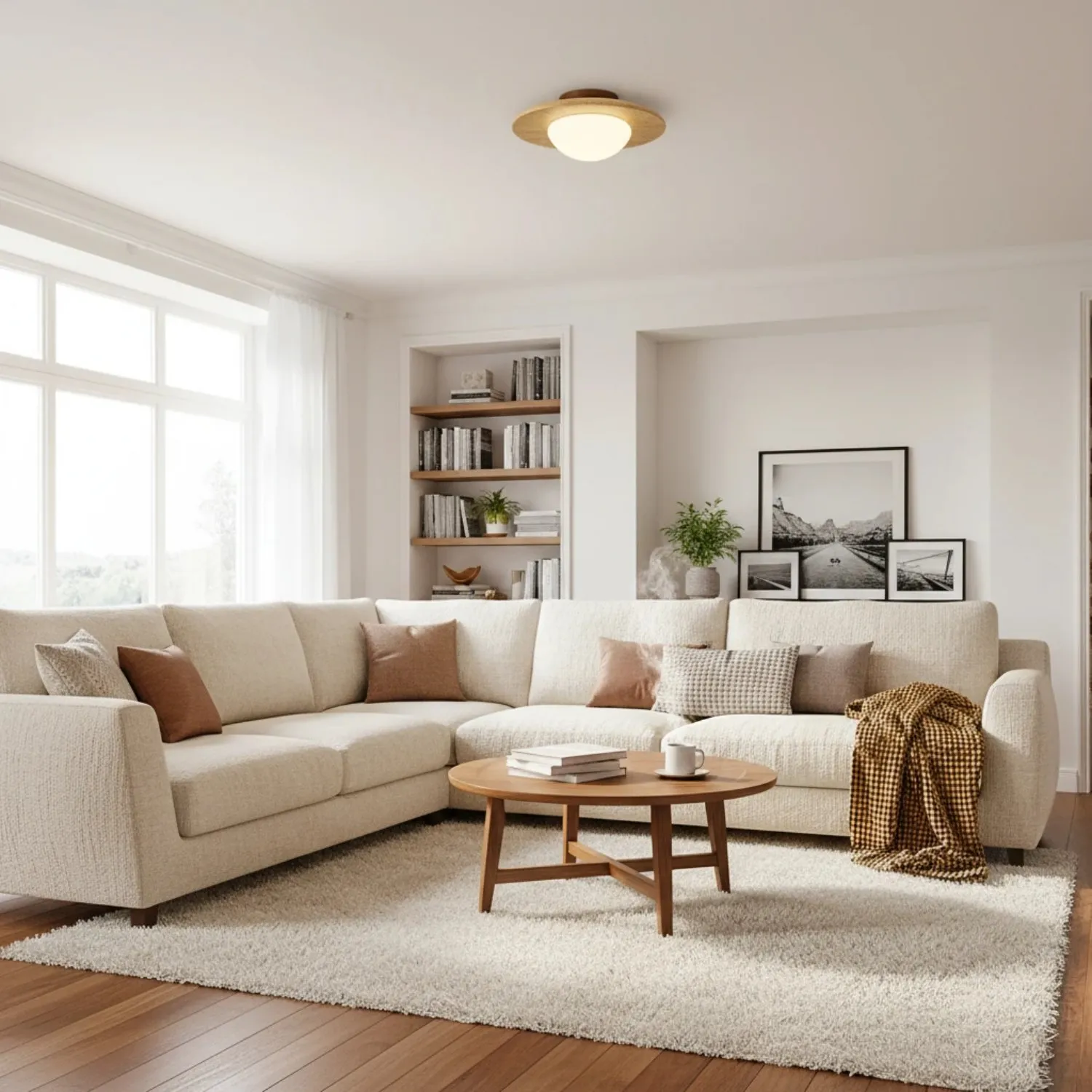
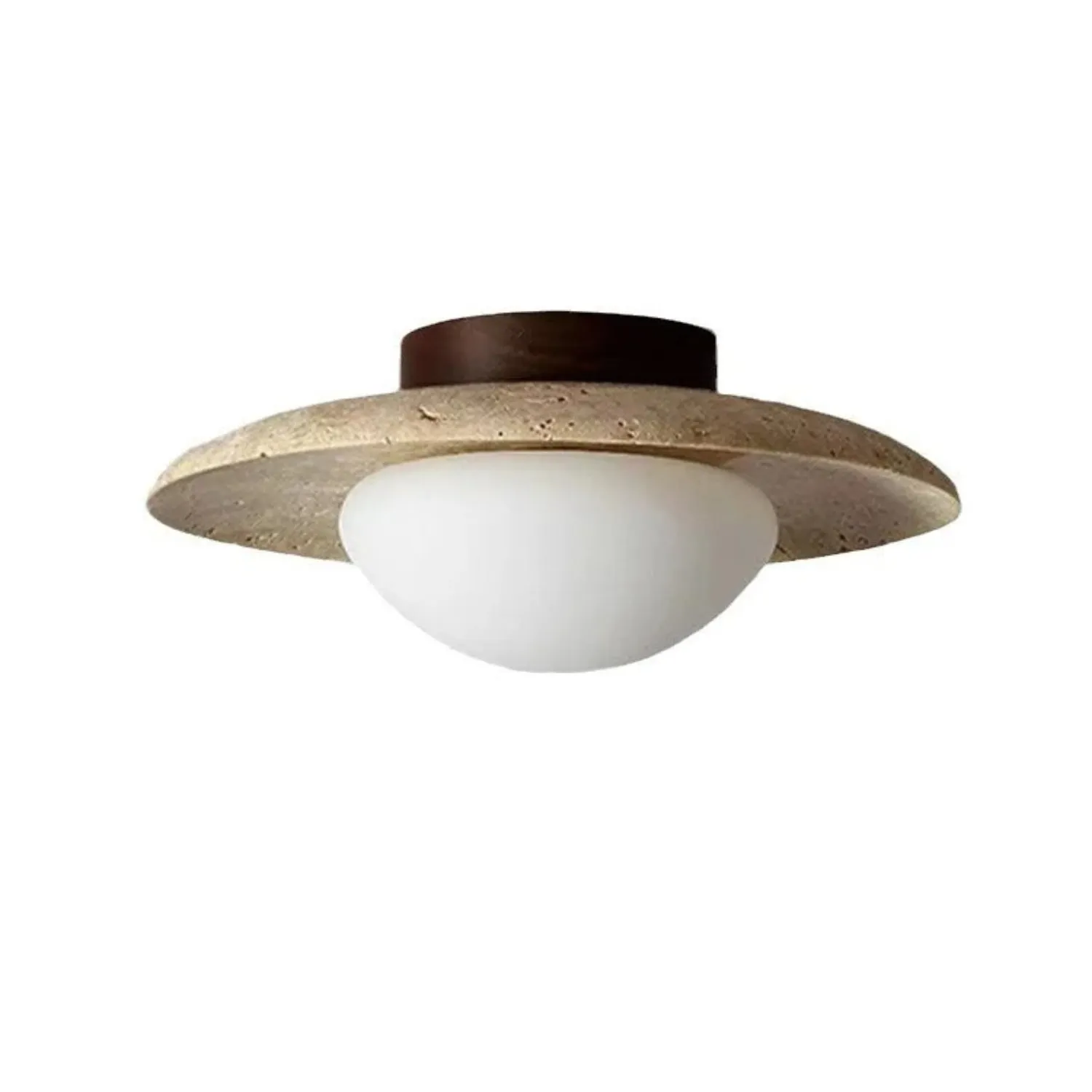
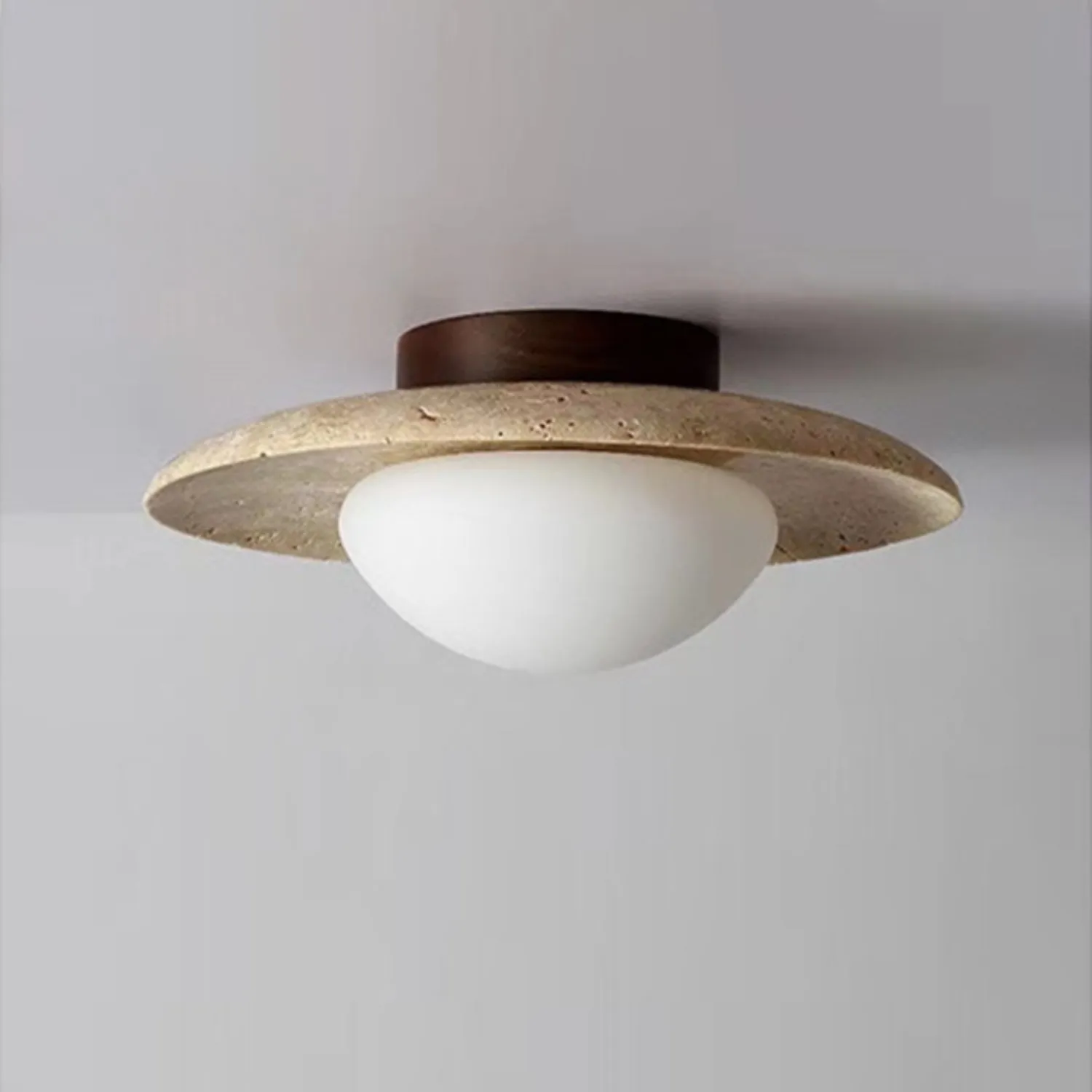
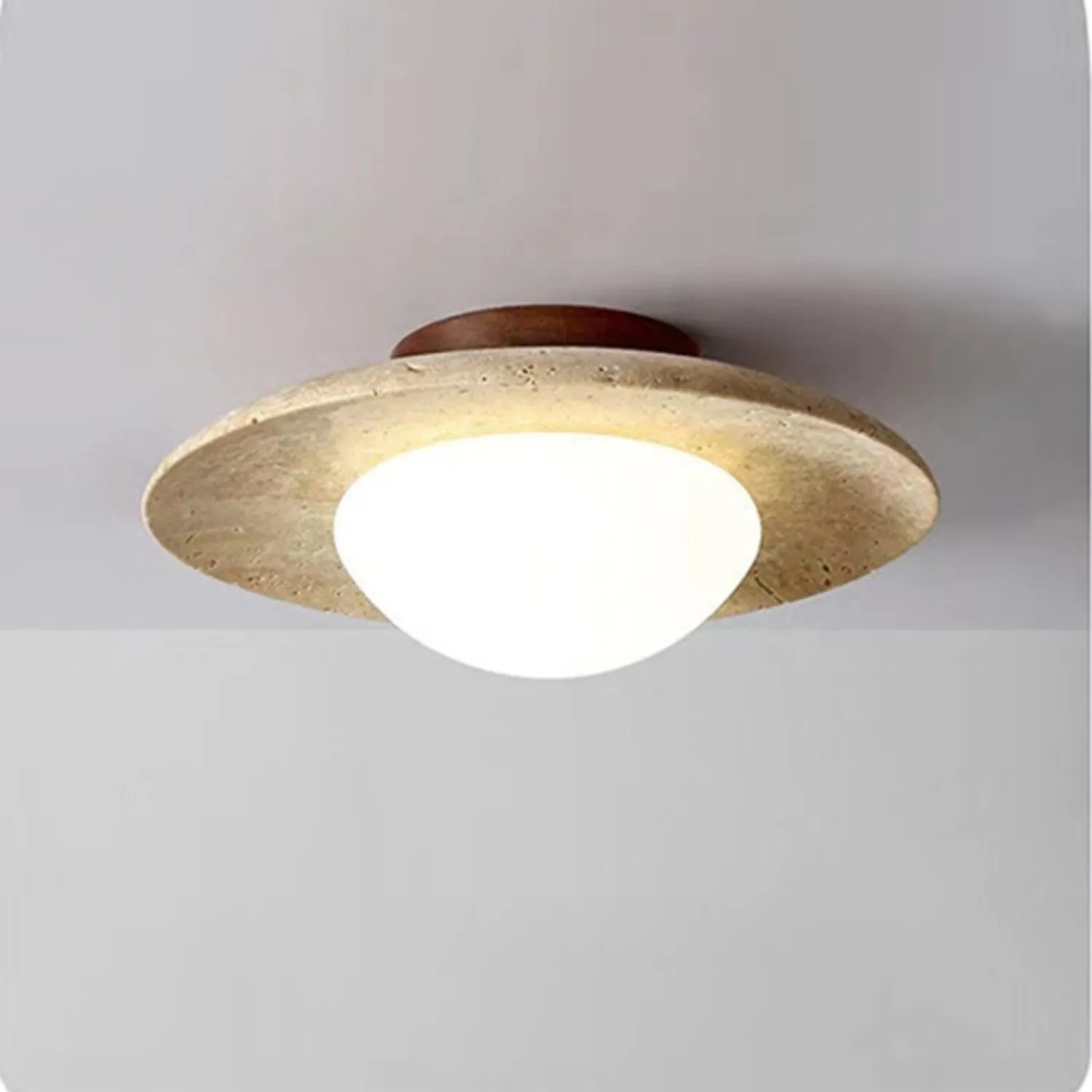
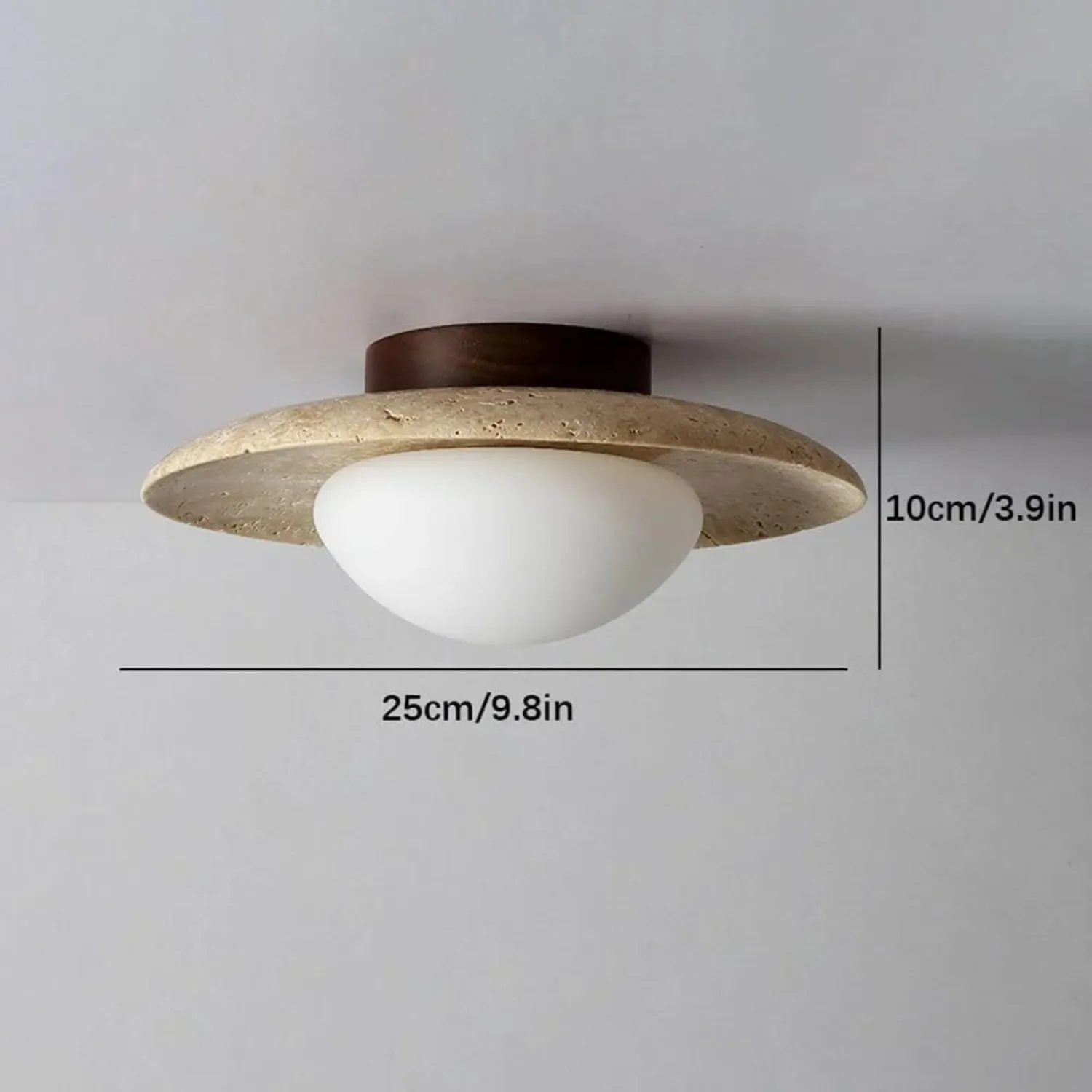
This is where a fixture like the Marvelle Modern Natural Travertine LED Ceiling Light becomes irreplaceable. Rather than hiding the light source in the ceiling fabric, the Marvelle celebrates it through a monolithic, cleanly sculpted dome carved from authentic travertine stone. Because travertine is naturally opaque and dense, the dome structure acts as an architectural shield. The integrated LED light source is directed down through a beautifully diffused aperture, preventing any direct glare.
When you look up at a fixture of this caliber, you are not staring at a raw bulb; you are looking at illuminated geology. The light emphasizes the subtle beige veins and organic cross-sections of the stone, turning the ceiling plane into a soft, glowing canopy. For spaces operating under tighter vertical limits, exploring dedicated Best ceiling lights for low ceilings can provide all the visual weight and upscale identity of a grand light fixture without sacrificing an inch of physical headroom.
3. The Eye-Level Accent: Introducing Depth and Human Scale
While an overhead stone fixture establishes the macro-environment, a space illuminated only from above will always feel incomplete. Overhead lighting alone creates a flattening effect; it fails to define the boundaries of the room and casts downward shadows on human faces. To counteract this and bring the lighting plan down to a comfortable, intimate scale, you must introduce wall lamps.
Wall sconces serve as the accent and task layers of your entryway. They bring the light source directly into the human field of vision, roughly five to five and a half feet above the finished floor. By positioning sconces along the walls of a foyer—ideally flanking a grand architectural element like an archway, a large framed mirror, or a statement console table—you can guide the visitor’s eye through the space.
To maintain the stately aesthetic we have established, the wall sconces must share a material DNA with the ceiling light, but they should not be an identical carbon copy. The goal is curation, not matching set monotony. This is where the Riley Vintage Travertine Wood Round Wall Sconce creates a breathtaking architectural dialogue.
The Riley sconce echoes the warm, organic texture of the overhead Marvelle light by utilizing a matching round travertine dome. However, it introduces a beautiful counterpoint: a rich, solid wood circular backing plate. The intersection of raw, earthy timber with the creamy, ancient stone creates a distinctly vintage, mid-century modern sensibility that instantly takes the chill out of any entryway. Because the Riley sconce directs its illumination backward against its wood plate and downward across the wall, it treats the wall surface itself as a canvas. It emphasizes the grain of the wood and the physical texture of your drywall or wallpaper, adding a layer of rich, painterly depth that a plain recessed light could never replicate.
4. The Choreography: How the Two Layers Interact
Successfully mixing a ceiling light and wall lamps comes down to orchestration. You want these fixtures to function as a unified system, adapting effortlessly to different times of day and shifting domestic moods.
| Lighting Scenario | Ceiling Light Status (Marvelle) | Wall Sconce Status (Riley) | Resulting Ambience |
|---|---|---|---|
| The Grand Welcome (High Traffic) | ON (100% Brightness) | ON (100% Brightness) | High-volume, fully illuminated space; feels expansive, safe, and celebratory. Excellent for showcasing architecture. |
| The Midnight Glow (Late Night) | OFF | ON (Dimmed to 20-30%) | Ultra-cozy, intimate mood. Sconces act as sculptural art pieces, casting soft accent shadows along the walls. |
| The Gallery Transition (Daytime) | ON (Dimmed to 50%) | OFF | Soft, ambient fill-light that counteracts outdoor grayness without making the home interior feel artificial. |

To achieve this level of fluid choreography, there are two non-negotiable technical rules you must follow:
- Absolute Color Temperature Consistency: Stone and wood look their best when illuminated by warm, glowing light wavelengths. You must ensure that both your ceiling fixture and your wall sconces are fitted with bulbs sharing the exact same color temperature—ideally between 2700K (Warm White) and 3000K (Soft White). Mixing a cool 4000K bulb in the ceiling with a warm 2700K bulb on the wall will instantly break the visual illusion, making the space feel fragmented and cheap.
- Independent Dimming Architecture: Never wire your ceiling light and your wall sconces to the same physical switch. They must reside on separate circuits, each controlled by its own dedicated dimmer.

🏛️ The Designer’s Final Verdict
Your entryway should not be treated as a thoughtless utility zone where you simply slap up a generic light bulb and call it a day. By choosing fixtures that celebrate the timeless, textural union of natural travertine stone and solid wood, you elevate your home's entry into a sanctuary of quiet luxury.
Pairing a structural overhead piece like the Marvelle Ceiling Light with an eye-level artistic anchor like the Riley Wall Sconce ensures that your lighting plan covers every spatial volume. It bridges the gap between high architectural airiness and warm, human-scale comfort. Spend the time to layer your illumination, respect the natural grain of your materials, and control your dimmers. Your entryway will reward you by transforming every single arrival into a genuinely stately homecoming.