A Guide to the Unique Aesthetics and Care of Natural Travertine in Home Lighting
For years, interior design leaned heavily on the crisp, flawless surfaces of polished metals, industrial glass, and stark white drywall. While that clean-lined minimalism offered a sense of order, it often left modern homes feeling slightly detached, cold, and sterile. Today, the design pendulum has swung decisively toward Organic Modernism and Quiet Luxury—movements that prioritize texture, soul, and materials shaped by the slow, unhurried hand of nature.
Among Earth’s most expressive geological treasures, travertine has emerged as a premier choice for designers looking to inject character into contemporary spaces. While traditionally reserved for expansive Roman coliseums, grand floors, or heavy mid-century coffee tables, this ancient stone has found a compelling new medium: luxury home lighting.
When transformed into a luminaire, travertine ceases to be just a structural element. It becomes a piece of living sculpture that interacts dynamically with light. If you are considering introducing this porous, character-rich stone into your home, this comprehensive guide will explore the unique atmospheric qualities of travertine lighting, how to style it across different architectural movements, and the exact protocols required to preserve its raw beauty for generations.
The Alchemy of Light and Stone: Understanding Shadow Play
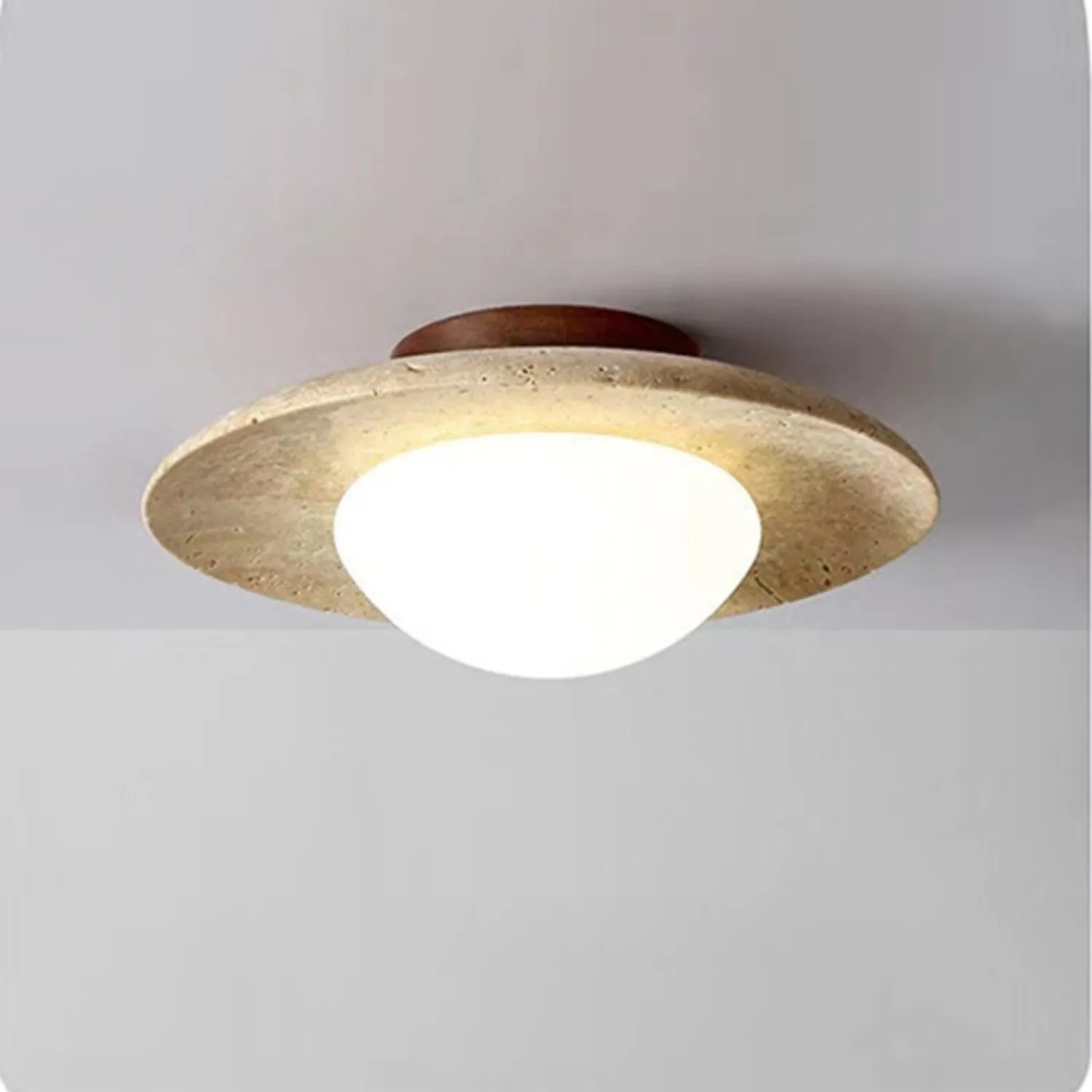
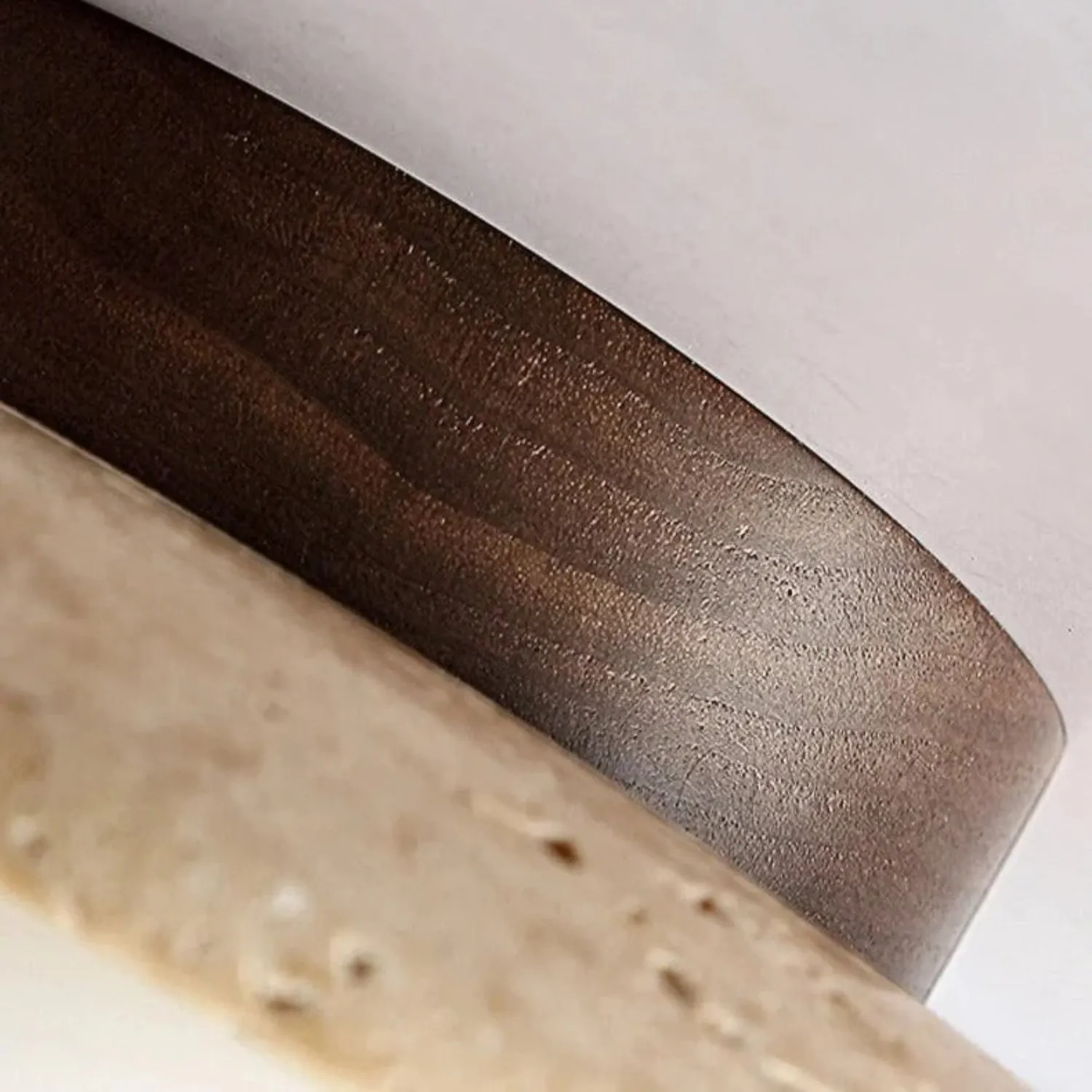
Travertine is a form of terrestrial limestone deposited by mineral springs, particularly hot springs. As geothermal waters shift and gas bubbles escape over millennia, they leave behind a distinct footprint: a complex network of concentric rings, irregular pits, troughs, and feathered voids. No two blocks of travertine are identical; each piece features a completely unique topographical map carved by time.
When you introduce an integrated light source to this material, a mesmerizing aesthetic transformation occurs. In standard furniture, travertine is static. In lighting, it becomes dynamic through a phenomenon known in architectural lighting as wall grazing or surface rendering. This interplay of stone and light serves as a masterclass in how to achieve the perfect layered lighting solution at home, which is beautifully demonstrated through the following dimensions:
- The Depth of Texture: When light passes over or throws rays against unpolished, natural travertine, it catches the microscopic ridges and deep pockets of the stone. This creates a soft, high-contrast interplay of micro-shadows and warm highlights, making the stone appear as if it is breathing.
- Luminescent Diffusion: Unlike cold artificial composites, natural travertine features a gentle, muted mineral composition that naturally absorbs harsh glares, emitting a soft, atmospheric glow that instantly calms the visual energy of a room.
- Tonal Warmth: Travertine inherently carries an organic palette of warm ivories, milky creams, soft taupes, and rich, layered walnuts. When illuminated by warm-spectrum LEDs, these subterranean tones are amplified, casting an inviting, golden-hour ambiance across your living spaces.
Curation and Spatial Harmony: Bringing Travertine Lighting Home
Integrating stone lighting fixtures requires an eye for material balance. Because travertine possesses a strong visual weight and tactile presence, it works best when curated as an intentional focal point rather than a repetitive element.
Depending on your personal home aesthetic, travertine can be styled to project sharp architectural sophistication or soft, nostalgic warmth. Let us look at two distinct design directions utilizing masterfully engineered fixtures.
1. The Contemporary Architectural View: Monolithic Minimalism
In highly streamlined, modern homes, the challenge is always to introduce texture without cluttering the visual field. Here, geometric purity is your best ally. A solid, unembellished block of travertine used as a ceiling fixture completely redefines how we look at an overhead plane.
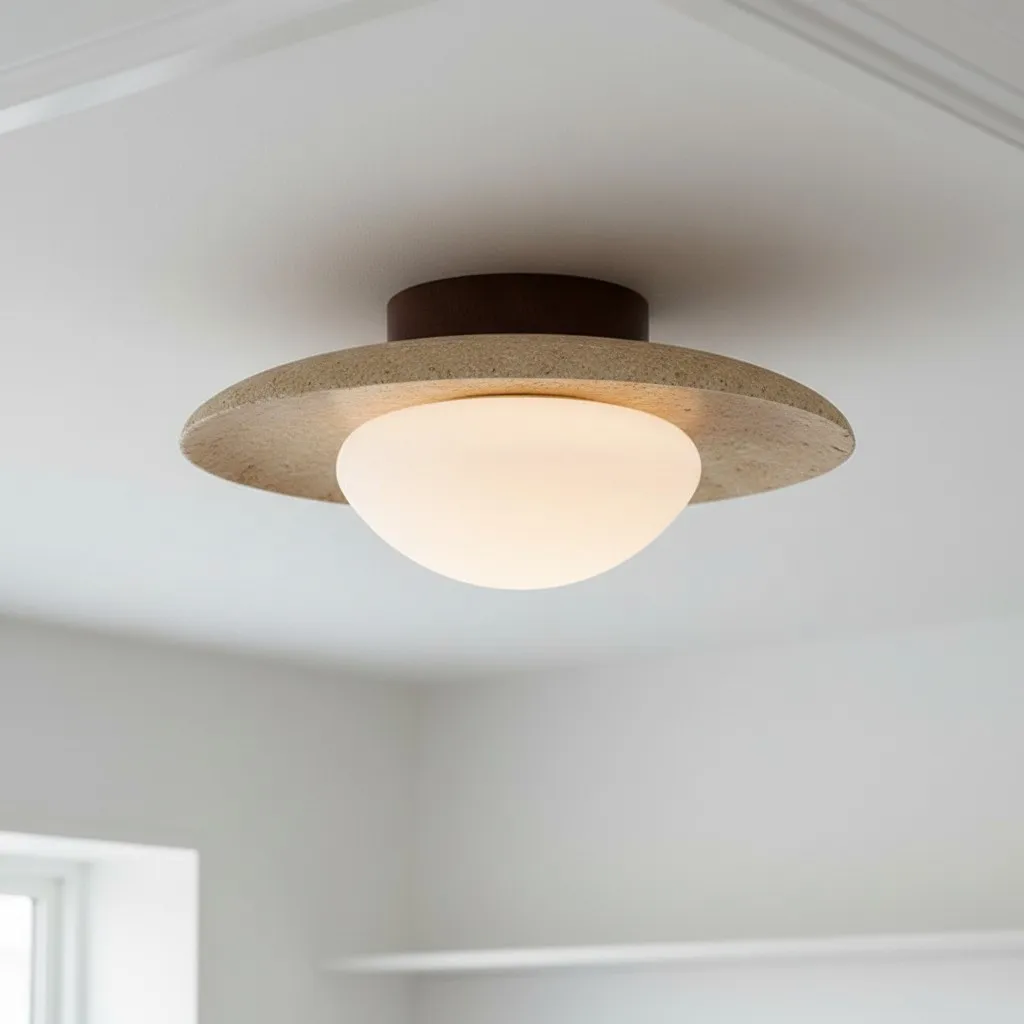
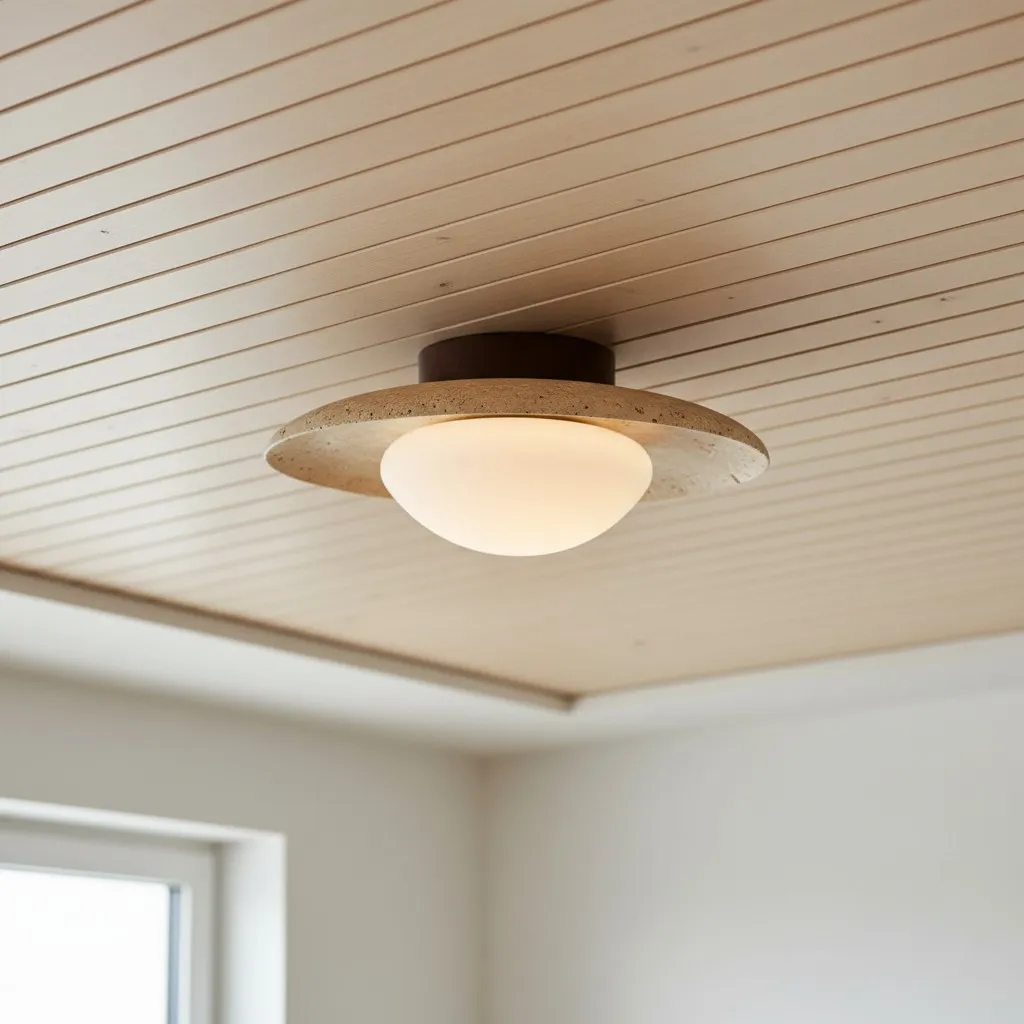
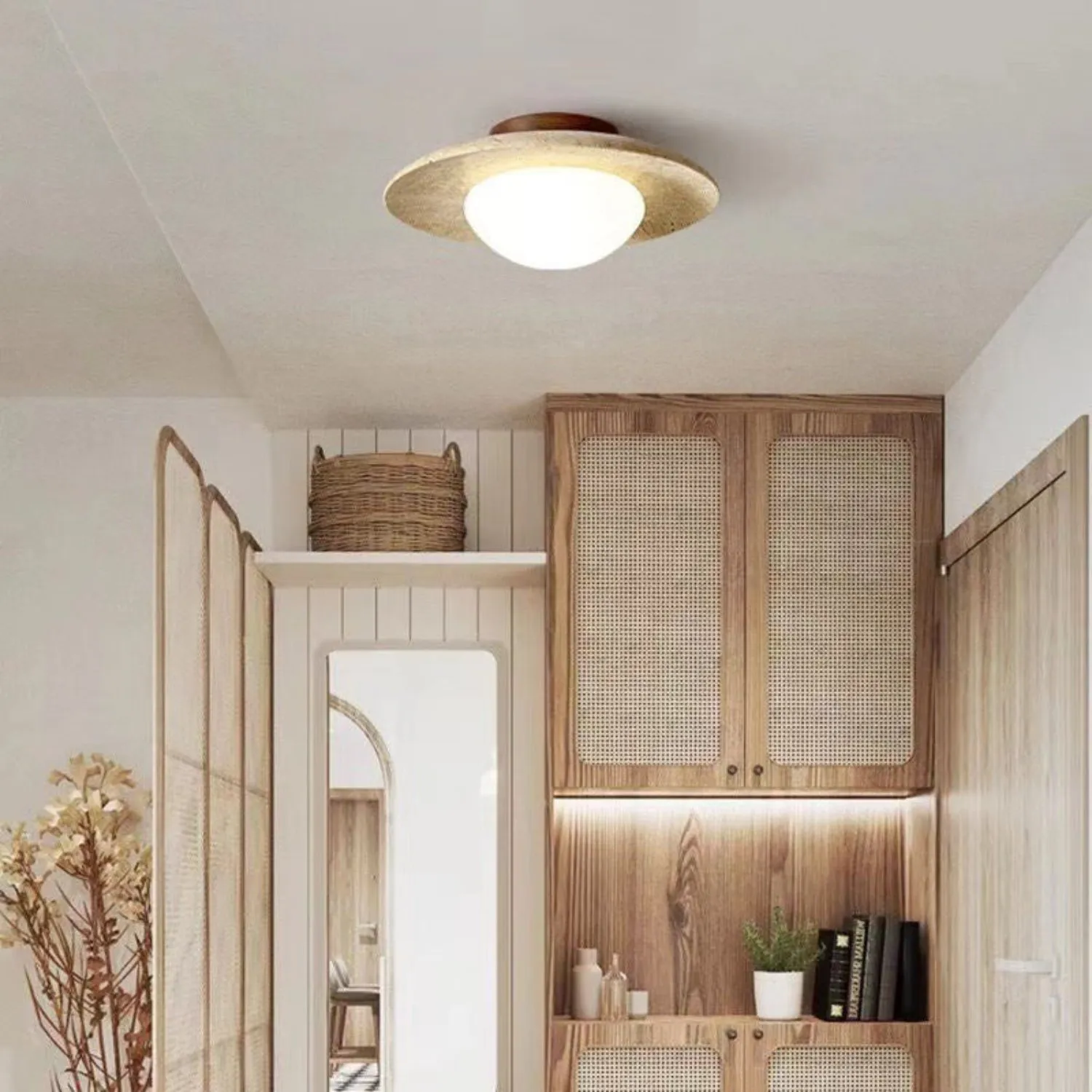
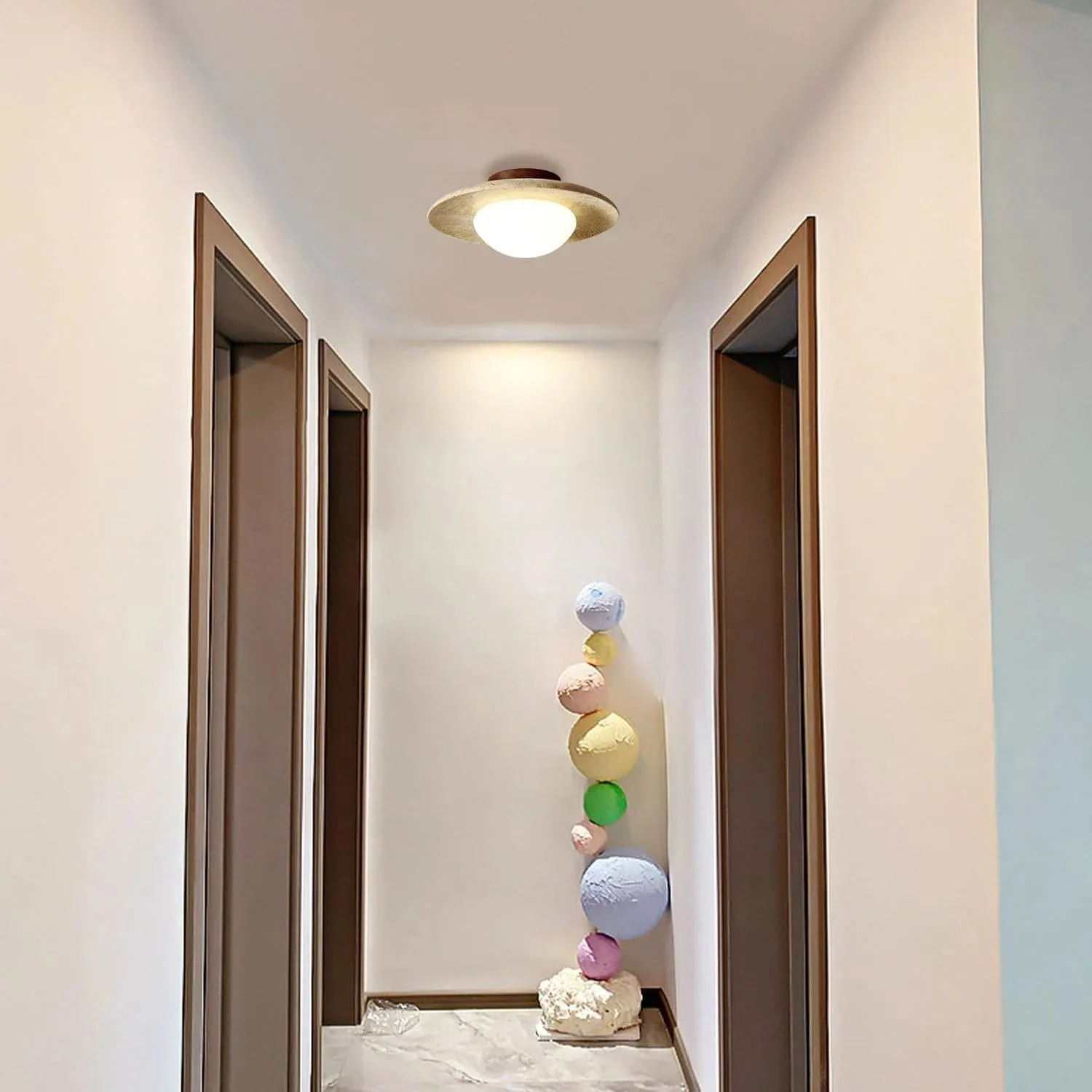
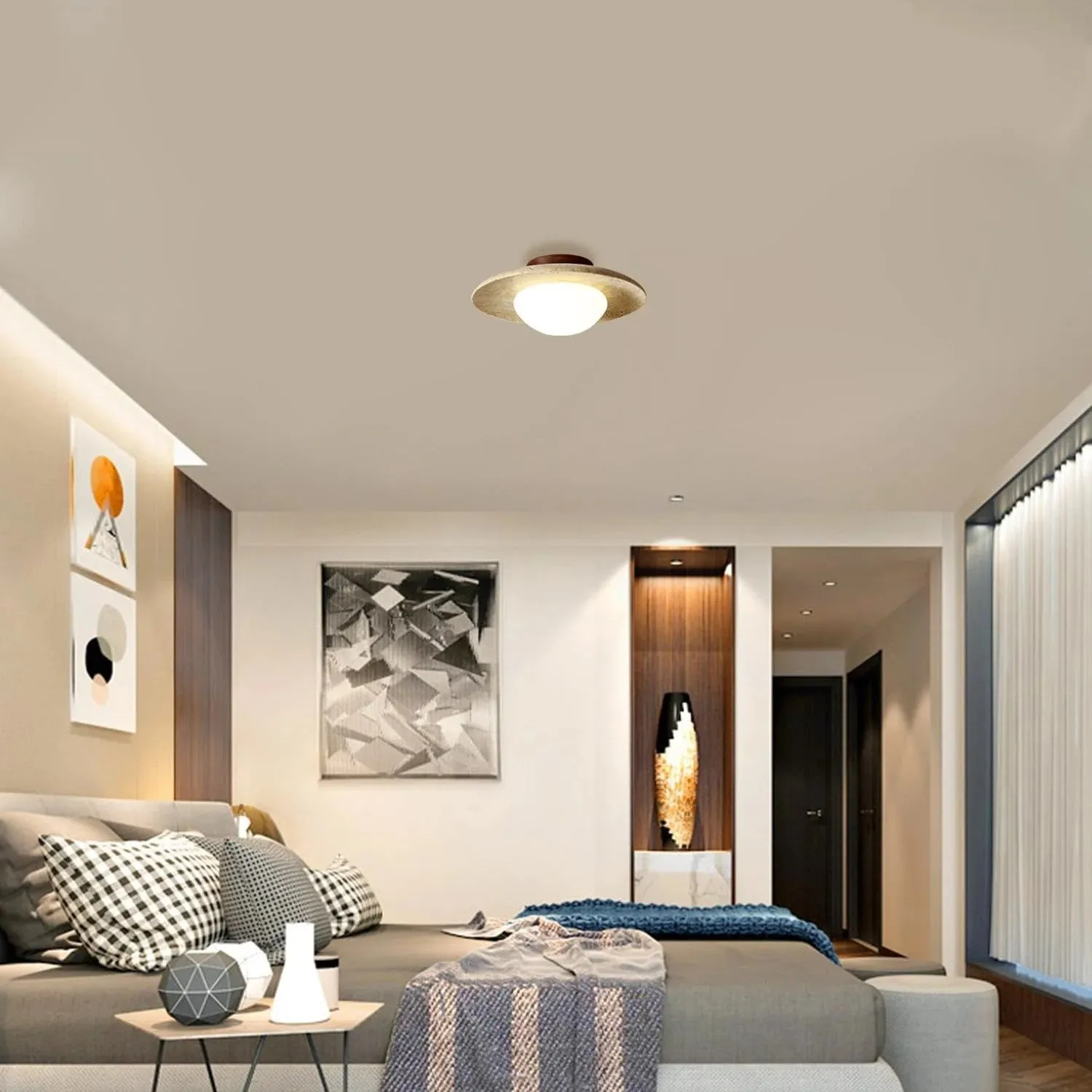
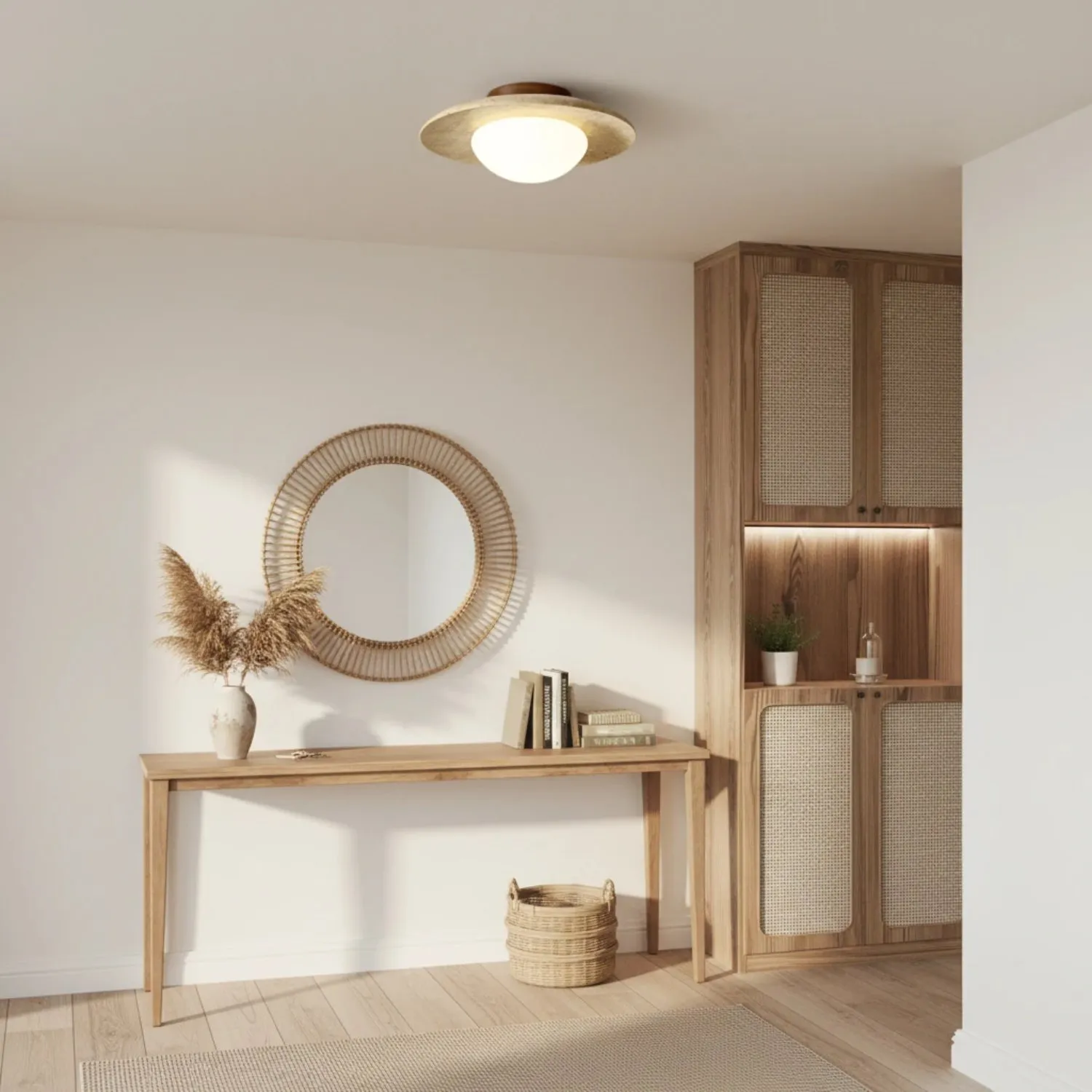
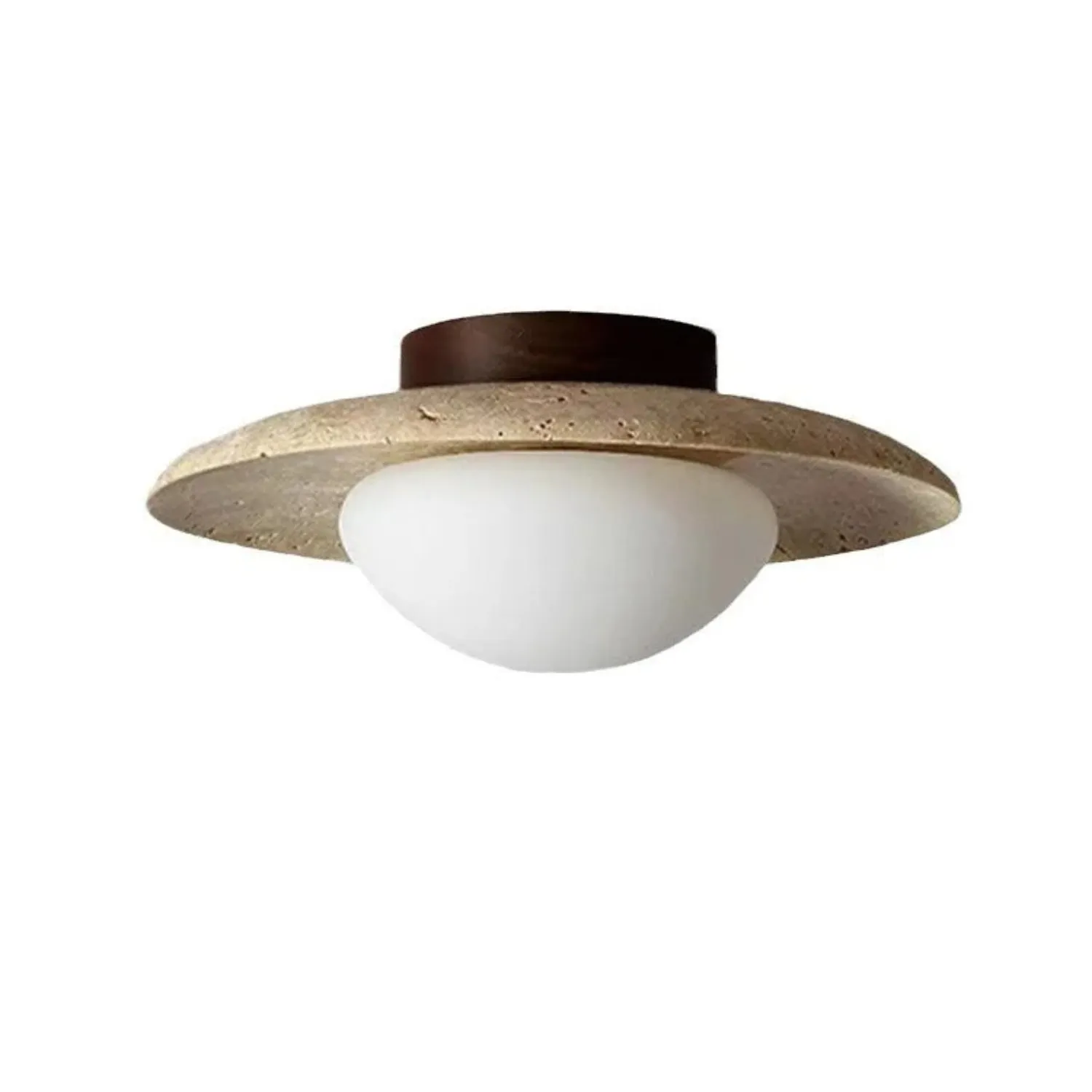
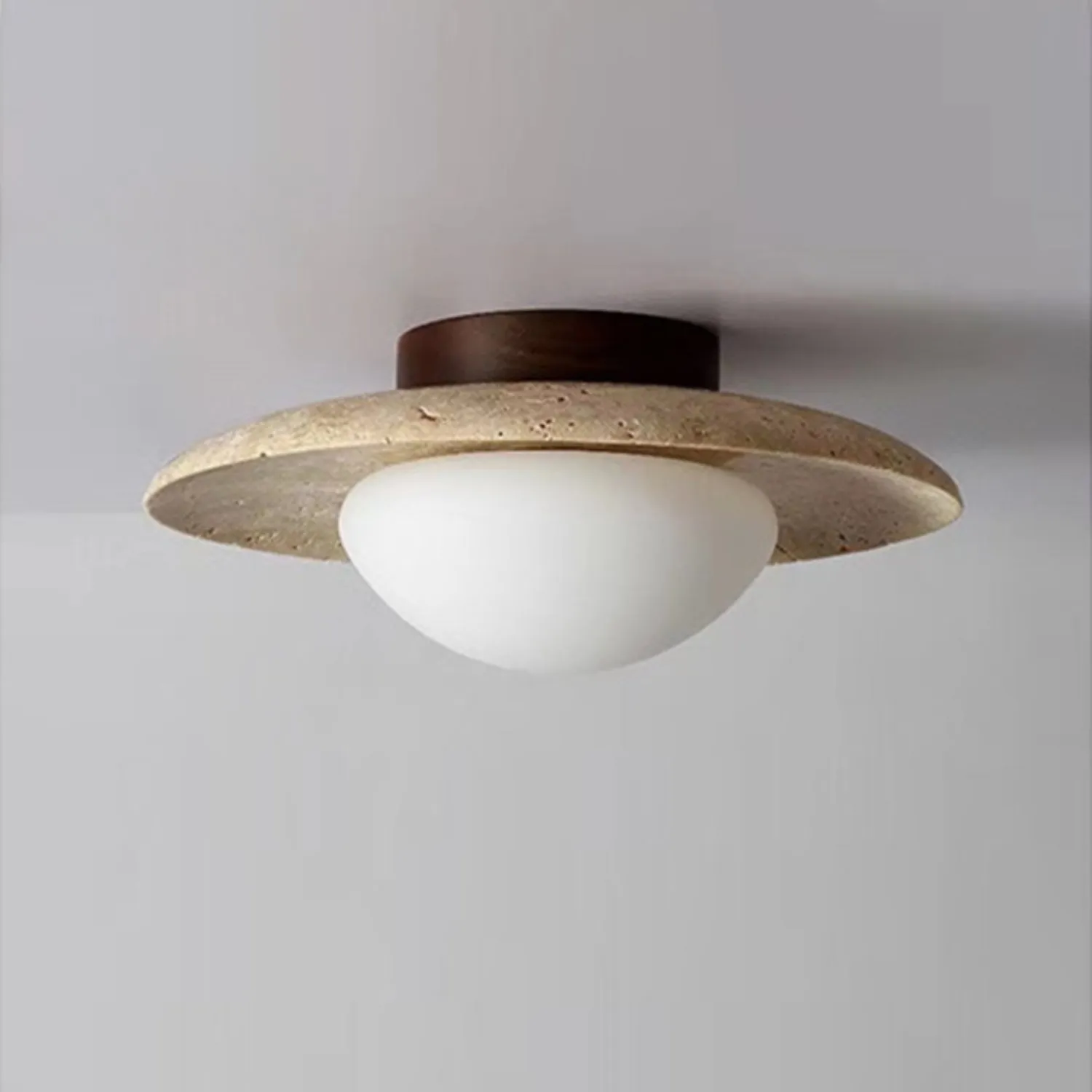
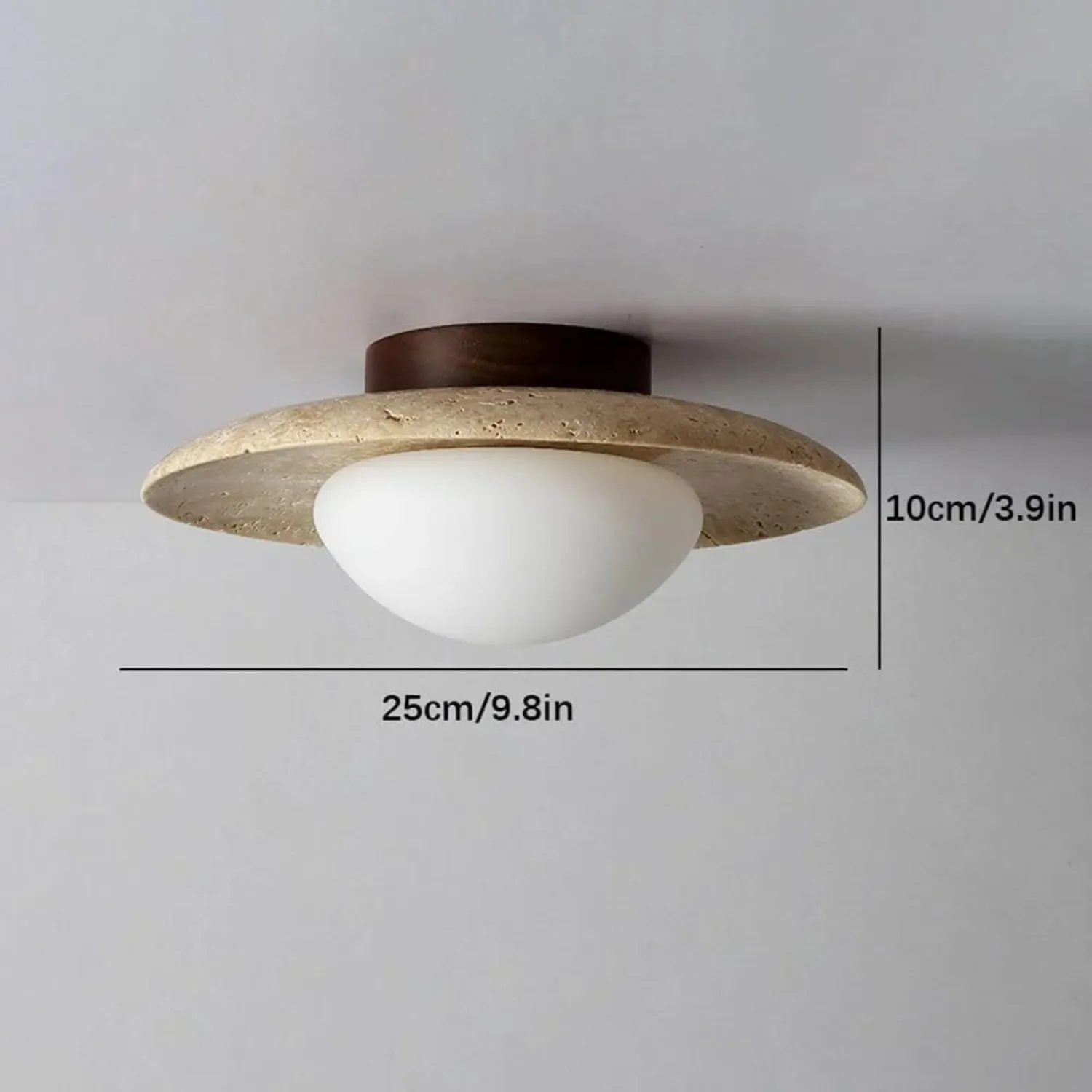
For these spaces, the Marvelle Modern Natural Travertine LED Ceiling Light serves as an extraordinary case study in structural balance.
Design Insight: Standard flush-mount ceiling lights are frequently treated as purely functional afterthoughts. The Marvelle upends this convention by presenting a clean-cut, rectangular monolith of natural travertine that hugs the ceiling.
By encasing a high-efficiency LED within a precisely machined stone block, it bridges the gap between raw geology and modern engineering. It is an exceptional choice for minimalist entryways, low-ceilinged corridors, or aligned in a series above a kitchen island, where it casts downward task lighting while showing off its rugged, creamy edge grain.
2. The Vintage & Japandi Dialogue: Material Duality
If your home leans toward the soft minimalism of Japandi design or the nostalgic, grounded textures of mid-century modernism, mixing materials is key. Travertine pairs exquisitely with natural wood grains, as both materials tell a story of growth, time, and organic evolution.
This rich dialog is perfectly embodied by the Riley Vintage Travertine Wood Round Wall Sconce.
- The Composition: The Riley sconce layers textures by mounting a perfectly circular disk of raw, porous travertine over a deeply grained, dark natural wood base.
- The Atmosphere: When turned on, the light source is cleverly concealed, washing backwards and sideways over the stone plate. The light accentuates the circular pitting of the travertine while casting a halo effect against the wall, accented by the rich, grounding dark wood trim.
- Placement Strategy: This fixture operates less like an appliance and more like a piece of lit sculpture. Use a symmetrical pair to flank a master bed, illuminate a cozy reading alcove, or add a warm layer of secondary accent light to an organic modern living room layout.

Demystifying the Weight: Structural Realities and Installation Peace of Mind
One of the most common hesitations homeowners face when considering stone lighting fixtures is a lingering anxiety regarding structural safety: Is natural stone too heavy for my walls? Will installation cause damage?
While travertine is indeed a solid, dense stone, modern luxury lighting manufacturing solves these concerns through intelligent structural engineering. You do not need commercial-grade reinforced concrete walls to enjoy these pieces, but you do need to understand the basic mechanics of installation.
When transitioning from design appreciation to structural preparation, you might wonder: What should I consider before installing lighting fixtures? To ensure a seamless and secure setup.
Wall and Ceiling Requirements
Most high-end travertine luminaires, including the Marvelle and Riley series, are designed with internal, heavy-duty aluminum or steel mounting brackets. These brackets act as a skeletal system, distributing the stone's weight evenly across the junction box and wall frame.
- Drywall Installation: If you are mounting a travertine sconce or ceiling light onto standard drywall or plasterboard, ensure that the mounting bracket screws anchor directly into a structural wooden wall stud or ceiling joist whenever possible.
- Hollow Wall Anchors: If positioning dictates that a fixture must sit between studs, do not rely on standard plastic wall plugs. Instead, use heavy-duty steel toggle bolts or threaded dry-wall anchors rated for at least twice the weight of the fixture.
- Handling with Tact: Travertine is incredibly strong under compression, but it can be brittle when subjected to sudden, uneven twisting forces. When installing, always support the entire body of the stone evenly. Avoid using power drills to overtighten metal decorative nuts directly against the raw stone surface; instead, hand-tighten to prevent micro-cracking.
The Vertical Care Blueprint: Tailoring Maintenance for Luminaires
If you search for "travertine care" online, you will be inundated with articles warning you about spilled red wine, acidic lemon juice, and heavy resealing schedules. Thankfully, none of these apply to your lighting fixtures. Because lighting operates on a vertical or elevated plane, it is entirely free from the high-traffic wear, impact, and liquid spills that plague kitchen countertops and floors.
Caring for travertine lighting is remarkably simple, but it does require a specific, gentle touch to prevent dust from settling permanently into its characteristic pores.
1. The Micro-Dusting Protocol
Because natural travertine features an unpolished, pitted texture, traditional cotton cleaning rags or paper towels are highly discouraged. Their fibers will snag on the rough edges of the stone, tearing apart and leaving a layer of white lint inside the cavities.
- The Solution: Use a clean, dry microfiber cloth or, better yet, a soft, long-bristled static duster or a high-quality makeup brush. A soft brush allows you to gently sweep dust out of the natural pits without scratching the stone or leaving fibers behind.
- Frequency: Incorporate this into your regular bi-weekly dusting routine to prevent airborne oils and dust from binding to the stone.
2. Spot Cleaning Smudges
During installation or lightbulb changes, natural finger oils can transfer onto the stone. If you notice a smudge, remember that travertine is primarily calcium carbonate—meaning it is highly reactive to acids.
- What to Avoid: Never use commercial glass cleaners, vinegar, citrus-based sprays, or abrasive scrubbing powders. These will etch the surface, removing the stone's natural luster and shifting its tone.
- What to Use: Dampen a microfiber cloth with warm water and a single drop of pH-neutral, gentle dish soap. Blot the area softly—do not scrub aggressively. Afterward, use a dry towel to blot away any excess moisture immediately.
3. A Note on Heat and LED Technology
Historically, high-wattage incandescent bulbs generated significant ambient heat, which could cause localized thermal expansion in natural materials over many years. Fortunately, modern fixtures like the Marvelle and Riley utilize advanced, low-voltage LED arrays. These systems run exceptionally cool, ensuring that your stone remains entirely unaffected by thermal stress while reducing your home's energy footprint.
Final Thoughts: Investing in an Earth Heritage Heirloom
Choosing natural stone lighting is a conscious rejection of transient, disposable decor trends. A fixture crafted from genuine travertine brings a piece of geological history into your living environment, acting as an anchor of authenticity amid a world of synthetic alternatives.
Whether you choose to celebrate the clean, monolithic presence of the Marvelle Ceiling Light or the layered, mixed-material storytelling of the Riley Sconce, you are welcoming an enduring sculptural element into your home—one that will capture light, cast exquisite shadows, and mature gracefully alongside your space for decades to come.
Frequently Asked Questions (FAQ)
Q1: Is natural travertine too heavy for standard drywall ceilings or walls?
While travertine is heavier than plastic or thin metal, high-quality fixtures are engineered with robust steel or aluminum brackets that safely distribute weight. By using heavy-duty wall anchors or screwing directly into studs, they can be safely mounted on standard drywall.
Q2: Will the heat from the light bulb damage or crack the travertine stone over time?
No. Modern luxury travertine fixtures utilize integrated LED light arrays or low-voltage LED bulbs. LEDs produce very little heat, eliminating thermal stress and preventing any risk of cracking or discoloration.
Q3: How do I clean dust out of the deep pores and holes in my travertine light?
Avoid using standard cloths which can snag. Use a soft, long-bristled duster, a static wand, or a clean makeup brush to gently sweep dust out of the pits. For stubborn dust, compressed air can also be highly effective.
Q4: Should I apply a commercial stone sealer to my travertine lamps?
Unlike travertine countertops or floors, lighting fixtures are not exposed to liquid spills, stains, or heavy contact. Therefore, they generally do not require regular chemical sealing. Keeping them clean and dry is sufficient.