Complete guide
What Color Temperature Is Best for the Kitchen? The Complete Guide to Banishing Glare and Hospital Vibes
Have you ever stepped into a kitchen at night and felt like you were suddenly under interrogation or, worse, walking into a sterile operating room? Alternatively, have you ever tried to prep a meal in a kitchen so dim and amber-toned that you couldn't tell if your meat was properly browned or if your vegetables were genuinely fresh?
If either scenario sounds familiar, you are dealing with a classic mismatch in color temperature.
The modern residential kitchen has a unique architectural challenge: it possesses a distinct split personality. On one hand, it is a high-stakes, task-oriented workspace where you handle sharp chef's knives, read fine-print recipes, and monitor boiling liquids. On the other hand, it serves as the ultimate social hub of the modern home—the place where children finish homework, guests gather with drinks during a dinner party, and families wind down over late-night snacks.
Because the kitchen must seamlessly pivot between an intense utilitarian workshop and an intimate living space, finding the right lighting is notoriously tricky. If you select a color temperature that is too warm, you sacrifice safety, task clarity, and spatial alertness. If you swing too far in the opposite direction and choose a color temperature that is too cold, you destroy the welcoming atmosphere of your home.
To solve this lighting dilemma once and for all, we need to look past generic online summaries and dive deep into how light color interacts with your kitchen's unique physical materials, spatial layouts, and fixture designs.
1. Decoding the Kelvin Scale: 3000K vs. 4000K
To choose the best lighting, we must first understand the Kelvin (K) scale, which measures a light source's color temperature. Low numbers on the Kelvin scale indicate warm, amber, and yellow tones, while higher numbers indicate cool, crisp, and bluish tones.
While residential bulbs are manufactured anywhere from an ultra-warm 2700K to a stark 6000K, the ultimate debate for a residential kitchen almost always boils down to a choice between two specific settings: 3000K (Soft Warm White) and 4000K (Neutral White).
To determine which temperature best serves your household, you must evaluate your kitchen’s material palette. Light does not exist in a vacuum; it acts as an active color modifier. Every beam of light bounces off your cabinets, countertops, backsplashes, and flooring, drastically altering how those materials look to the human eye.
The Case for 3000K (Soft Warm White)
This range is ideal for traditional, transitional, industrial, or rustic kitchen designs. If your kitchen features rich natural wood cabinets (such as oak, walnut, or hickory), earth-toned tile backsplashes, warm granite countertops, or brushed brass hardware, 3000K is your best option. It enhances the organic red and yellow undertones of wood grains, ensuring your space feels rich, grounded, and inherently cozy.
The Case for 4000K (Neutral White)
This range is perfectly suited for modern, ultra-minimalist, contemporary, or Scandinavian kitchens. If your space is dominated by crisp white Shaker cabinets, minimalist flat panels, glossy stainless steel appliances, polished concrete, or cool gray quartz surfaces, 4000K is the designer standard. It ensures white surfaces look brilliantly clean and pure, rather than cast in an accidental, dingy yellow tint.
2. The Hidden Kitchen Culprit: Reflective Glare and Eye Strain
Many homeowners carefully select their recommended color temperature, swap out their old lightbulbs, and yet still find themselves squinting or experiencing subtle headaches after spending an hour cooking dinner.
The hidden reason behind this discomfort is an environmental design flaw known as reflective glare.
Kitchens are inherently filled with what lighting engineers call specular surfaces—materials that act like partial mirrors. Think about polished quartz, marble countertops, stainless steel appliances, glazed ceramic subway tiles, and glass cooktops. When you introduce high-performance, high-output LED bulbs into these spaces—especially when using the crisper, more energetic 4000K wavelength—the light travels in highly concentrated, intense paths.
If those direct paths hit a polished marble island or a stainless steel range from an open, clear glass shade or a completely exposed bare-bulb fixture, they don't illuminate the surface evenly. Instead, they bounce directly back up into your eyes as sharp, intense bright spots.
This creates an incredibly fatiguing optical phenomenon. Your eyes are forced to constantly adjust between the blinding reflection on the counter surface and the deep, dark shadows cast by your own body as you lean over the workspace. This continuous, micro-adjustment of your pupils is a primary, hidden cause of evening eye strain, physical fatigue, and accidental kitchen mishaps, which underscores the importance of understanding how to achieve the perfect layered lighting solution at home .
3. The Solution: The Magic of Frosted Glass Diffusion
To achieve a kitchen that is highly functional for prep work yet beautifully soft for evening entertaining, you must combine your chosen color temperature with an intentional method of light diffusion.
Instead of allowing raw light beams to strike your polished countertops in direct, straight lines, you need to introduce a physical medium that breaks up, scatters, and softens those light rays in every direction. In interior design, high-quality frosted glass is the premier tool for this job.
When light from a 3000K or 4000K source passes through a premium frosted glass medium, the sharp, aggressive edge of the light is completely neutralized. The frosted finish acts like a photographic softbox, transforming a tiny, piercing point of light into a large, luminous surface that emits a balanced glow.
Furthermore, the physical mounting style of your lighting plays a massive role in how this diffused light populates the room. While hanging pendant lights excel at focusing light downward over a small, specific island zone, a central semi-flush mount ceiling fixture is the ultimate choice for overall, foundational room lighting, offering clear practical benefits of semi-flush mount light fixtures over pendants .
4. Bringing It All Together: A Functional Showcase
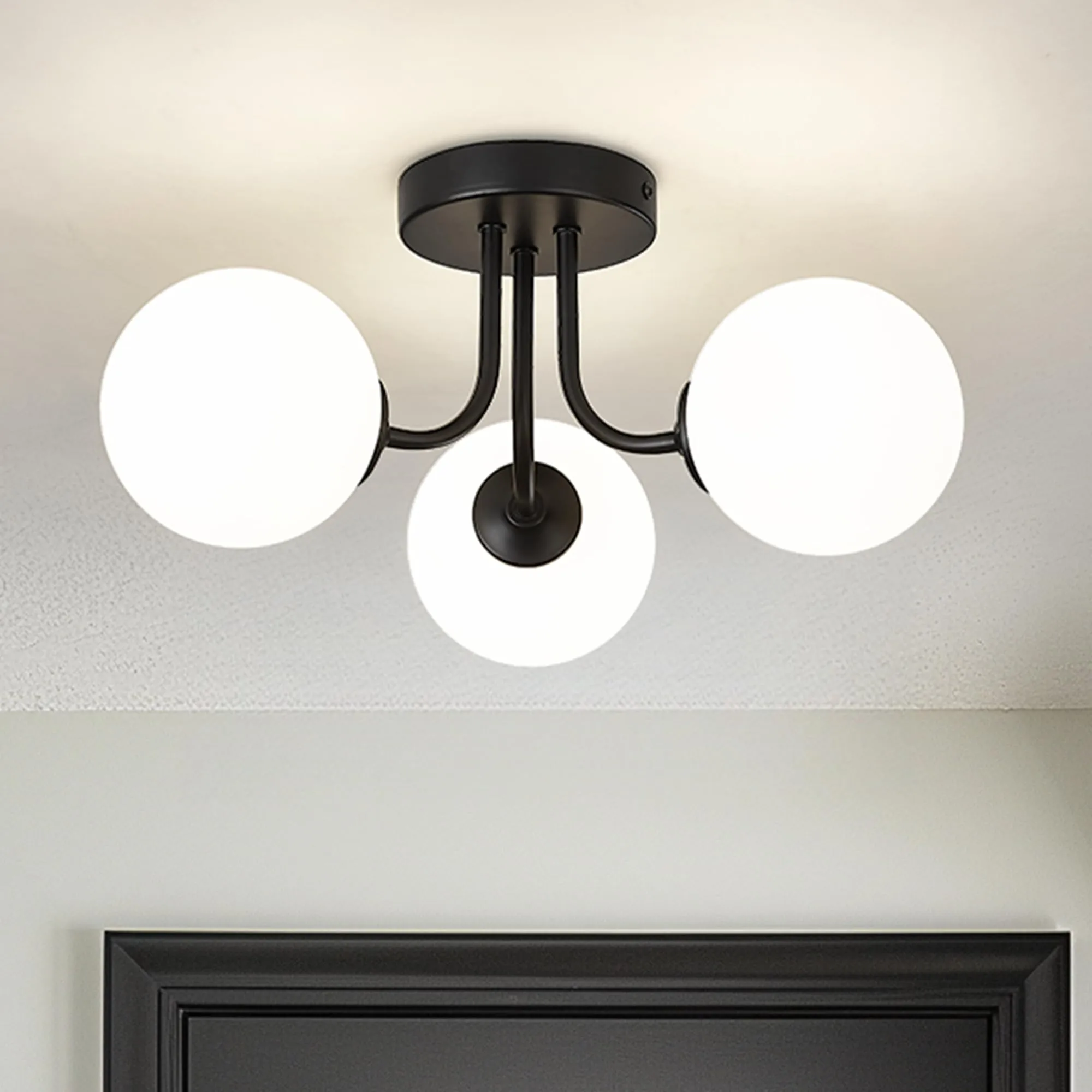
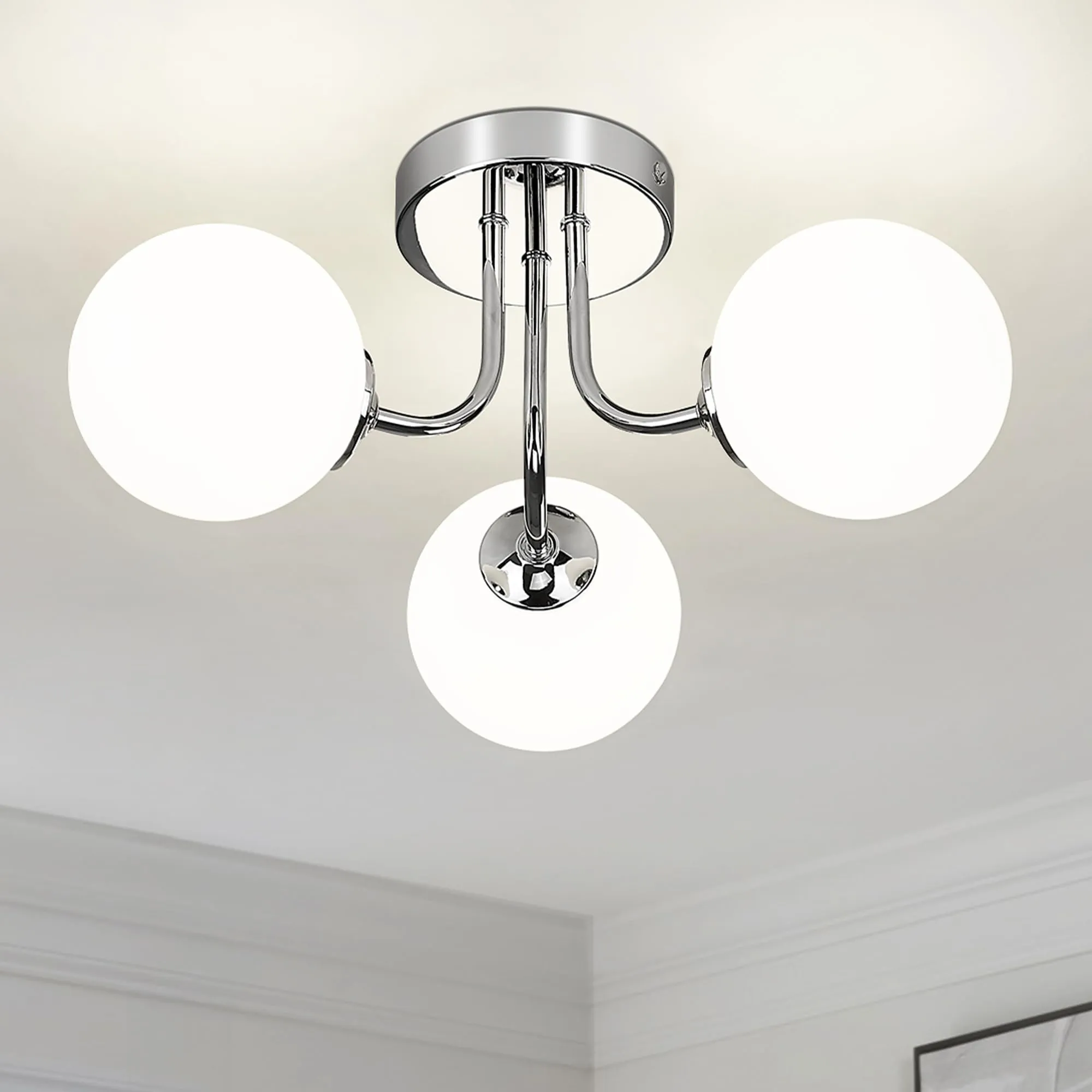
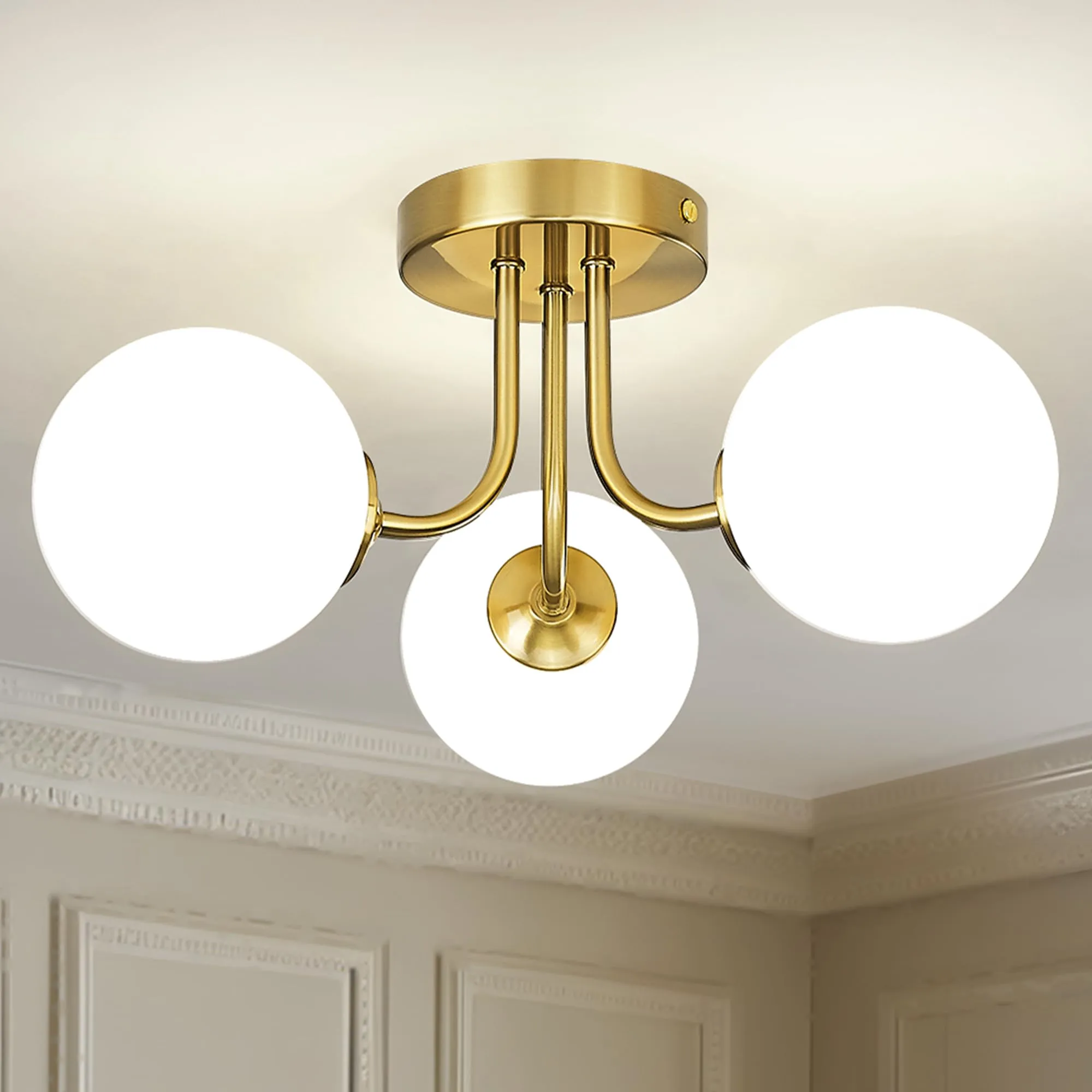
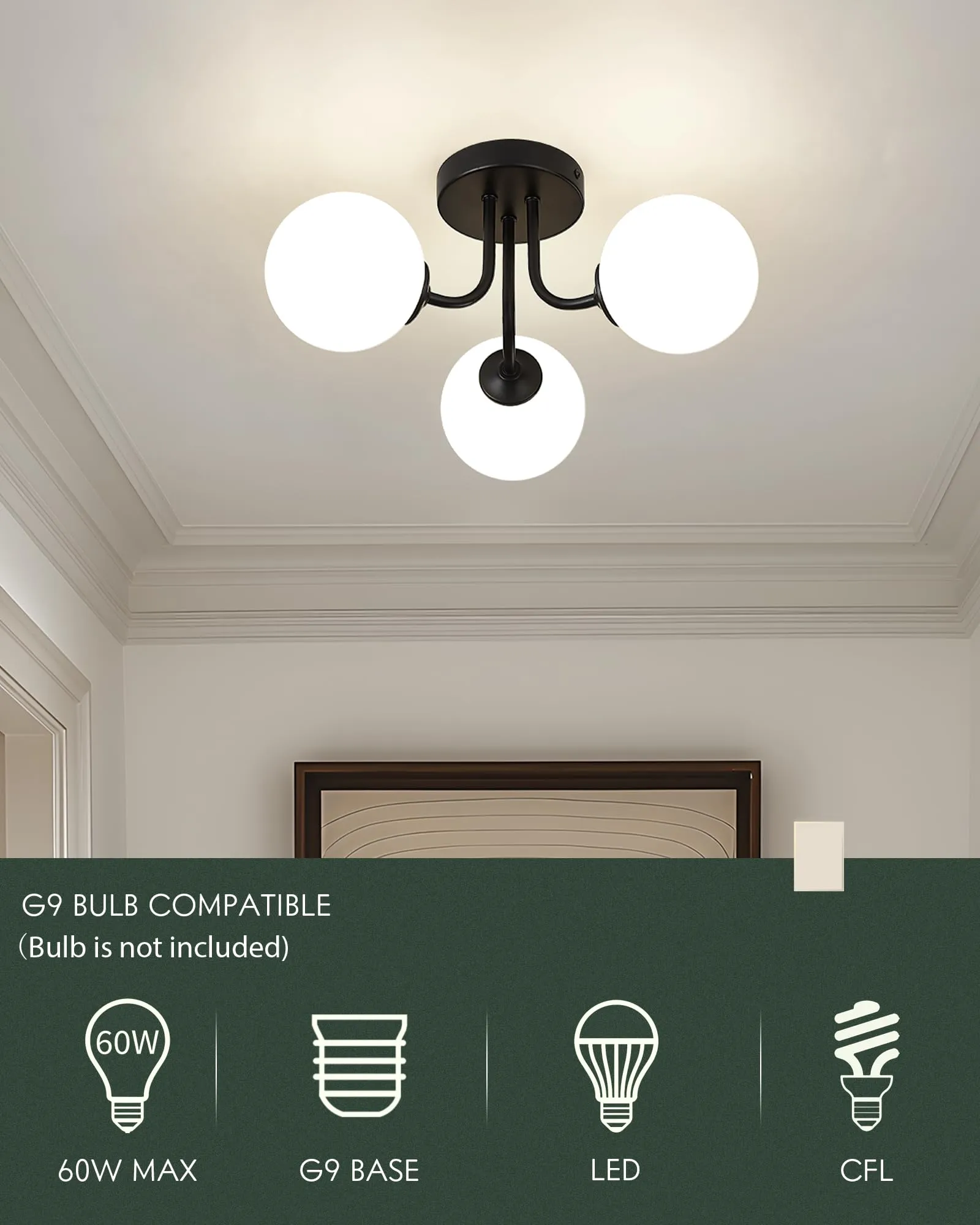
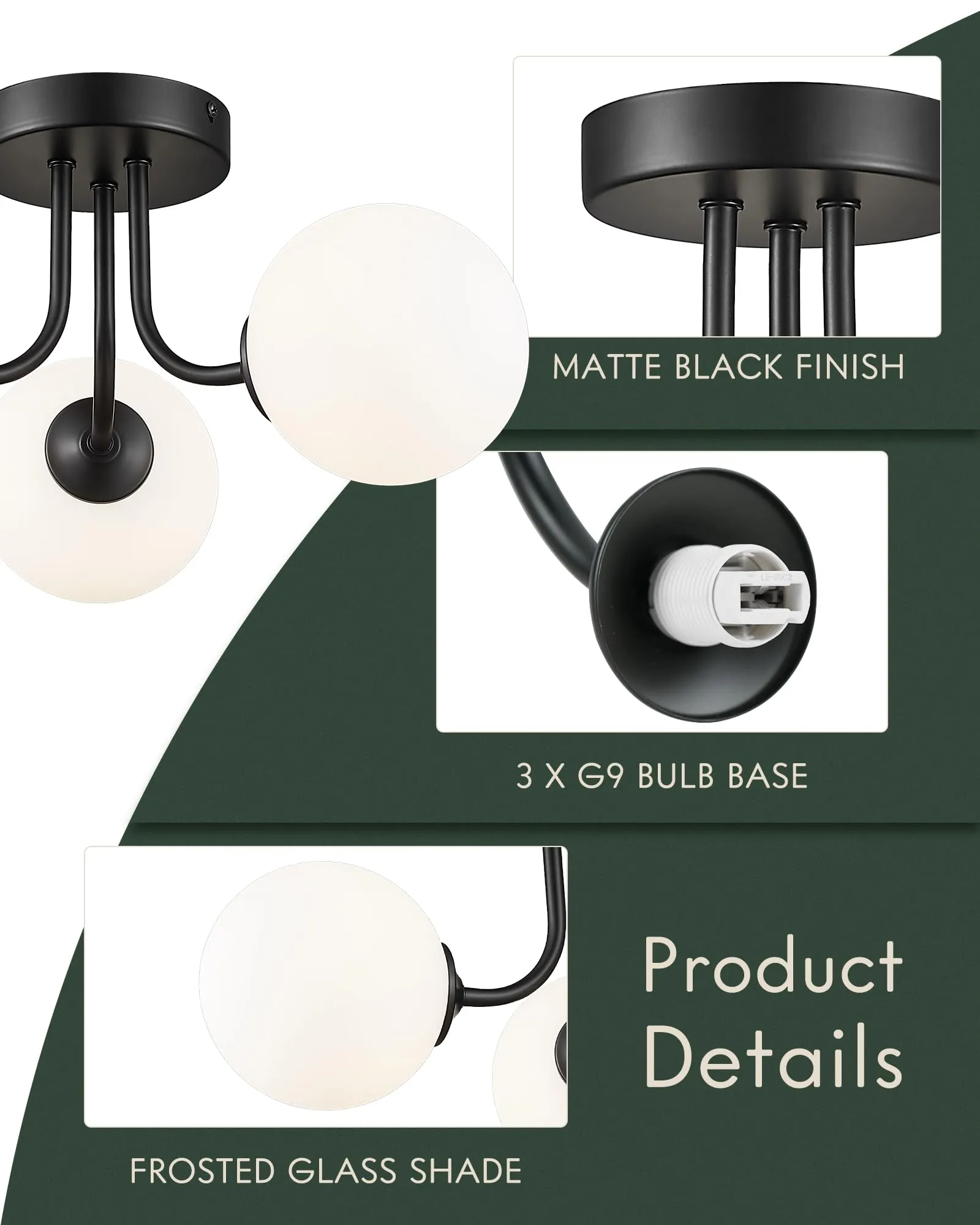
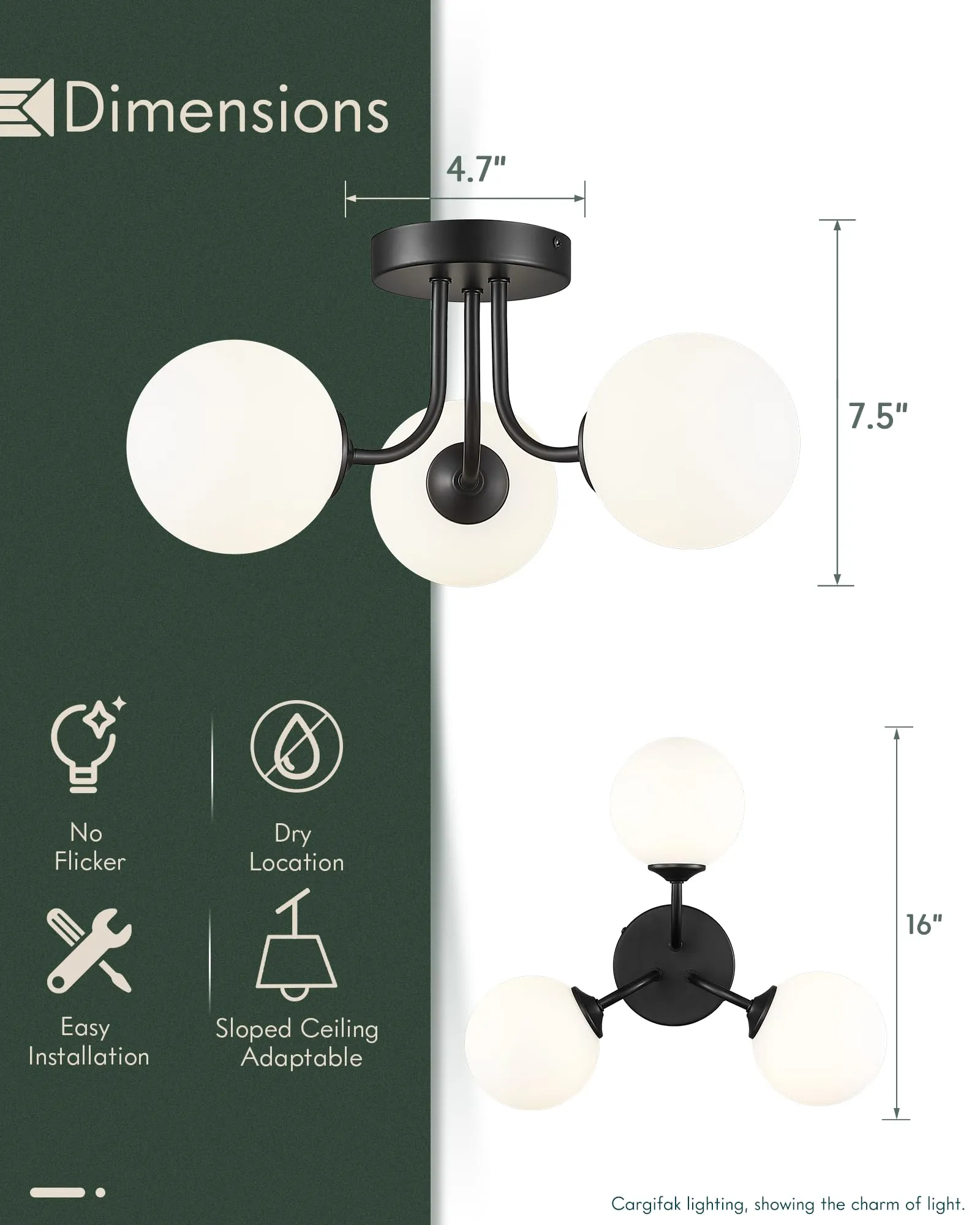
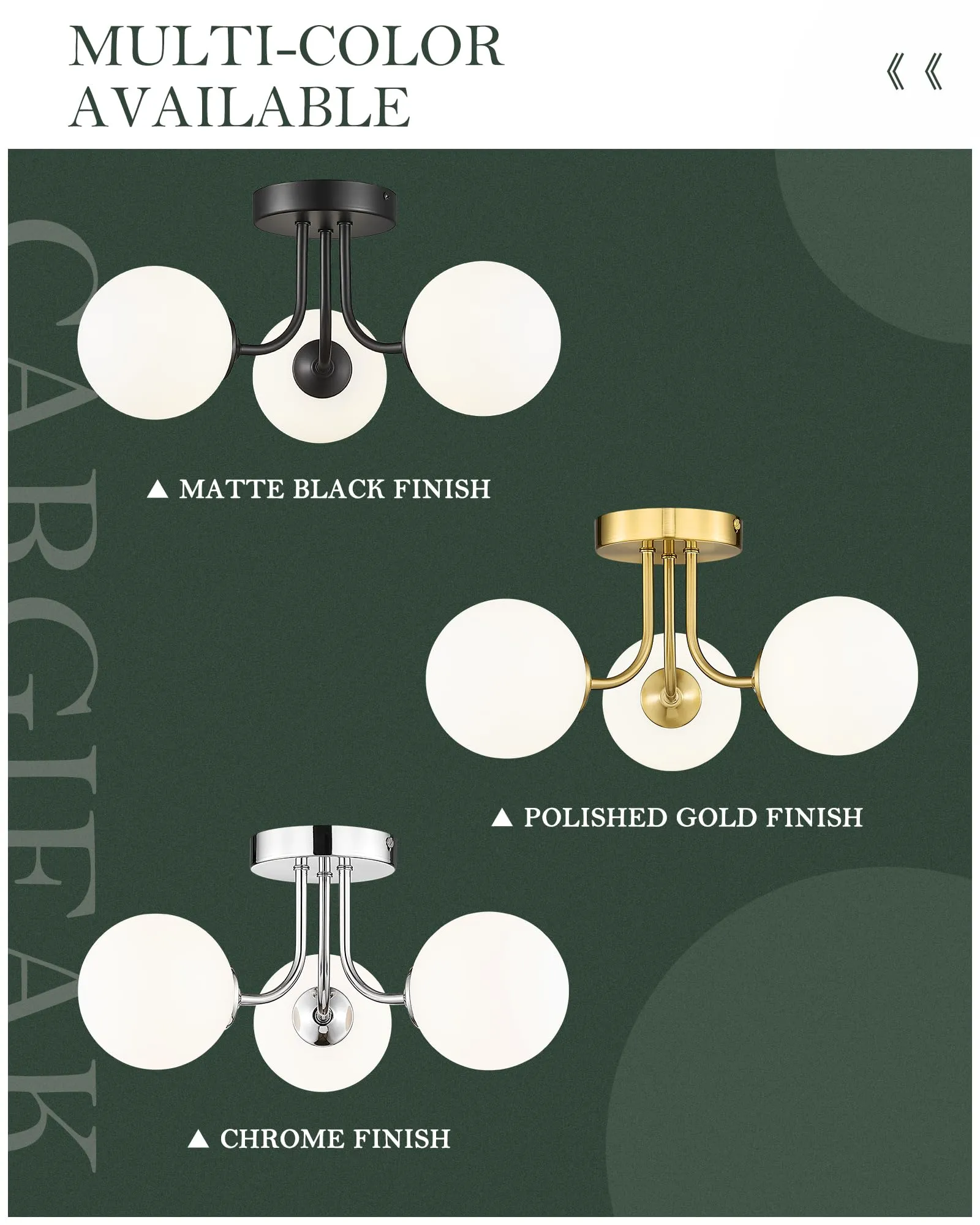
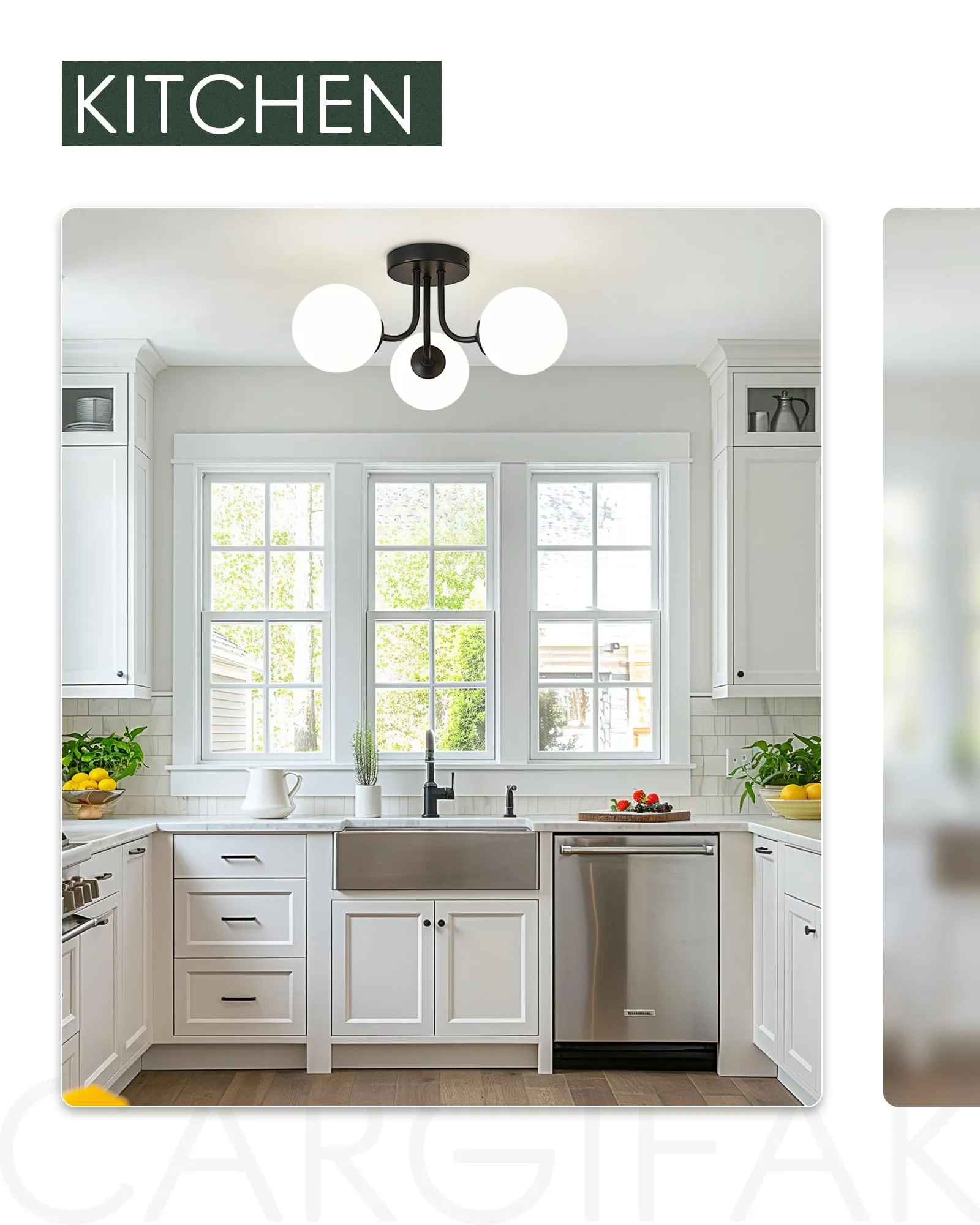
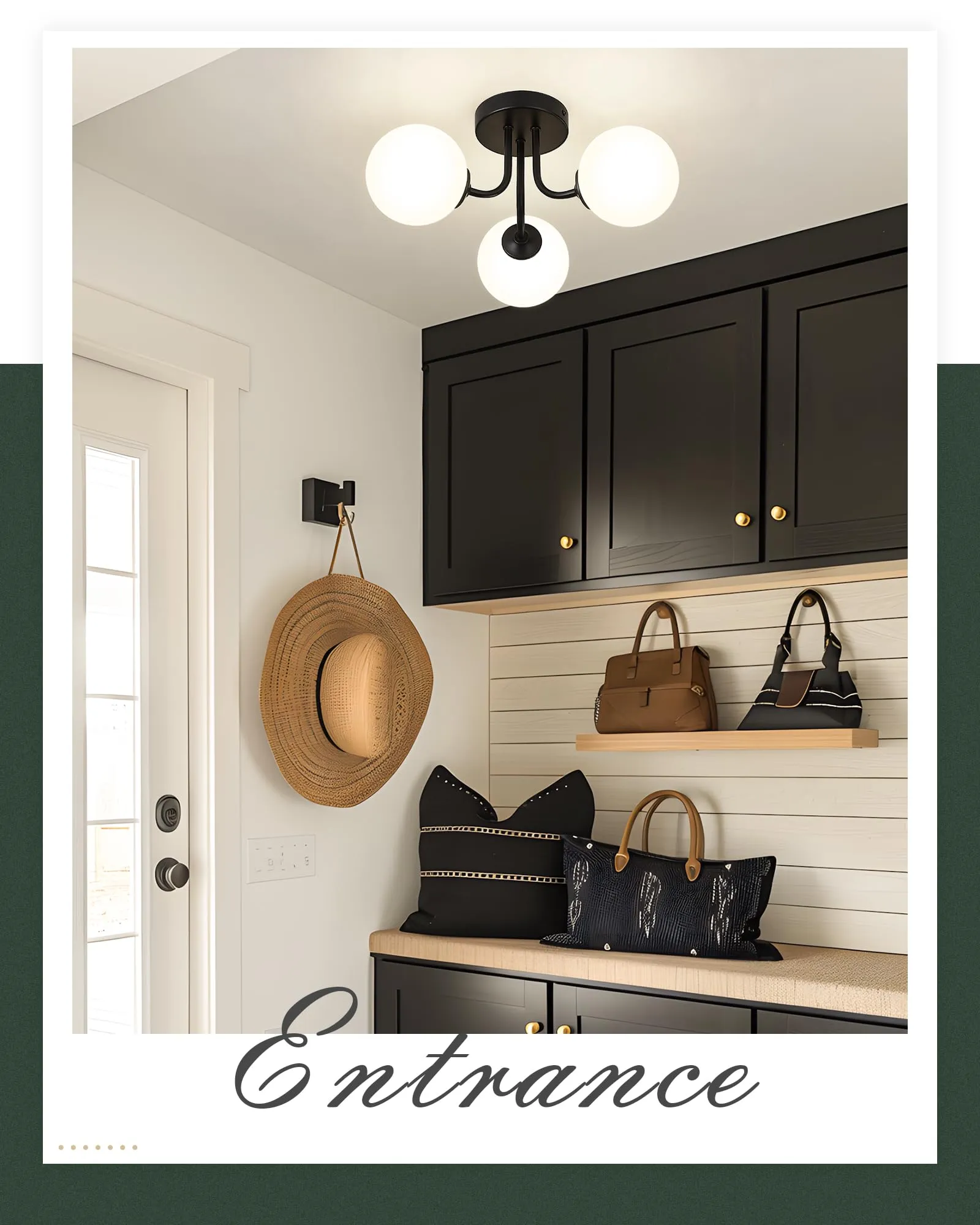
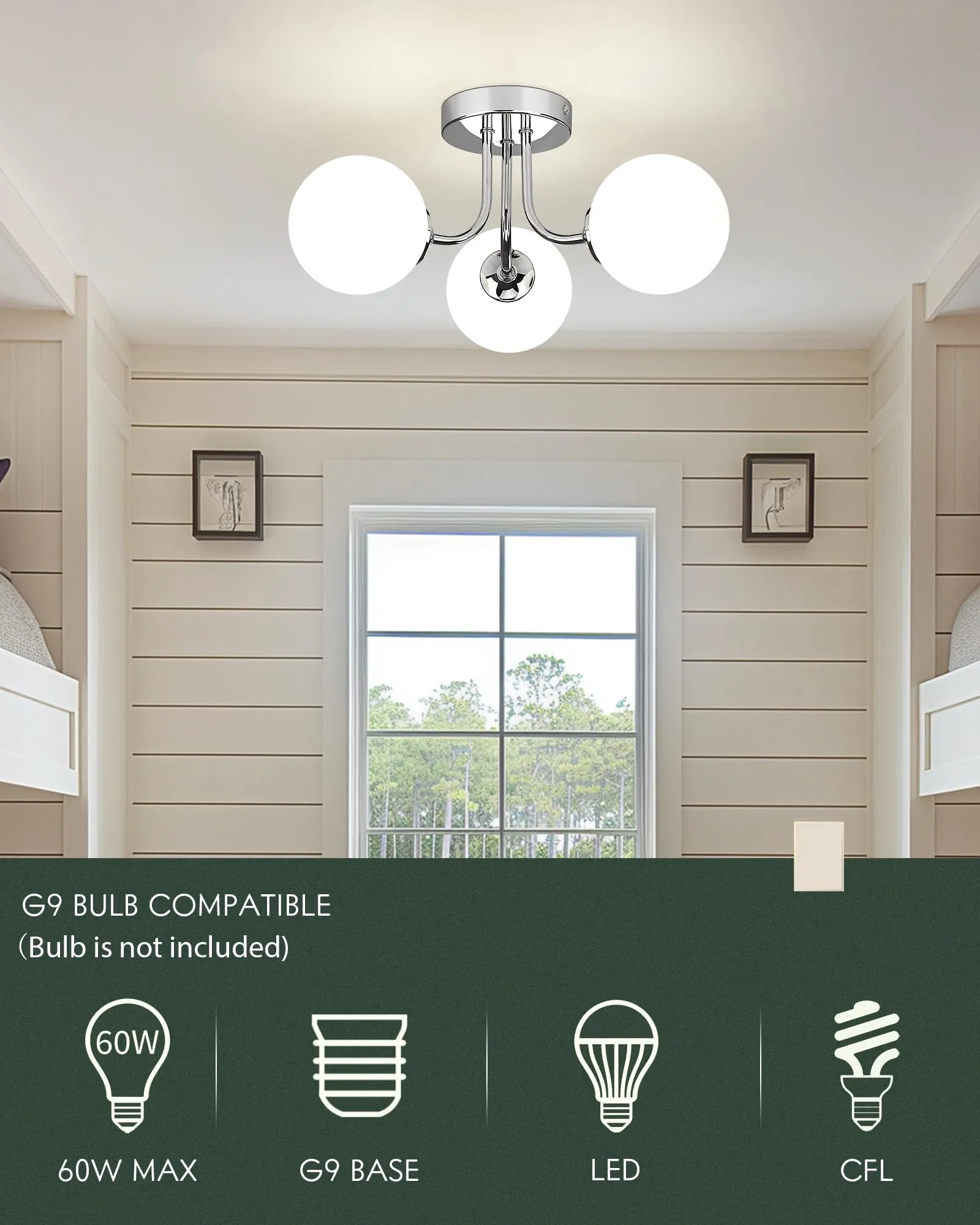
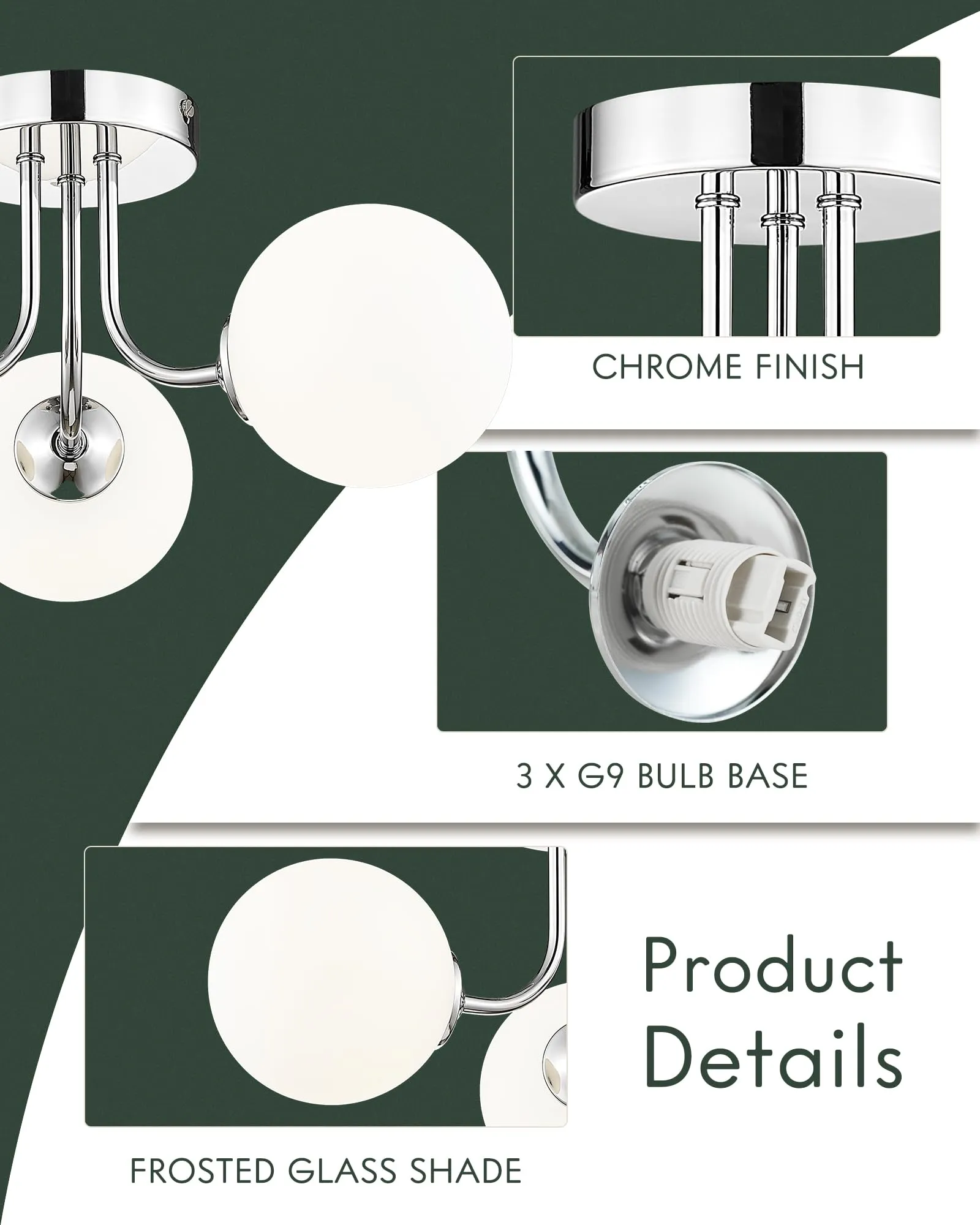
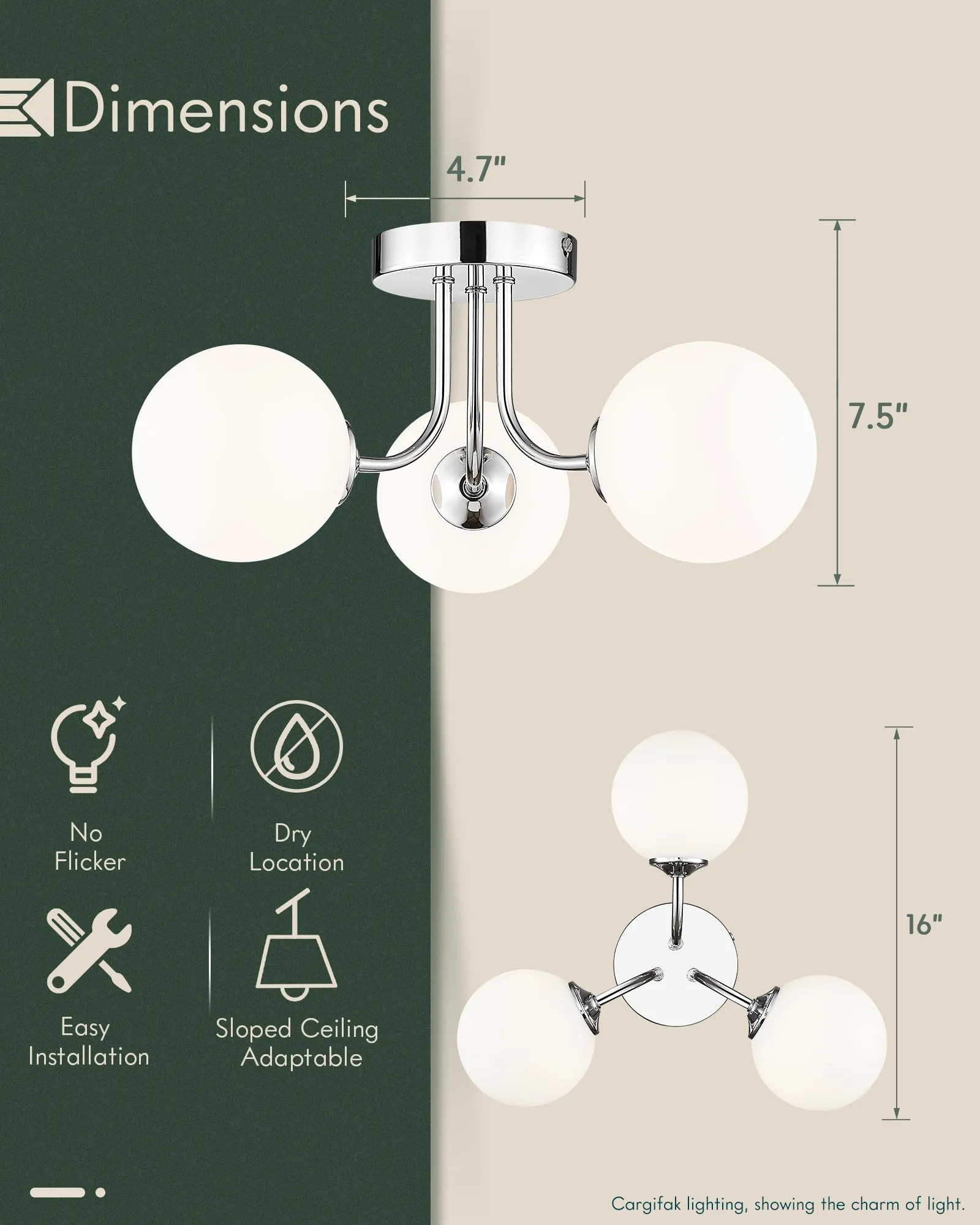
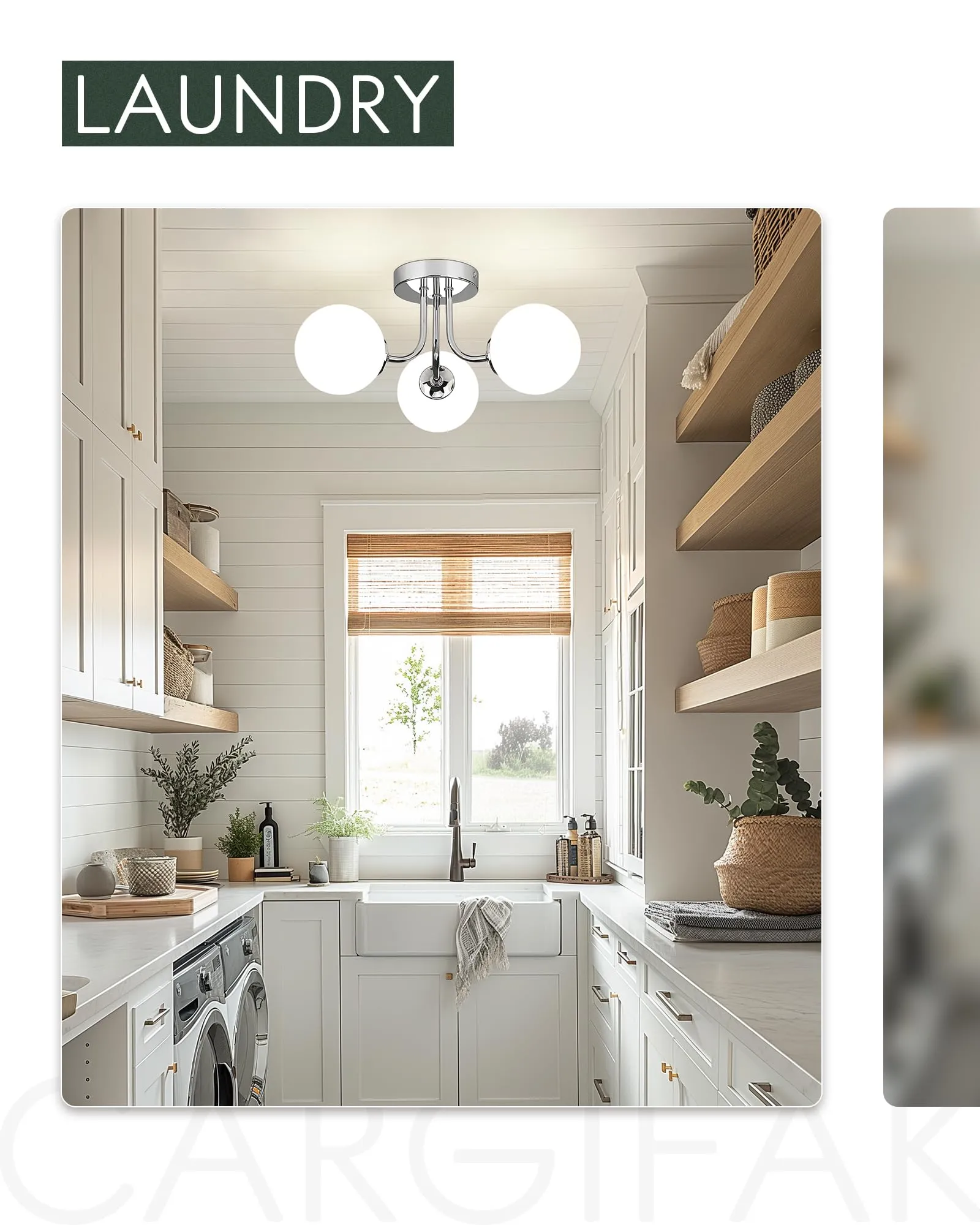
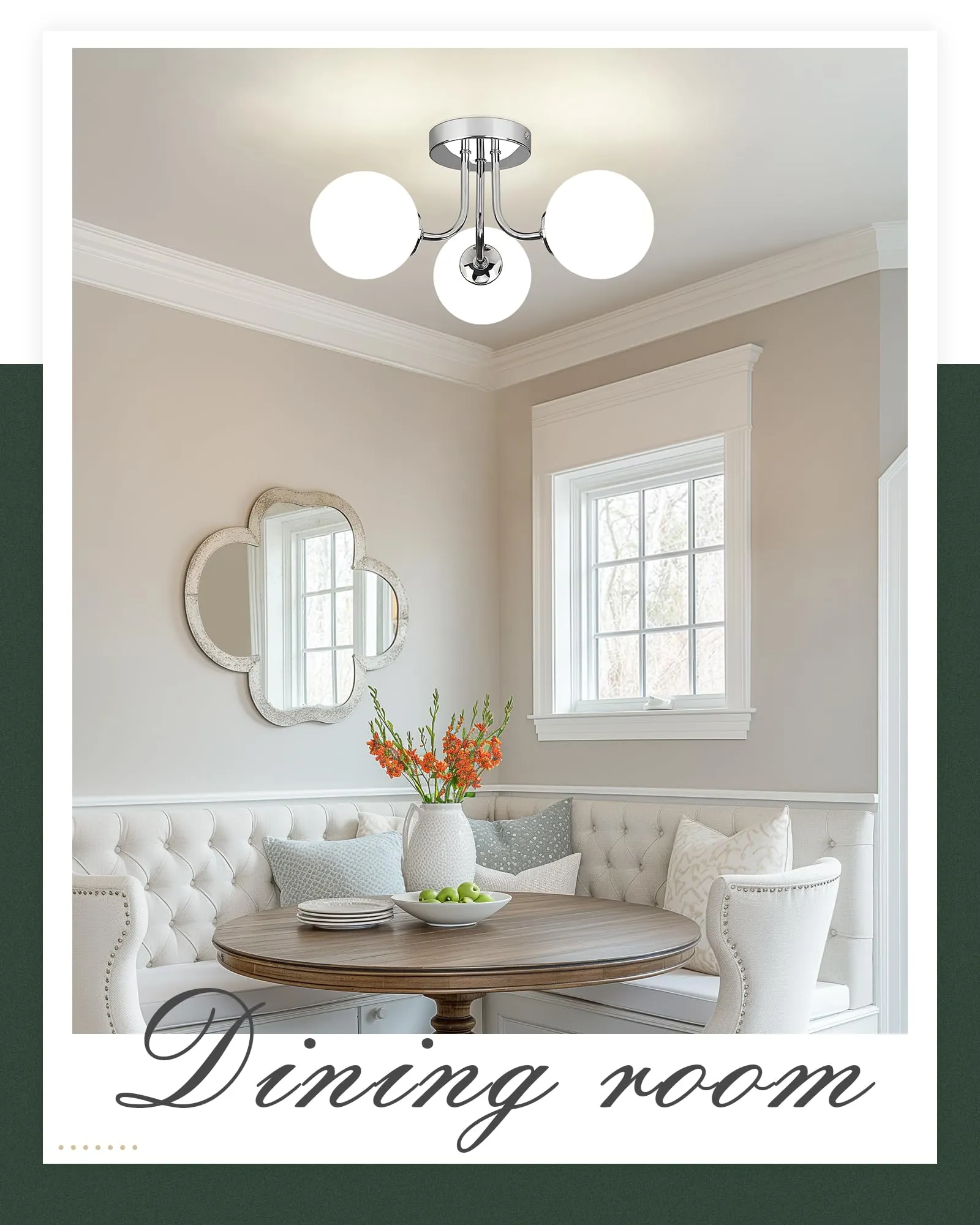
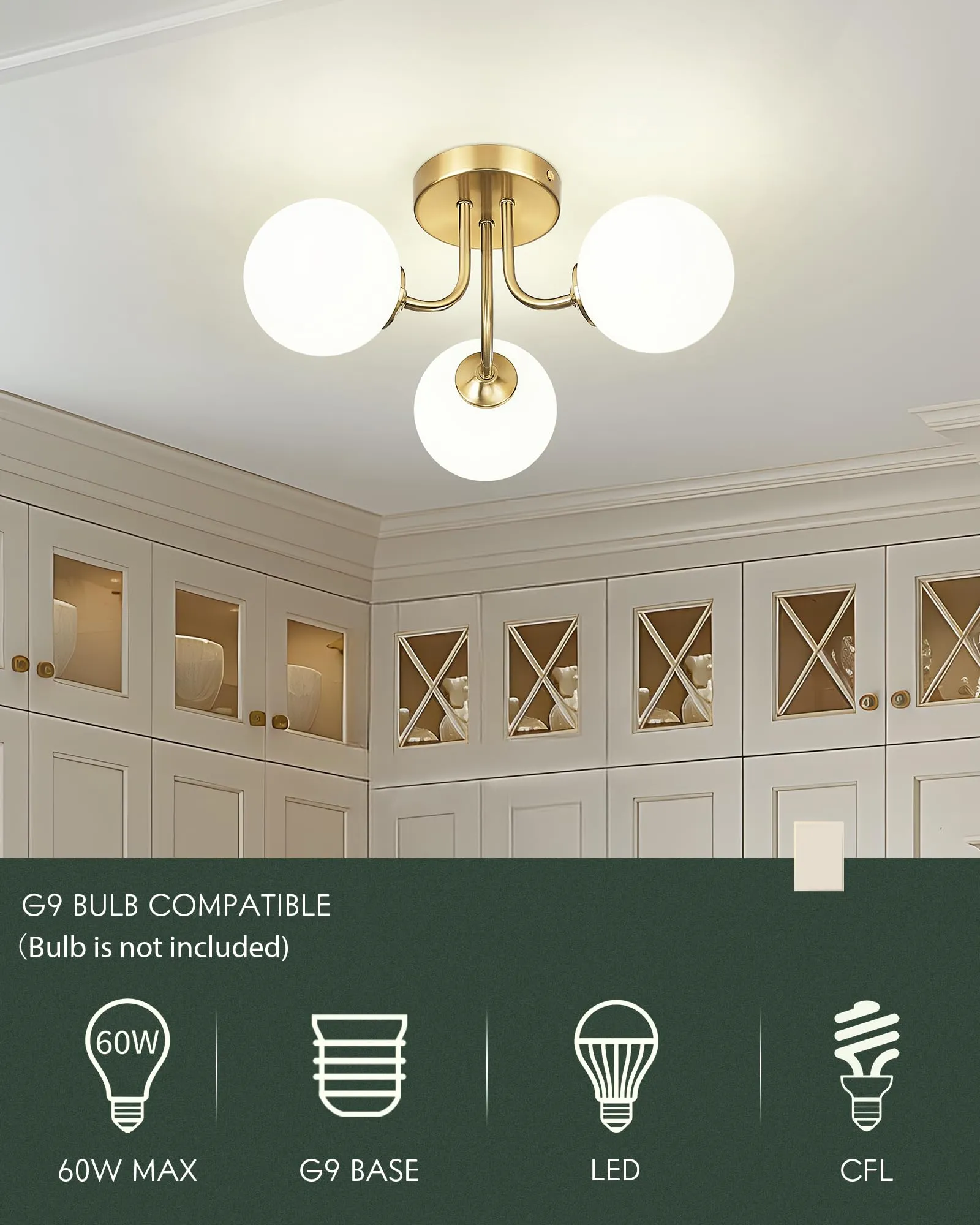
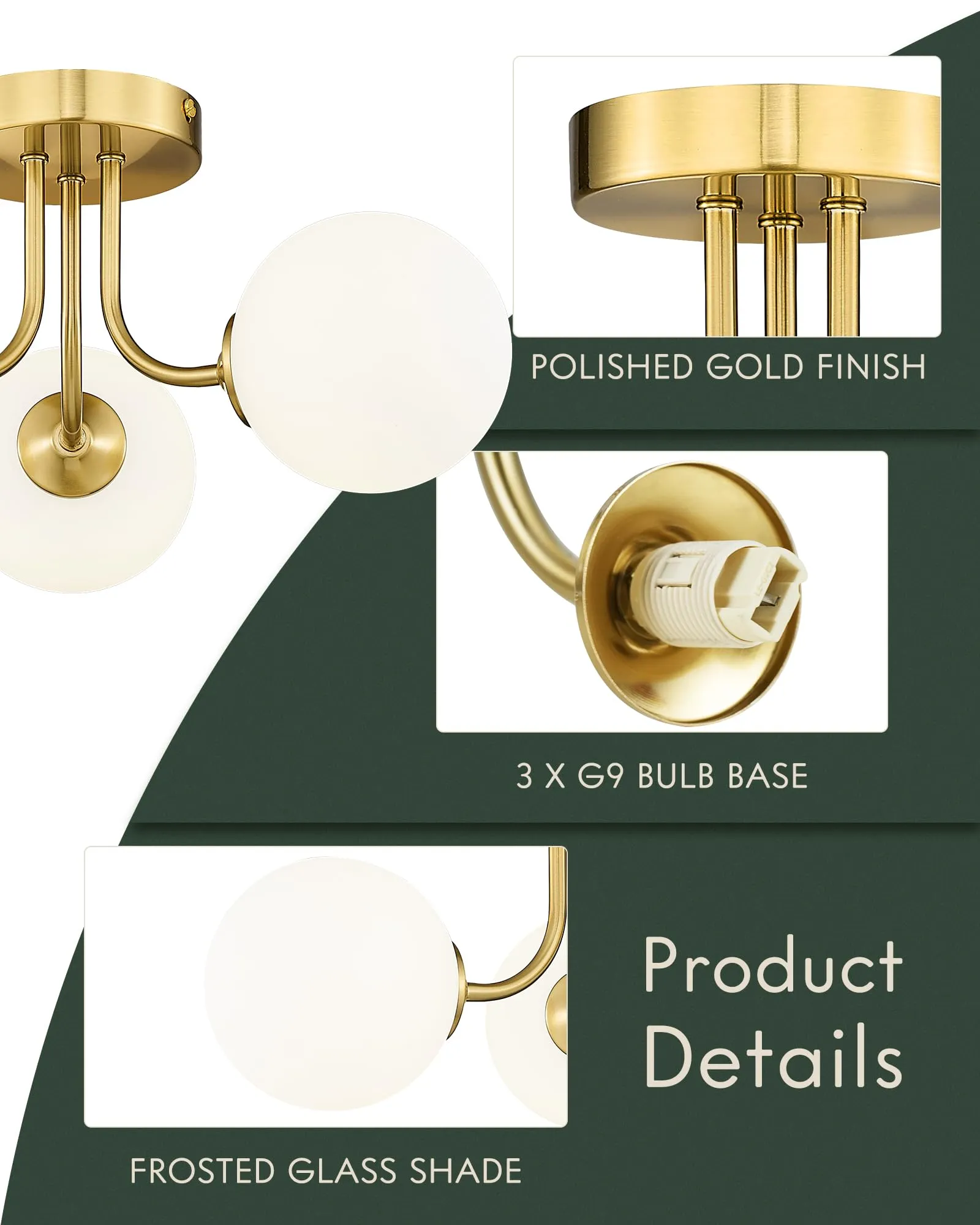
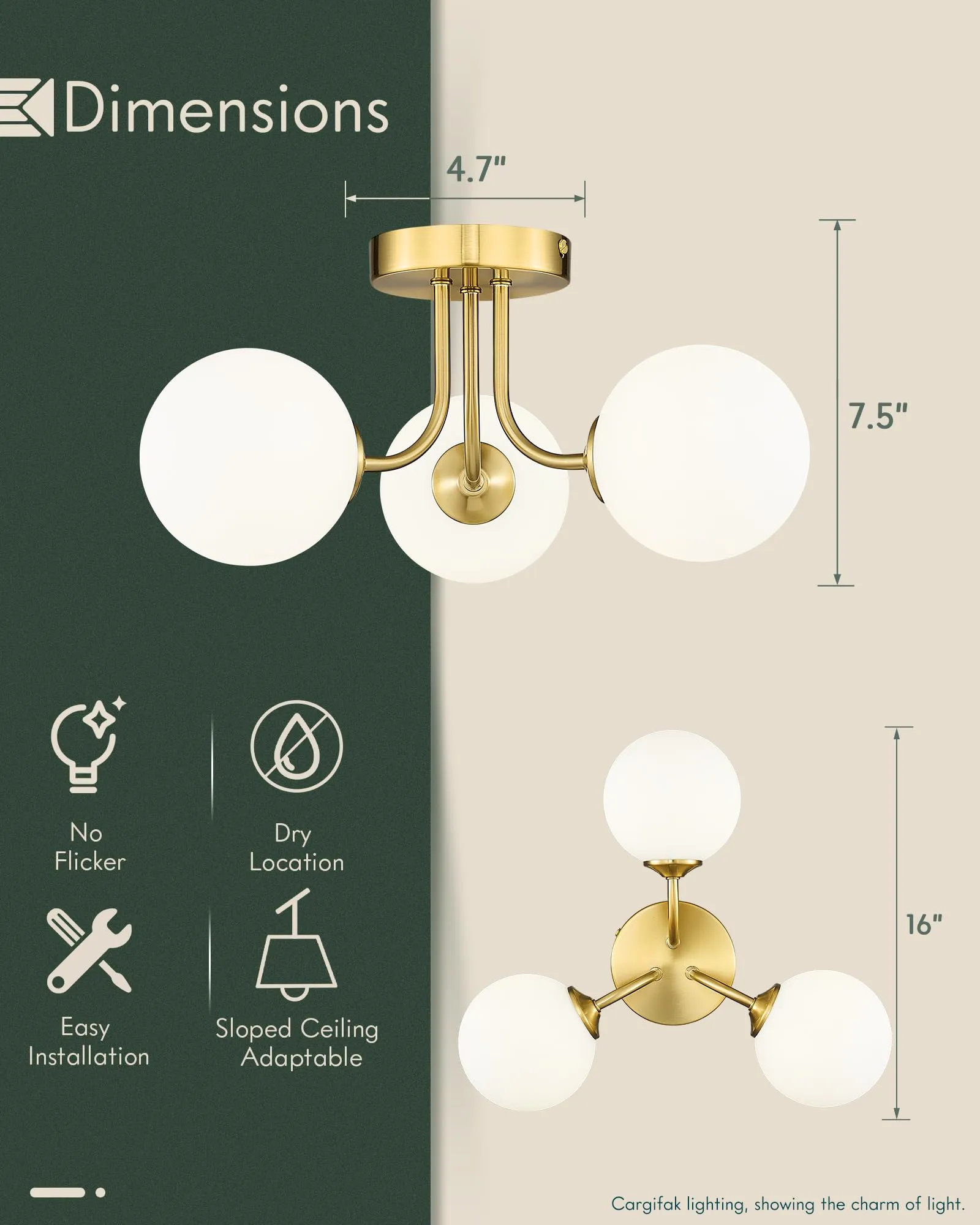
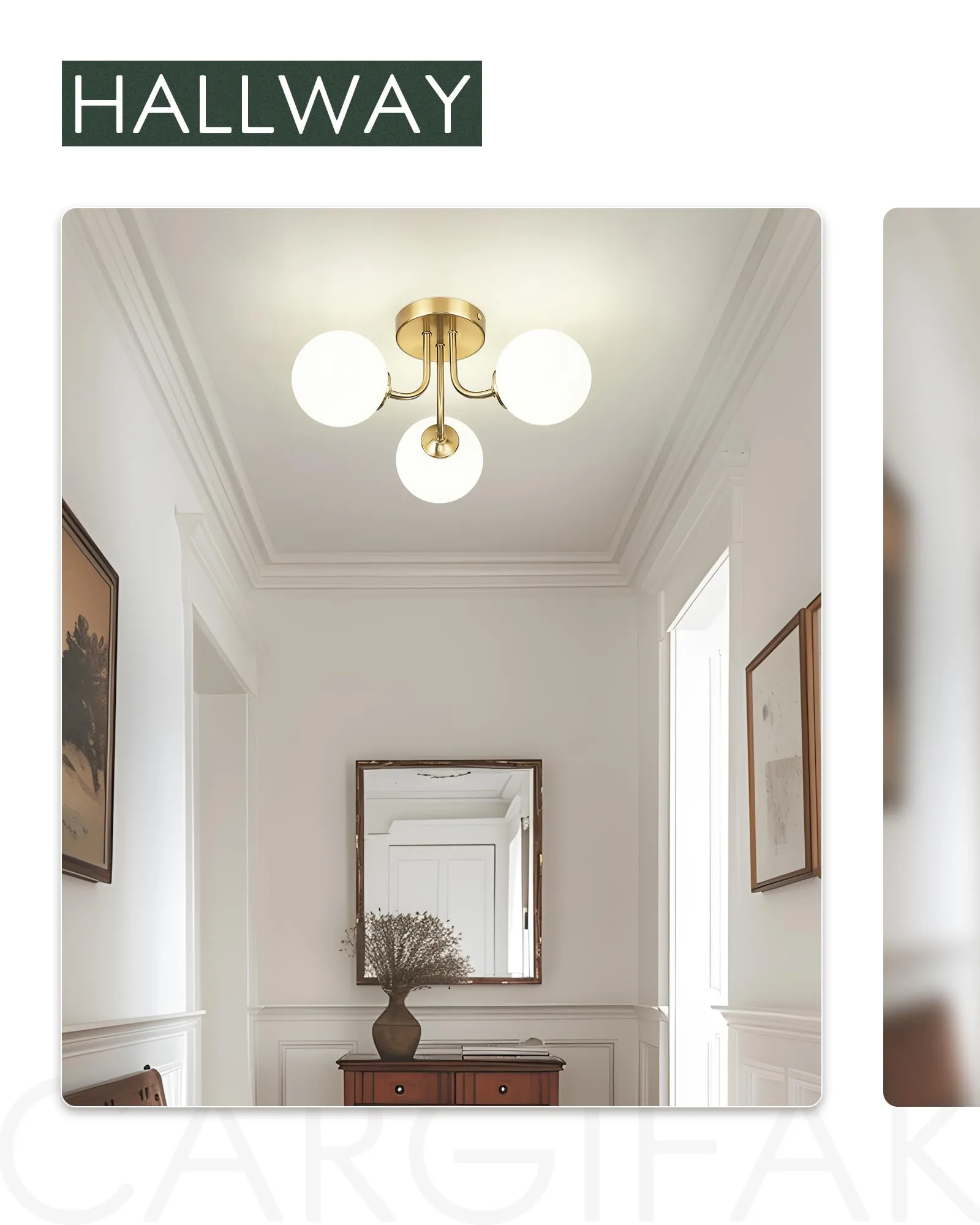
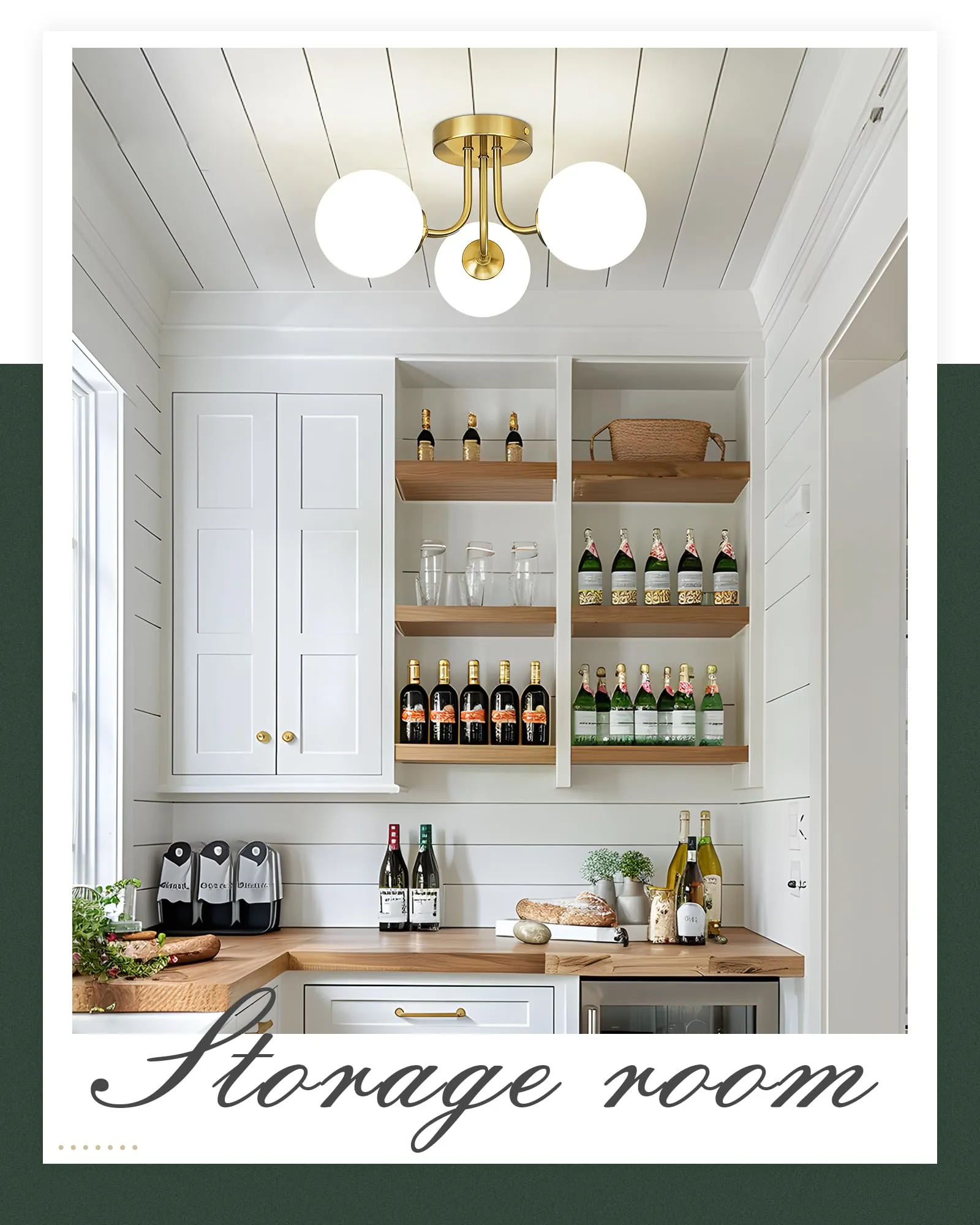
When you are ready to implement these design principles into your home, finding an overhead fixture that masterfully blends correct color temperature compatibility, optimal light diffusion, and high-end style is key. An exceptional execution of this balance can be seen in modern, multi-source designs like the 3-Light Black Ceiling Light Fixture with Globe Frosted Glass .
This style of industrial semi-flush mount fixture directly resolves the core lighting conflicts of the kitchen through several intentional design choices:
Multi-Source Lumens: Rather than relying on a single, overpowering lightbulb that creates a harsh central glare zone, a three-light configuration splits the lighting workload. It provides ample total brightness across your kitchen layout while keeping the intensity per bulb perfectly balanced.
Enclosed Frosted Globes: Every bulb is completely surrounded by an elegant white frosted glass globe. This serves as a premium diffusion barrier, meaning you can install energy-efficient 3000K or 4000K LED bulbs at high wattages while enjoying zero raw glare, zero harsh reflections, and zero eye strain.
The Power of Visual Contrast: From an aesthetic standpoint, the structure provides an exceptional visual anchor. The bold architectural lines of a matte black frame contrast beautifully against white ceilings and glowing frosted glass globes. It adds a grounding, contemporary style element that coordinates effortlessly with modern black cabinet hardware or classic stainless steel appliances.
Pro Designer Tip: The Adaptive Kitchen
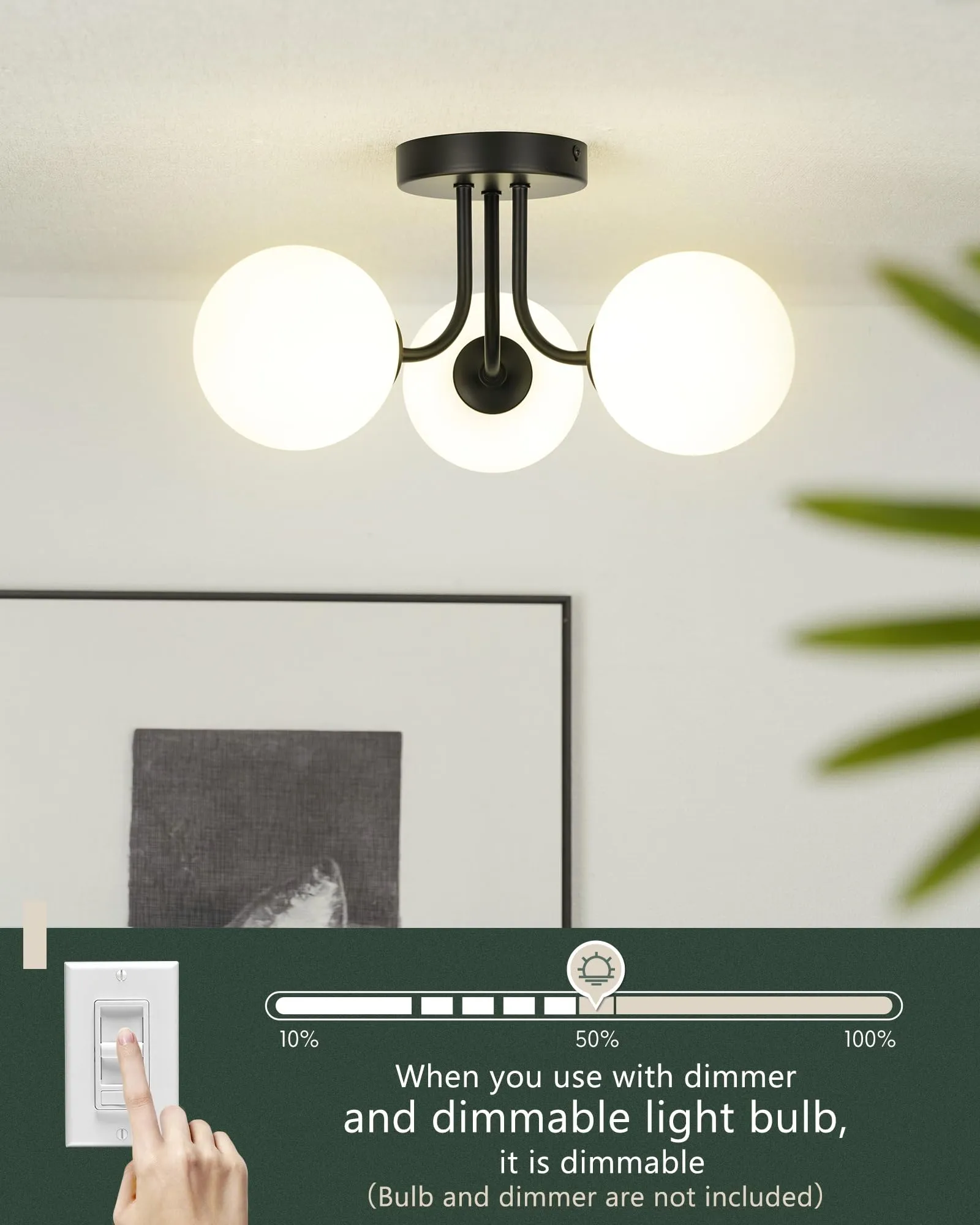
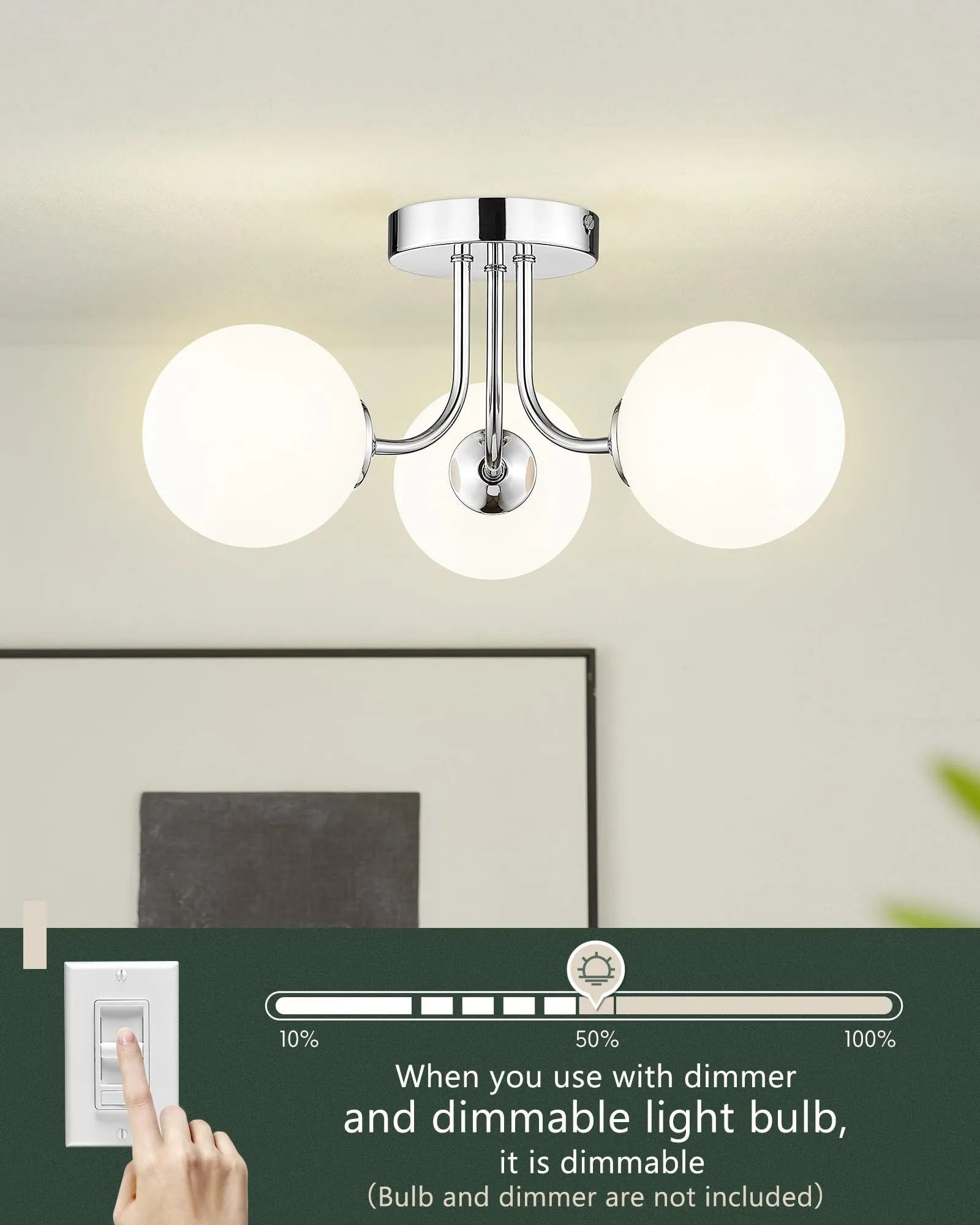
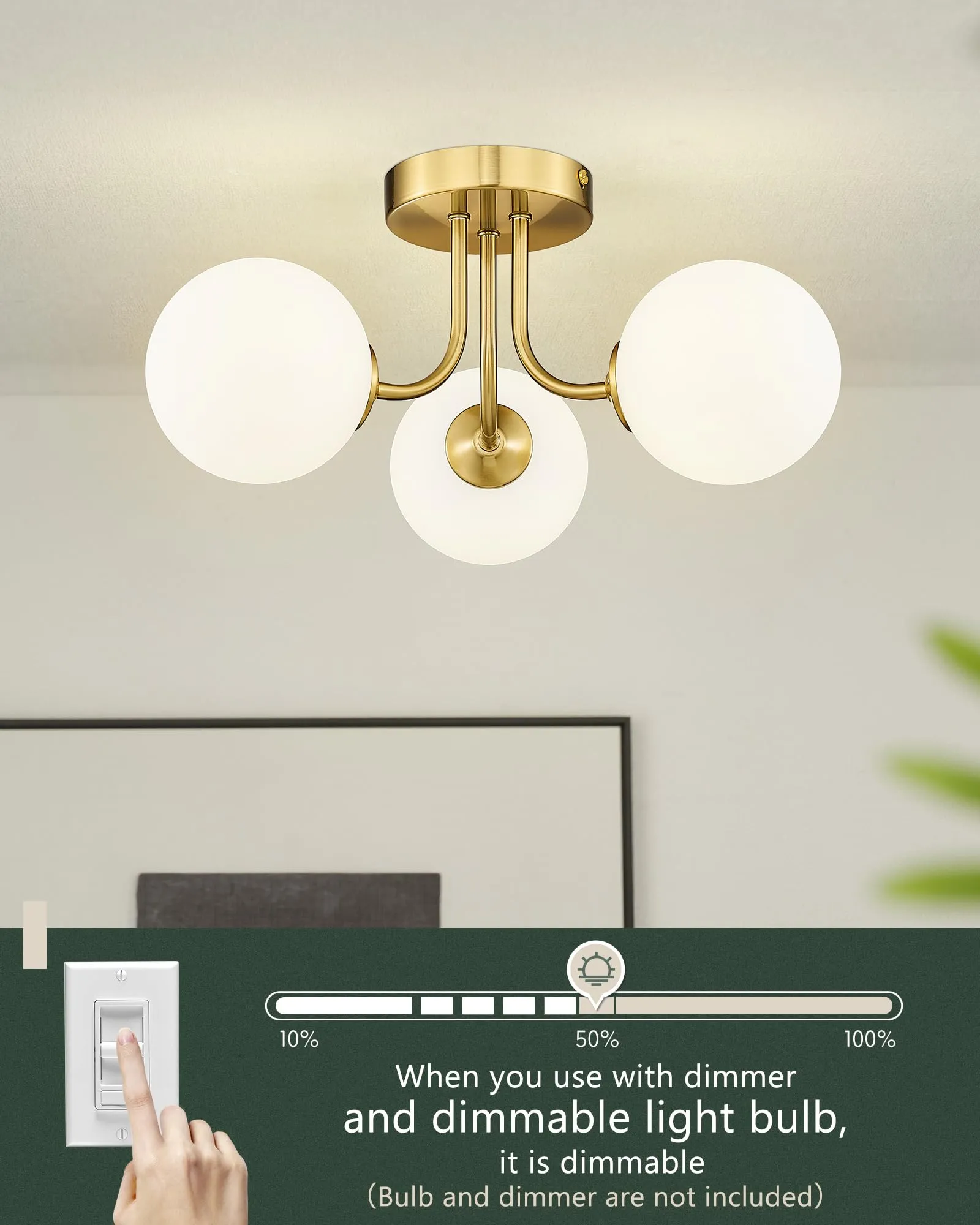
To unlock the full potential of a multi-light frosted glass fixture, always pair it with high-quality dimmable LED bulbs matching your chosen color temperature. By wiring your central semi-flush mount fixture to a compatible dimmer switch, you create an adaptive space that responds to your changing needs throughout the day. You can run the system at 100% capacity during a busy afternoon meal prep session for flawless visibility, and then slide the dimmer down to 30% in the evening. The frosted globes will instantly transition into a soft, glowing background ambiance, creating a warm, relaxed environment perfect for late-night conversations over a glass of wine.
Shop the 3-Light Black Ceiling Light Fixture on Hozo
Summary: Designing Your Kitchen's Perfect Glow
Mastering your kitchen's lighting doesn't require a professional degree in architectural engineering. It simply requires understanding how color temperature, physical materials, and glass textures interact.
Take a look at your kitchen's cabinetry, countertops, and overall design style to find your ideal baseline: 3000K for classic, warm, organic spaces, or 4000K for clean, crisp, modern interiors. Once you have selected your ideal color temperature, protect your eyes, eliminate shadows, and elevate your design by ensuring those light waves pass through high-quality frosted glass diffusion.
By selecting fixtures that prioritize both visual performance and physical comfort, you can transform your kitchen from a basic utilitarian cook-space into a stunning, beautifully balanced environment where family and friends naturally want to linger, keeping in mind How to clean glass light fixtures without scratching the surface to retain that perfect glow .
Frequently Asked Questions (FAQ)
Q1: Can I mix 3000K and 4000K color temperatures in the same kitchen?
It is generally not recommended to mix different Kelvin ratings within the same structural layer of lighting (e.g., mixing bulbs in a single central ceiling fixture), as it creates a visually jarring patchiness. However, you can layer them intentionally: for instance, using 4000K cool lights concealed under cabinets specifically for task work, while keeping your main overhead ambient ceiling lights at a softer 3000K.
Q2: Why does 4000K lighting look blue or cold in my kitchen?
If 4000K looks excessively cold, it is likely reacting to traditional warm wood cabinetry or a yellow-tinted wall paint, creating an uncoordinated visual clash. Alternatively, if you are using an open, non-diffused glass fixture, the raw concentrated beams can feel colder than they actually are. Switching to a diffused fixture like the 3-Light Black Ceiling Light Fixture with Globe Frosted Glass will instantly soften the presentation.
Q3: How many lumens do I need for standard kitchen lighting?
As a general design rule, kitchens require roughly 30 to 40 foot-candles of light for the general area, and up to 70 to 80 foot-candles at specific meal preparation zones. To achieve this easily without creating harsh singular hotspots, utilize multi-bulb ceiling fixtures that distribute lumens evenly across the room layout.
Q4: Are daylight bulbs (5000K or higher) recommended for small kitchens?
No. While some believe higher color temperatures make a small room look larger, 5000K+ lights introduce aggressive blue tones that create a stark, uninviting environment in residential homes. Stick to 4000K neutral white if you want a small kitchen to feel bright, clean, and spacious without sacrificing domestic comfort.
Q5: Why do I still see dark shadows on the counter after installing brighter bulbs?
Brighter bulbs do not automatically solve a placement problem. When the only light is behind your head, your body blocks it and creates a shadow over the worktop. Add a task layer under the cabinets or move the source closer to the front edge of the work zone, then use diffusion to keep the added light comfortable.
Q6: Should every fixture in the kitchen use the same color temperature?
Keep fixtures that share the same visual layer consistent so the room does not look patchy. A practical exception is intentional layering: a neutral task light under cabinets can work with a warmer ambient ceiling light when the two layers are controlled separately and the transition is visually gradual.
Q7: What should I check before buying a kitchen ceiling fixture online?
Confirm the fixture's overall width and height against the room and ceiling, the mounting plate and included hardware, bulb base and maximum wattage, dimmer compatibility, globe replacement availability, and the seller's delivery and return terms. These checks prevent the most common surprises after an order arrives.
Q8: What should I do if a glass globe arrives cracked or installation hardware is missing?
Photograph the packaging and the damaged or missing parts before installing anything, keep the order details, and contact the seller promptly through the stated support channel. Ask for the exact replacement part or a clear return and refund process, and do not energize a fixture with damaged glass or incomplete mounting hardware.
Q9: How can I tell whether a fixture will work with my dimmer?
Check that both the bulb and the dimmer are rated for LED dimming and that the fixture's recommended load falls within the dimmer's range. If the light flickers, buzzes, drops out at low settings, or has a narrow usable range, stop using that combination and confirm compatibility before replacing parts.