Lampade da tavolo in vetro o metallo? Scegli il materiale adatto alla luce, allo spazio e alla routine
Una lampada da tavolo in vetro è di solito la scelta migliore quando vuoi che la lampada appaia luminosa, leggera e decorativa anche da spenta. Una lampada in metallo è spesso preferibile quando ti serve un fascio più controllato, una silhouette grafica solida e una superficie che nasconda più facilmente le impronte. Per la maggior parte dei soggiorni e delle camere tranquille, il vetro crea un risultato più morbido e atmosferico. Per scrivanie operative, ambienti familiari molto utilizzati o schemi fortemente industriali, il metallo è spesso la scelta pratica più semplice.
Verdetto in 30 secondi
Scegli il vetro per luminosità, colore e presenza ariosa. Scegli il metallo per controllo direzionale, struttura visiva e manutenzione più semplice. Se vuoi calore senza far sembrare pesante la lampada, un paralume in vetro con base stabile in metallo offre il compromesso più utile.
Confronto rapido: cosa cambia in una stanza reale?
| Punto decisionale | Lampada da tavolo in vetro | Lampada da tavolo in metallo |
|---|---|---|
| Effetto luminoso | Può trasmettere o diffondere la luce attraverso il paralume, in base a tonalità e opacità | Blocca la luce attraverso il paralume e la dirige dalle aperture |
| Peso visivo | Spesso appare più leggera e aperta | Di solito crea una silhouette più forte e definita |
| Ruolo del colore | La tonalità può cambiare tra luce diurna e illuminazione serale | La finitura rimane più costante quando la lampada è accesa |
| Cura quotidiana | Mostra più facilmente polvere e impronte, soprattutto sulle zone trasparenti lucide | Le finiture verniciate o spazzolate nascondono meglio i segni d'uso |
| Spazi ideali per iniziare | Soggiorni, camere, angoli lettura, mensole aperte | Scrivanie, superfici molto utilizzate, ambienti industriali, angoli per attività |
| Attenzione principale | Richiede un posizionamento attento per evitare punti troppo luminosi e urti | Può apparire pesante o creare una zona di luce più stretta |

Cosa aggiunge davvero una lampada in vetro
Il vetro non produce un unico effetto luminoso. Il vetro trasparente espone la lampadina e crea riflessi; quello opalino ammorbidisce la vista della sorgente; quello colorato aggiunge colore sia all'oggetto sia all'atmosfera illuminata. Dopo il tramonto il paralume rimane parte della stanza, non soltanto un involucro attorno alla lampadina.
Questo rende il vetro utile quando una lampada da tavolo deve svolgere due funzioni: offrire luce locale delicata e agire come accento visibile. Funziona bene anche in stanze piccole, perché riflessi e trasparenza possono far sembrare l'apparecchio meno ingombrante di un paralume opaco delle stesse dimensioni. Il compromesso è che la lampadina conta di più: forma, luminosità e colore possono cambiare l'aspetto finale attraverso il vetro.
Se il colore è il fattore decisivo, usa Come scegliere il colore giusto per una lampada da tavolo in vetro per provare il paralume con parete, mobili, luce diurna e lampadina serale prima dell'ordine.
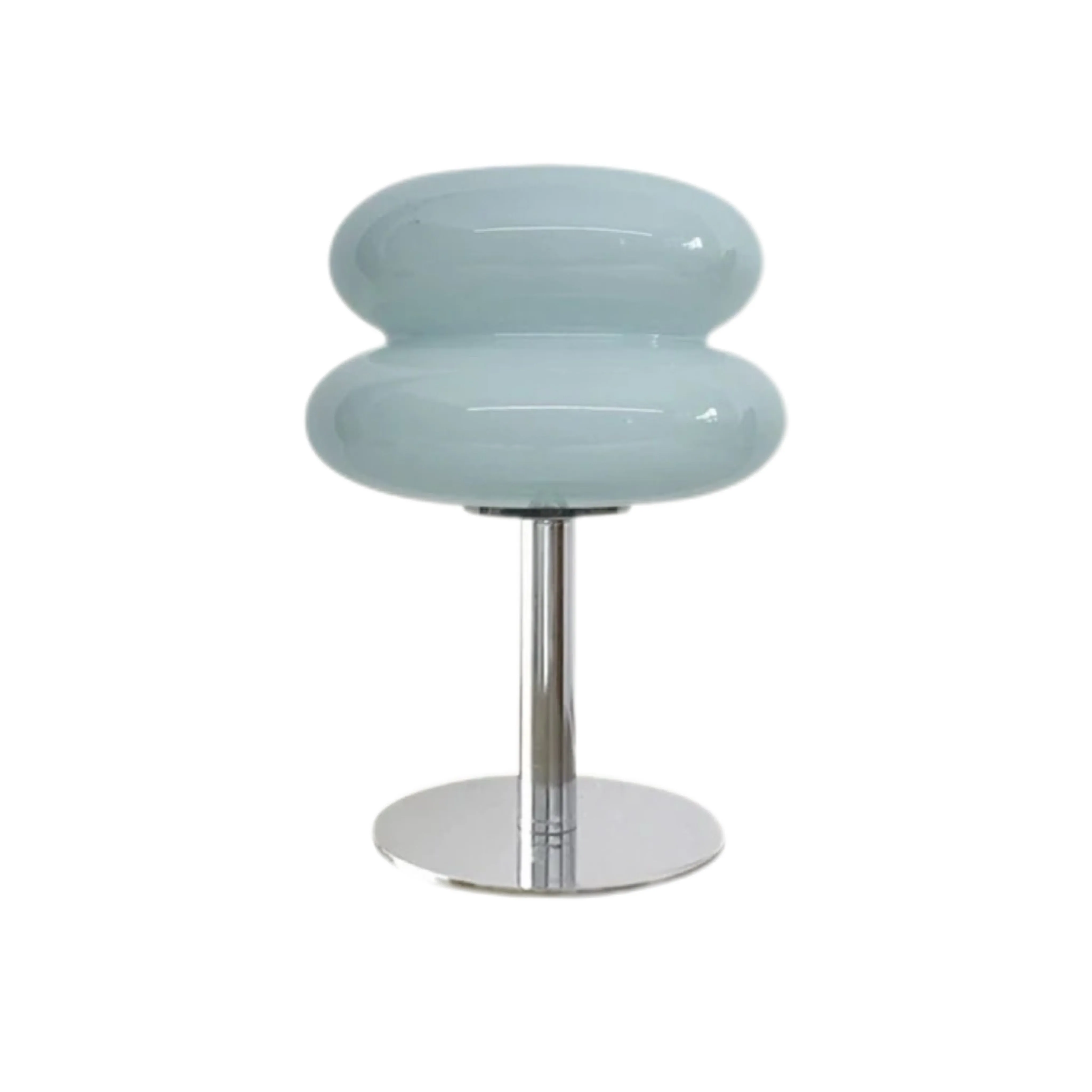
La lampada da tavolo in vetro Marta Modern Bauhaus abbina un paralume a cupola in vetro a una base in metallo: ottieni un aspetto luminoso guidato dal vetro senza perdere una silhouette stabile e ben ancorata.

Cosa fa diversamente una lampada in metallo
I paralumi in metallo sono opachi: la luce esce dal bordo aperto o da un'apertura progettata, invece di filtrare attraverso il materiale. È utile quando vuoi dirigere la luce su un libro, una tastiera o una piccola superficie di lavoro, mantenendo la lampadina schermata dalle normali linee di visuale. Il metallo offre inoltre bordi netti e un contorno forte, adatto a interni con accenti neri, cromo, ottone o dettagli industriali.
La stessa solidità può essere inadatta a una stanza piccola o delicata. Un paralume scuro e largo può sembrare più pesante delle sue misure, soprattutto su un comodino stretto. Le finiture molto lucide possono mostrare impronte e quelle verniciate possono scheggiarsi con urti ripetuti. La durata non dipende solo dal materiale: contano anche costruzione, finitura, stabilità della base e modo d'uso.
Le quattro differenze che dovrebbero guidare l'acquisto
1. Bagliore d'ambiente o zona concentrata?
Scegli il vetro quando pareti e oggetti vicini devono ricevere un bagliore delicato. Scegli il metallo quando il paralume deve contenere e dirigere la luce. In entrambi i casi, controlla il bordo aperto dalla normale posizione seduta per non esporre troppo la lampadina.
2. Oggetto discreto o elemento grafico?
Il vetro può fondersi con luce diurna e colori circostanti; il metallo mantiene il contorno. Usa il vetro per mantenere arioso un angolo compatto. Usa il metallo quando serve un segno scuro, color ottone o colorato intenzionale.
3. Superficie da esporre o superficie affollata?
Il vetro si adatta a credenze, mensole o comodini protetti. Il metallo è più tollerante su scrivanie o consolle familiari dove gli oggetti si spostano spesso. Qualunque scelta tu faccia, lascia spazio libero attorno alla base e tieni il cavo fuori dai percorsi.
4. Colore che si trasforma o rimane stabile?
Il vetro colorato può apparire tenue di giorno e più intenso quando è illuminato. Una finitura metallica opaca cambia meno. Scegli la trasformazione quando la lampada partecipa all'atmosfera serale; scegli la costanza quando deve coordinarsi precisamente con elementi fissi.
Usa la prova sfondo e attività
- Fotografa lo sfondo. Includi parete, superficie e il mobile più grande vicino.
- Definisci l'attività. Decidi se la lampada serve per atmosfera, comodino, lettura o lavoro alla scrivania.
- Segna l'ingombro. Usa le dimensioni previste e verifica che gli oggetti quotidiani entrino ancora.
- Controlla la linea di visuale da seduti. La parte più luminosa della lampadina non deve stare direttamente nella visuale normale.
- Scegli il materiale per ultimo. Vince il vetro quando bagliore e leggerezza visiva risolvono la stanza; vince il metallo quando servono controllo e resistenza.

In una stanza neutra, il materiale è solo il primo livello della decisione. Come abbinare una lampada da tavolo in vetro colorato in un interno scandinavo neutro spiega come ripetere un accento in vetro senza disturbare la palette calma.
Scegli il vetro se queste frasi descrivono la tua stanza
- La lampada deve aggiungere atmosfera oltre alla luce locale utile.
- La superficie o la stanza è piccola e una forma opaca pesante la dominerebbe.
- Vuoi un colore che diventi più intenso o luminoso dopo il tramonto.
- La lampada sarà in una posizione relativamente protetta.
- Sei disposto a scegliere la lampadina come parte dell'aspetto complessivo.
Il vetro è particolarmente convincente in camera o soggiorno, dove il comfort conta più di un fascio strettamente concentrato. Su un comodino stretto, però, dimensioni e portata sono importanti quanto il materiale. Per il posizionamento consulta Idee per lampade da comodino nelle piccole camere da letto nordiche.
Se il vetro è adatto alla stanza, confronta le sette varianti di colore del vetro e il diametro di 20 cm della Marta con la superficie reale prima di scegliere la finitura.

Scegli il metallo quando deve prevalere la funzione
- Ti serve un paralume che blocchi l'abbagliamento laterale e diriga più luce verso il basso.
- La lampada sarà spostata o maneggiata spesso su una superficie affollata.
- La stanza ha bisogno di un contorno netto collegato a ferramenta o strutture dei mobili.
- Preferisci una finitura simile di giorno e di notte.
- La palette circostante può sostenere un oggetto visivamente più forte.
Non scegliere il metallo solo perché sembra più resistente. Una base leggera può comunque ribaltarsi, una finitura lucida può macchiarsi e un paralume opaco mal posizionato può creare una metà superiore scura e una zona troppo luminosa sotto. Controlla l'apparecchio completo, non soltanto l'etichetta del materiale.
Raccomandazione finale: lascia che il paralume crei l'atmosfera e la base svolga il lavoro
Per soggiorno, comodino o angolo decorativo, inizia dal vetro. Offre più atmosfera, più leggerezza visiva e più possibilità di usare il colore senza aggiungere un oggetto ingombrante. Per una superficie di lavoro dedicata o una stanza che richiede una struttura grafica più netta, inizia dal metallo.
Un design ibrido è la risposta più completa quando vuoi un paralume luminoso ma apprezzi stabilità e contrasto. Marta usa una cupola in vetro e una base metallica, misura 20 cm di diametro per 28 cm di altezza e utilizza una lampadina E27 fino a 40 W. Non è dimmerabile: scegli dall'inizio un flusso confortevole e mantieni libero il percorso del cavo da 150 cm.
Quando la scelta guidata dal vetro è adatta alla stanza, controlla specifiche e finiture Marta attuali, poi conferma lampadina, ingombro, accesso all'interruttore e percorso del cavo prima dell'ordine.
Domande frequenti
Una lampada in vetro è più luminosa di una in metallo?
Non automaticamente. Il vetro può diffondere la luce visibile attraverso il paralume, mentre il metallo la dirige dalle aperture. Flusso e design del paralume controllano comunque il risultato.
Quale materiale è migliore per una stanza piccola?
Il vetro appare spesso più leggero, ma diametro, altezza e superficie libera contano più del materiale da solo.
Quale materiale è più facile da pulire?
Il metallo verniciato o spazzolato nasconde di solito meglio le impronte. Il vetro si pulisce facilmente, ma può mostrare prima polvere e segni d'uso.
Una lampada in vetro può funzionare su una scrivania?
Sì, se offre luce adatta, ha una base stabile ed è protetta dagli urti frequenti. Su una scrivania molto affollata il metallo può essere più semplice.
La lampada Marta include una lampadina?
No. Usa una lampadina E27 venduta separatamente, con potenza massima di 40 W.