Illuminating the Path: The Definitive Dark Corner Lighting Scheme for Hallways and Entrances
Picture this: You unlock your front door after a grueling day at work, ready to embrace the comfort of your sanctuary. You step inside, flip the switch, and are immediately greeted by a gloomy, narrow corridor that feels more like an uninspired underground tunnel than a welcoming home. If this scenario sounds frustratingly familiar, you are certainly not alone.
Entrances and hallways are frequently treated as the architectural stepchildren of residential design. They are inherently narrow, almost always completely cut off from natural windows, and notoriously prone to developing awkward, cast-shadow dark corners. Yet, these transition zones hold immense power over our daily lives; they dictate the critical "first impression" of your home for guests and serve as your own psychological decompression chamber when returning from the outside world.
A poorly lit hallway doesn't just look depressing—it actively distorts your home's layout, making spaces feel cramped, claustrophobic, and fragmented. However, fixing a stubborn dark corner isn't as simple as screwing the highest-wattage, brightest bulb you can find into a dusty ceiling fixture. True spatial transformation requires a strategic, layered approach to lighting. By understanding how light behaves in tight spaces and choosing materials that masterfully shape that light, you can easily turn a dim transit corridor into a bright, sophisticated architectural highlight.
1. The Hidden Pitfalls of Hallway Lighting: Why Standard Fixes Fail
When homeowners notice an entryway or corridor feels dark and uninviting, their instinctual reaction is usually to tackle it with sheer, raw brightness. They buy high-lumen, exposed LED bulbs or clear glass pendant fixtures, thinking that flooding the area with intense light will solve the problem. Unfortunately, this is where basic physics clashes head-on with interior design.
When you place a harsh, unfiltered light source inside a confined, windowless space, you inadvertently create what professional lighting designers call "hard shadows." Because the light waves strike the walls at sharp, direct angles without any filtration, the contrast between the illuminated areas and the structural corners becomes aggressively stark. The bright spots become blindingly glary, while the dark corners actually look deeper, sharper, and more pronounced by comparison.
Furthermore, many older or standard homes suffer from low hallway ceilings. Hanging a long, dramatic pendant or chandelier in a tight space with limited vertical clearance creates an oppressive, heavy overhang. It forces the eyes downward, visually compressing the corridor and making the entire ceiling feel like it is closing in on you.
The Golden Rule of Narrow Spaces: You cannot solve a dark corner problem with more aggressive light; you solve it by changing the quality and direction of the light.
To fix these underlying architectural limitations without embarking on an expensive structural renovation, you need to understand how to manipulate light distribution.
2. The Layered Lighting Strategy: A Masterclass in Banishing Shadows
To permanently neutralize shadows in structural transition zones, we must abandon the outdated mindset of relying on a single, lonely ceiling light. Instead, high-end interior architecture utilizes a concept known as Layered Lighting. By breaking down your illumination scheme into distinct, specialized tiers, you can effortlessly manipulate spatial perception and stretch the visual dimensions of any room.
For entryways, porches, and hallways, an effective lighting scheme requires a seamless synergy between two essential layers:
- Ambient Lighting (The Baseline Glow): This is your foundational layer. It provides the overall volume of light required for safe navigation, basic visibility, and setting the primary mood of the space. It should be soft, expansive, and completely free of glare.
- Auxiliary/Accent Lighting (The Precision Relief): This layer acts as your strategic strike team. It is deployed specifically to fill the physical blind spots that your main ceiling light cannot gracefully reach—such as deep structural corners, wall recesses, next to coat racks, or flanking entryway mirrors.
When these two layers work in harmony, they create a fluid visual gradient. The eye is guided effortlessly down the length of the hallway, noticing beautiful design details rather than getting trapped in pockets of gloomy shadows.
3. The Ambient Layer: Elevating Space with Soft, Cloud-Like Diffusion
Let's begin with your foundation: the ambient ceiling light. Because hallways and porches have limited square footage, your main light fixture must deliver maximum light dispersion while maintaining a compact, unobtrusive physical footprint. Recessed can lights are a common default, but they often feel sterile, commercial, and cast unflattering downward cones of light that leave the upper walls in darkness.
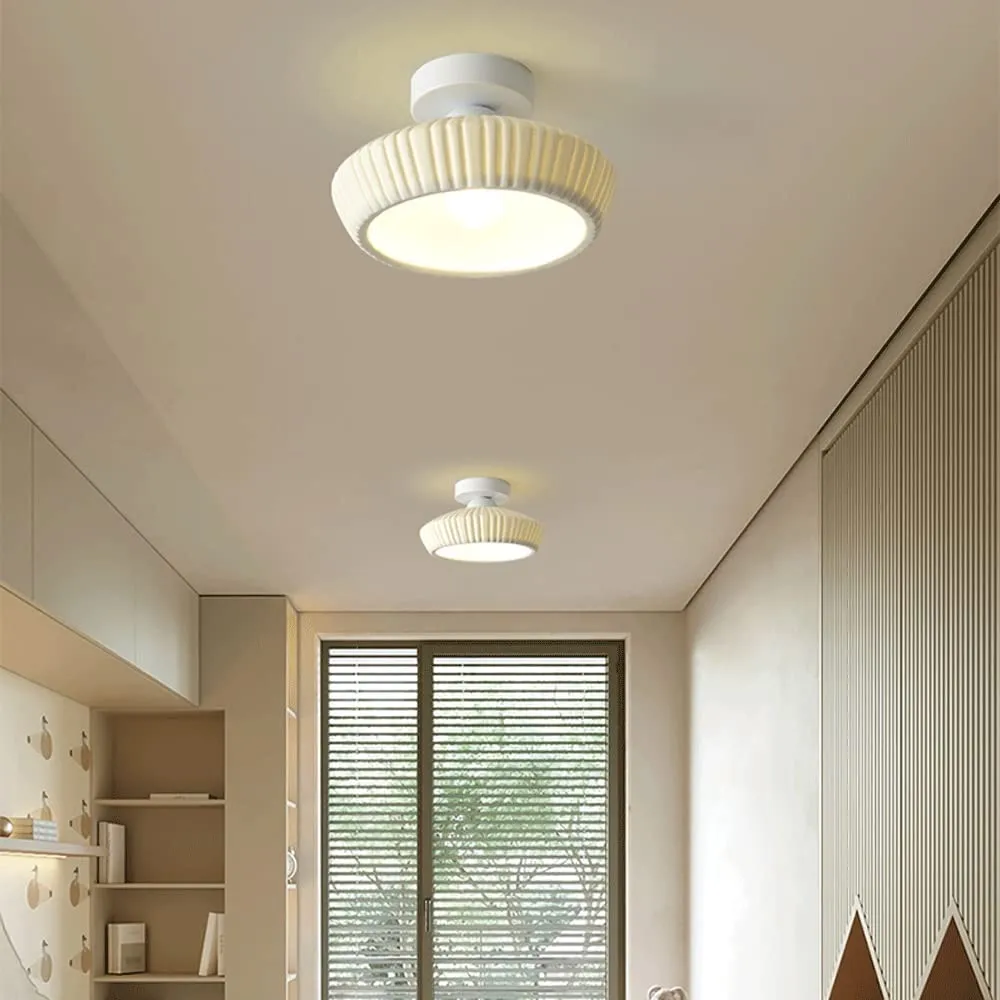
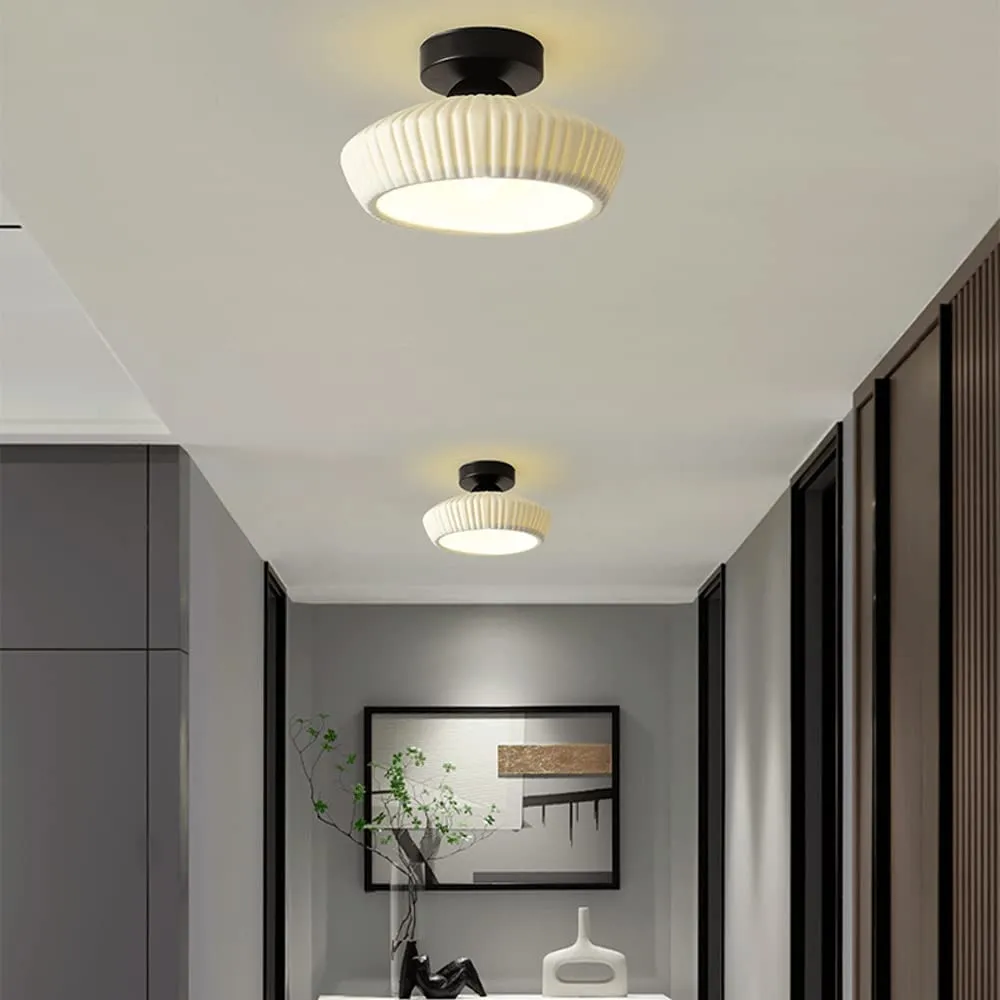
The ideal solution is a semi-flush mount ceiling fixture. A semi-flush design hangs just a few inches below the ceiling, allowing light to escape not just downward, but also upward and outward across the ceiling surface. This reflects light back down, instantly making the room feel taller and airier.
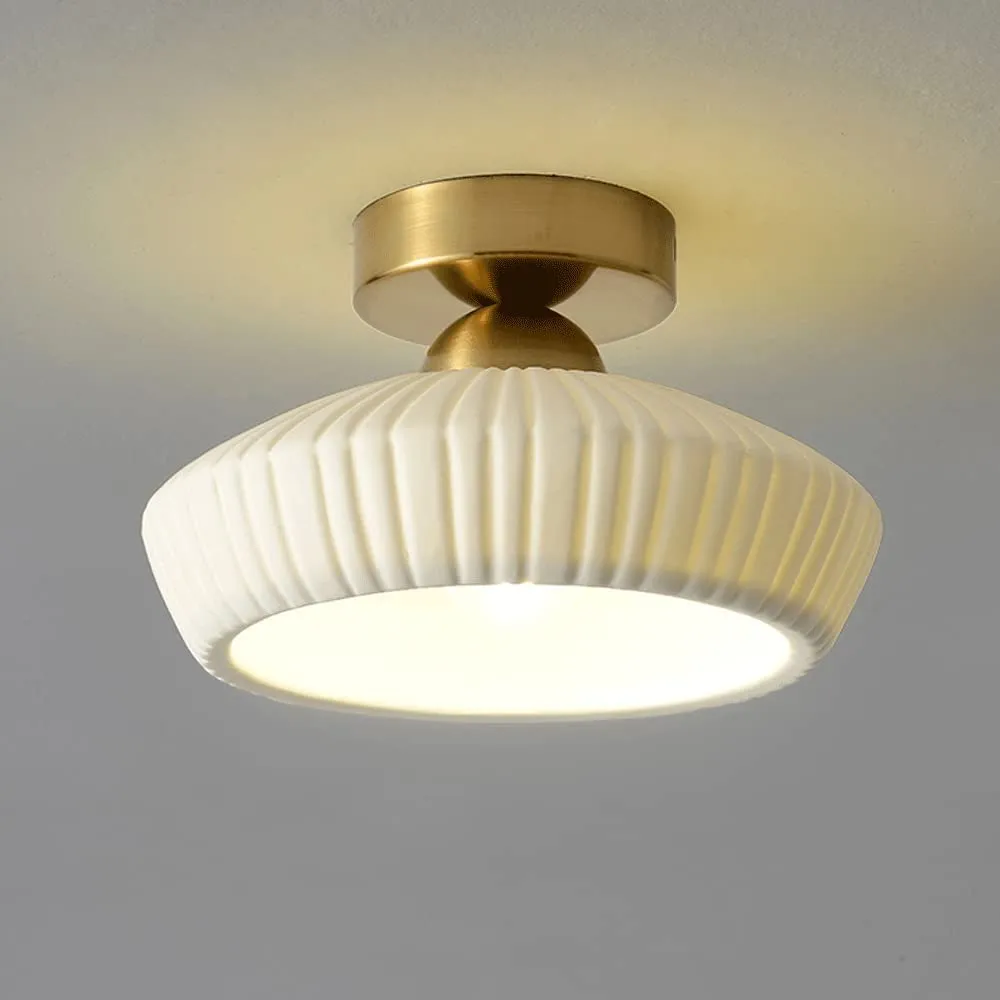
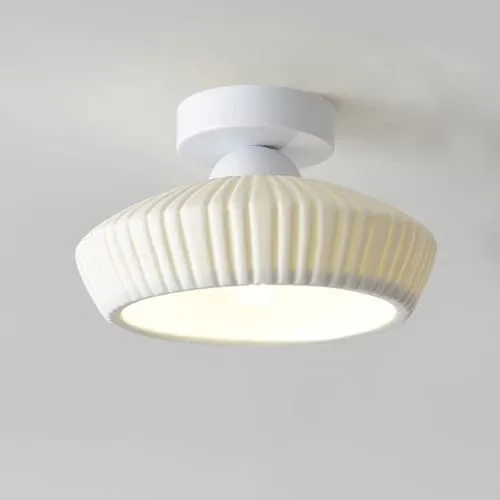
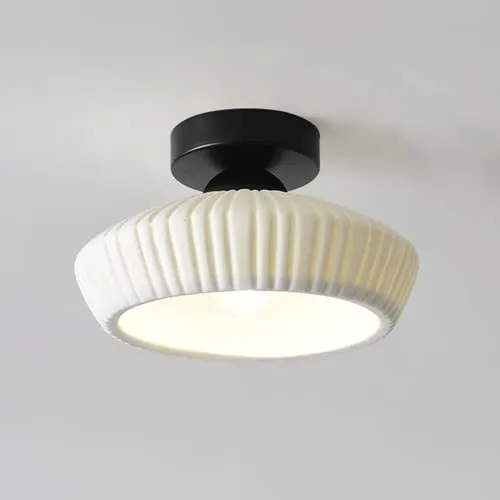
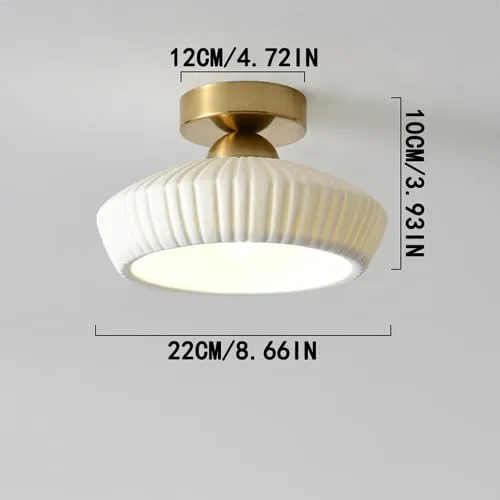
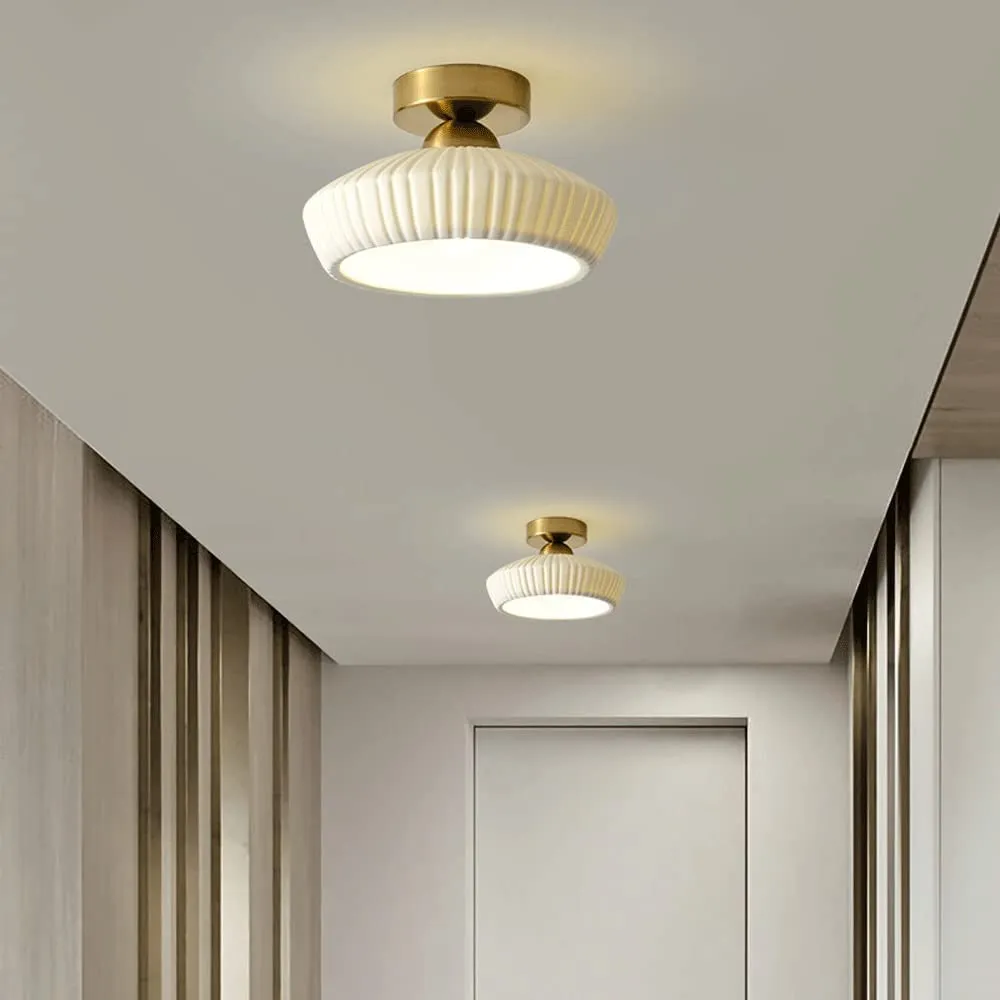
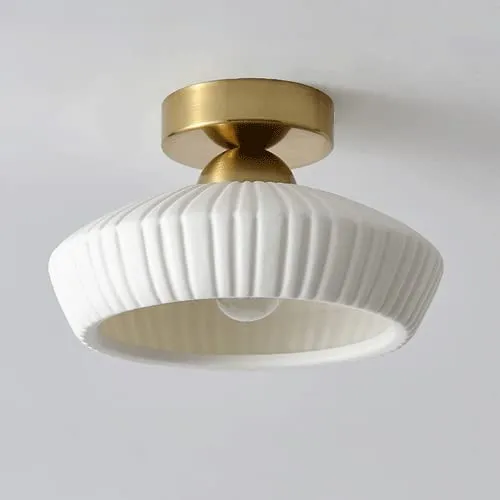
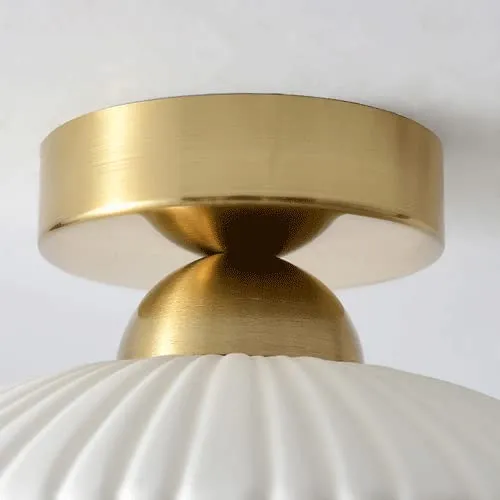
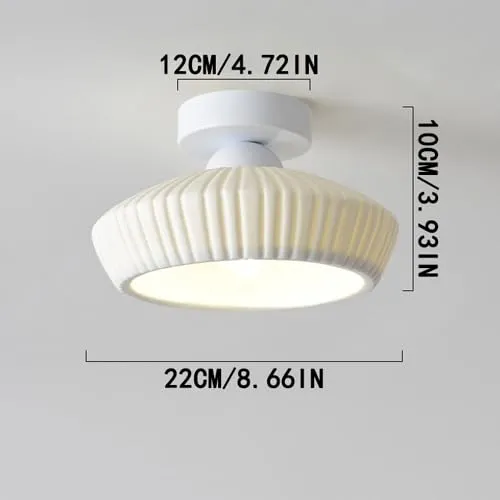
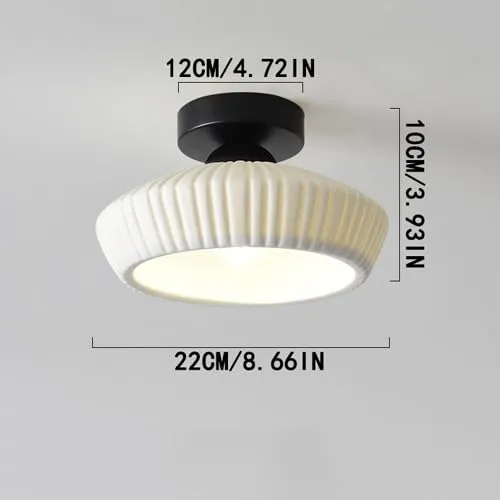
To achieve this perfect baseline glow, the White Semi Flush Mount Ceiling Light (Mid Century Modern Close to Ceiling Light Fixture) serves as an exceptional design tool.
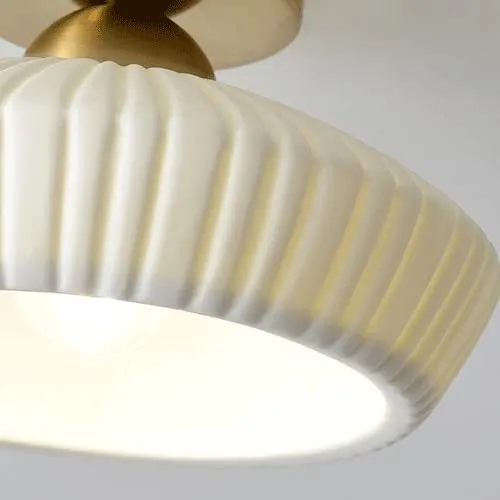
The true secret weapon of this fixture is its 8.6" Milk Glass Ceramic Shade. Unlike clear glass, which permits harsh light filaments to irritate the eyes, milk glass acts as an elite optical filter. It catches the raw light waves and breaks them up, scattering a velvety, uniform glow in a complete 360-degree radius.
Key Structural Benefits for Hallways:
- Shadow Eradication: By turning a point-source of light into a broad, glowing orb, it eliminates hard edges and softens the transitions into corners.
- Mid-Century Modern Sophistication: The clean, organic ceramic aesthetic effortlessly bridges the gap between cozy Farmhouse warmth and sleek, architectural minimalism.
- Low Ceiling Friendly: At 8.6 inches, it offers a beautifully sculpted design presence without encroaching on vital head clearance in tight corridors or entry porches.
By installing this style of fixture along the primary axis of your entryway or porch, you establish a bright, glare-free environment that sets a welcoming, upscale tone the moment you step across the threshold.
👉 Explore Design Specs & Options: White Semi Flush Mount Ceiling Light Product Page
4. The Precision Layer: Eliminating Strategic Blind Spots with Modern Wall Sconces
Even with a flawless ambient ceiling light, long corridors or L-shaped entryways will inevitably harbor structural blind spots where overhead light cannot effectively reach. This includes areas like the space directly above a console table, the dark wall segments between distant bedrooms, or flanking an entryway vanity mirror.
To conquer these specific dark corners, you need to pull the light down from the ceiling and introduce illumination at human eye level. This is the domain of the the architectural wall sconce.
A spectacular companion to the soft diffusion of the main ceiling fixture is the Wall Sconce 1 Light (Modern Wall Light Fixture with Matte Black Finish).
This fixture introduces a captivating study in visual contrast to a boring hallway. It features a sharp, graphic Matte Black frame that contrasts beautifully against light-colored hallway walls, paired elegantly with a Milky White Glass Shade.
How Strategic Sconce Placement Transforms Corners:
- The Wall-Washing Effect: When mounted on a flat wall near an unlit corner, this sconce casts a beautiful bidirectional or omnidirectional glow. The light grazes the wall texture, drawing the gaze upward and visually expanding the narrow corridor outward.
- Focal Point Creation: Instead of leaving a dark corner to feel like wasted space, adding a sconce transforms it into an intentional design feature. If you flank an entryway mirror or a piece of statement artwork with a pair of these modern black lamps, you create a gorgeous, bright vignette that pulls attention away from any structural imperfections—offering a perfect real-world masterclass in how to pair mirrors and lighting to double your room size.
- Material Continuity: Because it shares a milky white glass shade language with the semi-flush ceiling mount, your lighting scheme looks cohesively curated by a professional designer rather than thrown together at random.
👉 Explore Design Specs & Options: Modern Matte Black Wall Sconce Product Page
5. The Pro-Layout Blueprint: Distance, Height, and Temperature Formula
Now that you have selected the perfect combination of fixtures—the soft, organic white semi-flush mount and the crisp, structural matte black sconces—it is time to execute the physical installation with mathematical precision. Even the most stunning fixtures will underperform if they are poorly spaced or equipped with the wrong bulb types.
Follow this exact designer blueprint to map out your layout:
Spacing Your Ceiling Lights
In a long, continuous hallway, do not rely on just one center light. Space your semi-flush mount ceiling lights roughly 5 to 7 feet (1.5 to 2 meters) apart from one another. This spacing ensures that the wide, diffused spheres of light overlap perfectly at the floor level, leaving zero gaps of shadow along your walking path.
Mounting Your Wall Sconces
To maximize the space-stretching effects of a wall sconce while avoiding awkward glare, mount the fixture so that the center of the glass shade sits exactly 60 to 66 inches (1.5 to 1.7 meters) above your finished floor. This places the light source right around average eye level. It ensures the light beautifully illuminates faces in entryway mirrors and casts an optimal wash of light up and down the drywall.
The Color Temperature Rule
For transitional areas like hallways and porches, your bulb choice is paramount. Both of the recommended fixtures utilize highly accessible lamp bases (including the widely compatible E26 socket on the matte black sconce).
When applying the proper color temperature and brightness guidelines for all types of rooms, always select LED bulbs with a warm, welcoming color temperature of 2700K to 3000K (Warm White). Avoid cool white bulbs (4000K or higher), which will instantly make your home look like a sterile, cold medical clinic. A warm white glow enriches the ceramic and milk glass materials, bringing out a cozy, high-end hotel ambiance that makes coming home a genuinely soothing experience.
6. Conclusion: Turning Transitions Into Highlights
Your entryway and hallways should never feel like an afterthought or a gloomy gauntlet you have to hurry through. They represent the opening chapter of your home’s interior design story.
By replacing harsh, clear bulbs with the cloud-like, 360-degree diffusion of a mid-century milk glass semi-flush light, and targeting stubborn structural blind spots with the sharp, graphic elegance of matte black wall sconces, you can effortlessly banish dark corners forever. Stop letting awkward layout shadows compromise the mood of your living space. Implement a deliberate, layered lighting scheme today, and step into a brilliantly illuminated home every single time you open the front door.