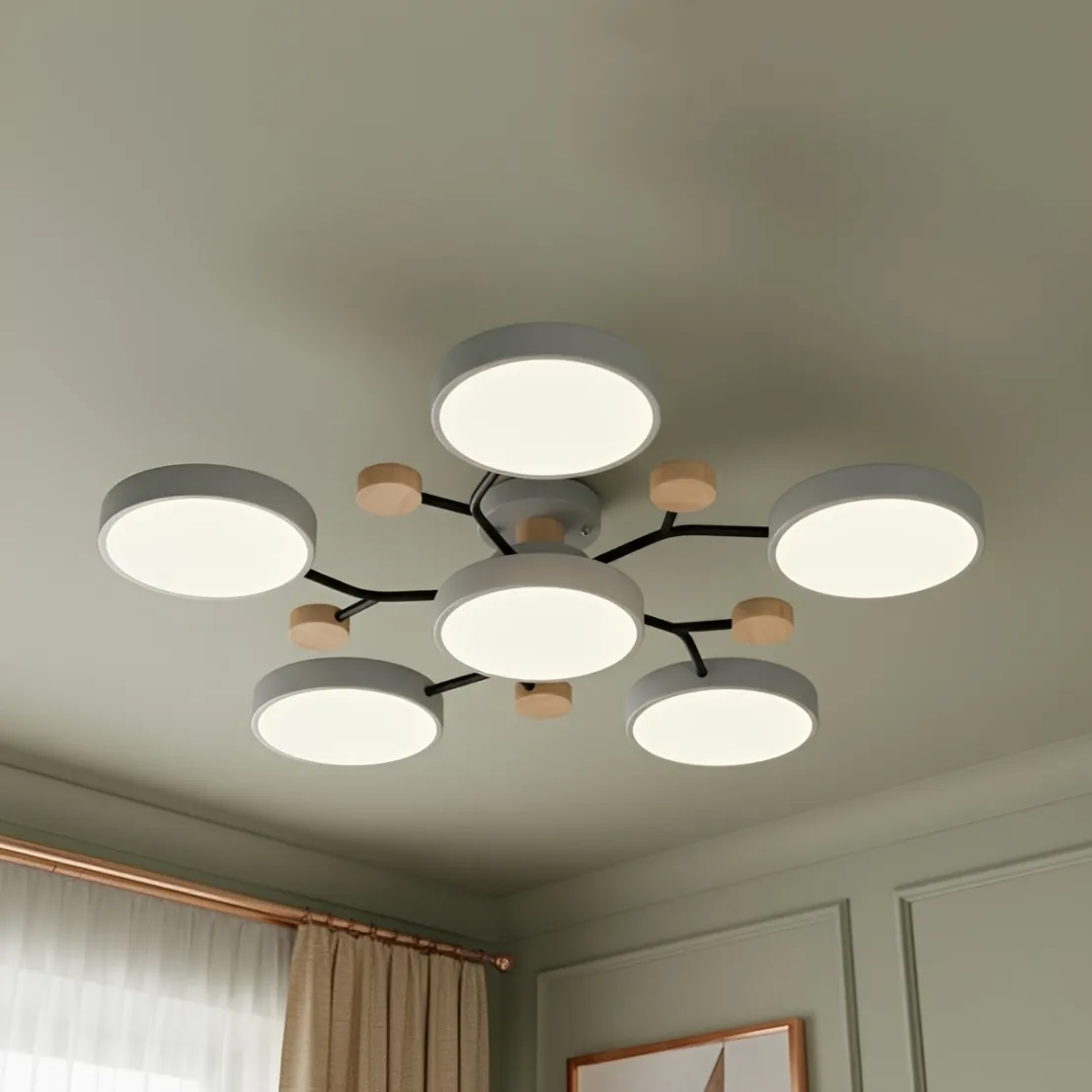
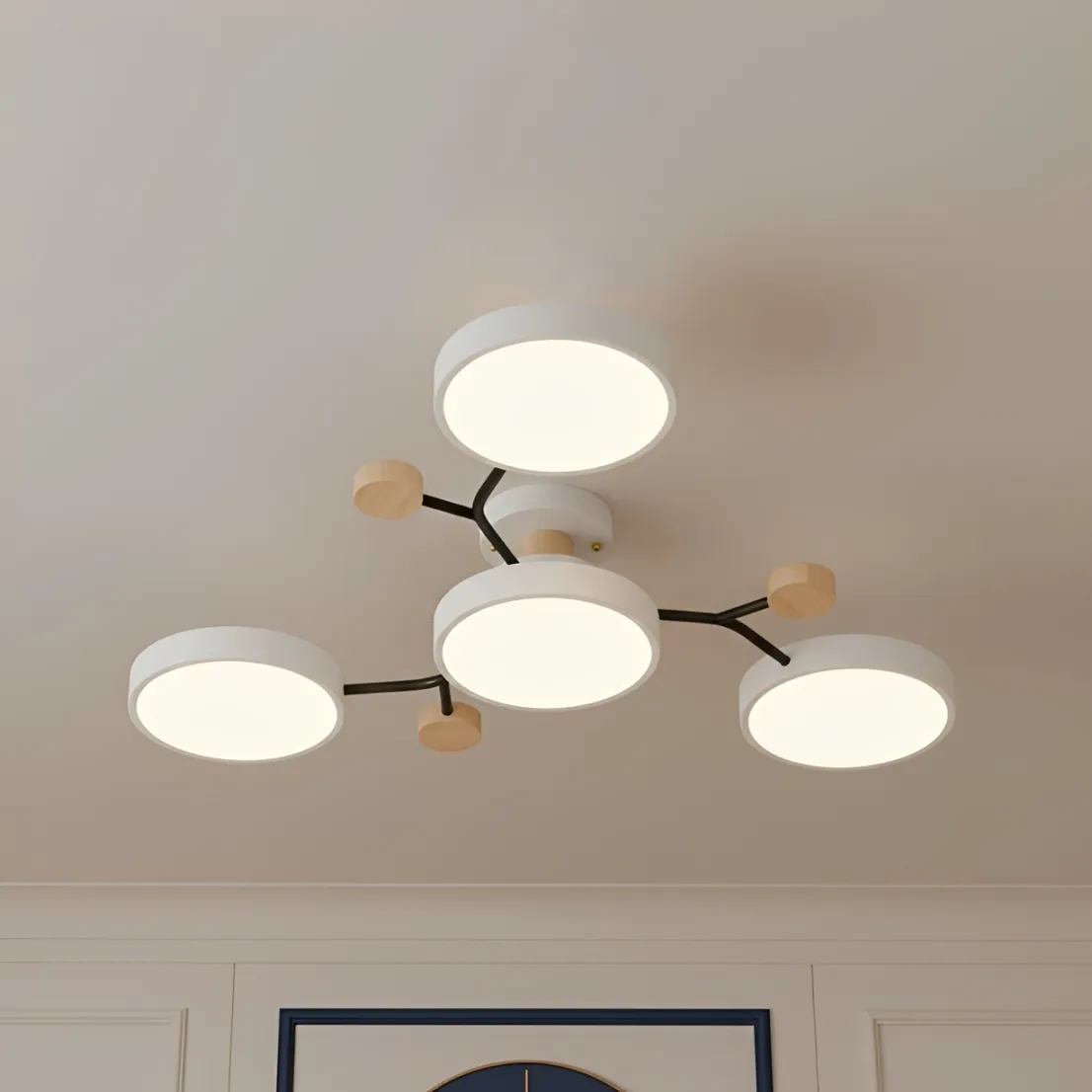
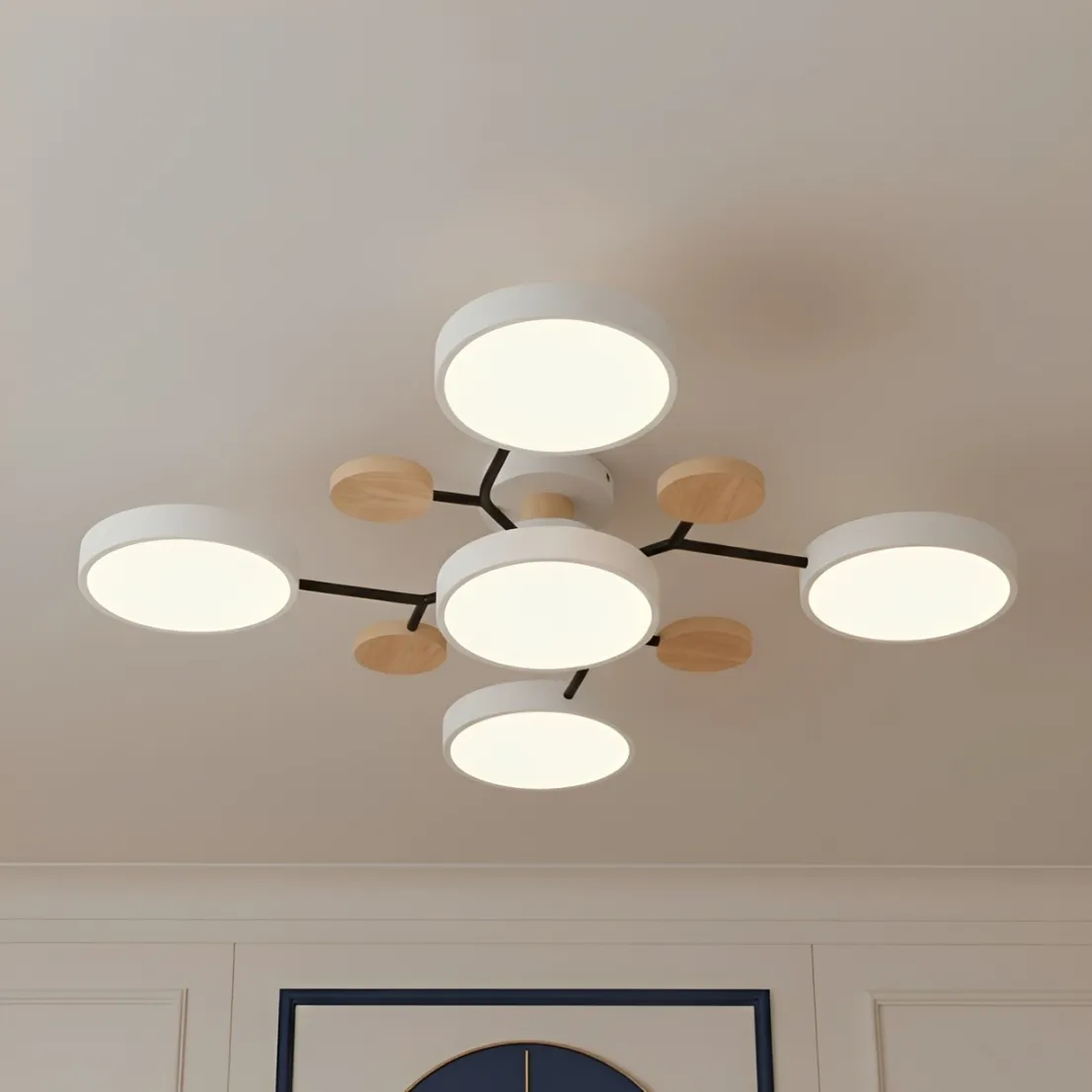
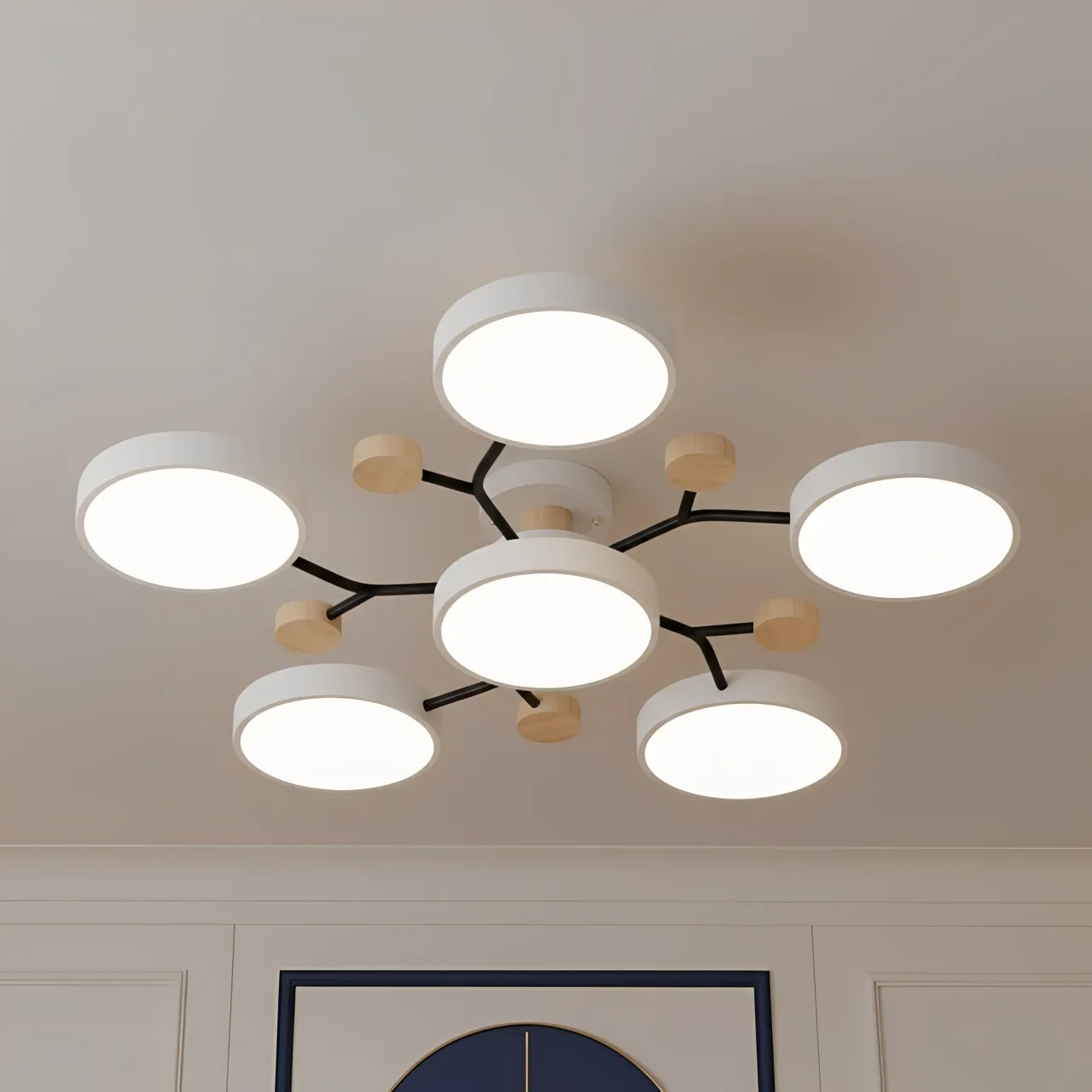
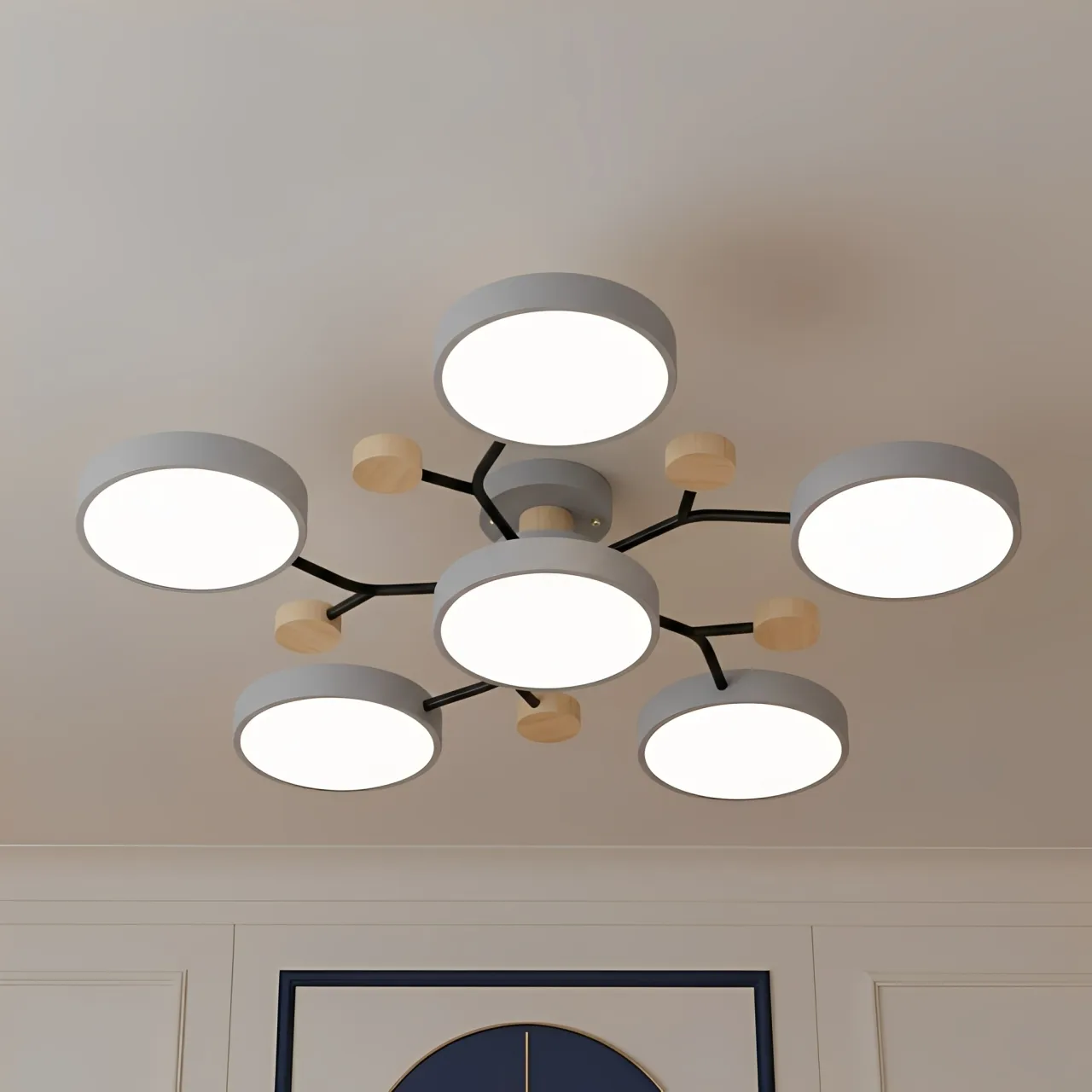
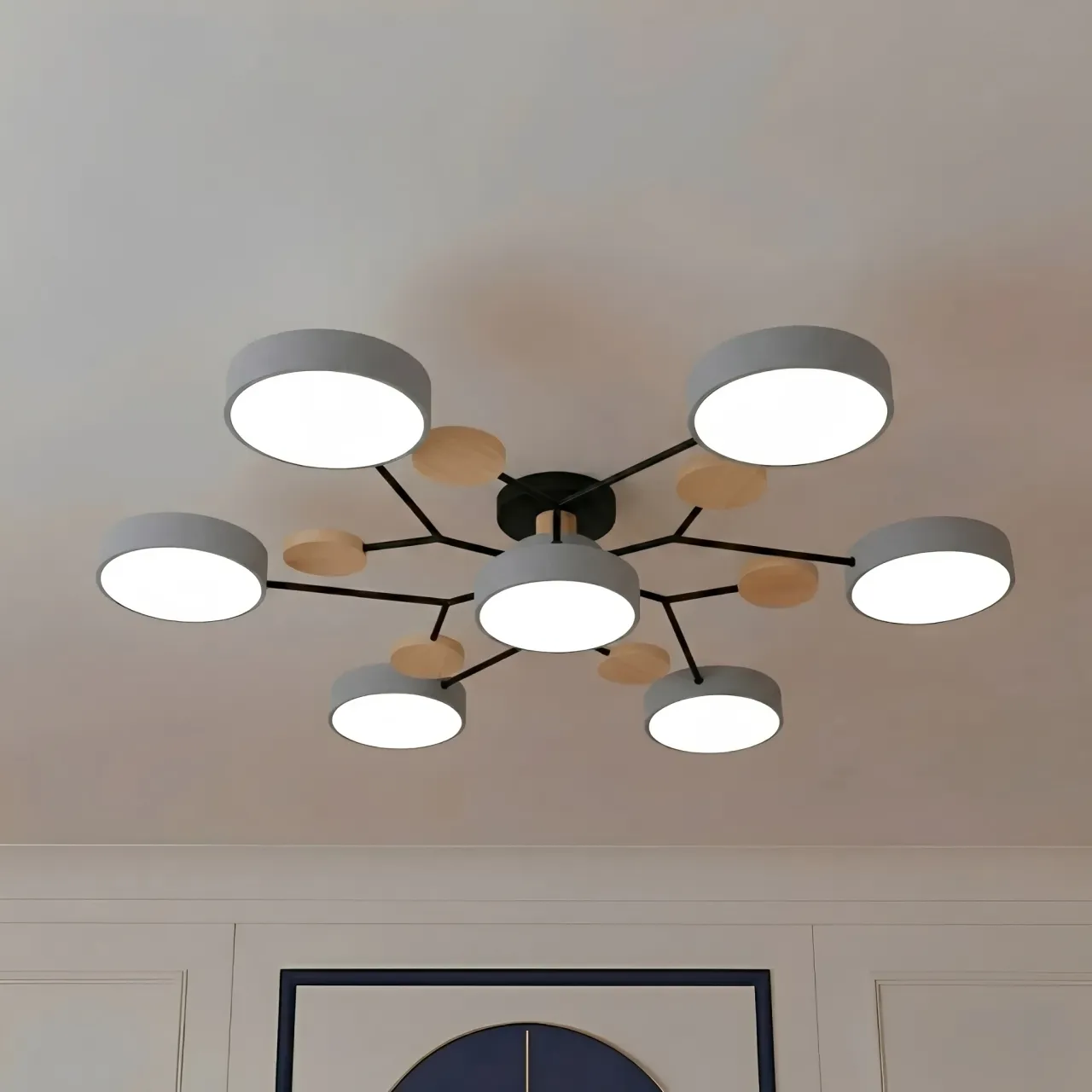
4-Head vs. 7-Head: Comparing Light Spread in a Multi-Head Ceiling Light
For most standard living rooms, the 4-head version is the better-balanced choice. It occupies less ceiling space, is easier to maintain, and works well when seating is arranged around one central area. Choose the 7-head version when the room is genuinely wide, the furniture is divided into several zones, or you want the ceiling light to have a stronger visual presence.
More heads do not automatically mean better lighting. Seven heads offer broader distribution potential, but actual brightness also depends on lumen output, diffuser design, ceiling height, and the room's other lights.
Quick Comparison Table
The 4-head model is the practical default; the 7-head model is the large-room option. Both versions of the Orea Nordic Minimalist Modern Round Wooden LED Ceiling Light for Living Room use integrated LEDs, have a 15 cm profile, and come in green, white, or gray.
| Decision point | 4-head version | 7-head version |
|---|---|---|
| Fixture size | Dia. 75 cm × H 15 cm | Dia. 95 cm × H 15 cm |
| Rated wattage | 48W | 84W |
| Source layout | Four points within a tighter footprint | Seven points across a wider footprint |
| Spread potential | More centered | Broader and more distributed |
| Visual effect | Balanced and relatively restrained | Large statement fixture |
| Cleaning | Fewer shades and branches | Three additional heads to clean |
| Best setting | Medium room with centralized furniture | Large, wide, or multi-zone room |
| Best buyer | Wants sufficient ambient light without dominating the ceiling | Wants maximum coverage potential from one central fixture |
Their shared construction means neither has an inherent durability advantage. Seven heads simply create more surfaces to maintain.
What Is the 4-Head Version?
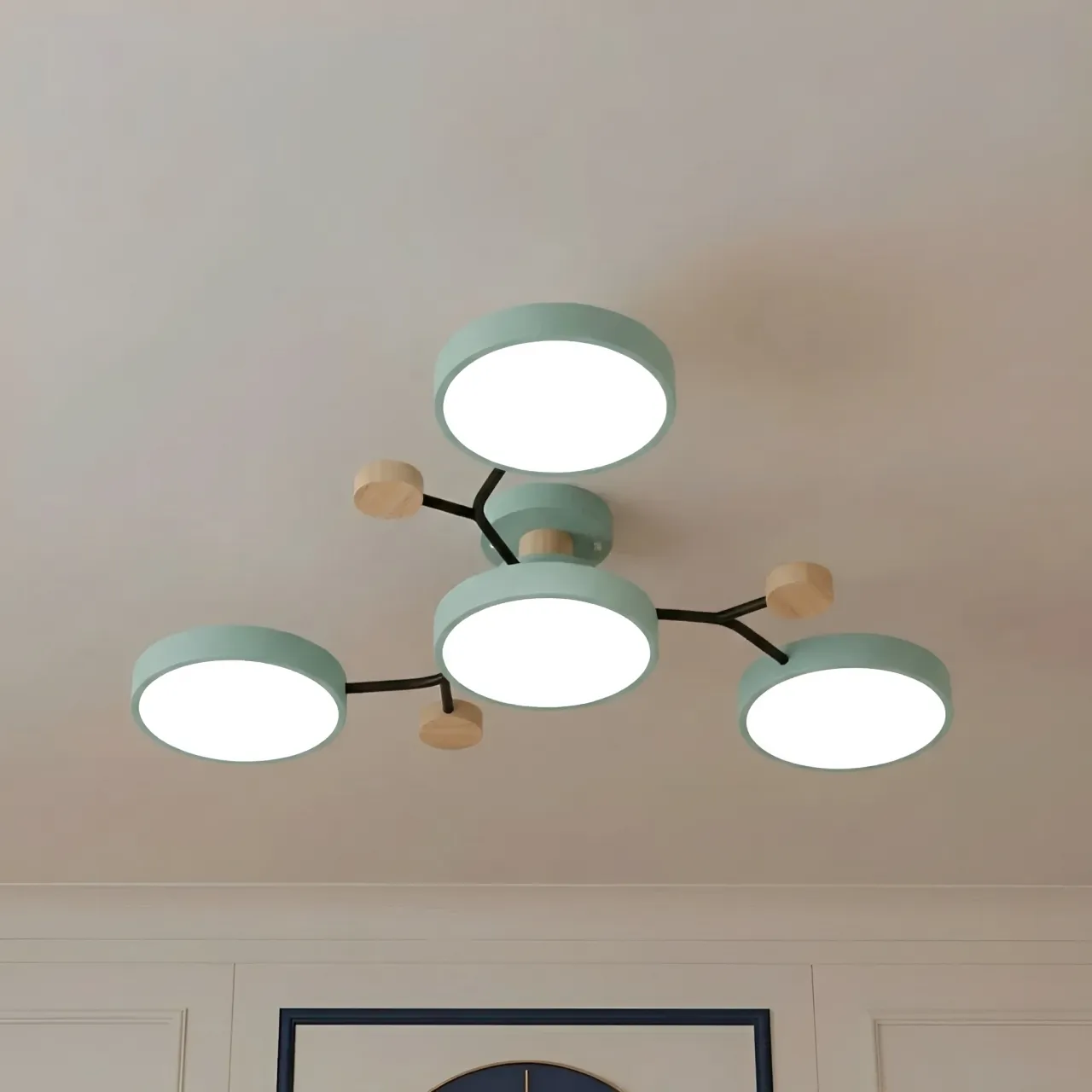
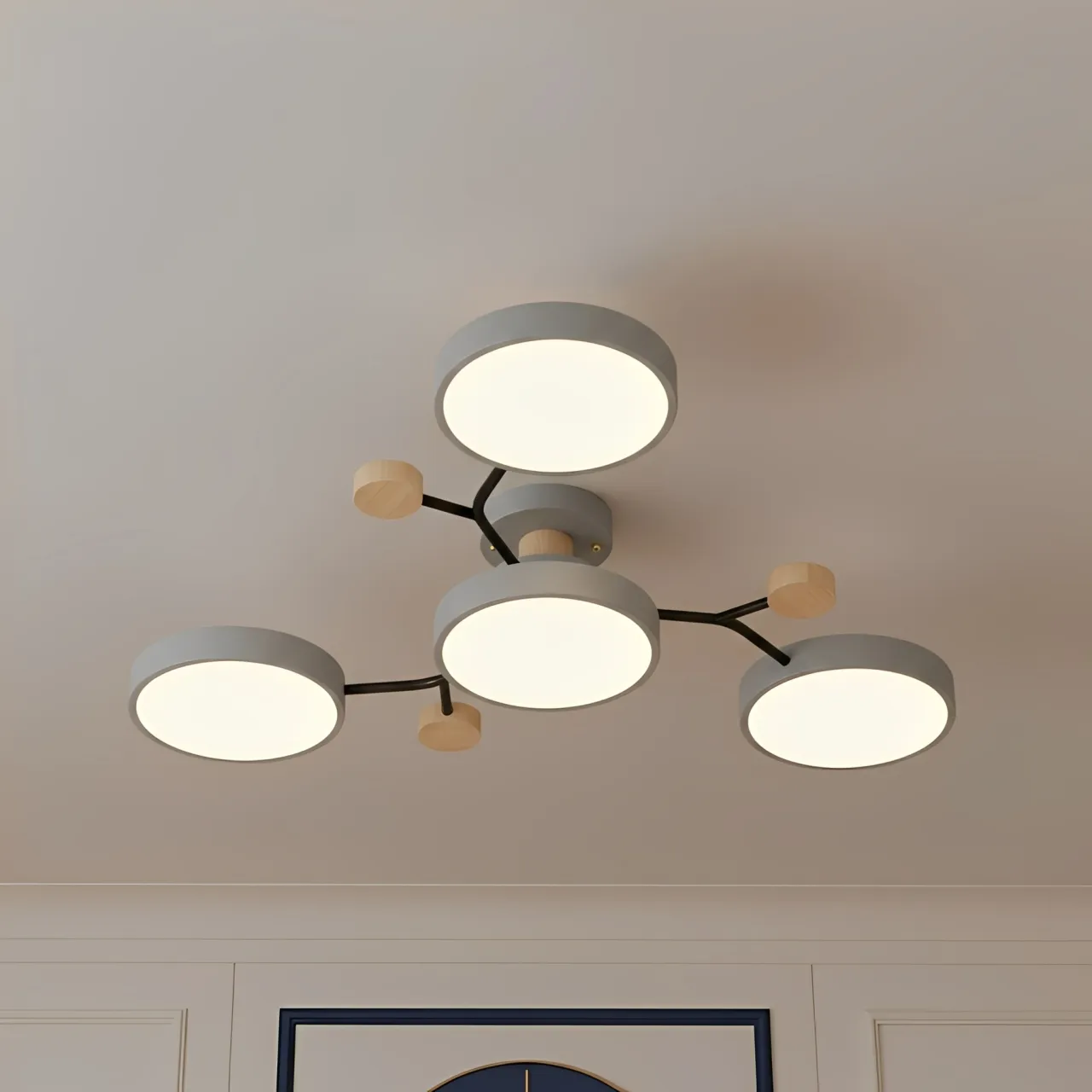
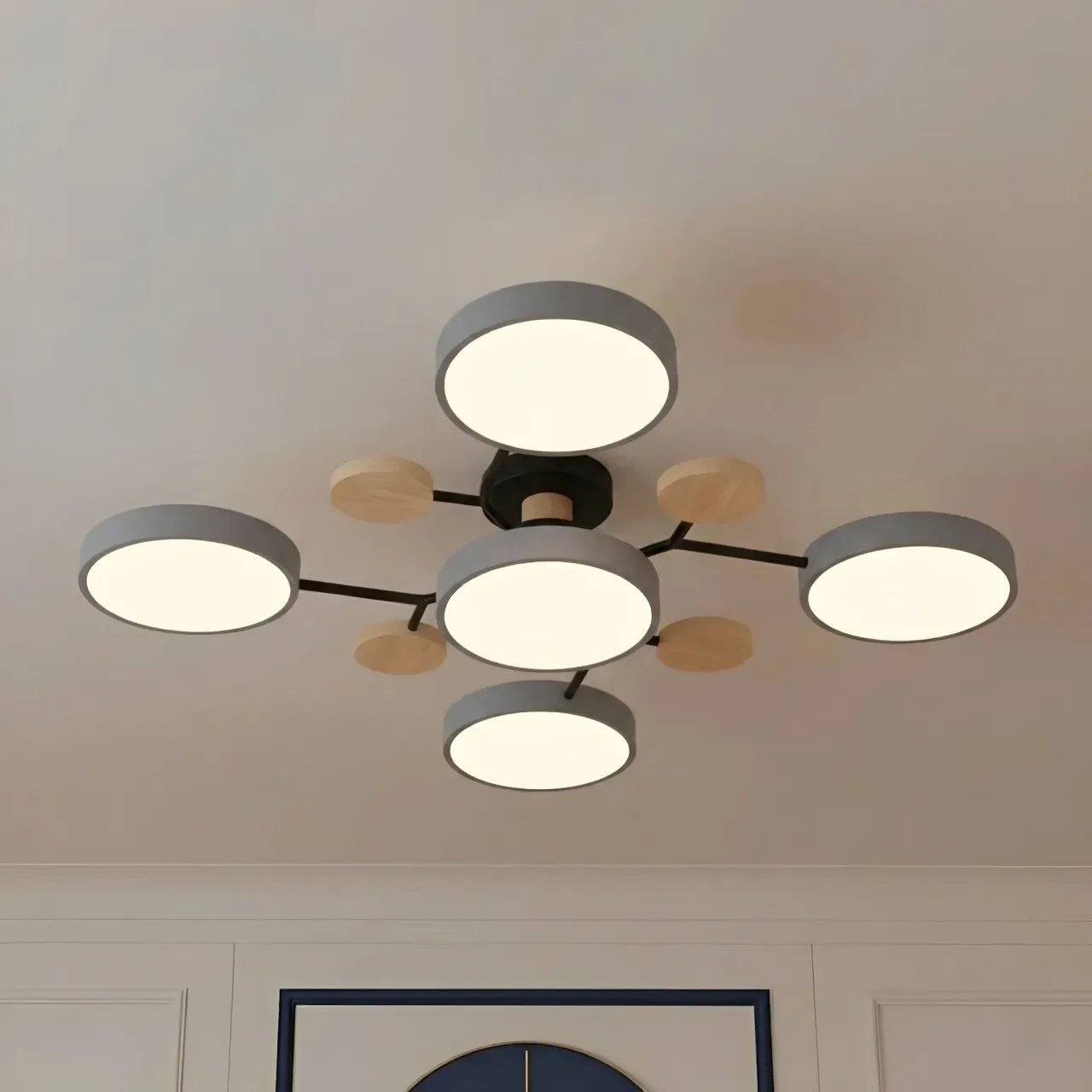
The 4-head version is more compact, but at 75 cm, or about 29.5 inches, it is not a small fixture. It can still be the main ceiling feature in a medium living room.
It is a sensible choice for a 3.5 × 4 m living room where the sofa, chairs, and coffee table form one conversation zone. With a floor or table lamp for reading, the ceiling light does not need to handle every task alone.
It also suits the quieter look explored in Warm Minimalism at Home: Elevating Your Space with Nordic Minimalist Wooden Ceiling Lights.
What Is the 7-Head Version?
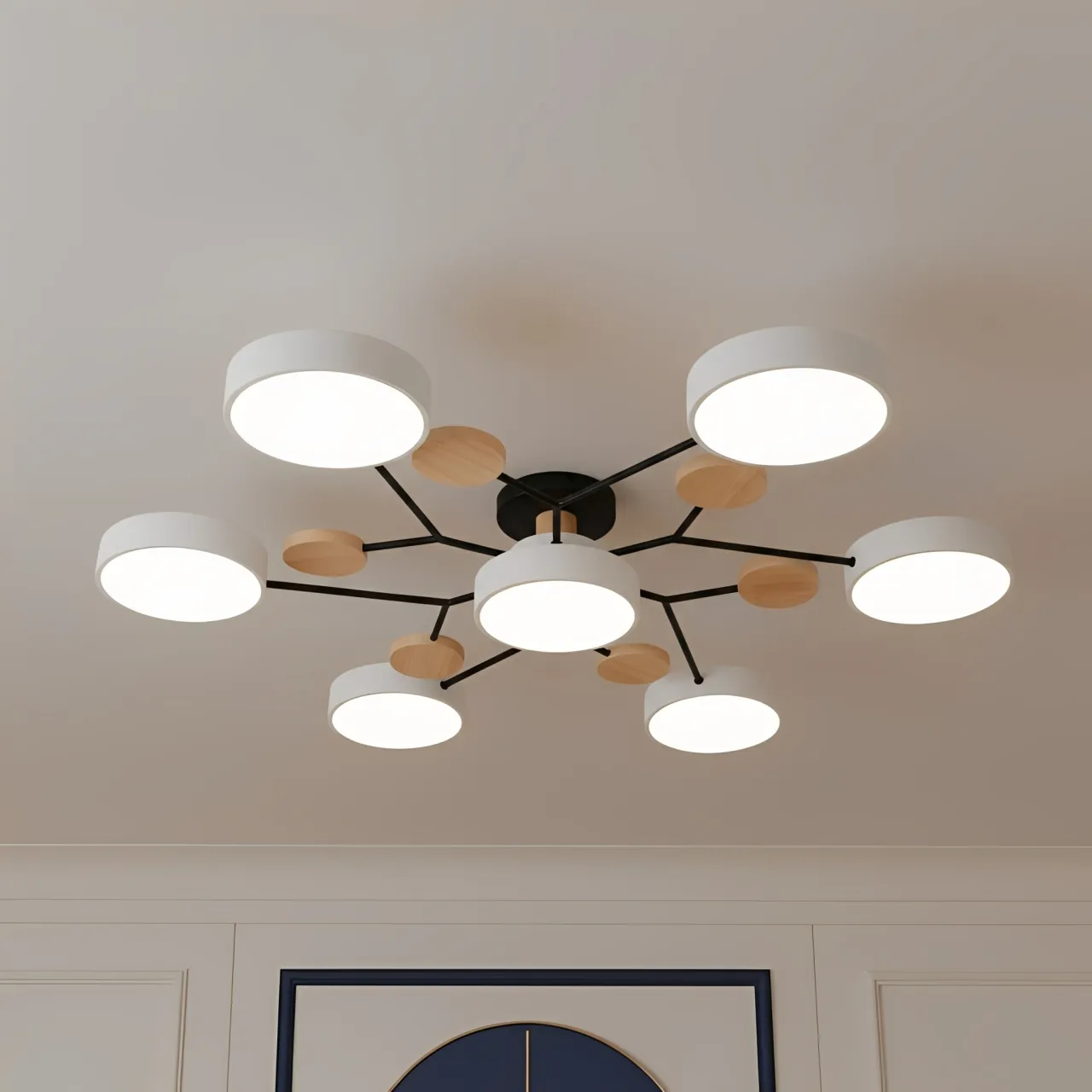
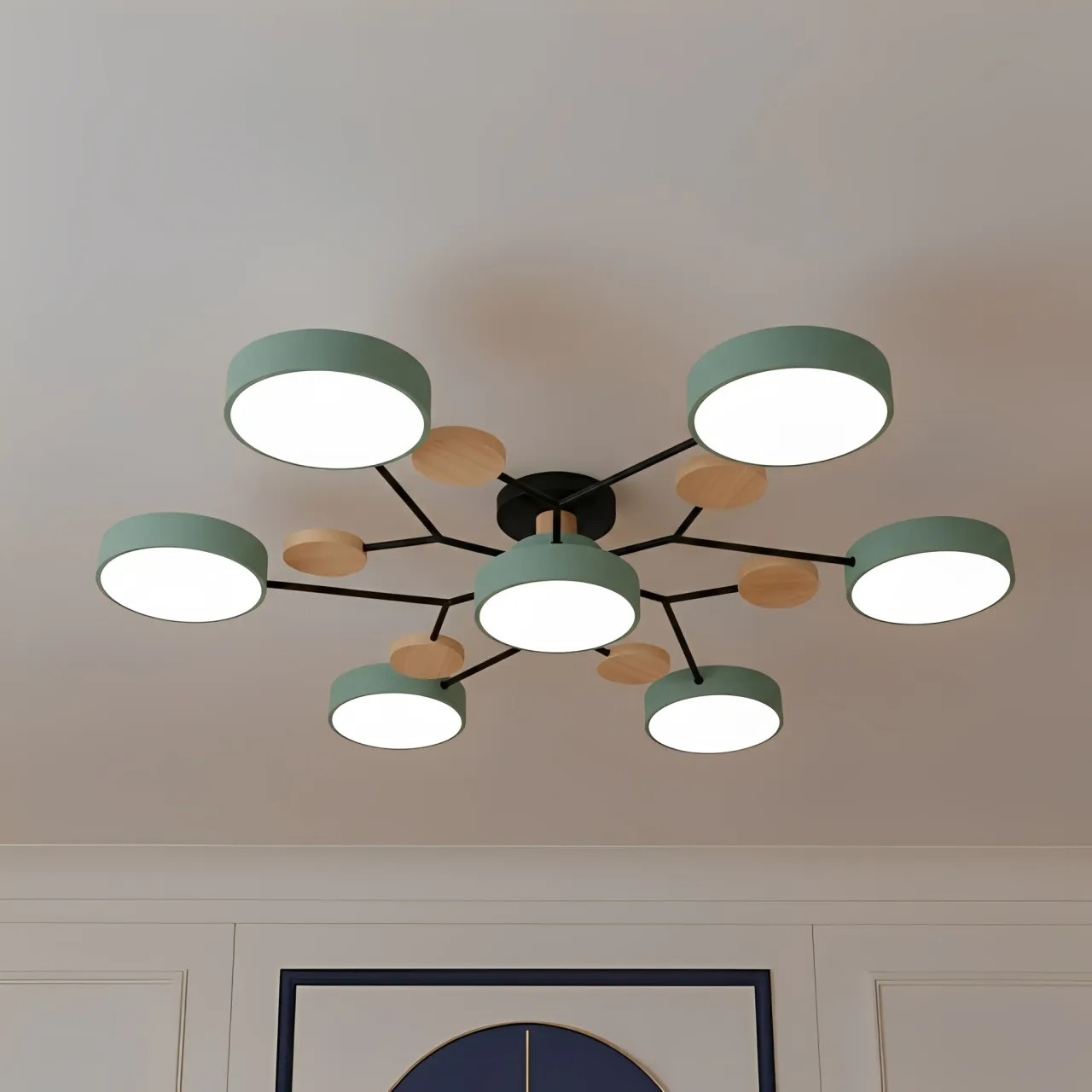
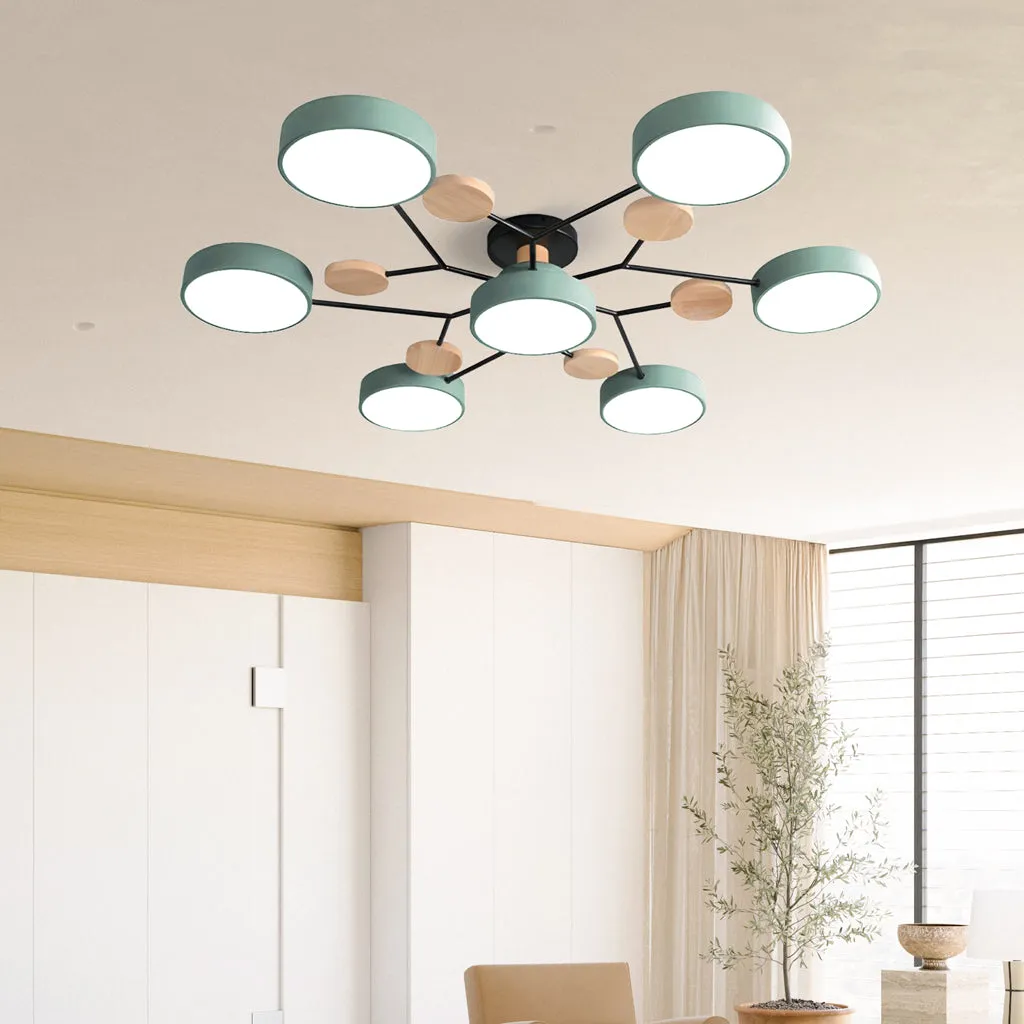
The 7-head version is a 95 cm statement light for rooms that can use its extra span. It is 20 cm wider and carries three additional LED heads.
Its diameter is about 27% greater, while its nominal circular ceiling envelope is roughly 60% larger. It therefore looks substantially bigger even though both versions hang only 15 cm below the ceiling.
It works best in a wide living room, a large square room with furniture beyond the central coffee table, or an open plan where it defines one major zone. It will not necessarily replace a dining pendant, wall lights, or lamps.
If ceiling clearance is your first concern, Low ceilings? Why a Nordic minimalist ceiling light is your best solution explains why profile and placement matter as much as diameter.

Key Differences That Matter
The decision depends on source distribution, power, visual size, and room layout.
Light spread is not the same as fixture width
The 95 cm version positions more sources across a wider structure, giving it an advantage in distribution potential and reducing the concentration of light at the room's center.
However, 95 cm is fixture width, not guaranteed illuminated diameter. Without photometric or lumen data, promising a specific coverage area would be misleading.
Wattage shows consumption, not exact brightness
The 84W model draws 75% more rated power than the 48W model, suggesting greater output potential. Watts, however, measure electricity use rather than visible light.
For a concrete running-cost comparison, using the light four hours per day would consume approximately:
- 4-head: 70 kWh per year
- 7-head: 123 kWh per year
- Difference: about 53 kWh per year
The visual-size difference is significant
Both lights have a 15 cm profile, so headroom is similar. A 95 cm fixture can suit broad seating but overwhelm a narrow sofa and small coffee table.
Before buying, use this four-step check:
- Measure the ceiling zone served by the light, not the entire open-plan floor.
- Mark a 75 cm and a 95 cm circle with painter's tape on the floor beneath the mounting point.
- View the outlines from the doorway and from the main seat.
- List existing floor lamps, wall lights, and task lights before deciding that more heads are necessary.
This is more reliable than selecting by room name: a “living room” may be a compact apartment or a six-meter-wide family space.
More heads require more maintenance
Cleaning methods are the same, but seven shades and their branches create more dust-catching edges. If access requires a ladder, four heads offer a meaningful maintenance advantage.
Choose the 4-Head Version If…
Choose four heads for one main furniture group and a ceiling light that supports rather than dominates the room.
The 4-head version is the stronger choice when:
- The seating is centered beneath or around one mounting point.
- The room already includes a floor lamp, table lamp, or wall light.
- A 95 cm outline overlaps awkwardly with tall cabinets or feels too wide from the doorway.
- Lower power consumption and faster cleaning matter to you.
- You prefer a quieter Nordic look rather than a statement ceiling feature.
Color changes perceived visual weight. Classic White vs. Macaron Green: Choosing your Modern Macaron Ceiling Light is the next step after selecting a size.
Choose the 7-Head Version If…
Choose seven heads when a 95 cm fixture fits and the wider source distribution solves a real layout problem.
The 7-head version is justified when:
- Seating extends across a broad area rather than clustering around one table.
- One ceiling point must serve several nearby activity areas.
- The room has enough negative space for a 95 cm fixture to look intentional.
- You want the ceiling light to function as a major design feature.
- You accept higher rated power and additional cleaning in exchange for broader coverage potential.
Do not select seven heads merely because a room is called “large.” Identify where people sit, read, and gather. In a long room, one central fixture can still leave both ends underlit; two lighting zones may work better.
Final Recommendation
The 4-head version is the best default because it balances ambient distribution with a manageable 75 cm span, lower rated power, and simpler maintenance. It is especially suitable when furniture forms one central group and other lamps provide task light.
Upgrade only when a 95 cm fixture fits visually and its wider layout serves multiple seating or activity areas. Then the additional heads are functional rather than decorative.
Once those conditions are clear, compare the available sizes and finishes on the Orea Nordic Minimalist Modern Round Wooden LED Ceiling Light for Living Room product page.
FAQ
Does a 7-head ceiling light always spread light farther?
It has greater spread potential because more sources are positioned across a wider fixture. Exact coverage still depends on beam angle, diffuser design, lumen output, mounting height, and room surfaces.
Is the 84W version 75% brighter than the 48W version?
Not necessarily. It draws 75% more rated power, but brightness must be compared in lumens. Optical and thermal efficiency can affect how much useful light reaches the room.
Which version is better for a low ceiling?
Both are only 15 cm high, so their clearance is similar. The 4-head version usually feels less visually dominant in a smaller low-ceiling room, while the 7-head version needs more ceiling width around it.
Can the 4-head version work in a large living room?
Yes, if it serves one central seating zone and floor lamps, wall lights, or table lamps cover other tasks. If it must be the only major source across a wide layout, seven heads may be more suitable.
Which version is easier to clean?
The 4-head version. Both use the same general materials and finishes, but four heads mean fewer shades, branches, and edges to dust.