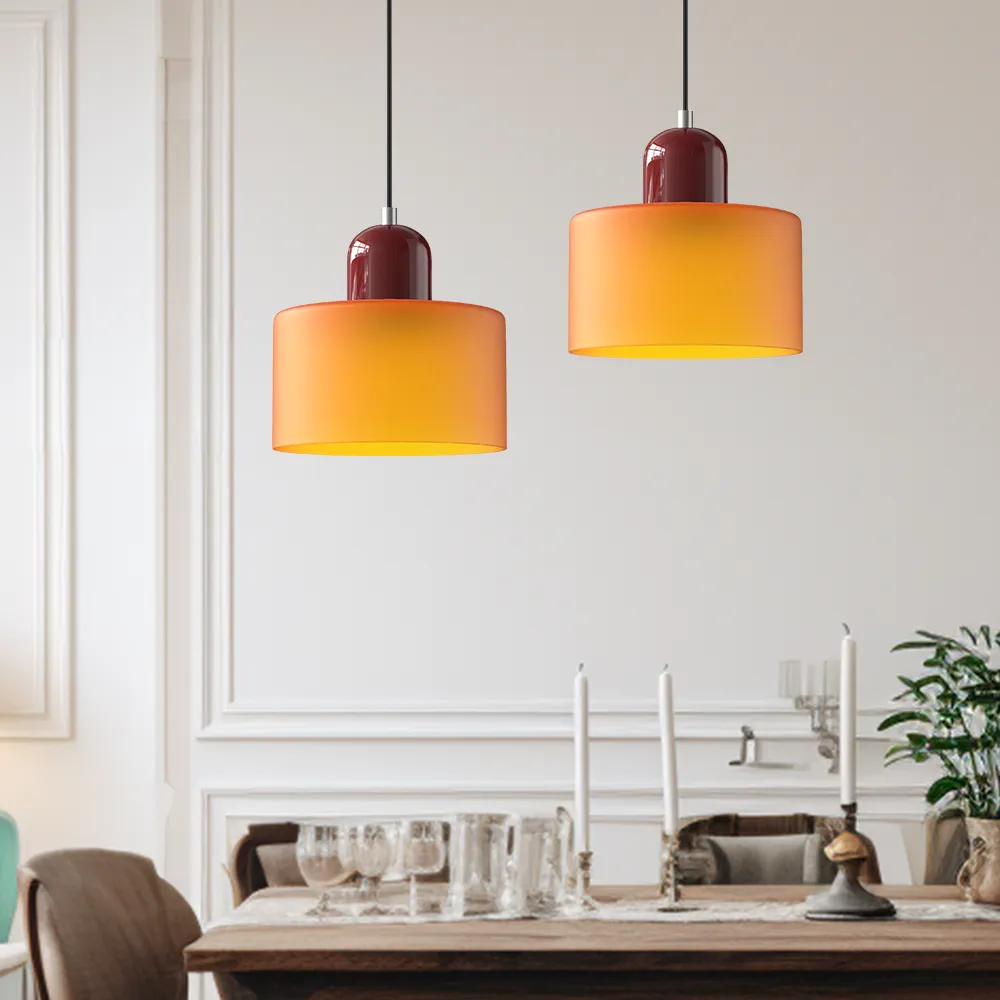
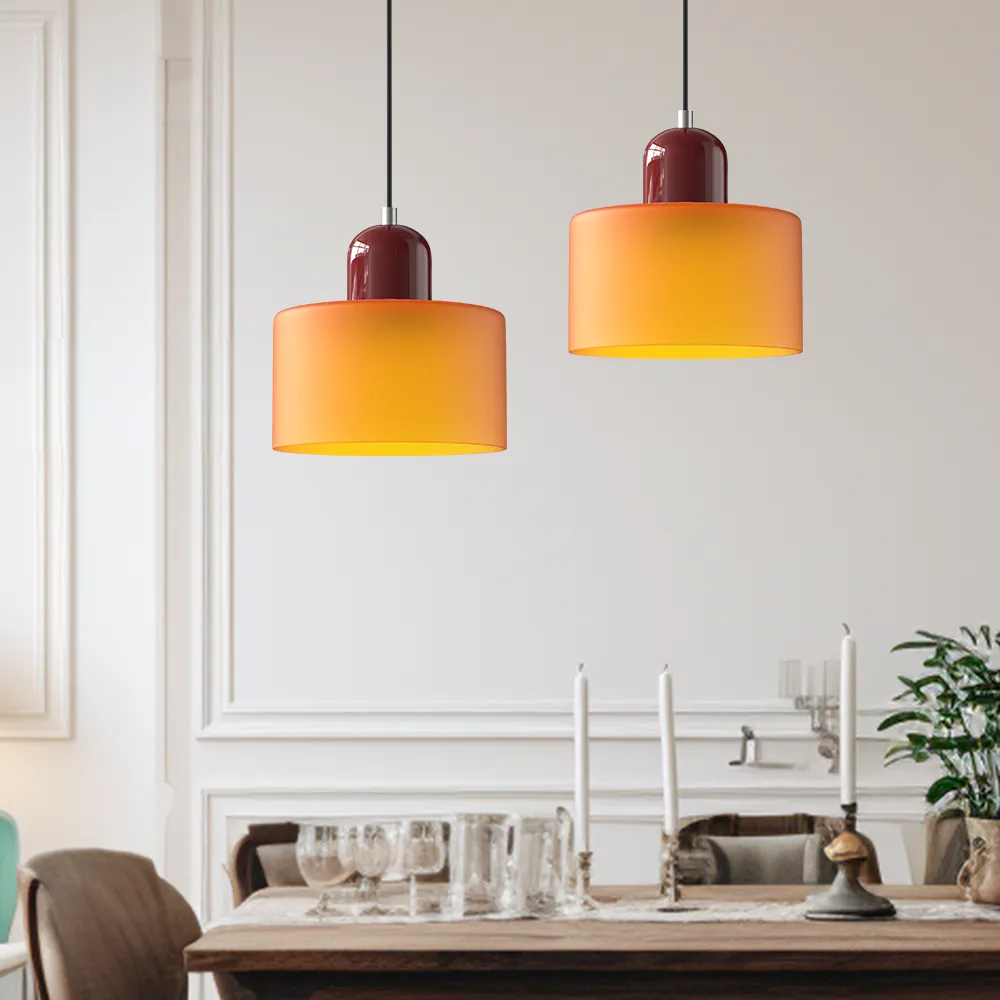
Quick answer: small glass pendant lights work best over a kitchen island when the group, rather than one shade, has enough visual presence. Decide the number and overall silhouette first, then choose whether the glass should preserve sparkle, tint the light, scatter bright points, or combine those effects. Finally, test the bulb from seated and standing eye level. A compact pendant can look deliberate; a bright exposed bulb that makes people squint cannot.
A product photograph makes a pendant easy to judge as an object and hard to judge as part of a room. Kitchen islands are long, horizontal surfaces surrounded by cabinets, stools, appliances and sightlines. A 15 cm glass cylinder may disappear when shown alone over a broad island, yet a row of the same cylinders can create a clear rhythm without turning the ceiling into a visual barrier.
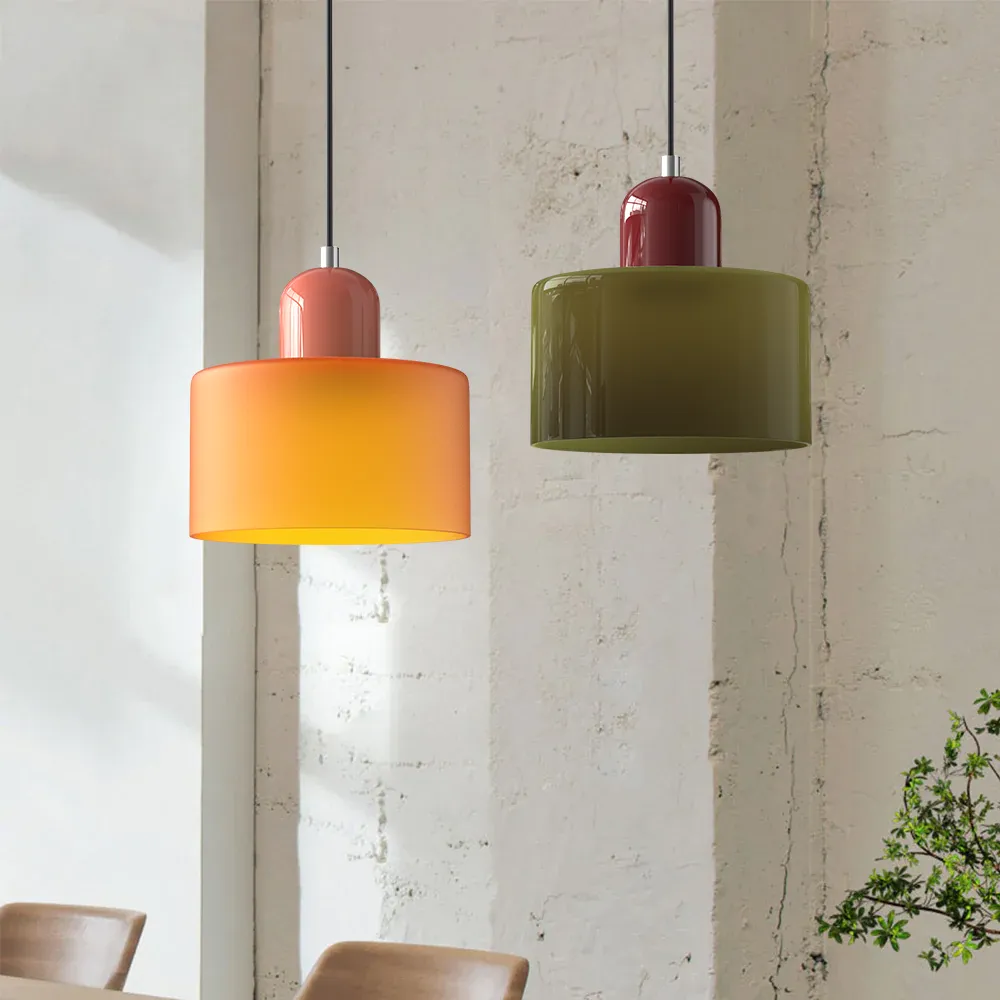
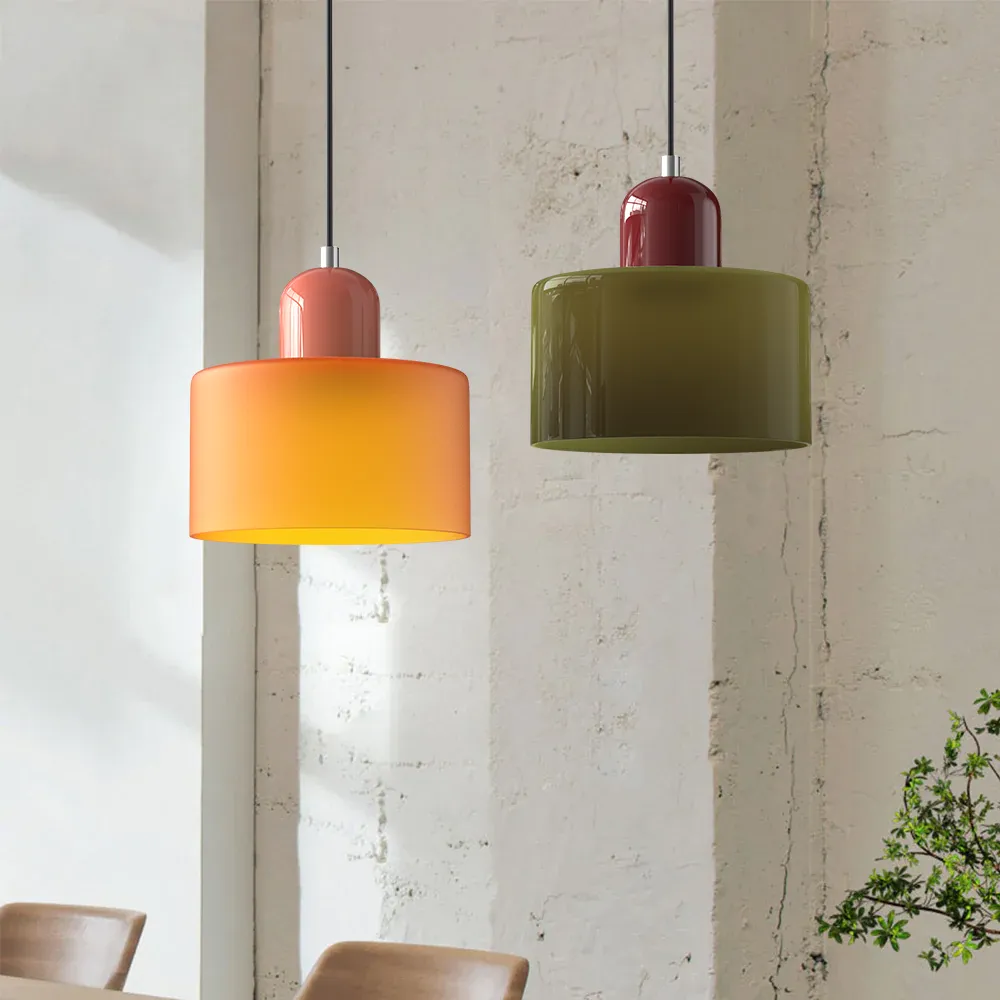
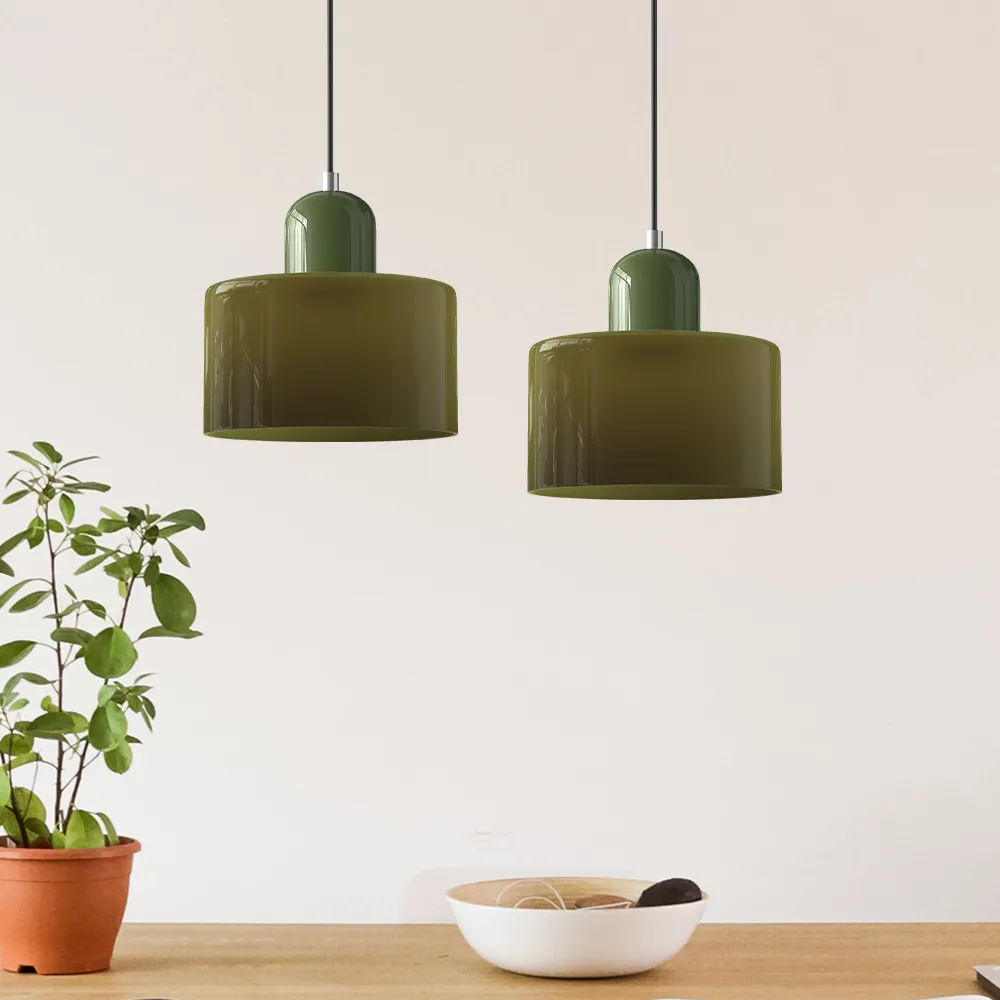
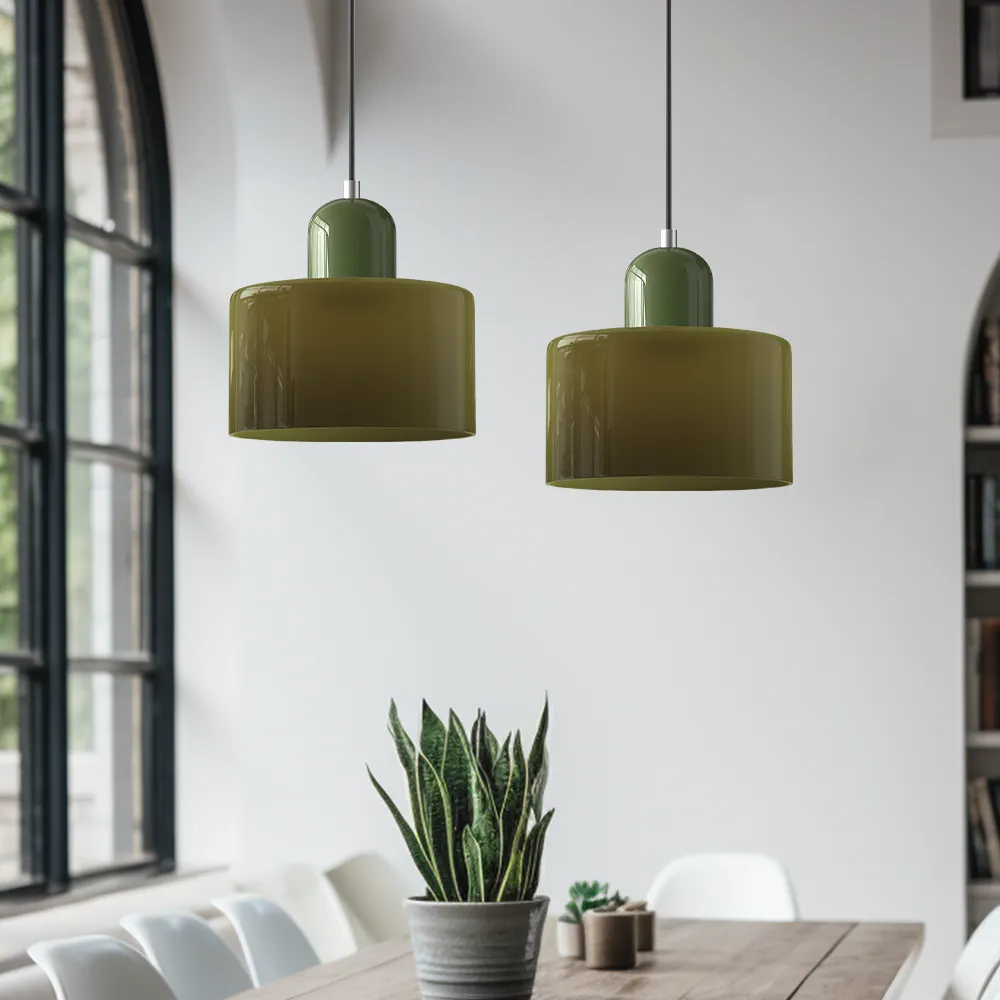
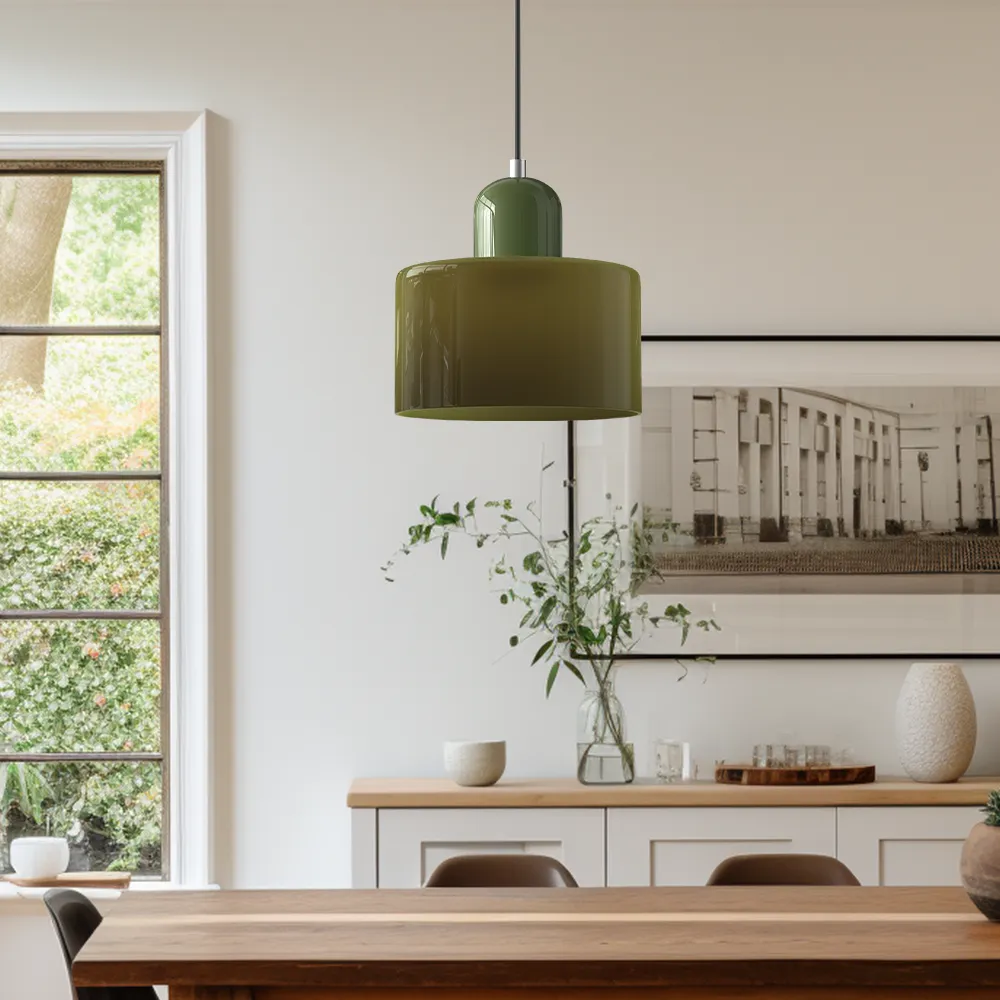
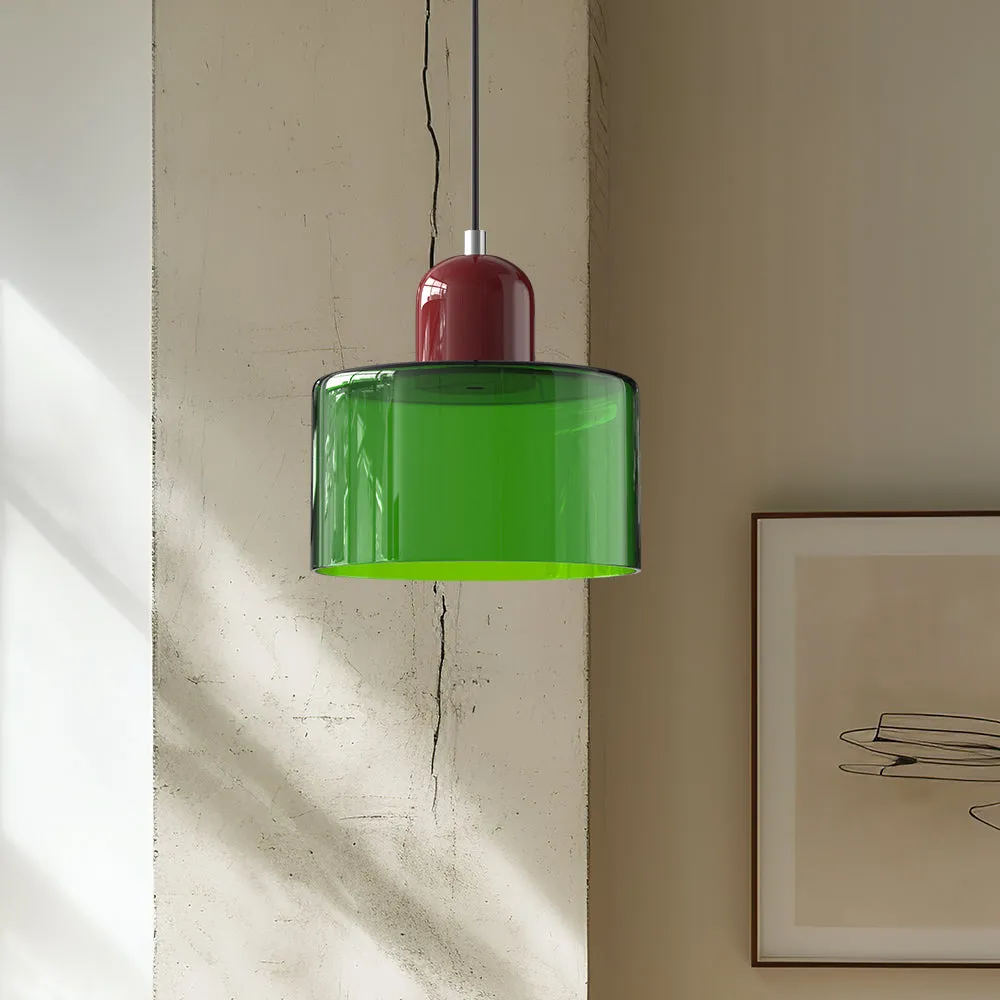
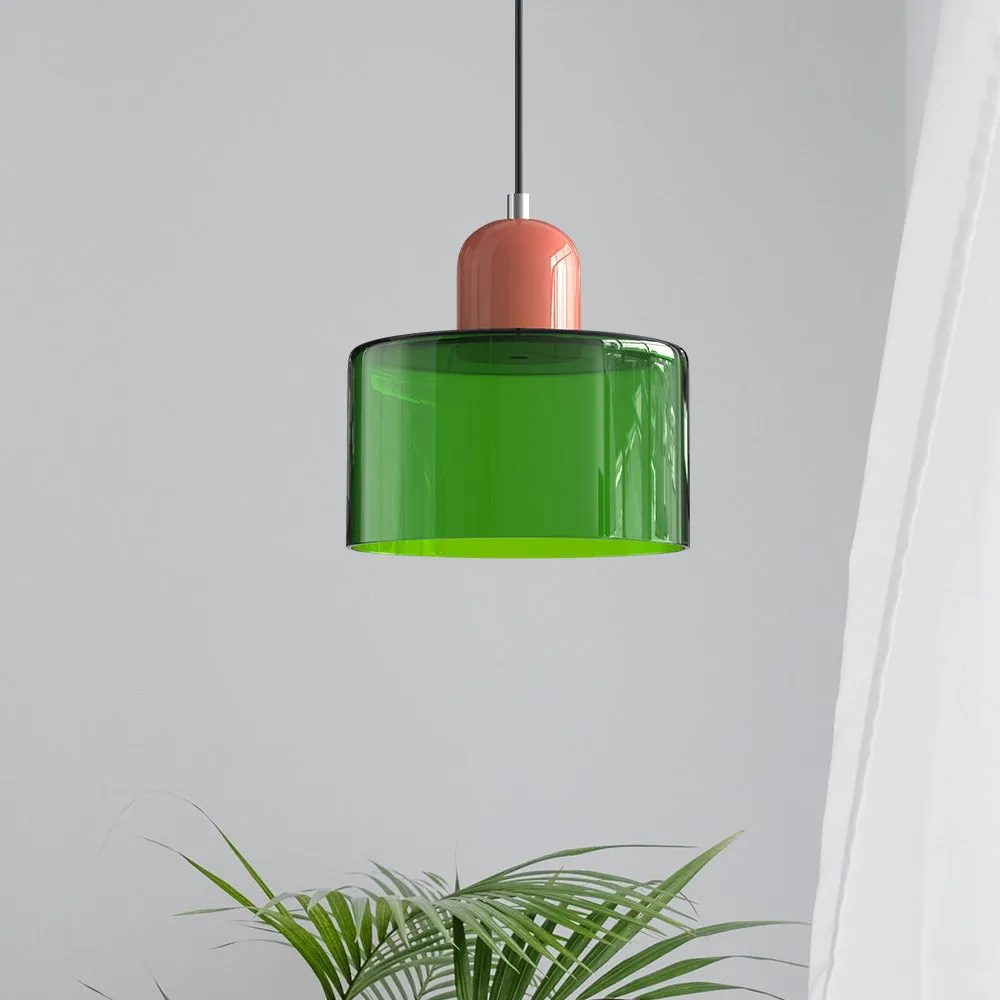
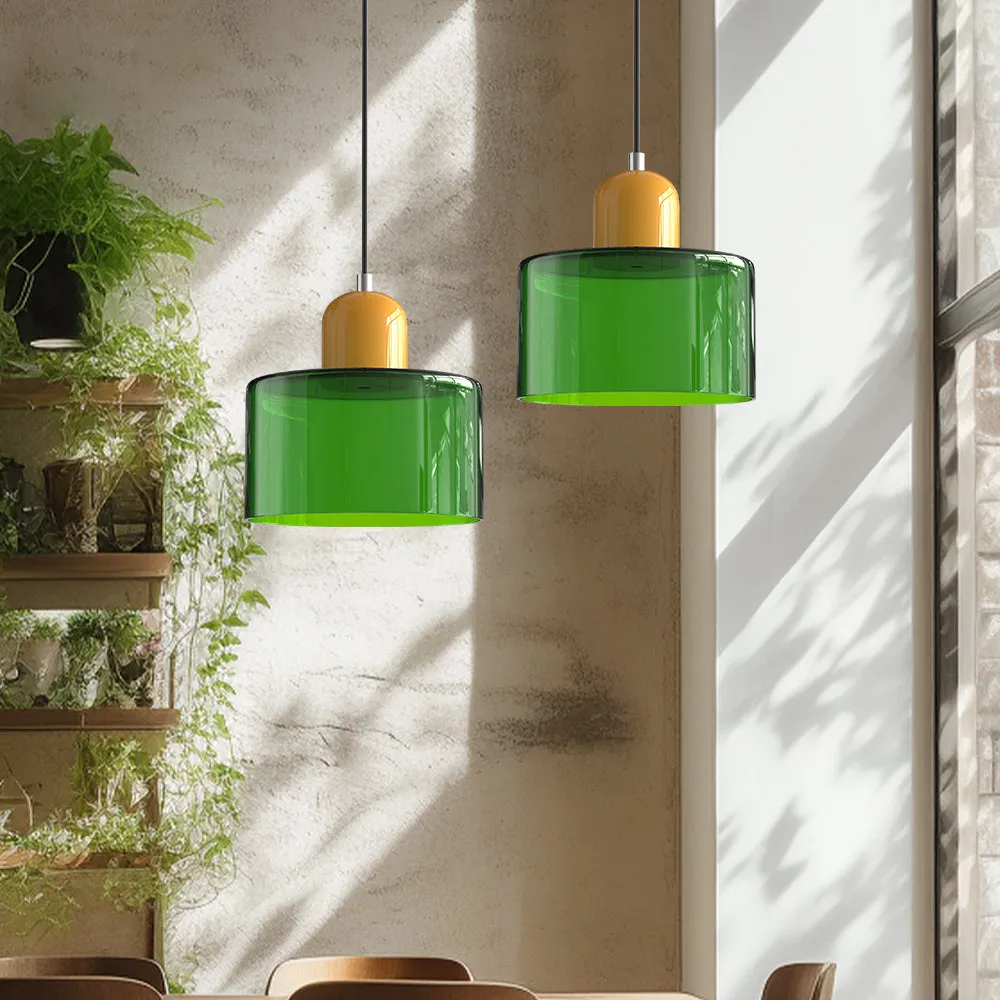
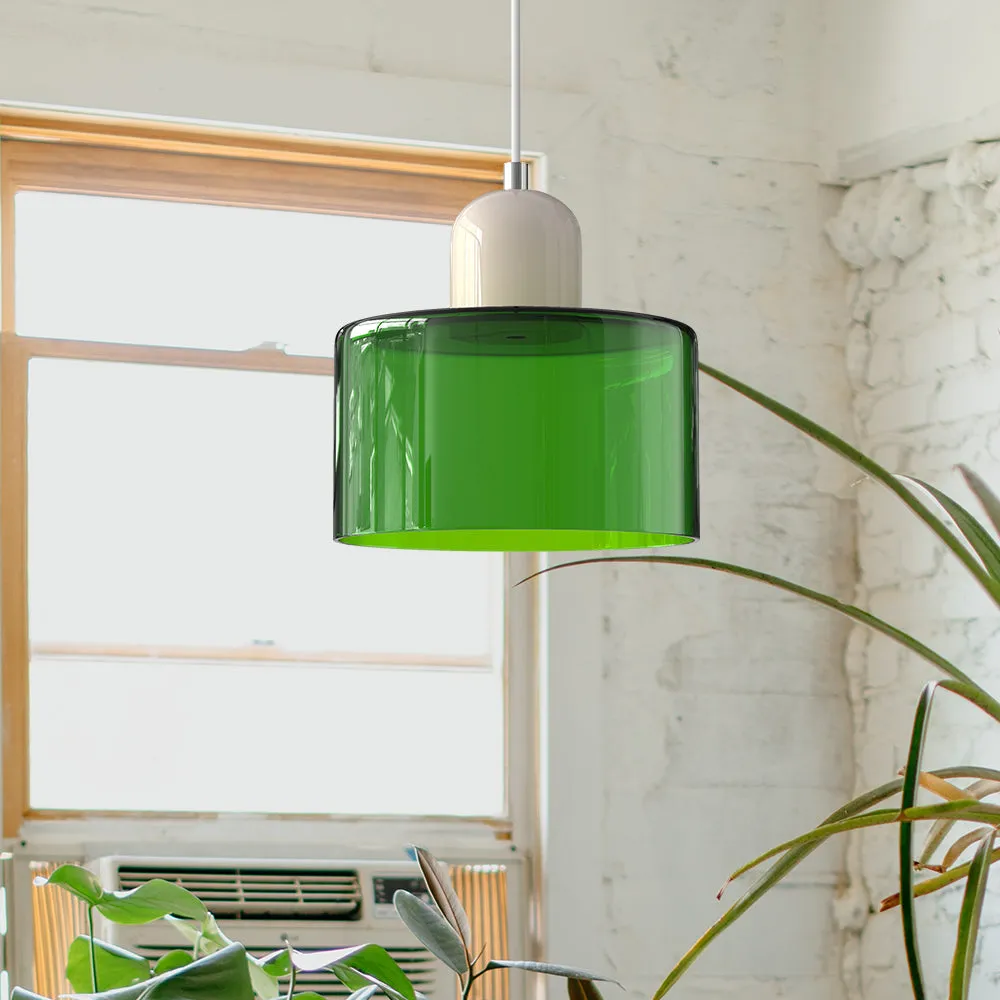
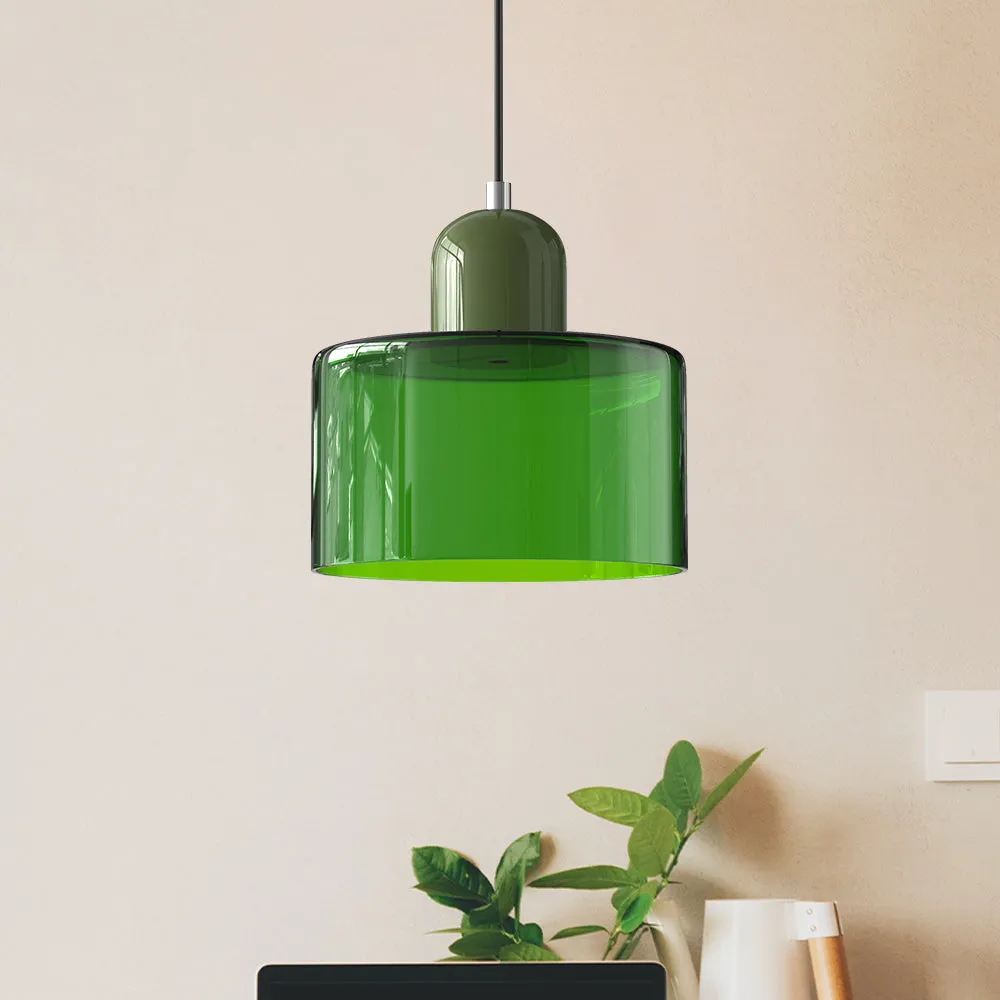
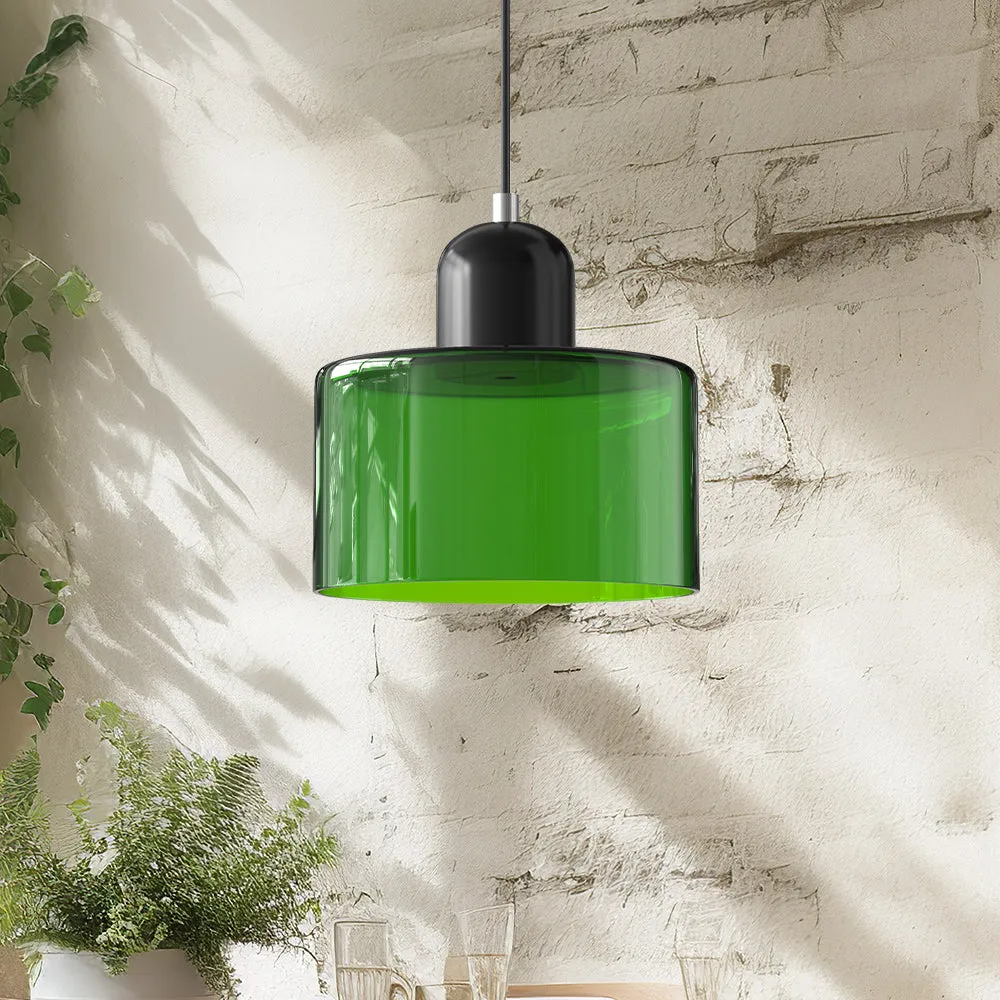
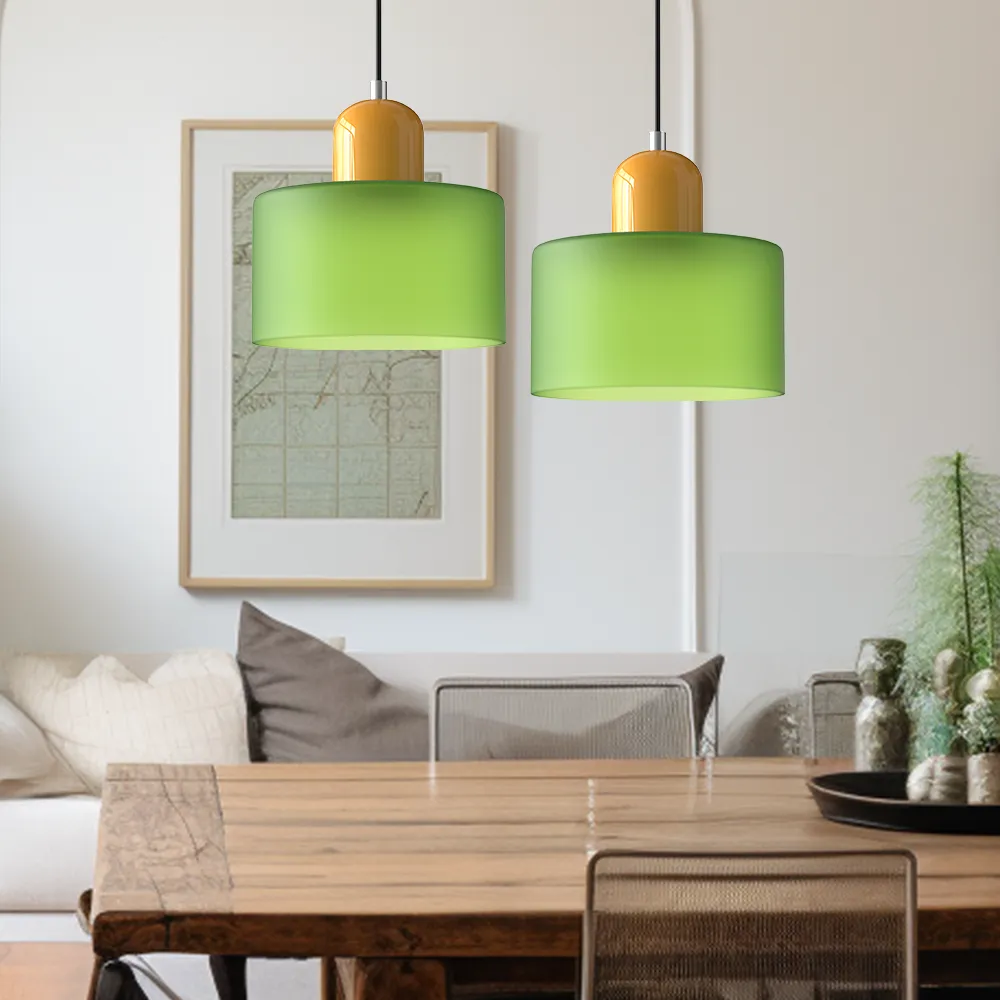
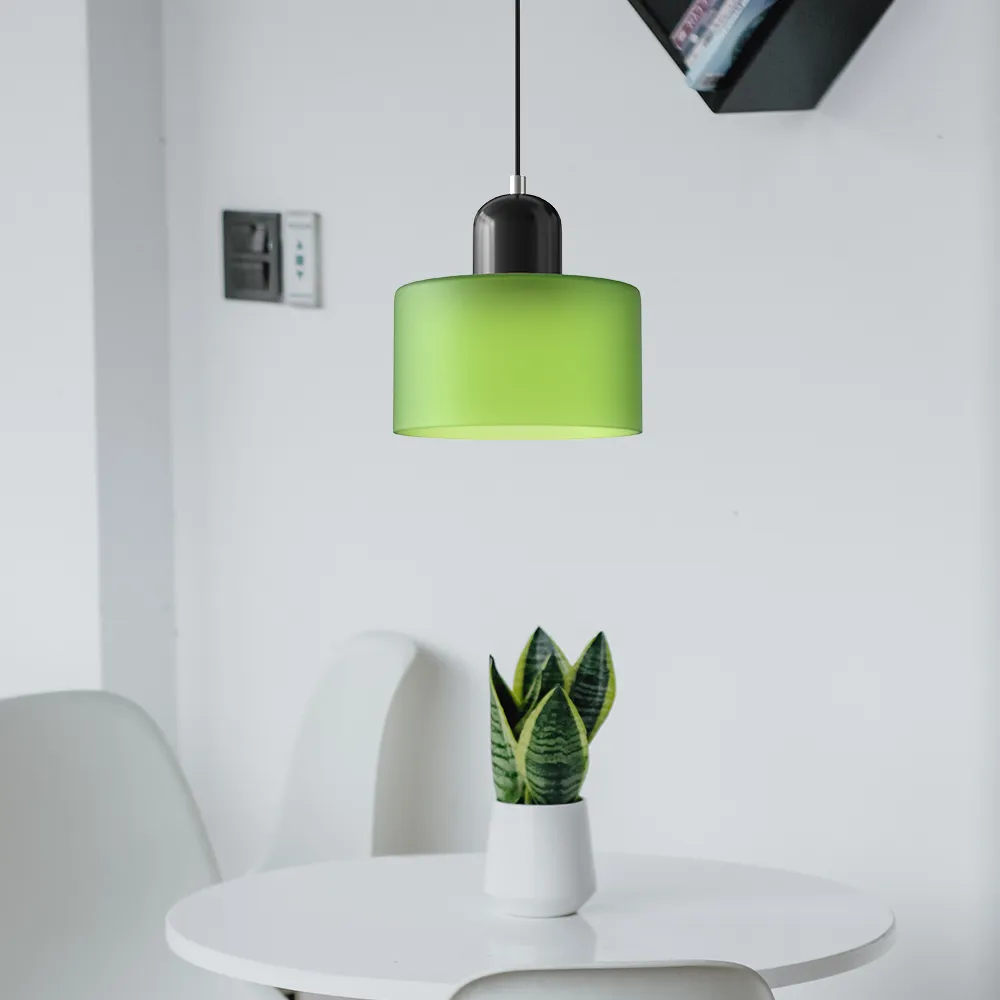
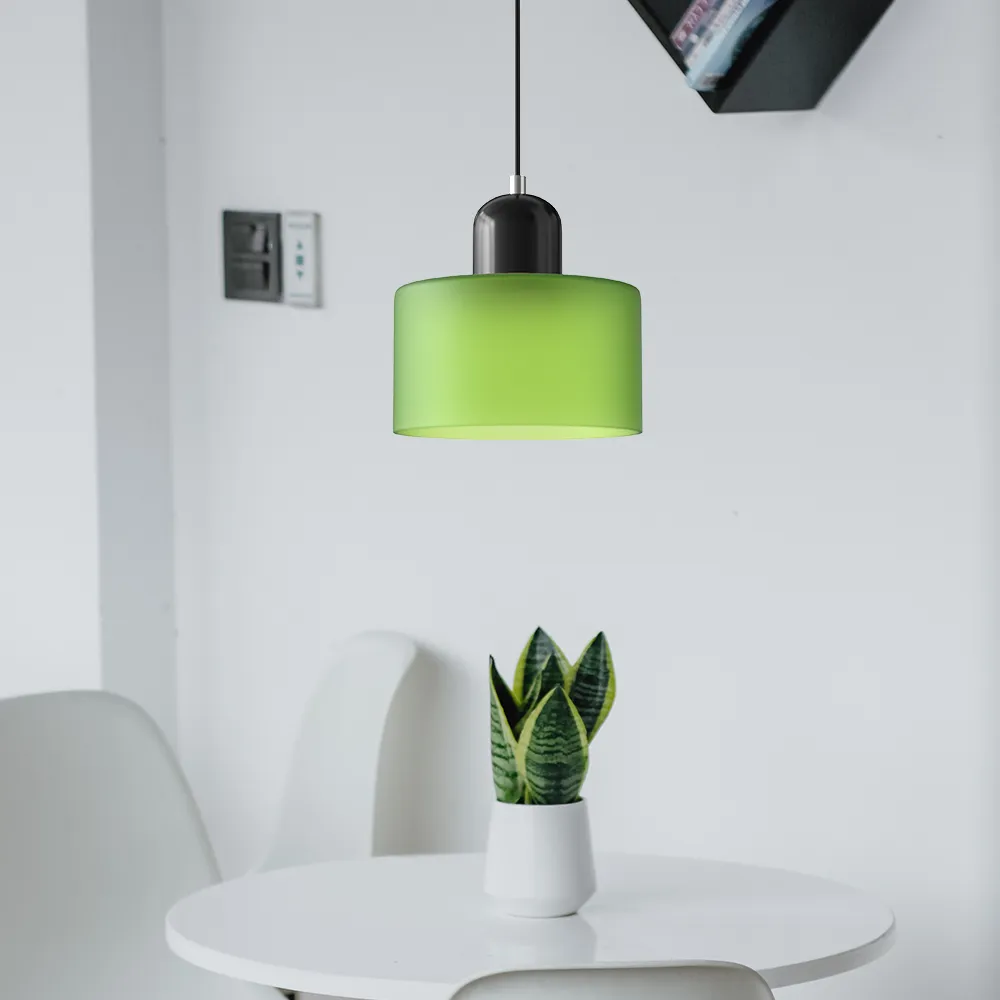
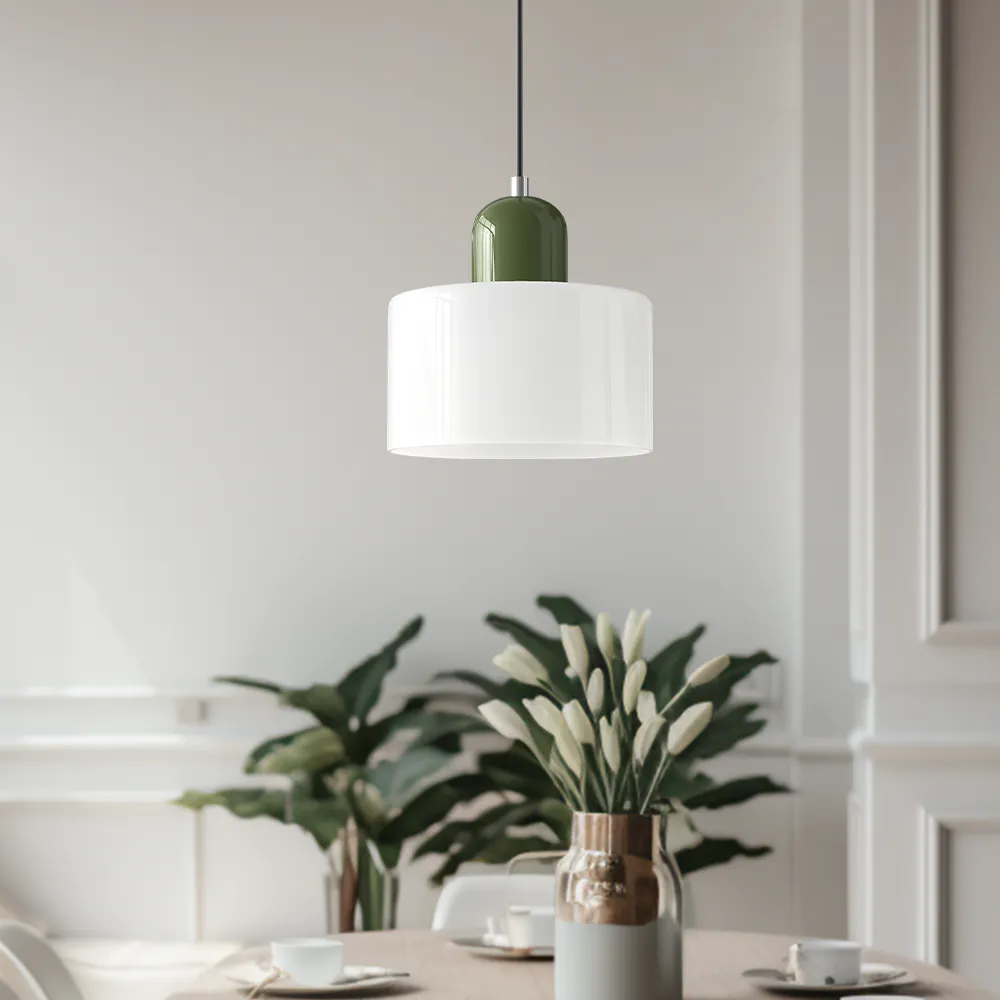
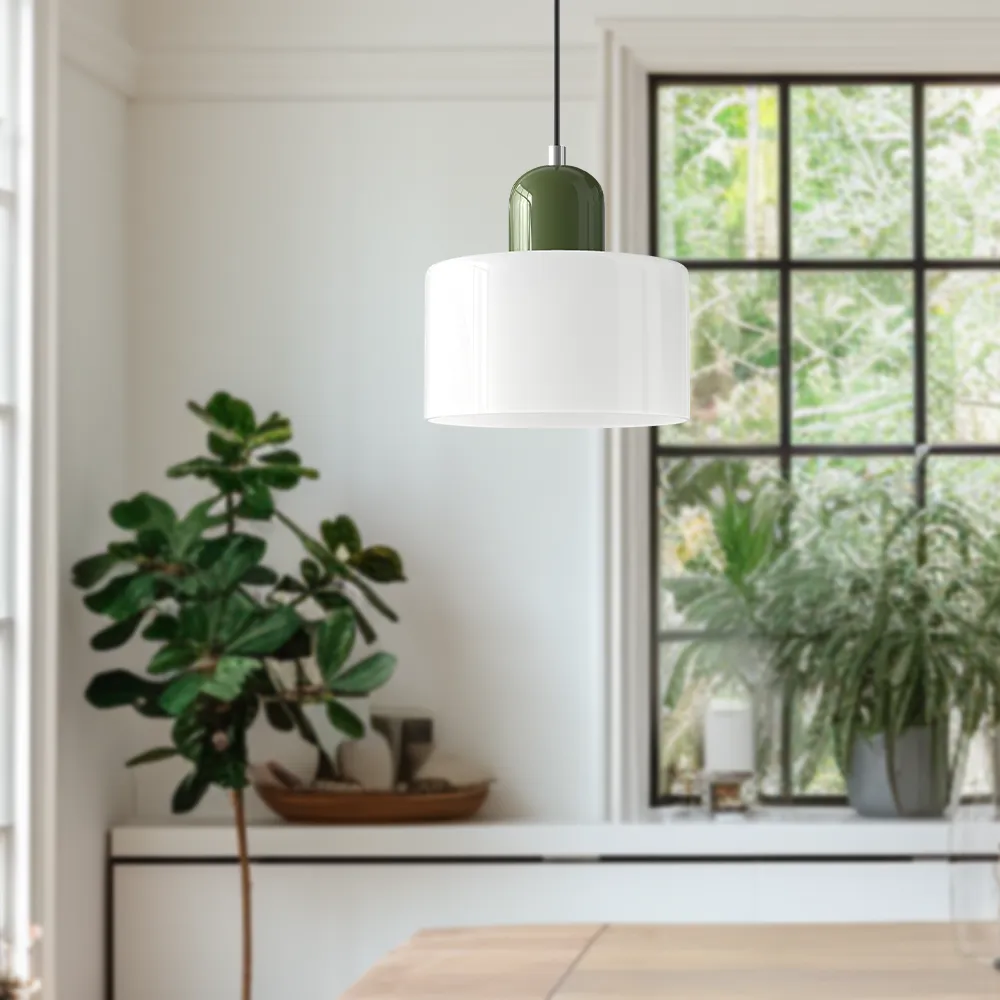
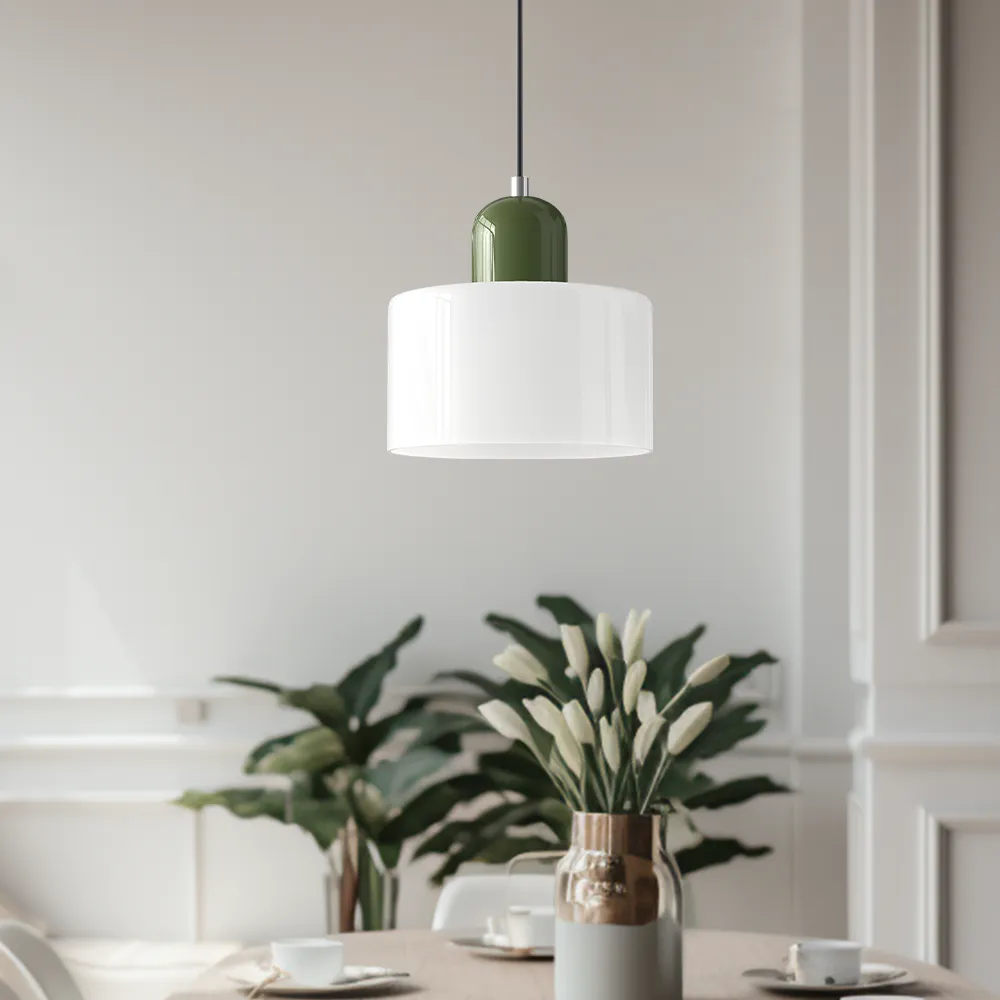
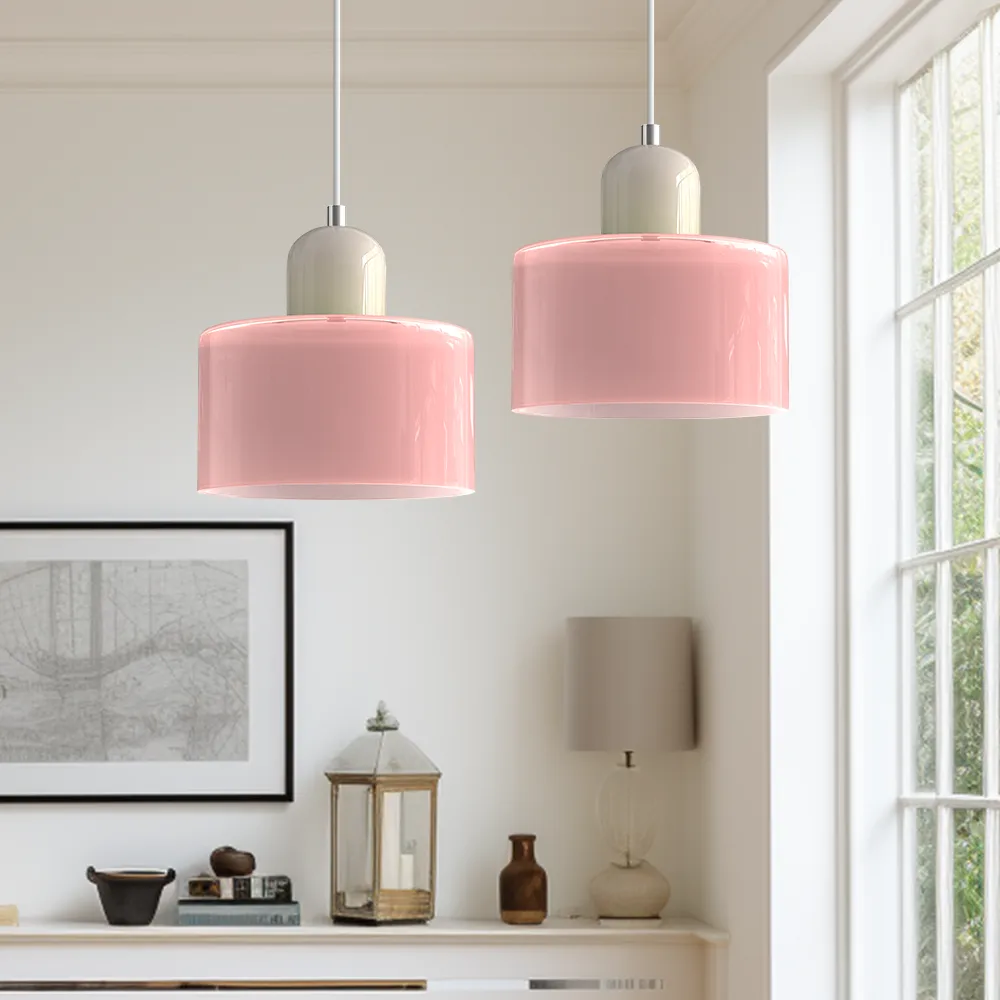
The Bauhaus Nordic Morandi Cylinder Glass Pendant Light is a useful example because its hand-blown shade is compact: about 15 cm (5.9 inches) in diameter and 17 cm (6.7 inches) high. It is available in Orange, Green, Light Green, Frosted Green, White and Pink shade options with several painted-metal base colors. Those choices affect more than style, so evaluate them in a fixed order.
1. Judge the Group Before Judging One Shade
Start with the role of the pendants. If they are meant to be a strong focal point on a large island, one tiny cylinder is likely to look incidental. If they are meant to form a light, repeated accent while recessed or under-cabinet lighting handles most of the work, small glass shades can be exactly the right visual weight.
Sketch the whole group as it will appear from the room entrance. The visual span of a row is the distance from the outside edge of the first shade to the outside edge of the last. That span, the empty space around it and the repetition of the drops determine whether the arrangement reads as intentional. The separate kitchen island pendant lighting guide covers height, quantity and spacing; use it after you have chosen the visual role.
when two or three repeated shades form a clear line, the island has other lighting layers and the open glass keeps the room visually light.
when a single fixture must anchor a broad island, the group is lost beside an oversized hood, or the bulb must be driven uncomfortably bright to do every lighting job.
Before drawing the group, check the Morandi's 15 cm by 17 cm dimensions and compare that full-size outline with your island rather than relying on the scale of an online photograph.
2. Color and Frosting Do Different Jobs
People often use “colored,” “frosted” and “soft” as if they mean the same thing. They do not. The CIE defines a colour filter as a selective filter that significantly changes the chromaticity of transmitted light. In practical terms, tinted glass can make the light reaching the room look warmer, greener or pinker because it does not pass every part of the bulb's output in the same way.
Frosting addresses a different property. A diffuser uses scattering to alter the spatial distribution of radiation. A frosted surface can blur the outline of a bright filament or LED point and spread brightness across more of the shade. It may feel gentler from a particular seat, but it does not guarantee a specific light output, color or glare result.
The Morandi's Frosted Green option makes the distinction easy to remember: a shade can be both colored and diffusing. Compare that with a smoother Orange or Pink option, where the visible bulb and the transmitted color may play a larger decorative role. Choose the optical job first, then the hue.
3. Check Glare From the Seats, Not From the Box
Glare is not simply “a lot of light.” The CIE definition of glare describes discomfort or reduced ability to see caused by an unsuitable luminance distribution, range or extreme contrast. That is why the same pendant can feel comfortable in daylight and sharp after dark: the bulb becomes a small bright point against a much dimmer room.
Test three views before installation is finalized. Sit at every stool and look across the island, stand at the main prep position, and enter from the adjoining room. In each view, ask whether the bulb is the first thing your eye notices. Also look for a bright reflected point in a window, polished appliance or glossy cabinet door.
- If the lamp is directly visible, consider a softly finished bulb or a more diffusing shade.
- If only one seat has a problem, the hanging height or viewing angle may matter more than the shade color.
- If the entire room is dark around the island, add or raise surrounding light instead of asking one decorative pendant group to carry the whole kitchen.
4. Choose a Shade Color in Both Daylight and Evening Light
Judge each color twice. During the day, the unlit glass must work with cabinets, stone, timber and wall color. At night, the same shade becomes part of the light source. Orange and Pink can produce a stronger warm color impression; Green and Light Green can cool or redirect the palette; White is visually quieter; Frosted Green combines a colored appearance with a more scattered view of the bulb. These are tendencies, not calibrated performance claims.
Hand-blown glass also has natural variation. The product page specifically notes that color and measurement differences are inevitable, so do not try to match the shade to a screen sample or cabinet paint code with laboratory precision. A better method is to decide whether the fixture should blend, bridge two existing colors or act as an accent, then allow reasonable variation within that role.
Compare the current Morandi shade and base combinations with photographs of your kitchen taken in daylight and after dark. Use the product page for available options, not as a promise of an exact screen-to-glass color match.
5. Treat the Bulb and Shade as One Lighting Choice
The Morandi uses an E27 bulb, the bulb is not included, and the listed maximum is 40W. Those facts establish the socket and electrical limit, but they do not specify how bright or comfortable a chosen bulb will appear through each glass option. Shop by the bulb's lumen output and light quality, while staying within the fixture limit.
The U.S. Department of Energy's explanation of LED light quality separates color appearance, usually condensed to correlated color temperature, from color fidelity and light distribution. That distinction matters here. A warm bulb does not automatically prevent glare, a high-CRI bulb does not cancel a colored shade, and a lower-watt LED is not necessarily dimmer than another lamp simply because its wattage is lower.
Purchase check: confirm E27 fit, physical bulb size, lumen output, color appearance and whether the bulb's finish hides the brightest point. The product page does not state a dimming specification, so verify fixture, bulb and control compatibility before planning a dimmer.
6. Use One Final Decision Table
| Decision | What to inspect | Useful response |
|---|---|---|
| Scale | Whole group from the doorway and seating area | Add repetition or choose a larger focal fixture; do not solve scale with a brighter bulb. |
| Color | Unlit glass against fixed room finishes | Choose blend, bridge or accent as the shade's clear visual role. |
| Diffusion | Visibility of the bulb and bright points through the shade | Favor frosting or a softer bulb finish when the source enters normal sightlines. |
| Light quality | Evening appearance of surfaces, food and faces | Test the bulb and shade together instead of trusting Kelvin alone. |
| Electrical fit | Socket, wattage limit and installation conditions | Use E27 within 40W and have fixed wiring reviewed by a qualified electrician. |
For fixed electrical work, the Electrical Safety Foundation International recommends using a qualified, licensed electrician. Give that professional the fixture specification and your intended bulb or control information rather than treating the shade decision as separate from installation.
If the compact scale, hand-blown variation and color-led design suit your plan, review the Morandi product details once more before ordering. Confirm the chosen shade/base combination, E27 socket, 40W maximum and indoor-use specification.
Final Takeaway
A small glass pendant succeeds when its modest size is intentional, its shade performs the optical job you need and its bulb stays comfortable from real viewing positions. Build the group first, separate color from diffusion, and test the evening view. That sequence is more reliable than choosing a favorite swatch and hoping the light behaves the same way in your kitchen.
FAQ
Are 5.9-inch pendant lights too small for a kitchen island?
Not automatically. They are usually more convincing as a repeated group or a light accent than as one dominant fixture over a broad island.
Does frosted glass always eliminate glare?
No. Frosting can scatter light and obscure a bright point, but bulb output, viewing angle and the contrast with the surrounding room still matter.
Is colored glass the same as frosted glass?
No. Color mainly changes the transmitted spectrum and appearance; frosting mainly scatters the light. A shade such as Frosted Green can do both.
What bulb does the Morandi pendant use?
It uses an E27 bulb, which is not included. The product page lists a maximum of 40W.
Can I match the glass exactly to a cabinet color from my screen?
Do not rely on an exact match. Screens, room light and hand-blown glass variation can all change the apparent color.