The Ultimate Sizing Guide: Choosing the Right Multi-Head Ceiling Light for Your Room
Finding the perfect multi-head ceiling light requires balancing the fixture's physical footprint with your room's dimensions and daily lighting needs. Buy a fixture that is too small, and your ceiling will look bare while your room remains dim; buy one that is too large, and it will overwhelm the space, making the ceiling feel oppressively low. The definitive rule is to match the light's diameter to your room's proportions and its LED wattage to your square footage. For standard bedrooms, a 75 cm, 4-head to 5-head fixture (48W–60W) is ideal. For spacious living rooms, you must scale up to a 95 cm, 6-head to 7-head fixture (72W–84W).
Quick Answer: The Multi-Head Sizing Cheat Sheet
If you need to make a fast, accurate decision without doing the math, follow these definitive guidelines based on standard room sizes and modern LED outputs:
- Small to Medium Rooms (10–15 sq meters): You need a 4-head or 5-head fixture. Look for a diameter of around 75 cm and an energy output between 48W and 60W. This is the sweet spot for bedrooms, home offices, and cozy dining nooks.
- Large Rooms (15–25+ sq meters): You need a 6-head or 7-head fixture. Opt for a wider diameter of 95 cm and a robust power output of 72W to 84W. This ensures light reaches the far corners of open-plan living rooms or large master suites.
- The Height Rule for All Rooms: Unless you have vaulted ceilings exceeding 3 meters, prioritize flush or semi-flush designs. A fixture height of 15 cm is the absolute safest bet to maintain an airy, open feel in modern apartments.

3 Golden Rules for Sizing Multi-Head Lights
Choosing a multi-head, "branch" or "molecular" style ceiling light is fundamentally different from buying a traditional solid dome light. Because these fixtures have negative space between the glowing heads, they carry less visual weight. This means you can—and should—go slightly larger in diameter. Here is how to calculate exactly what you need.
1. The Diameter Calculation Formula
The most reliable way to find your baseline fixture diameter is by converting your room's dimensions.
- The Metric Formula: Measure your room's length and width in meters. Add them together, then multiply by 10. The result is your ideal fixture diameter in centimeters.
Example: A room is 4 meters wide and 5 meters long. (4 + 5) × 10 = 90 cm. Therefore, a 95 cm fixture will look perfectly proportioned in this space. - The Design Caveat: Because multi-head branch lights are visually lighter than solid drum shades, you should always round up rather than down. If your math suggests an 85 cm light, a 95 cm multi-head fixture will look better than a 75 cm one.
2. Matching LED Wattage to Space
Modern LED wattage is vastly more powerful than old incandescent bulbs. You must choose a wattage that provides functional brightness without causing harsh glare.
- For primary living spaces: Aim for about 3W to 4W of LED power per square meter. A 20-square-meter living room requires roughly 60W to 80W of LED light. An 84W, 7-head fixture will provide brilliant, shadow-free illumination for the entire space.
- For bedrooms and relaxation areas: Aim for 2.5W to 3W per square meter. A 15-square-meter bedroom needs around 40W to 45W. A 48W, 4-head fixture offers ample light for getting dressed without feeling like a clinical interrogation room.
Designer Tip: While wattage controls overall brightness, picking the right light tone is what sets the mood for your room. To select the ideal ambiance for your space, read How to choose the perfect color temperature (Warm vs. Cool) for your Nordic minimalist wooden ceiling light.
3. The Ceiling Clearance Mandate
The most common mistake buyers make is ignoring the fixture's vertical drop. Safety codes and basic interior design principles dictate that the bottom of any light fixture should hang no lower than 2.1 meters from the floor.
Given that most modern apartment ceilings are between 2.4 and 2.6 meters high, bulky chandeliers are instantly disqualified. You must look for fixtures with a vertical profile of 15 cm to 20 cm. This ultra-thin profile ensures you never feel like the light is looming over your head.
Room-by-Room Guide: Matching Head Count to Your Space
Different rooms serve different functions, and your lighting configuration should reflect how you use the space. Here is exactly how to deploy multi-head fixtures across your home.
The Bedroom: Focus on Symmetry and Softness
Bedrooms require even, non-glaring light that covers the bed and wardrobe areas equally. A massive, high-wattage light can disrupt the tranquil atmosphere.
- The Verdict: Choose a 4-head (48W) or 5-head (60W) fixture.
- Why it works: At 75 cm in diameter, this size anchors the center of the ceiling perfectly above a standard Queen or King-sized bed. The lower wattage ensures the room remains relaxing. If your bedroom features lots of natural wood furniture, choosing a fixture with subtle wooden accents will tie the room's aesthetic together seamlessly.
The Living Room: Prioritize Expansive Spread
The living room is a high-traffic, multi-purpose zone. It’s where you entertain, read, and watch television. A single central light source often creates harsh shadows in the corners of the room. This is where the multi-head design shines.
- The Verdict: Install a 6-head (72W) or 7-head (84W) fixture.
- Why it works: The sprawling 95 cm diameter pushes the individual light sources outward, acting like multiple mini-lights scattered across the ceiling. This branch-like spread eliminates dark corners and provides the necessary 70+ watts to fully illuminate a large, open-plan family room.

The Dining Area: Centered and Intentional
If you do not want low-hanging pendants over your dining table—perhaps to keep sightlines open to a nearby television or window—a multi-head flush mount is a chic alternative.
- The Verdict: Match the fixture to the table shape. A 5-head (60W) fixture works beautifully over a round table, while a longer 6-head fixture mimics the proportions of a rectangular dining table.
- Why it works: The 15 cm low profile ensures the light never blocks the view across the table, while the 60W output is bright enough for family dinners or helping kids with homework.
The "Low Ceiling" Dilemma: Overcoming Modern Architecture
If you live in a modern apartment built in the last two decades, you likely face the "low ceiling dilemma." Standard ceilings hover around 2.4 meters to 2.6 meters.
When you have limited vertical space, heavily decorated chandeliers or drop pendants make the room feel cramped and claustrophobic. However, traditional "boob lights" or flat LED panels often look cheap and lack personality.
The solution is the molecular branch design. By spreading horizontally across the ceiling rather than dropping vertically into the room, these fixtures create an optical illusion. The wide, 95 cm horizontal span draws the eye outward, making the ceiling feel broader and, consequently, taller. When paired with an ultra-slim 15 cm height, you get all the dramatic architectural impact of a statement chandelier with none of the headroom penalties.
Our Top Pick: The Orea Nordic Minimalist LED Ceiling Light
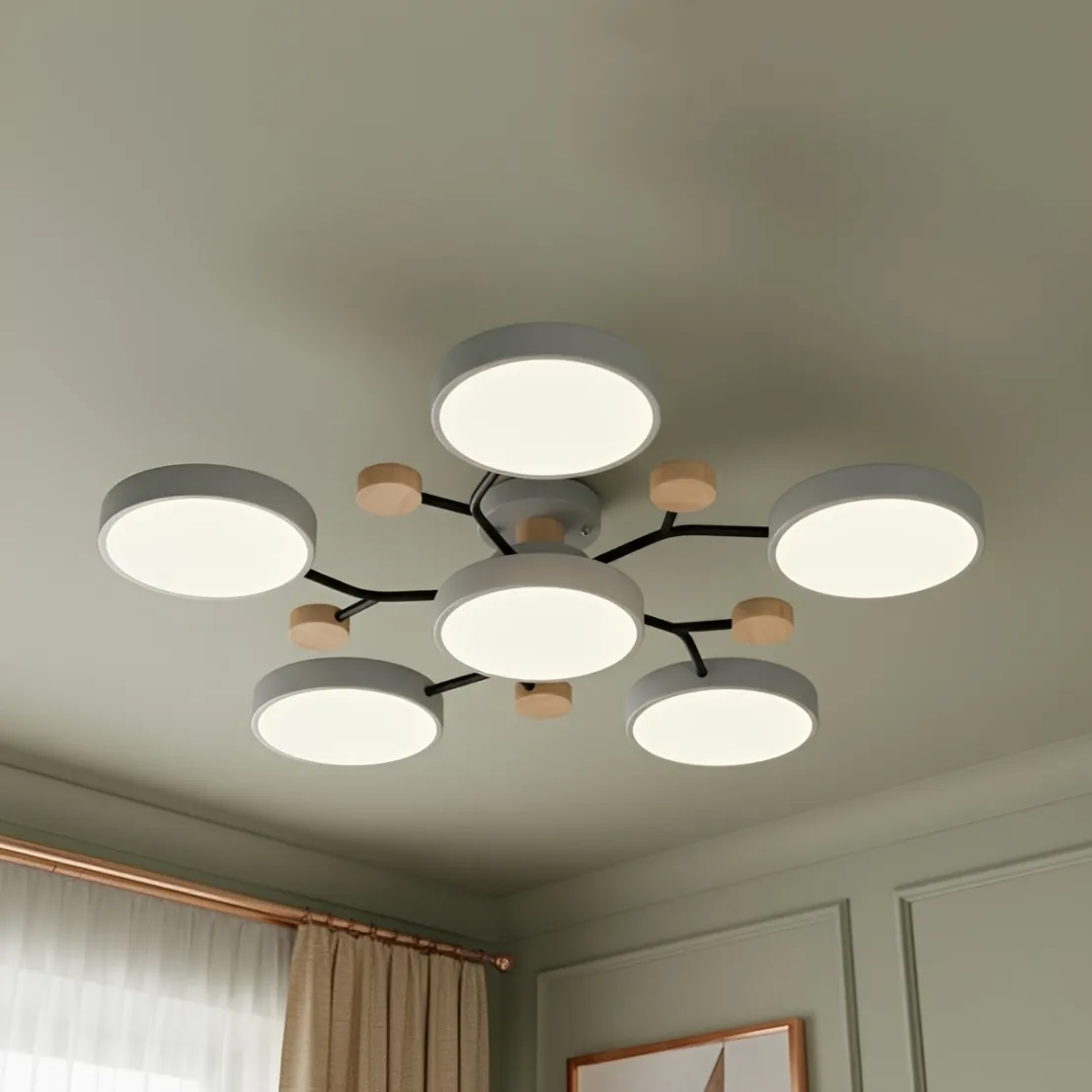
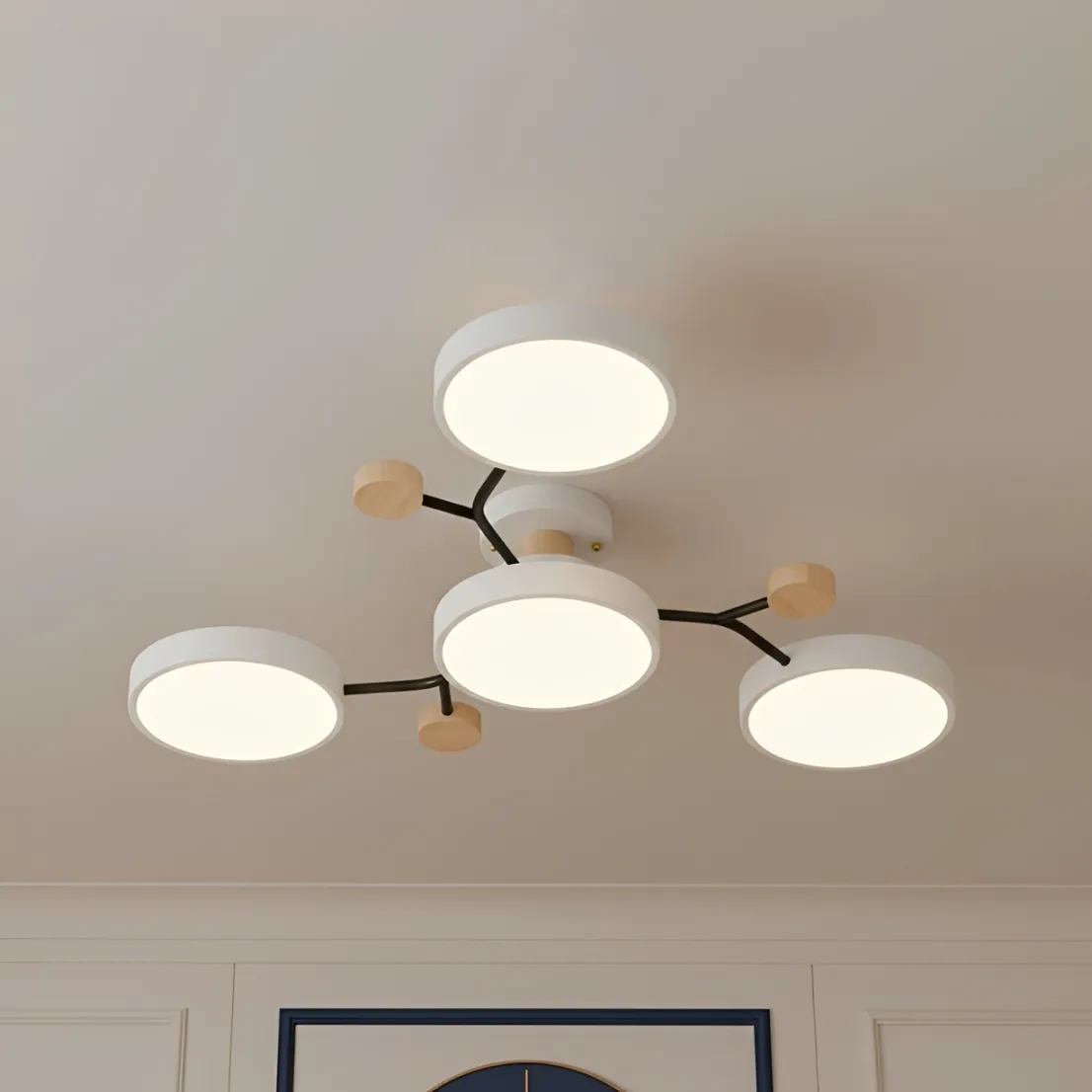
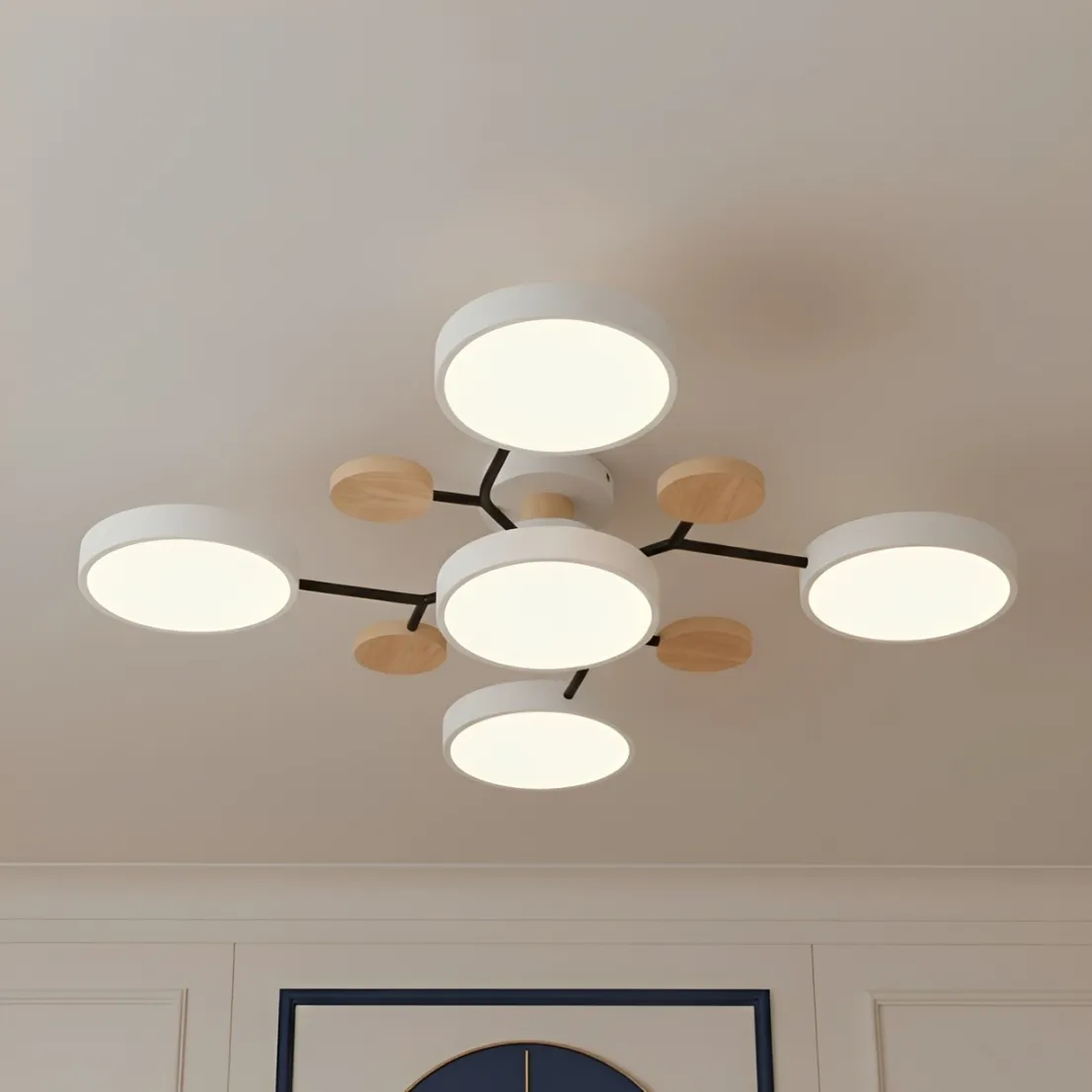
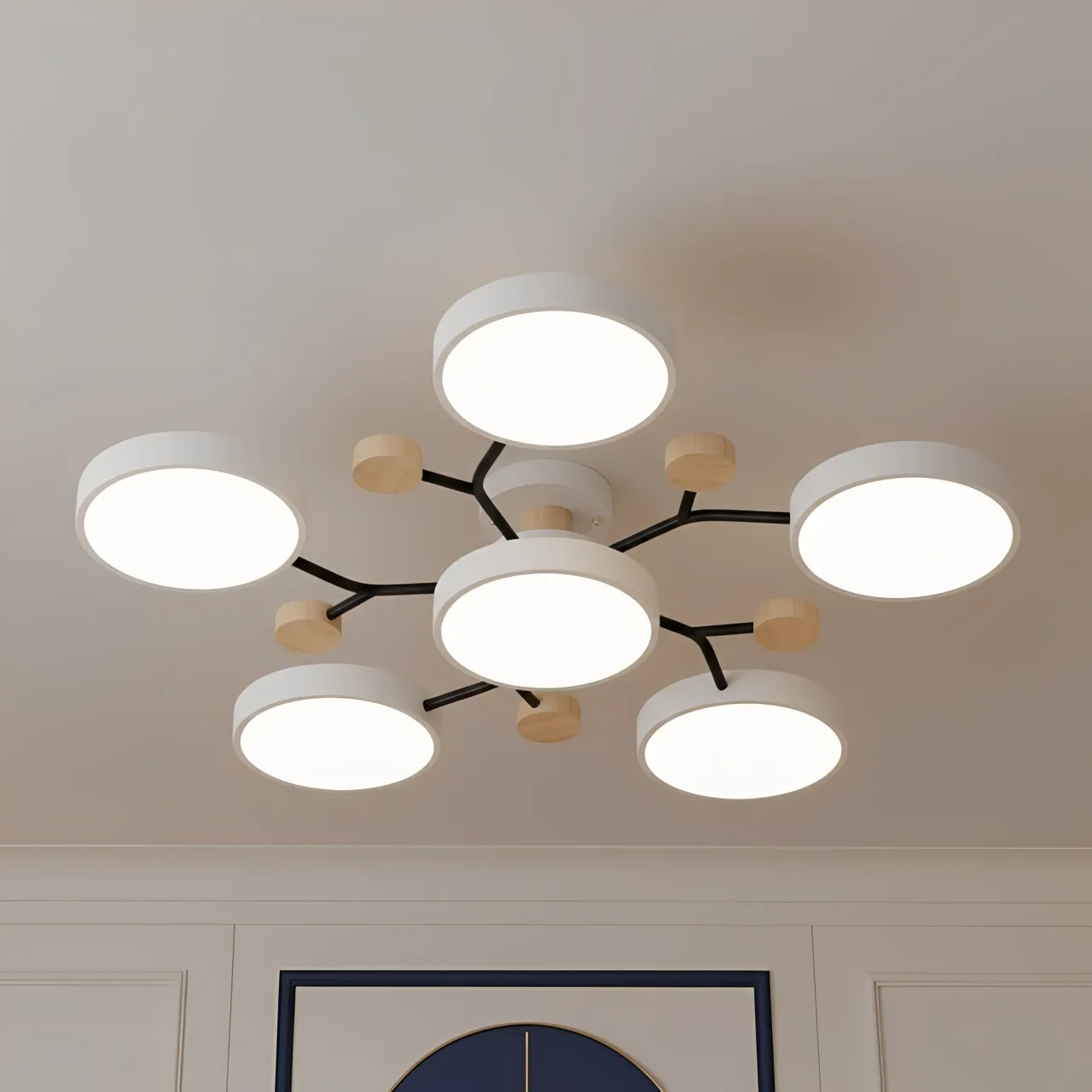
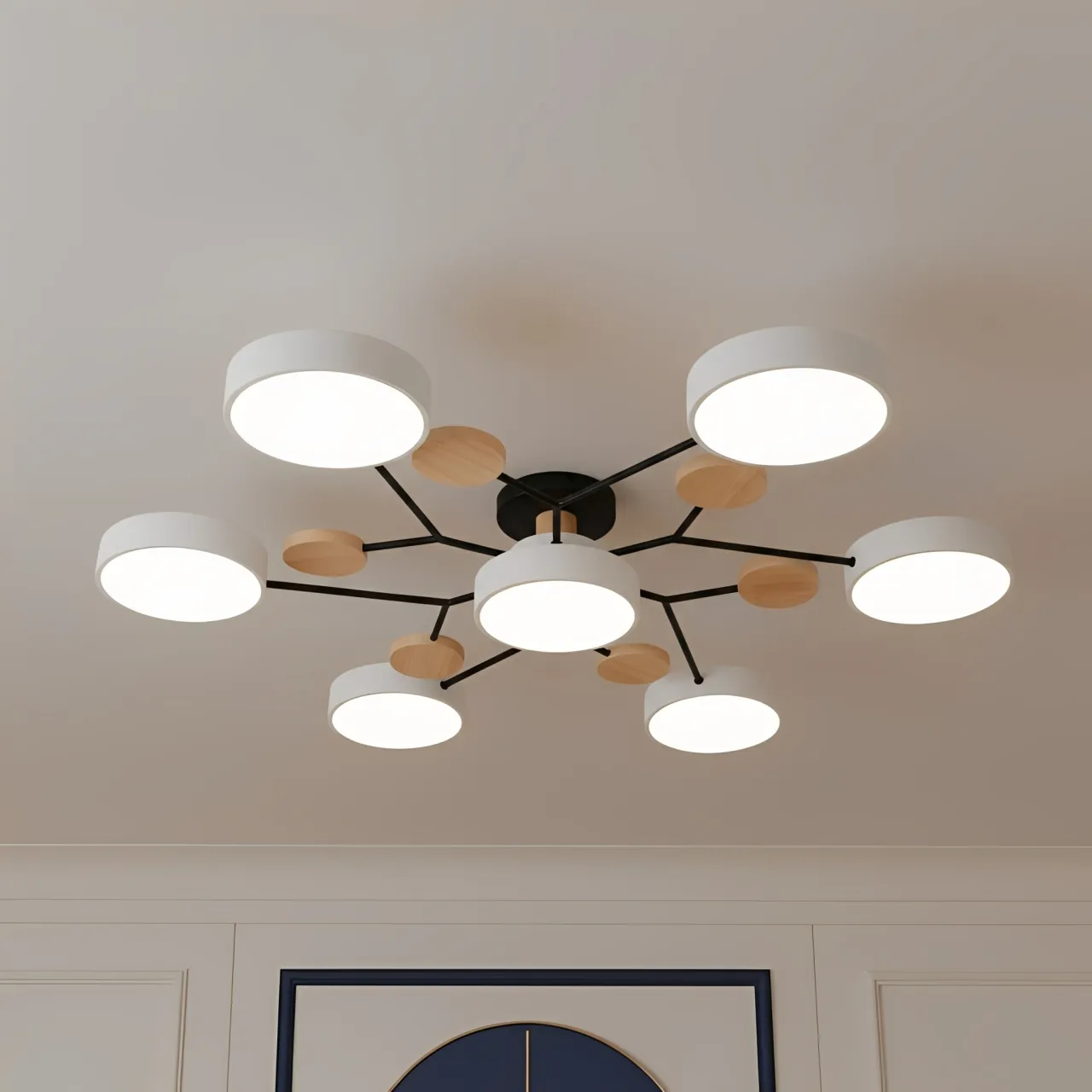
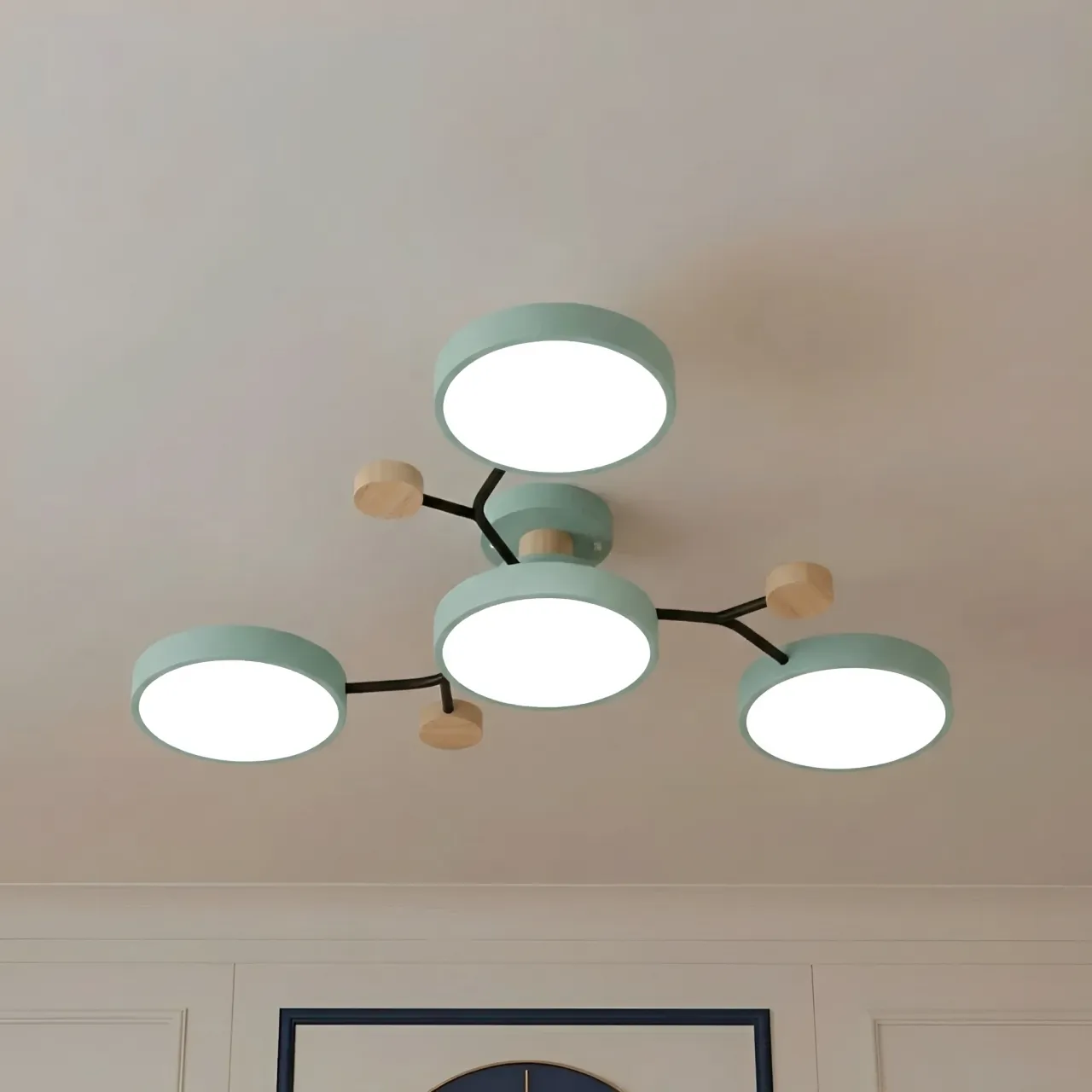
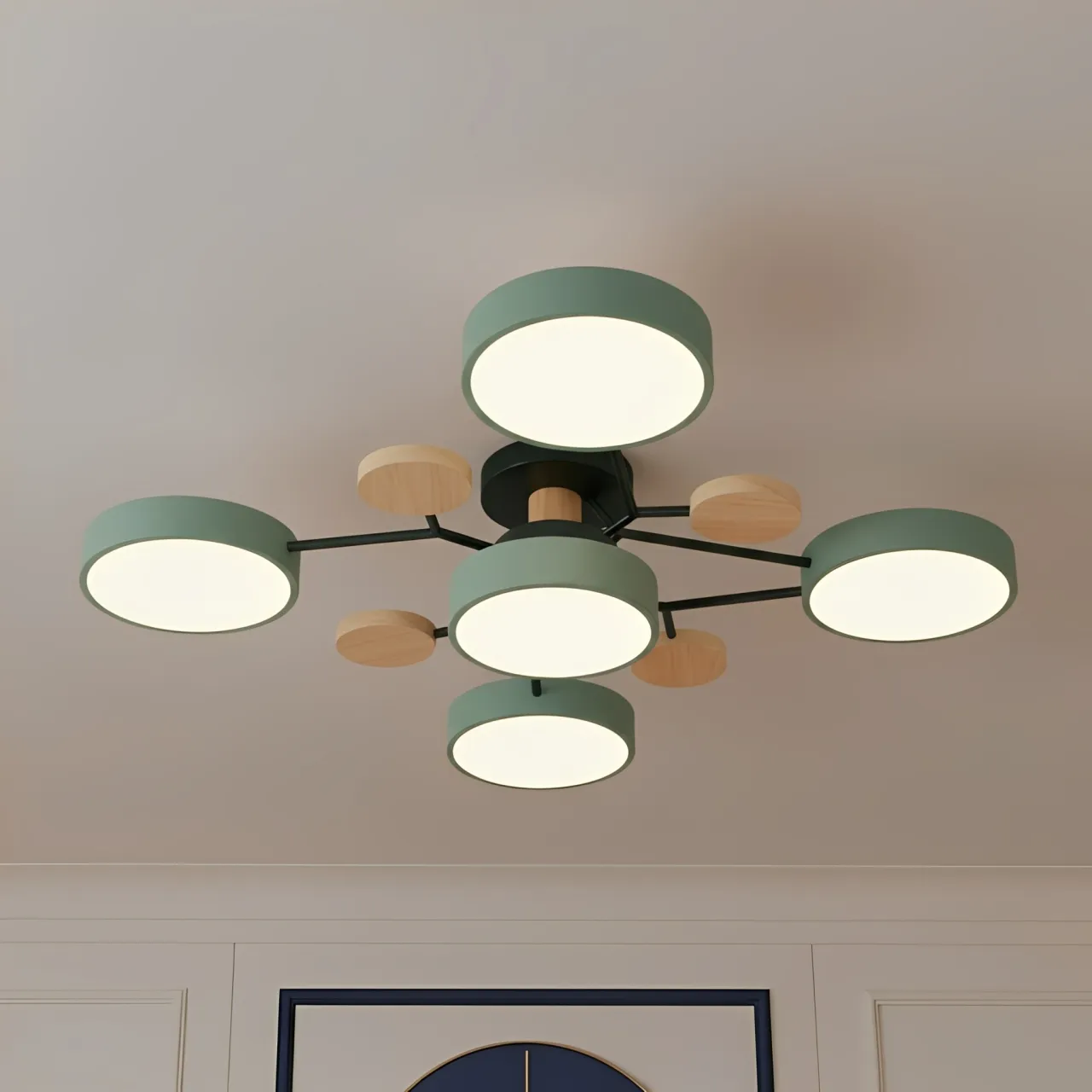
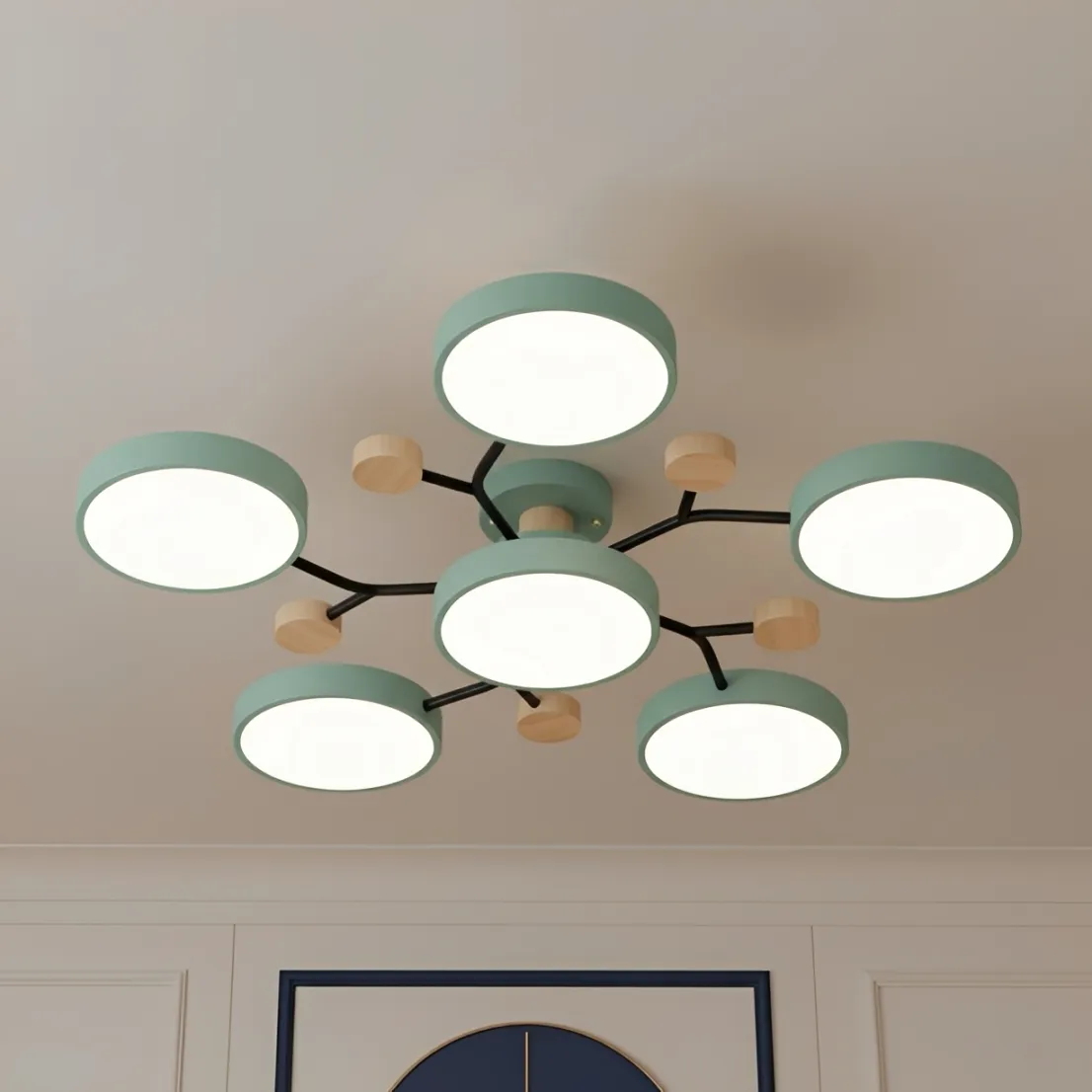
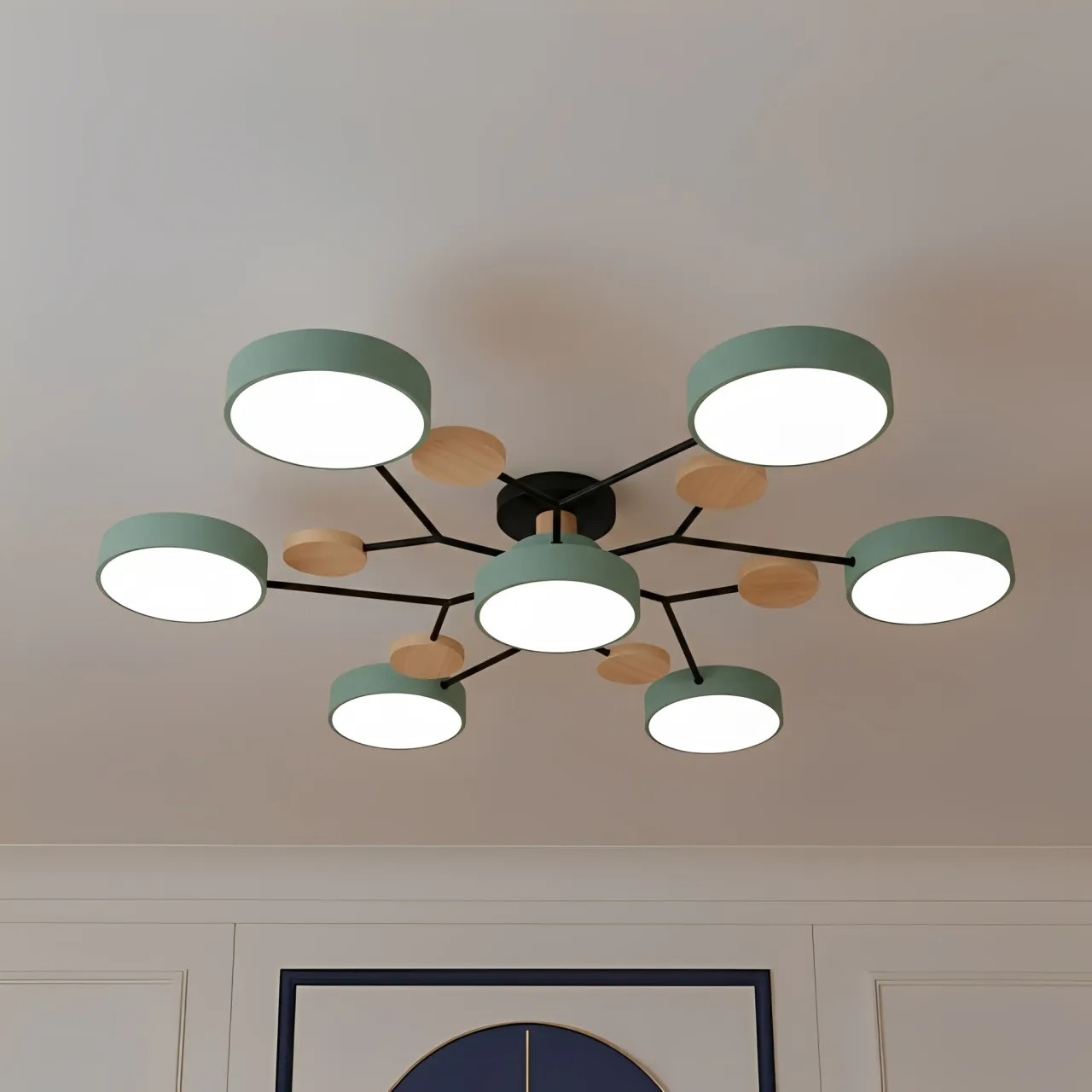
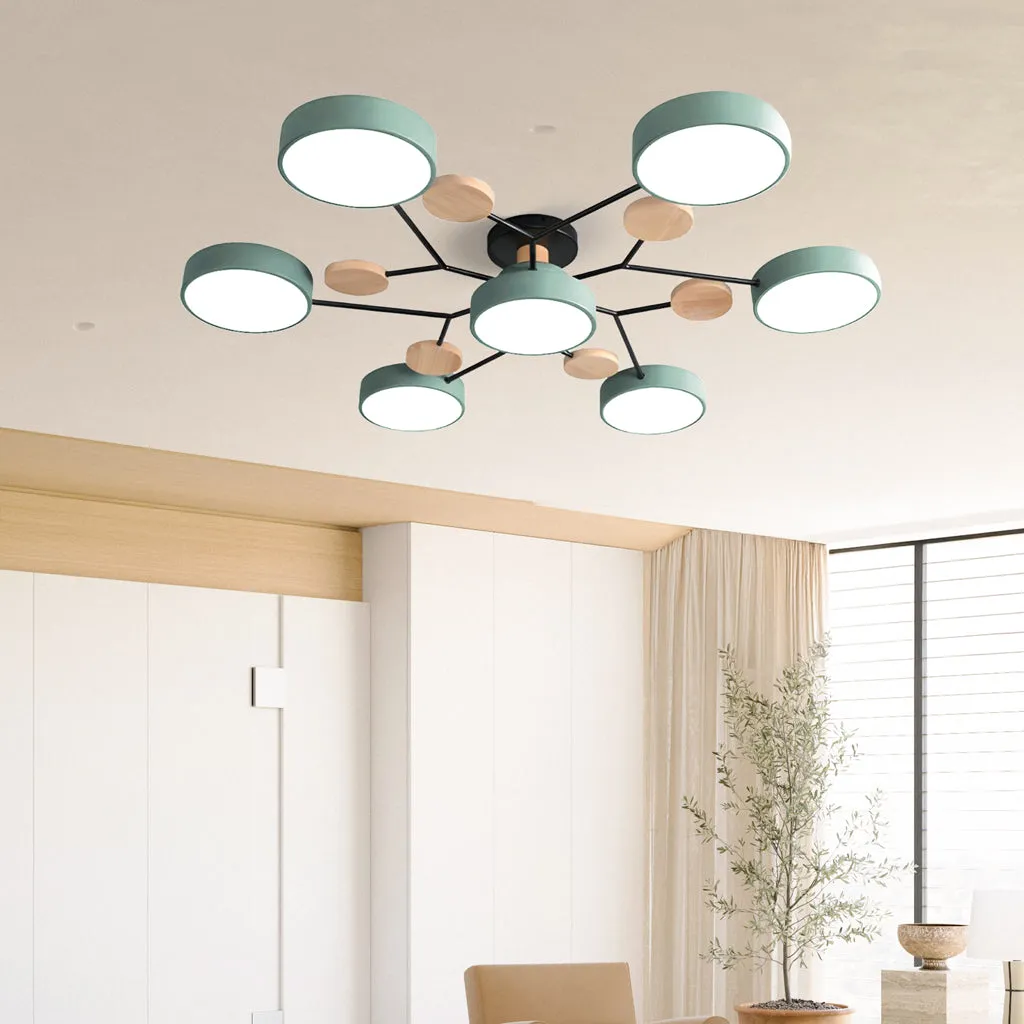
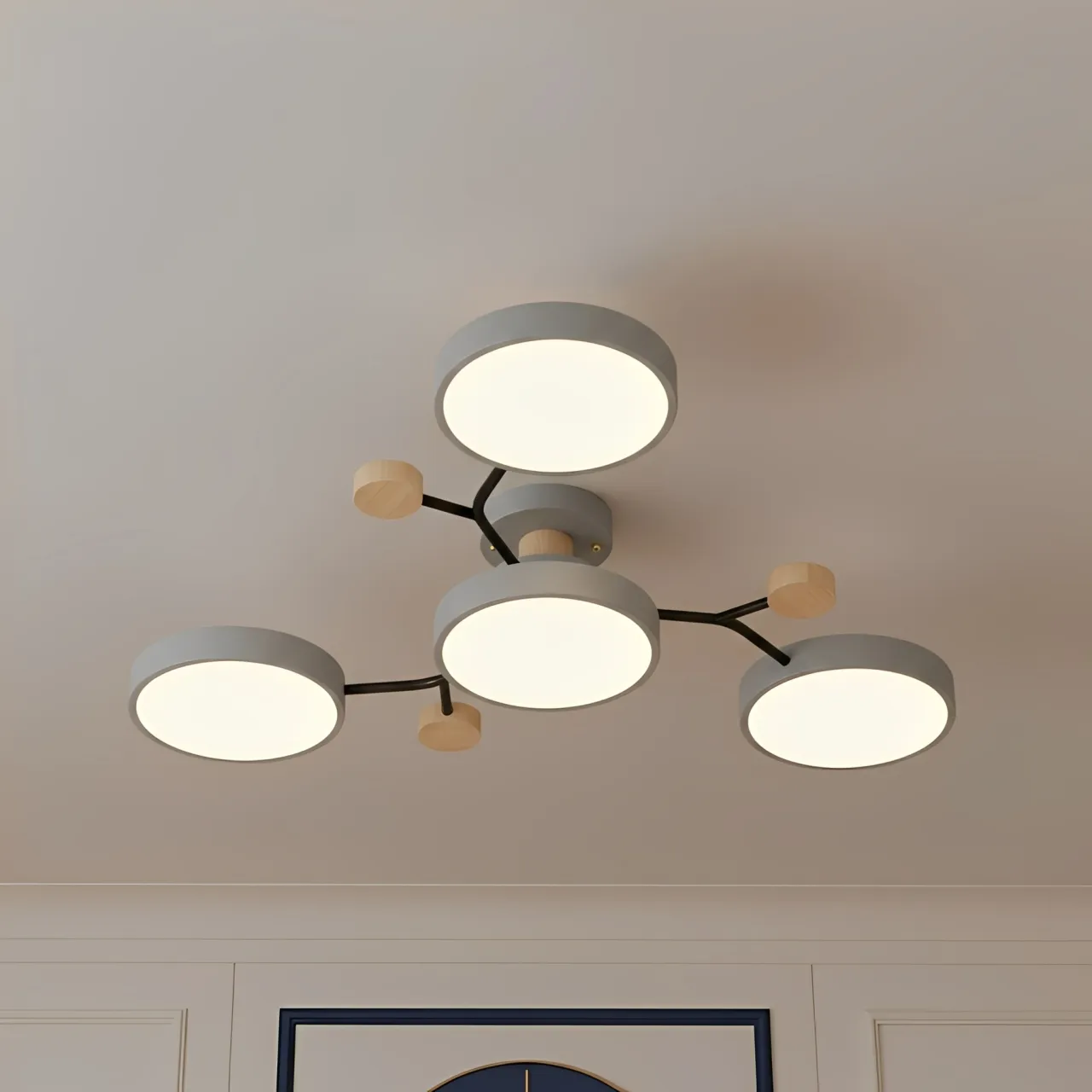
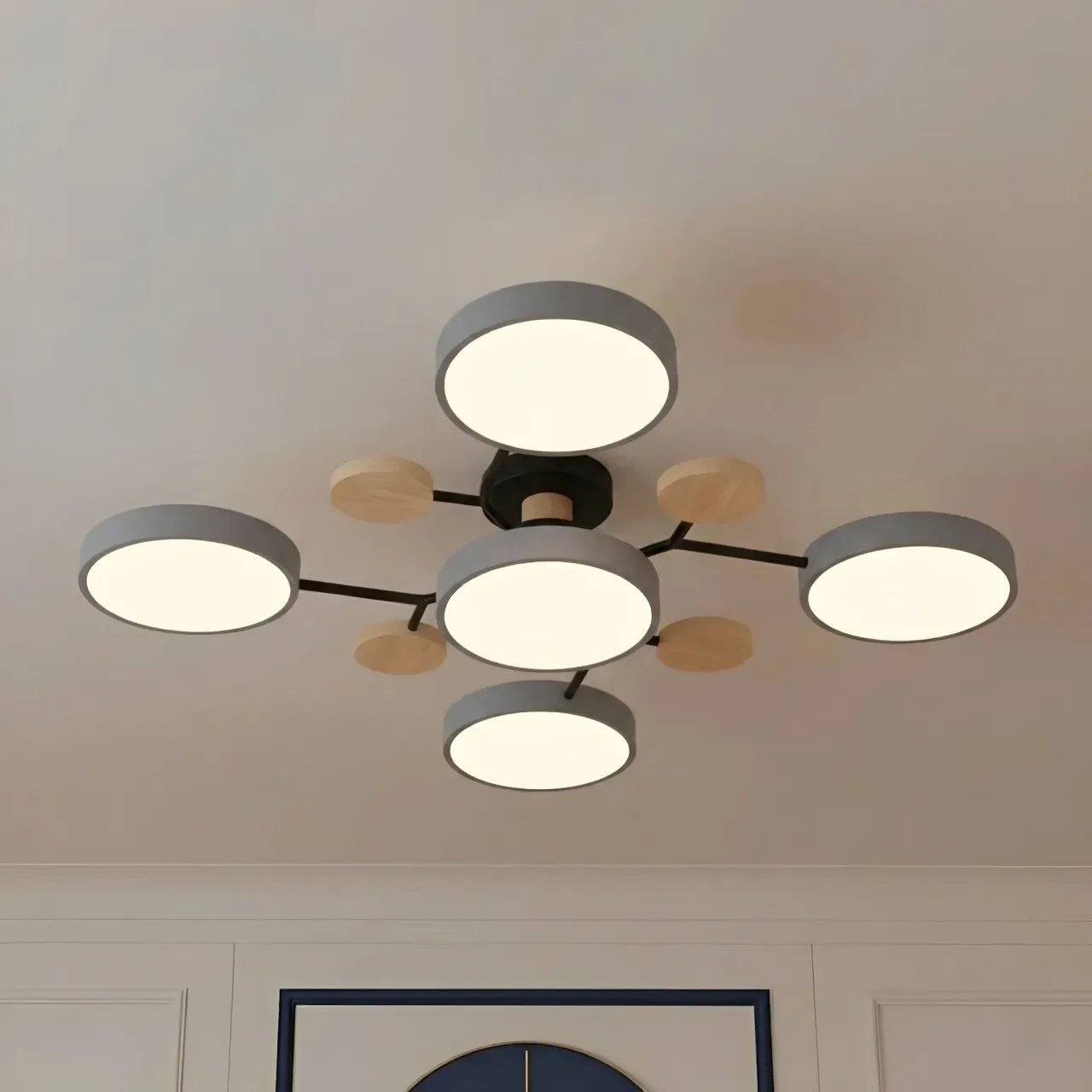
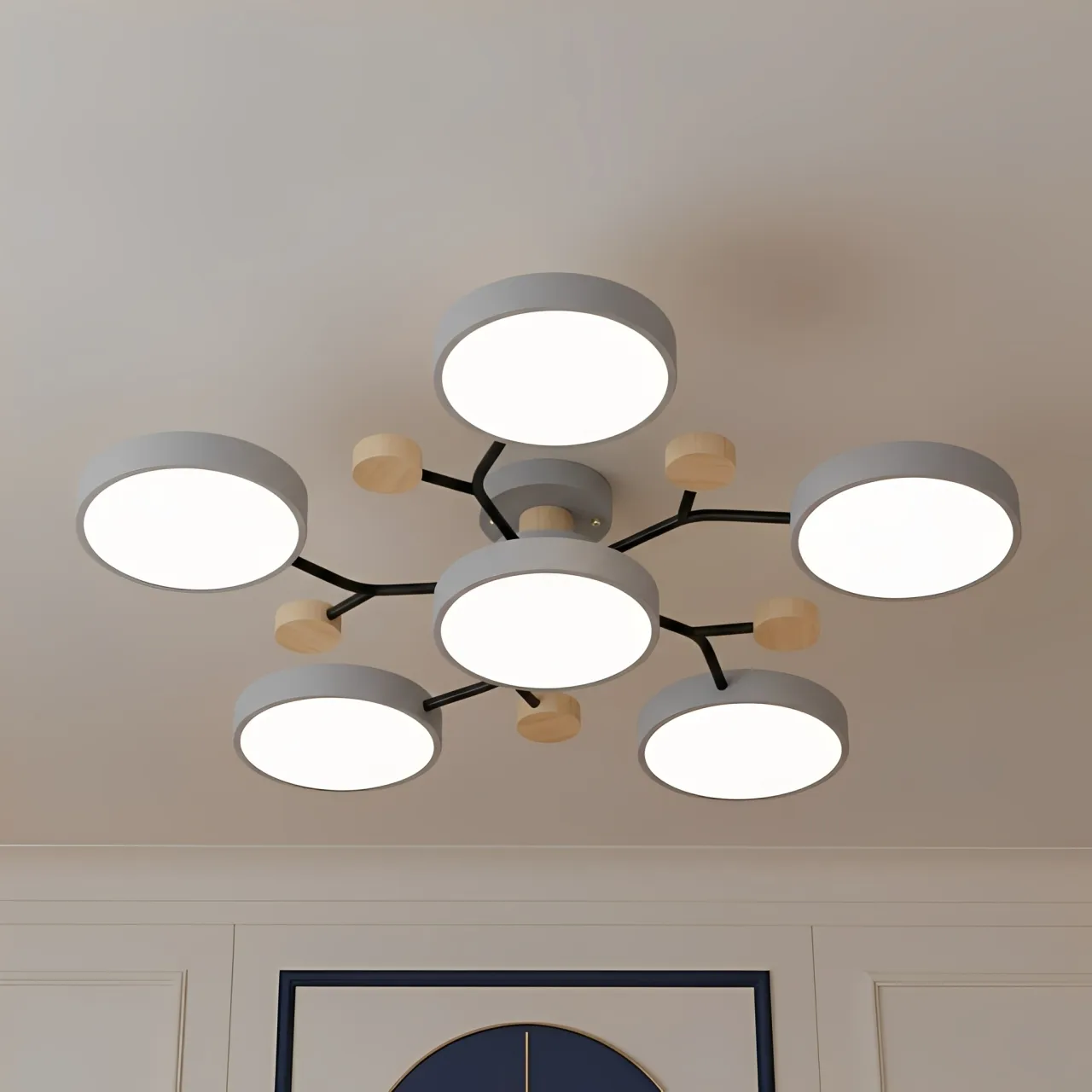
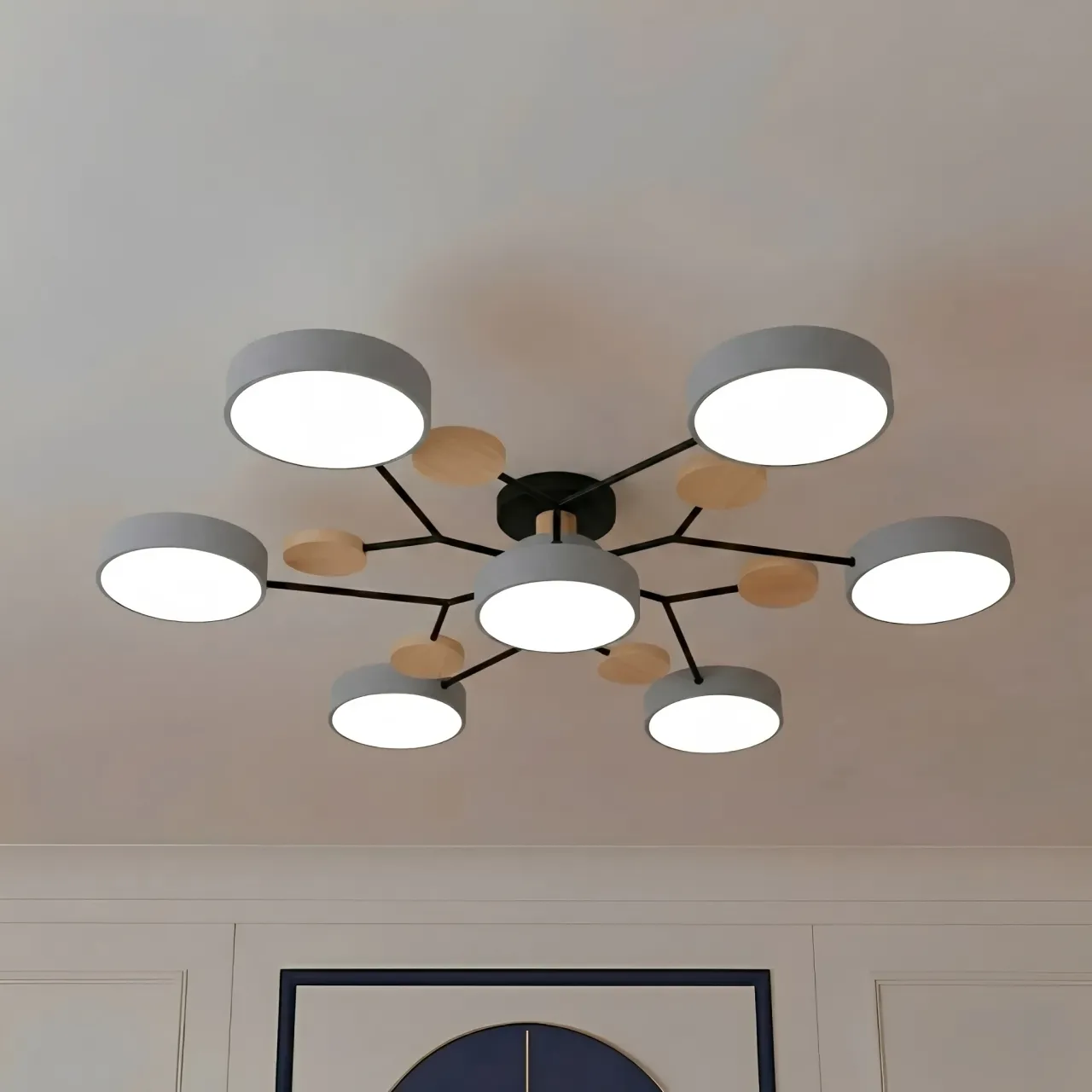
If you are looking for a multi-head fixture that perfectly balances mathematical proportions, LED brightness, and Scandinavian aesthetics, we highly recommend the Orea Nordic Minimalist Modern Round Wooden LED Ceiling Light for Living Room.
This fixture practically acts as a blueprint for everything discussed in this guide. It avoids the clinical look of standard LED panels by incorporating warm wooden accents and a sleek "molecule branch" structure. More importantly, it is engineered with a strict 15 cm height profile, making it the ultimate solution for standard and low ceilings.
Here is a breakdown of how the Orea light fits into your home:
| Room Size / Type | Recommended Configuration | Dimensions & Output | Best Color Finish |
|---|---|---|---|
| Standard Bedroom | 4-Head | Dia 75 cm, 48W | Gray or White (Neutral) |
| Large Bedroom / Dining | 5-Head | Dia 75 cm, 60W | Green (Accent Color) |
| Standard Living Room | 6-Head | Dia 95 cm, 72W | White (Blends with ceiling) |
| Large Open Living Space | 7-Head | Dia 95 cm, 84W | Gray or White (Minimalist) |

Instead of guessing whether a light will fit, the Orea allows you to purposefully select the 75 cm footprint for intimate spaces or the sprawling 95 cm footprint for large rooms. The distinct Macaron Green, White, and Gray finishes—paired with the natural wood base—make it incredibly versatile for Nordic, Japandi, or modern minimalist interiors.
If you're unsure which color palette aligns best with your existing decor, explore Which color to choose? White, Green, or Gray for your Modern Macaron Ceiling Light.
Frequently Asked Questions (FAQ)
Q: Can I use an 84W (7-head) fixture in a small 10-square-meter bedroom?
No. Unless the fixture is hooked up to a highly responsive dimmer switch, 84W of LED power in a space that small will be uncomfortably bright and cause severe glare. Stick to the 48W (4-head) model for rooms under 12 square meters.
Q: Why should I choose a branch/multi-head design over a single large LED dome?
Light distribution. A single large dome concentrates all its light in one central spot, creating harsh shadows around the perimeter of the room. A multi-head branch design pushes the light sources outward toward the edges of the room, resulting in much softer, more even illumination.
Q: Will a 15 cm tall ceiling light look flat or boring?
Not if it has structural design. A flat LED panel looks boring because it lacks depth. A molecular branch light like the Orea has overlapping arms, distinct circular light heads, and contrasting materials (wood and matte metal). This provides 3D architectural interest while remaining safely close to the ceiling.
Q: Which finish—Green, White, or Gray—is safest if I plan to change my furniture later?
White is universally the safest choice, as it blends seamlessly into standard white ceilings, making the room feel taller. Gray offers a slightly more industrial or masculine edge while remaining highly neutral. The Macaron Green is a statement choice; it looks stunning alongside natural oak or walnut furniture, but it does require a bit more commitment to a cohesive color palette.