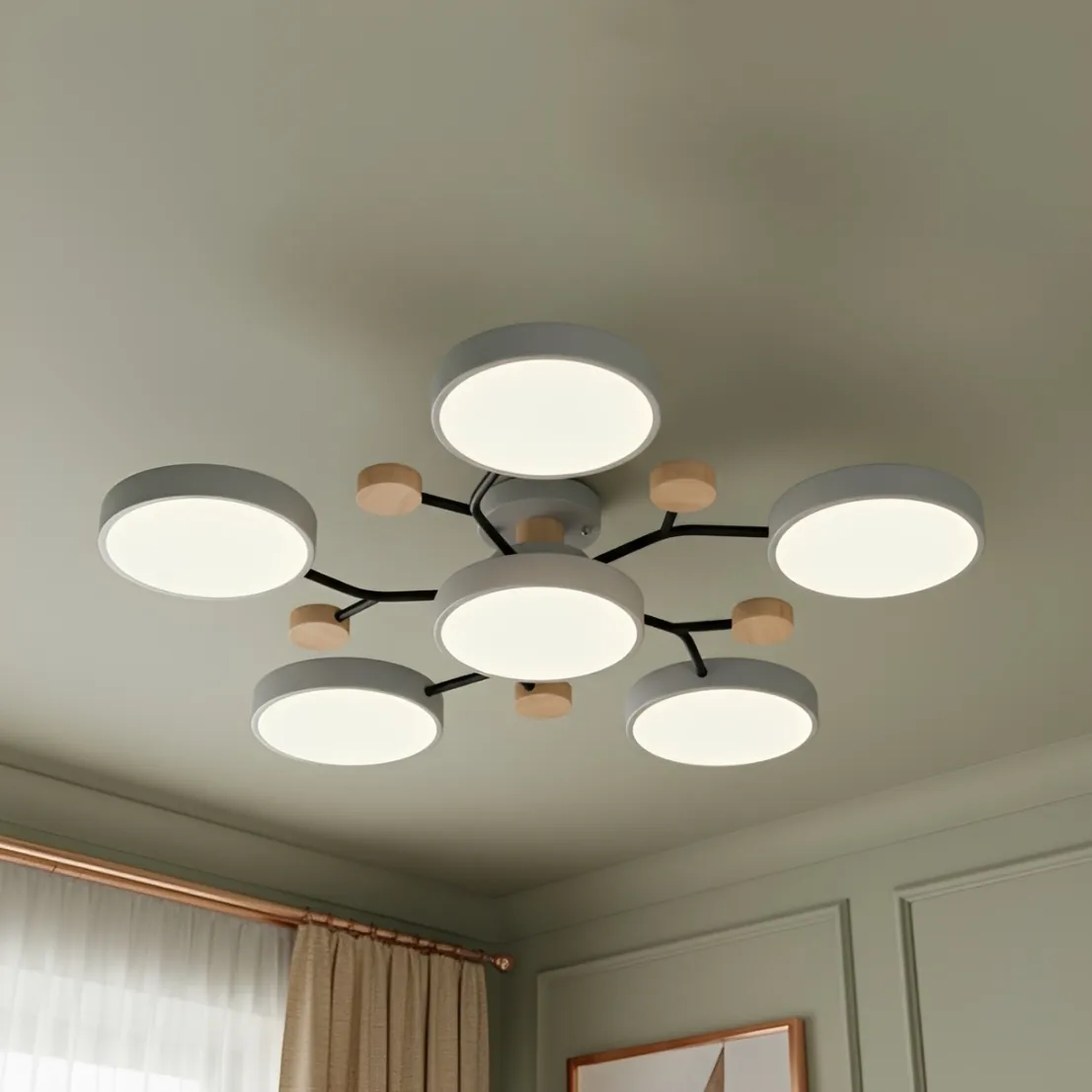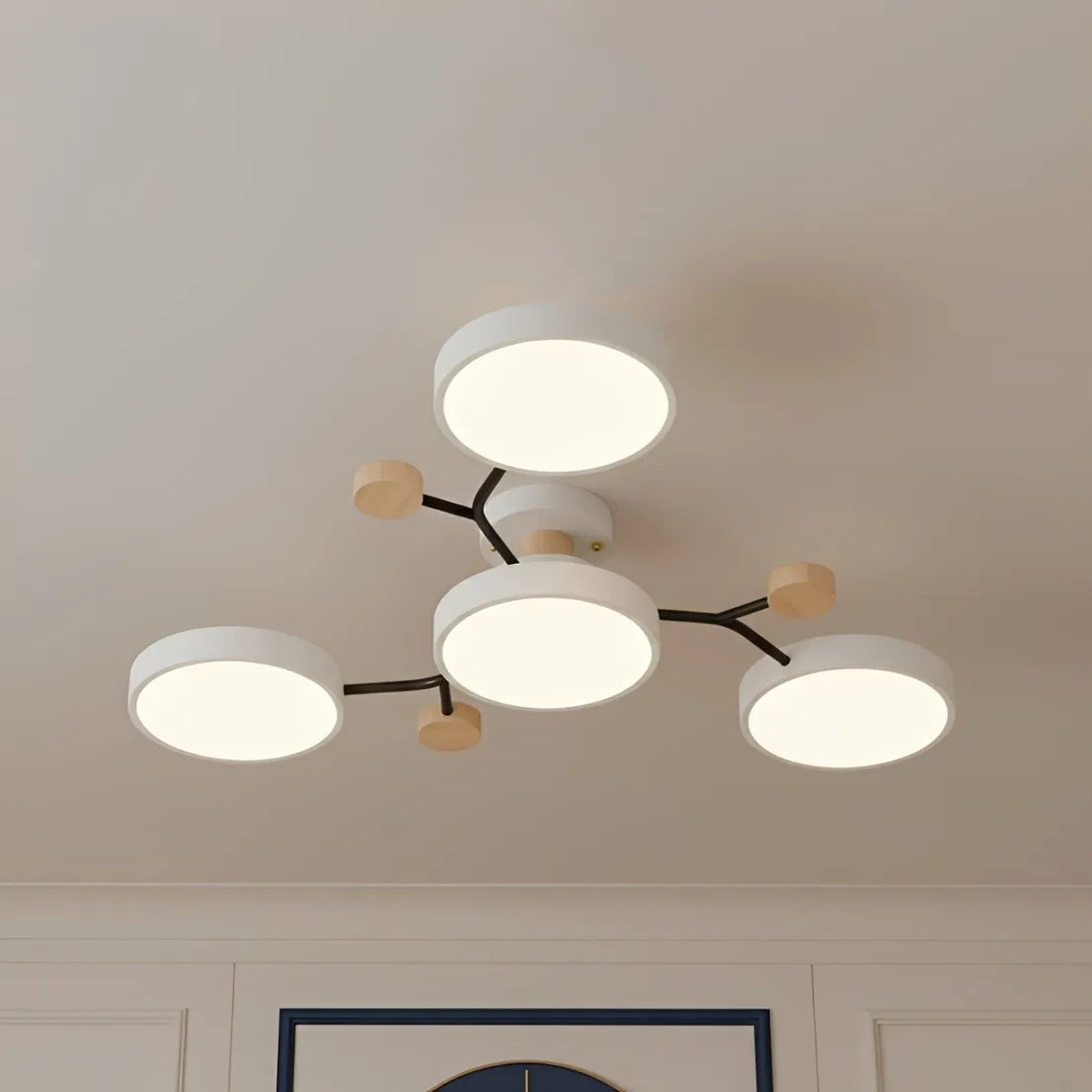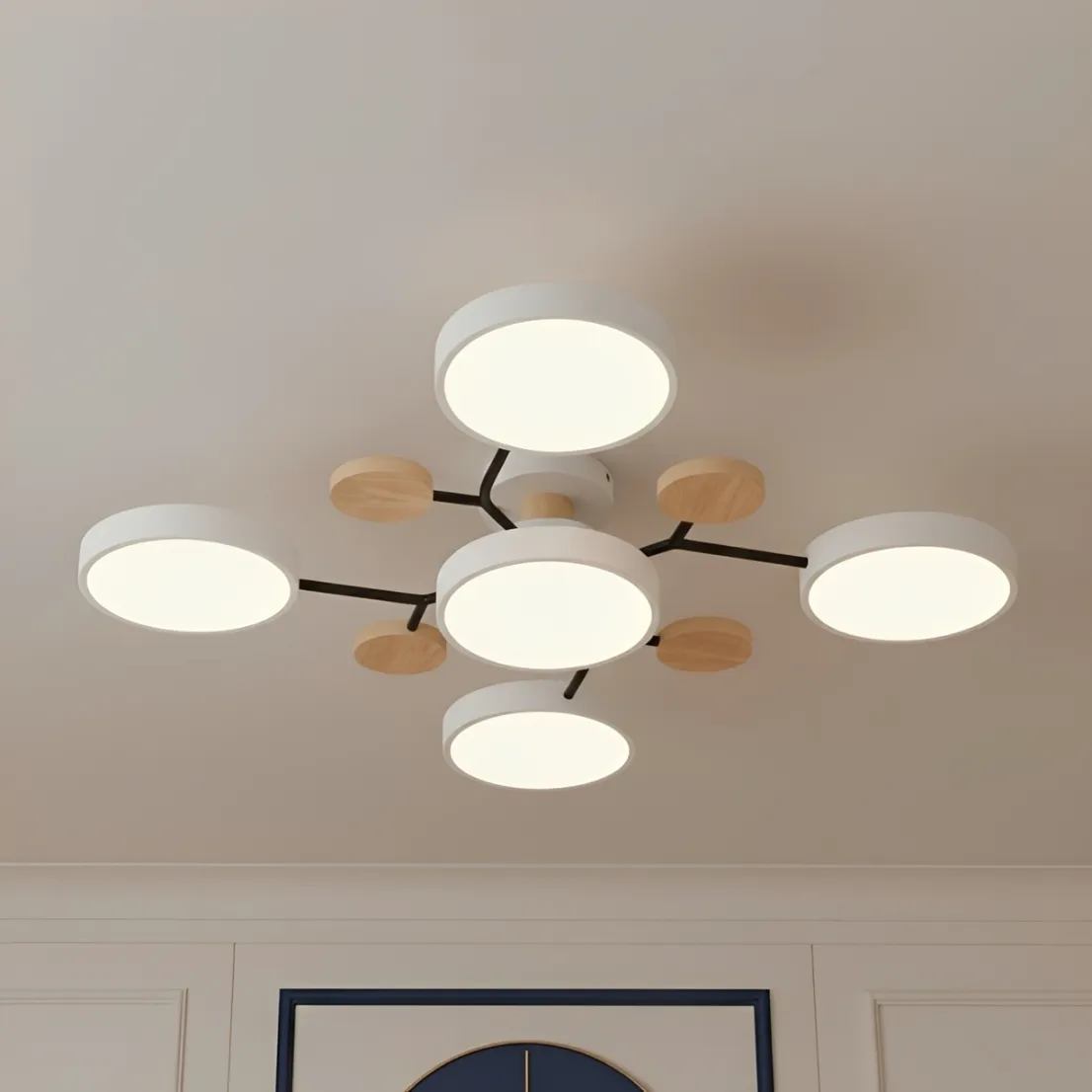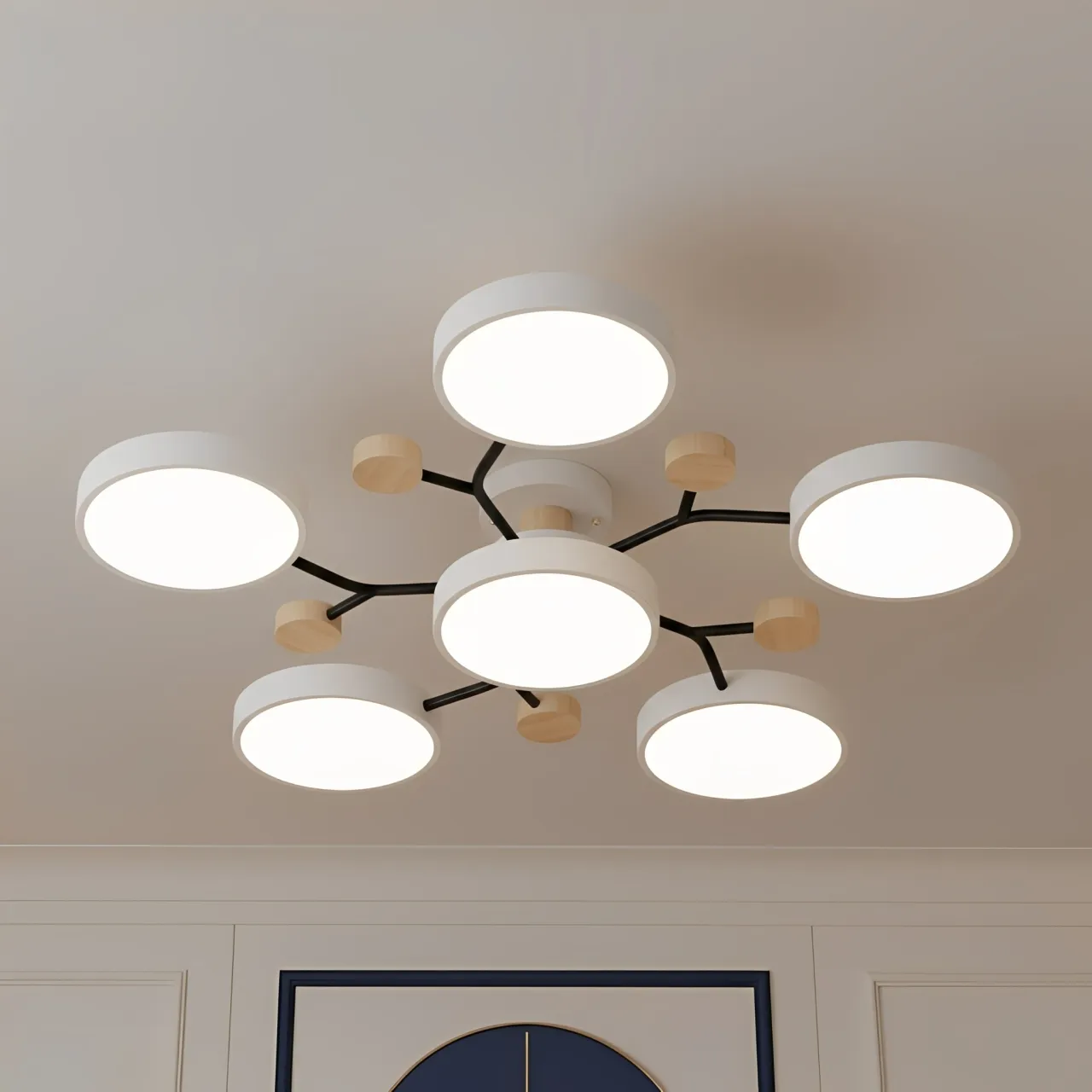
Warm, neutral or three-color light: choose the LED ceiling light according to real life
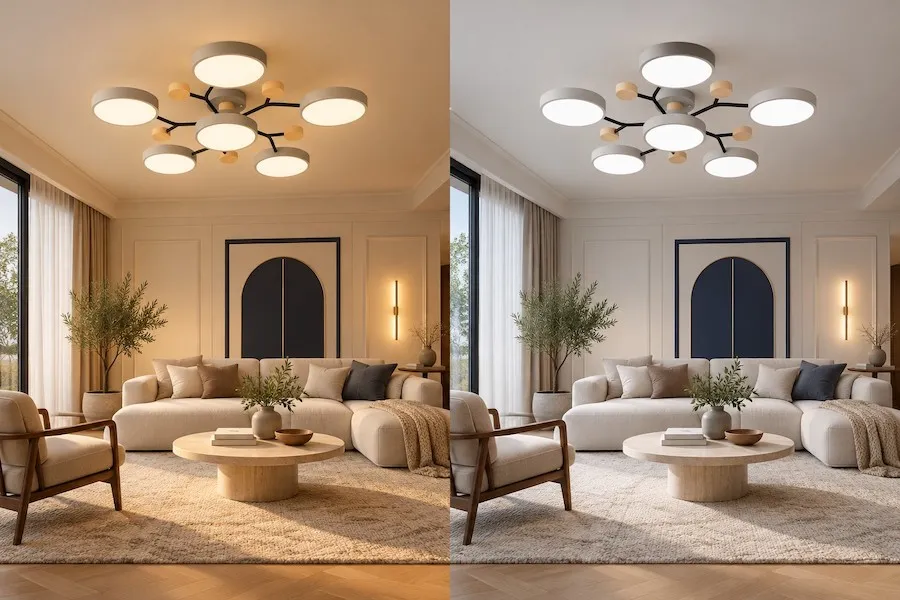
Choose a warm light if the living room is primarily for relaxing in the evening, a neutral light if the room is also used for working or reading, and a three-color version if you want to switch between different scenarios without installing multiple fixtures. Before ordering, check the actual Kelvin, the control used to change modes, and the availability of the color combination and number of bulbs.
Quick comparison
| Option | Practical effect | When to choose it |
|---|---|---|
| Warm light | Soft atmosphere, wood and more enveloping fabrics | Relax, television, evening conversation |
| Neutral light | More legible whites and a greater sense of clarity | Mixed use, visual tasks, cold interiors |
| Three colors | Multiple selectable temperatures | Multifunctional room, as long as the command is clear |
Commercial labels aren't enough. The CIE lighting terminology distinguishes between color temperature and correlated color temperature; for everyday comparison, always ask for the manufacturer's declared Kelvin values.
When warm light is the simplest choice
The range commonly perceived as warm, often around 2700-3000K, promotes a relaxed atmosphere and pairs well with wood, beige, terracotta, and natural fabrics. It's a suitable choice when the living room is used primarily after dinner and precise tasks require a dedicated lamp.
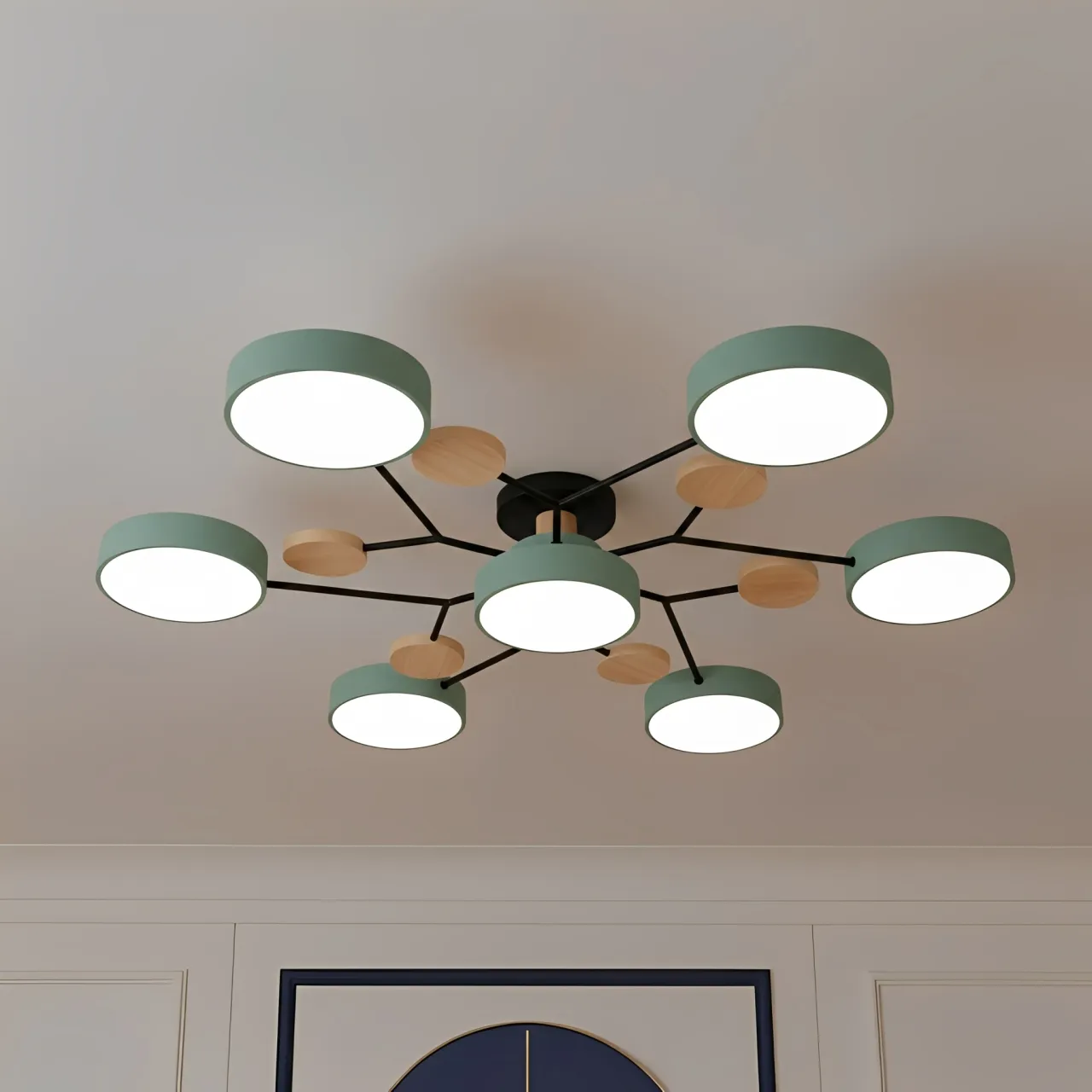
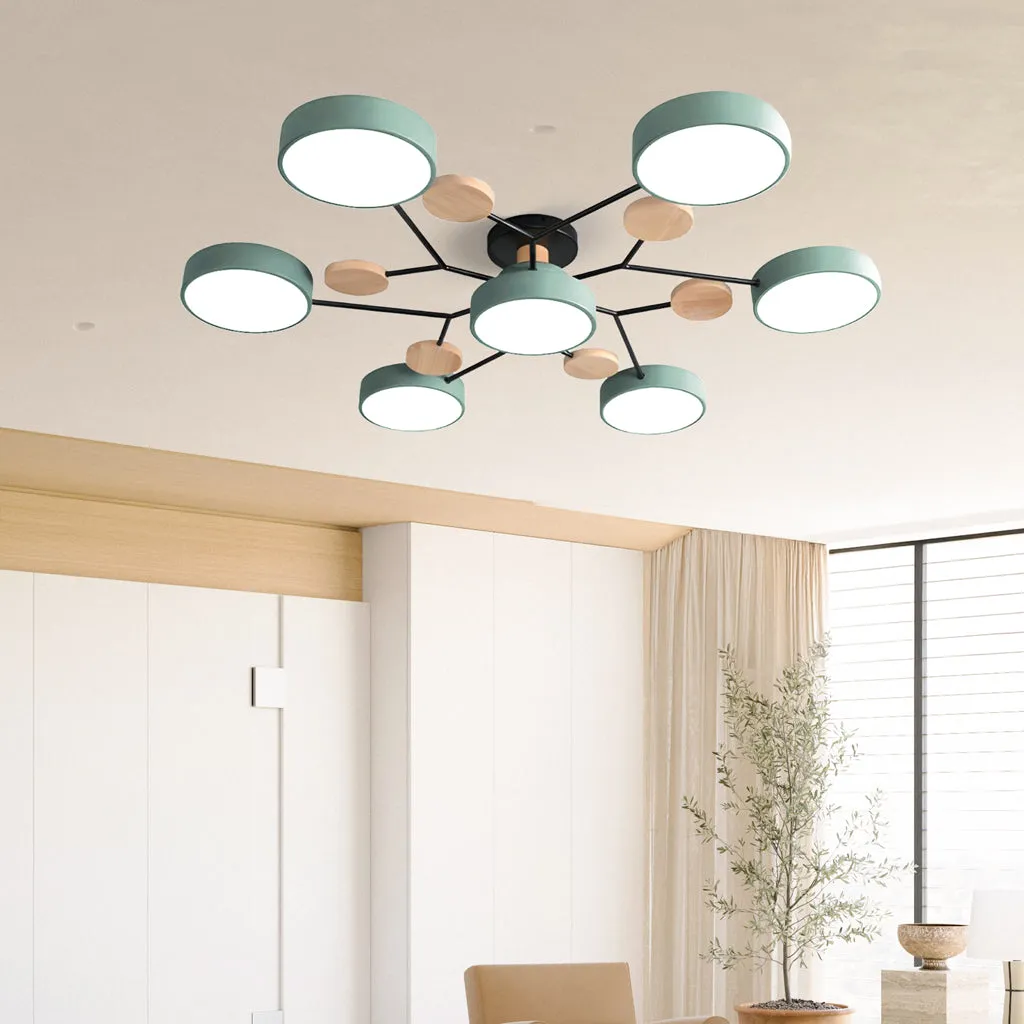
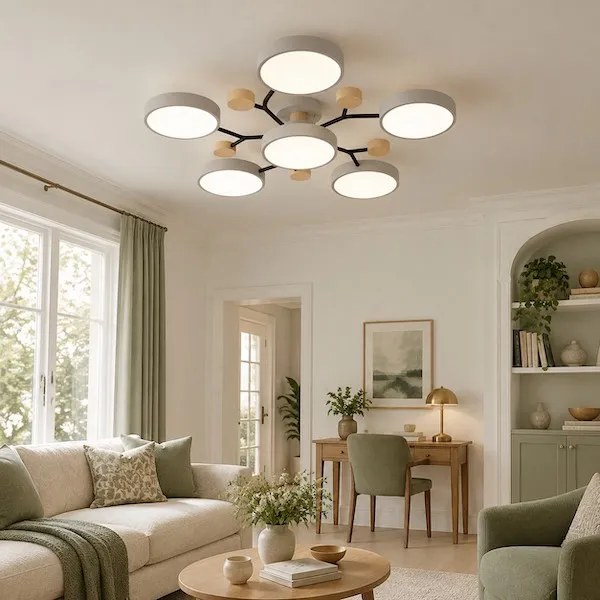
Warm light shouldn't overtone the color orange. In a room with a very yellow floor or cream walls, check an evening swatch: too many warm tones can distort the whites and greens. A white or gray finish can keep the overall look more balanced.
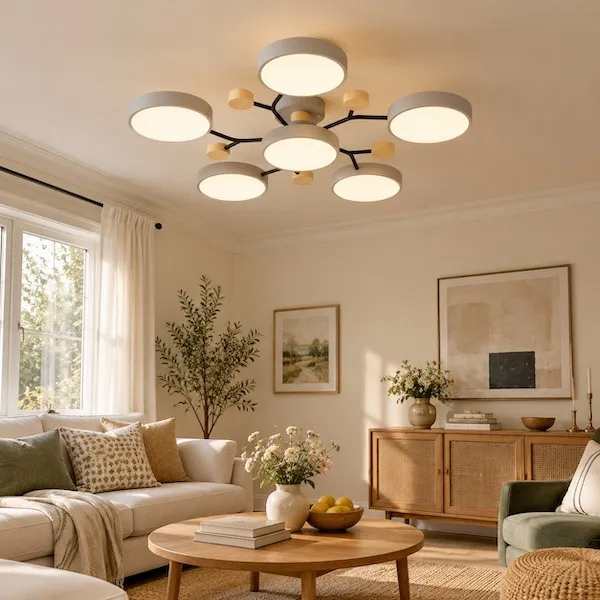
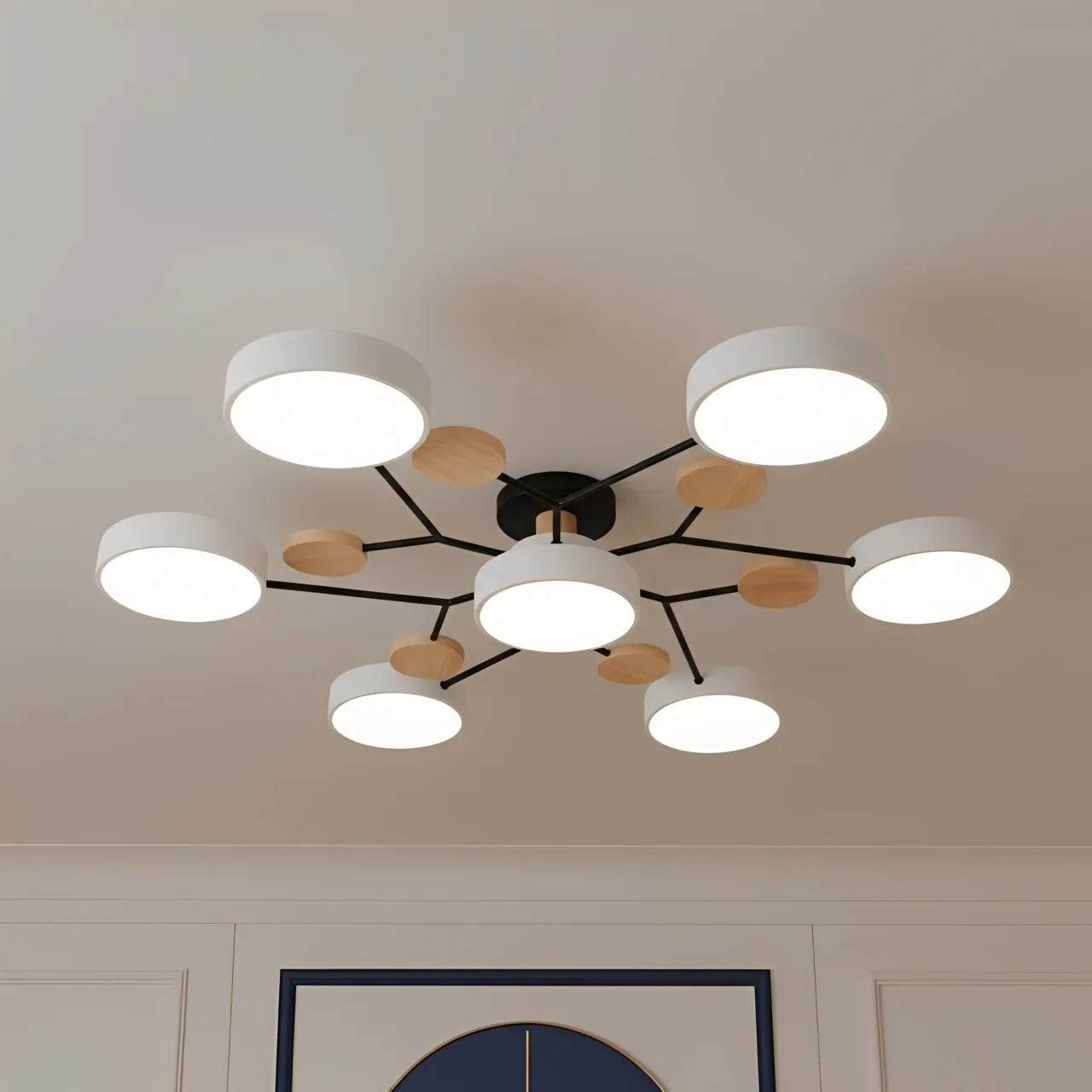
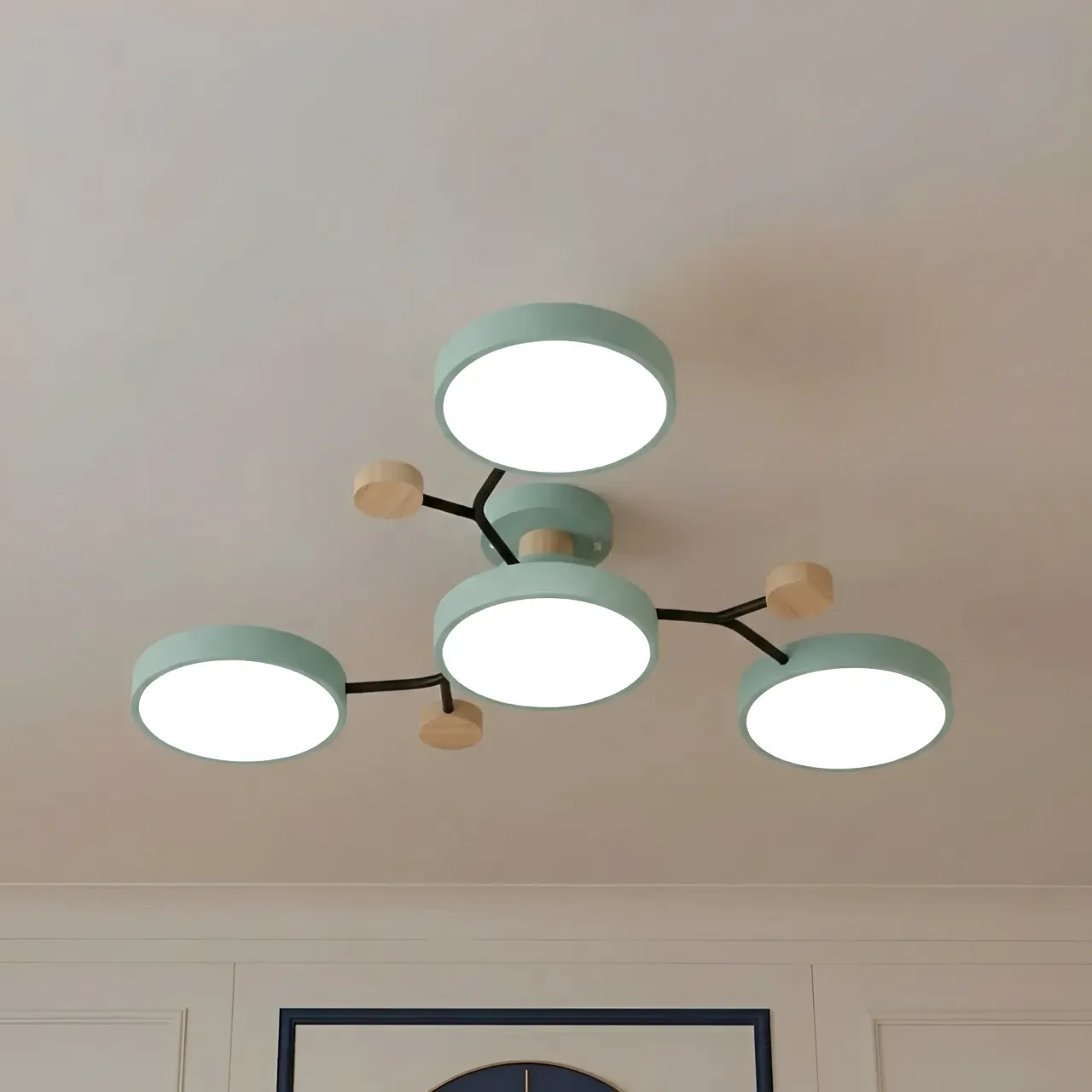
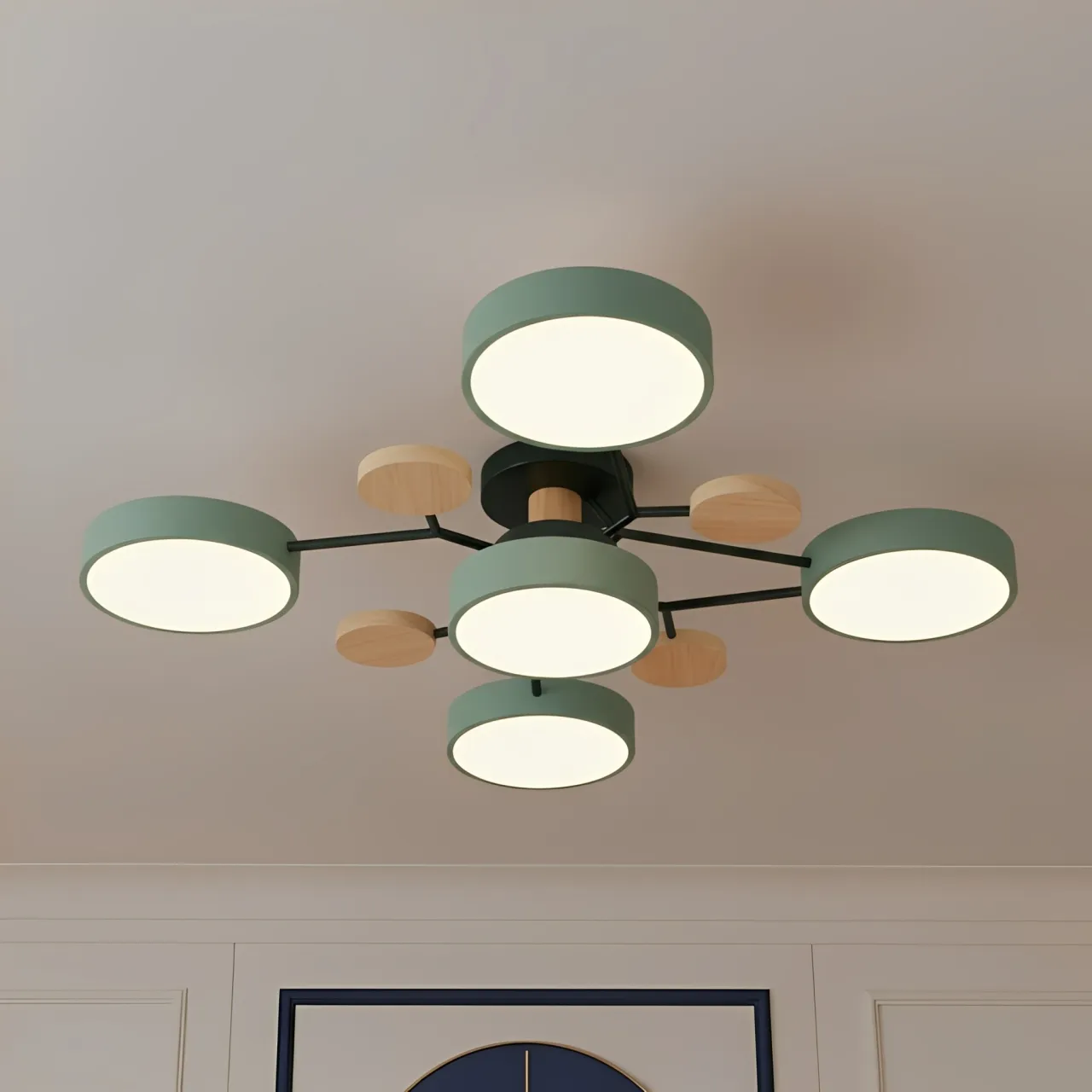
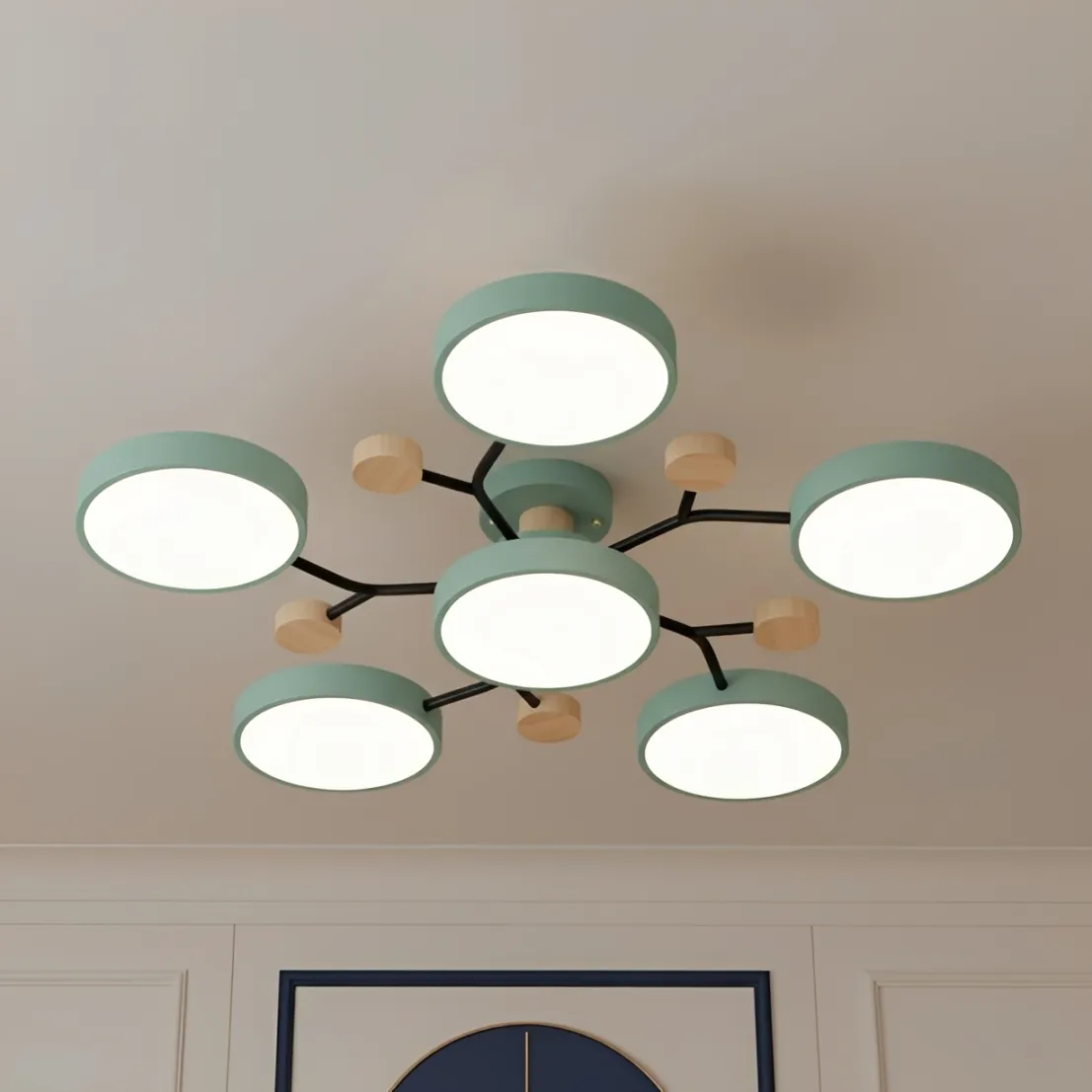
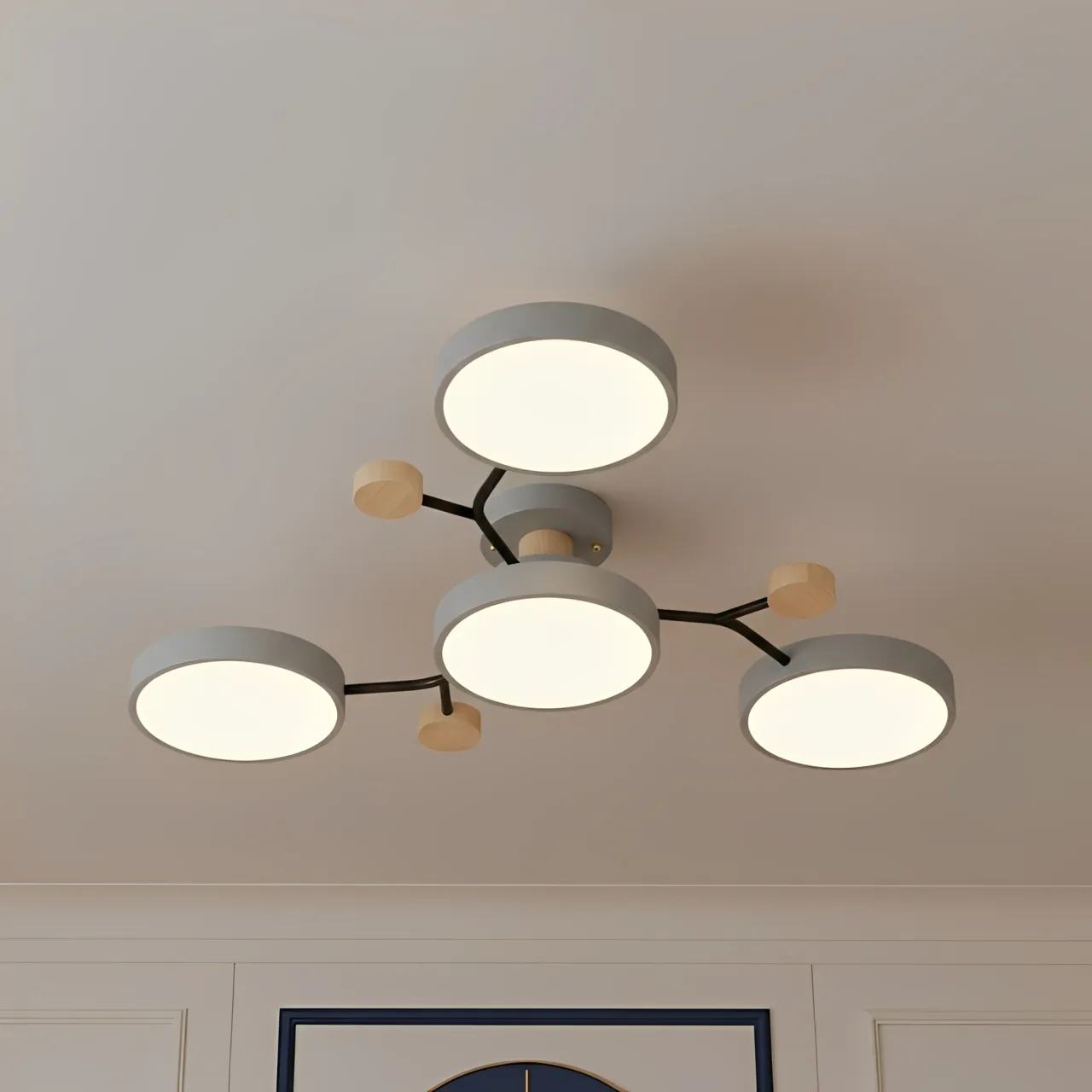
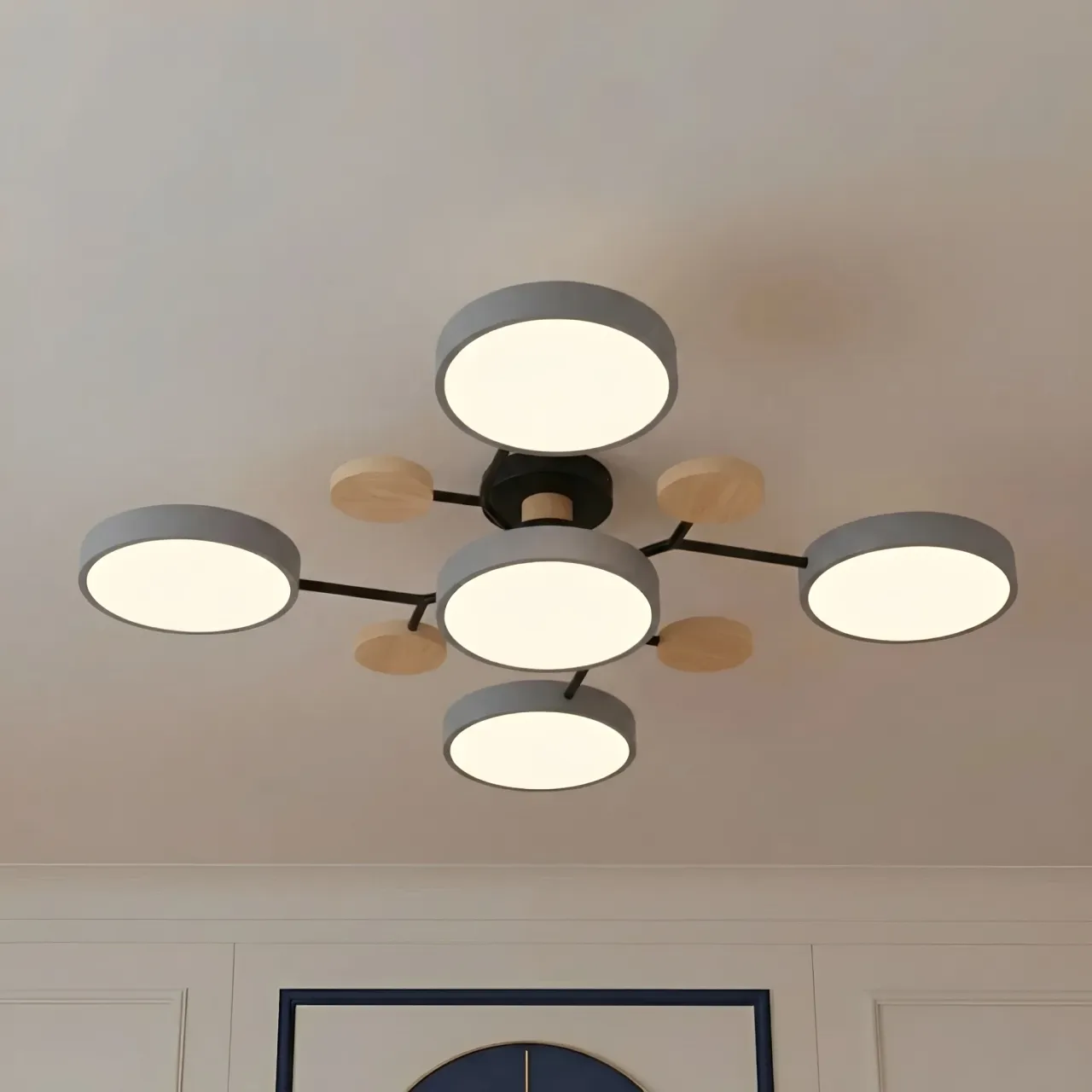
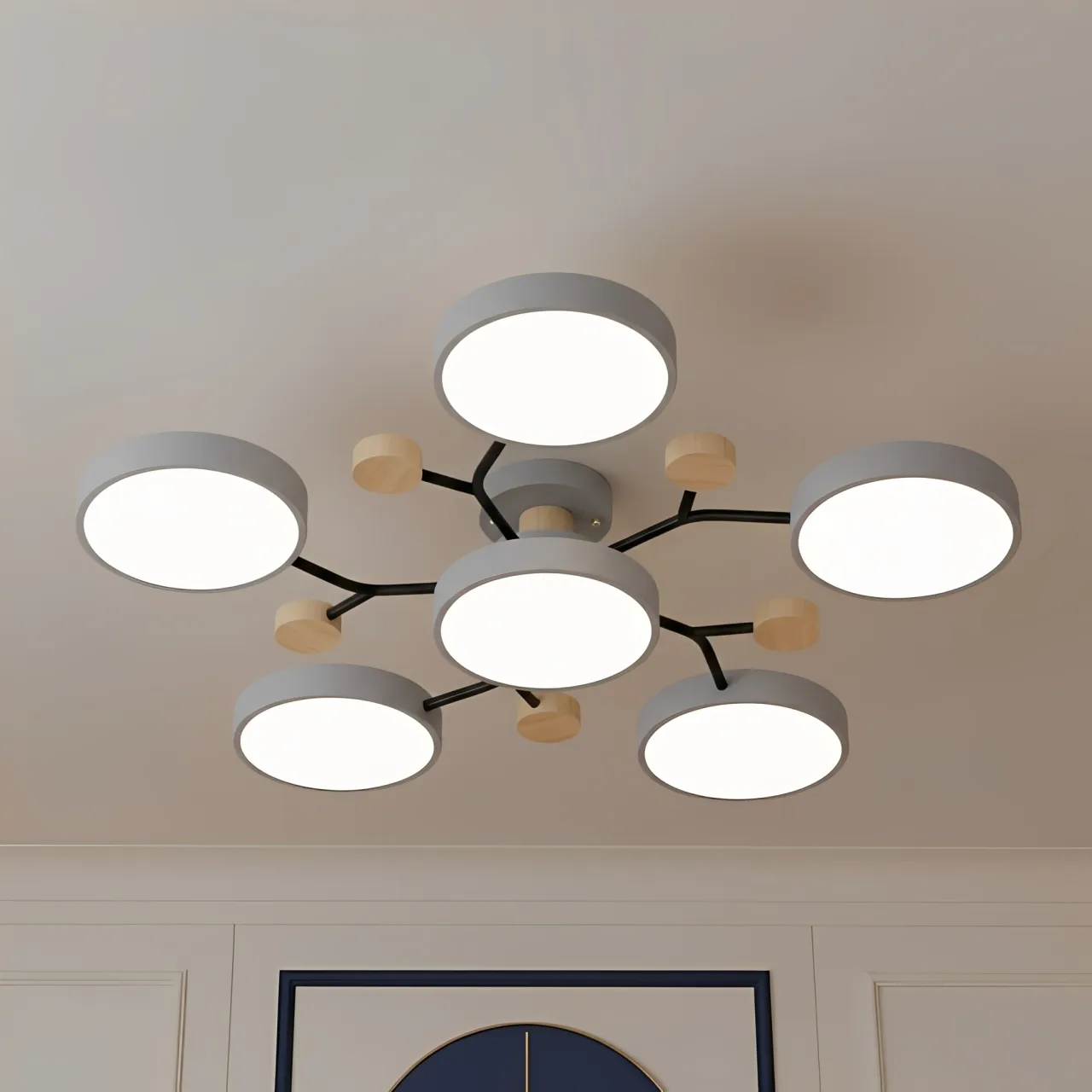
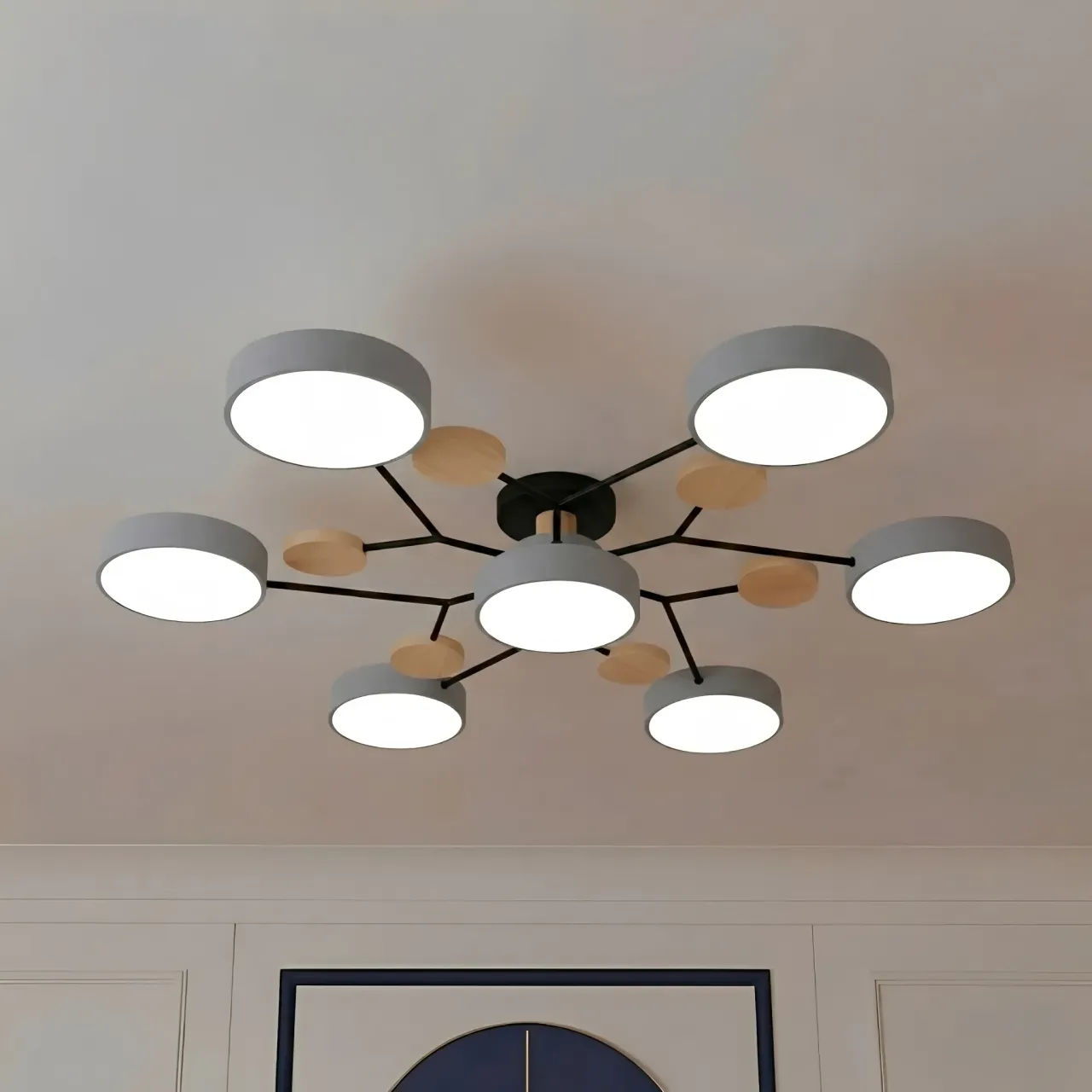
The Orea page shows Warm Light variants for available configurations. Compare the color and number of heads on the Orea ceiling light datasheet .
When to prefer a neutral light
Neutral lighting, often set around 3500-4000K in residential comparisons, makes details, paper, and white surfaces easier to read. It's useful in a living room used for work, homework, or hobbies. However, if the room is used for relaxation, too cool a tone can be unwelcoming in the evening.
Consider walls and finishes. Pale greens appear cleaner under neutral lighting, while warm woods can appear shallower. Don't choose the color temperature solely from product photography: display, exposure, and white balance change perception.
What does three colors really mean?
Three colors generally refers to three selectable temperatures, not three lamp finishes. Changing them can be done with a switch, remote control, or other specific control. Ask which Kelvins are included, how to switch between modes, and whether the lamp remembers the last setting after turning it off.
The Orea page only shows the three-color option for some of the currently listed combinations, not for every color and number of heads. Furthermore, changing the temperature doesn't automatically equate to continuous brightness adjustment. This distinction is essential before purchasing a dimmer.
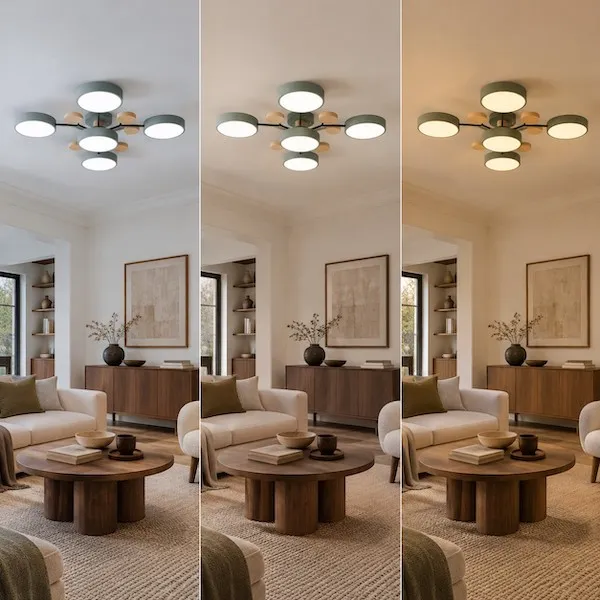
If you want the flexibility of three colors, open the Orea page and verify that the option appears in the exact finish and head combination you intend to order.
Match the temperature to the hours of use
- Observe the room in the morning, at sunset and after dinner.
- List the activity that is most demanding on your eyesight.
- Check wood, white walls, fabrics and screens under two sample lamps.
- Choose a fixed temperature if you always use the room the same way; choose three colors if the scenarios really change.
Wattage remains a separate decision. A neutral temperature may seem brighter, but it's no substitute for comparing lumens and watts. The European Energy Label Guide helps you understand performance and consumption without confusing color and light output.
Mistakes to avoid
Mixing adjacent temperatures: A very cold ceiling light next to warm lamps creates a visible separation. Choosing from a photo: the monitor doesn't accurately display Kelvin. Confusing three colors and a dimmer: a lamp can change hue without reducing brightness. Ignoring the command: awkward cycles can render flexibility useless.
The final recommendation
For a living room used mostly in the evening, choose warm light. For a truly multifunctional room, evaluate three colors after confirming Kelvin and control. Choose a fixed neutral light when visual clarity and cool surfaces matter more than the evening atmosphere. Then link this decision to: How many watts do you need to light a living room? Guide to LED ceiling lights , Dimmable LED ceiling light: compatibility between lamp, driver, and switch , and What to check before buying an LED ceiling light online in Italy .
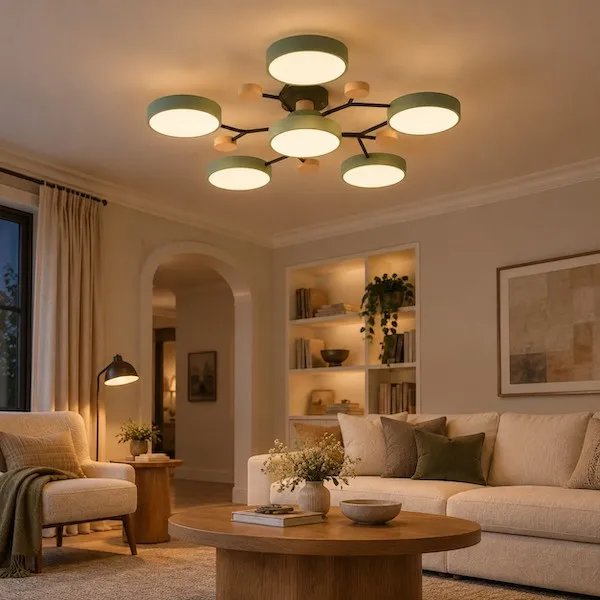
Once you have decided on the temperature, check the availability, diameter and power of the variant on the Orea product page .
FAQ
What light is best for relaxing?
A warm light is usually the simplest choice for the evening living room.
Is neutral light too cold?
It depends on the Kelvin and the materials. Try it with real walls, wood, and fabrics.
Does three colors mean dimmable?
No. It indicates selectable temperatures; brightness adjustment must be declared separately.
How do I choose Kelvin?
Ask for the exact values and compare them during the hours when you use the room most.
Can I mix different temperatures?
Yes, but nearby sources with very different hues can create an inconsistent result.