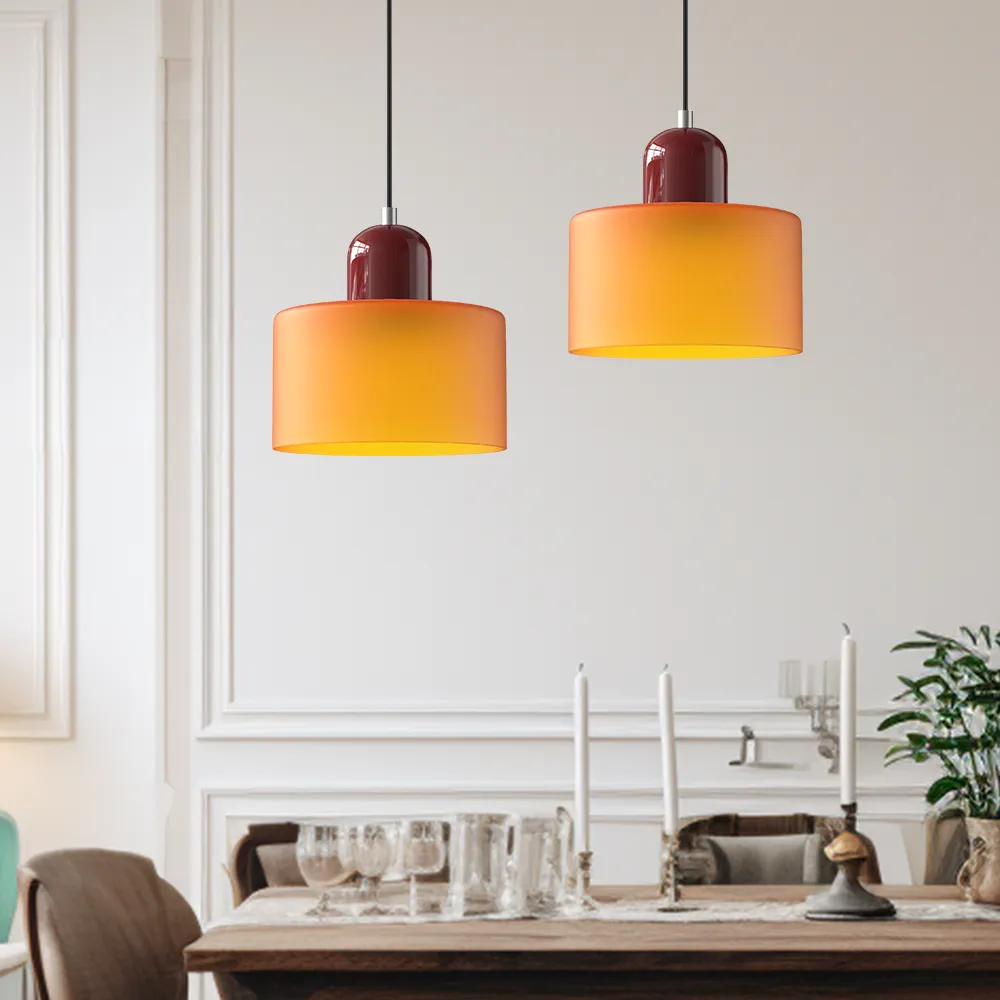
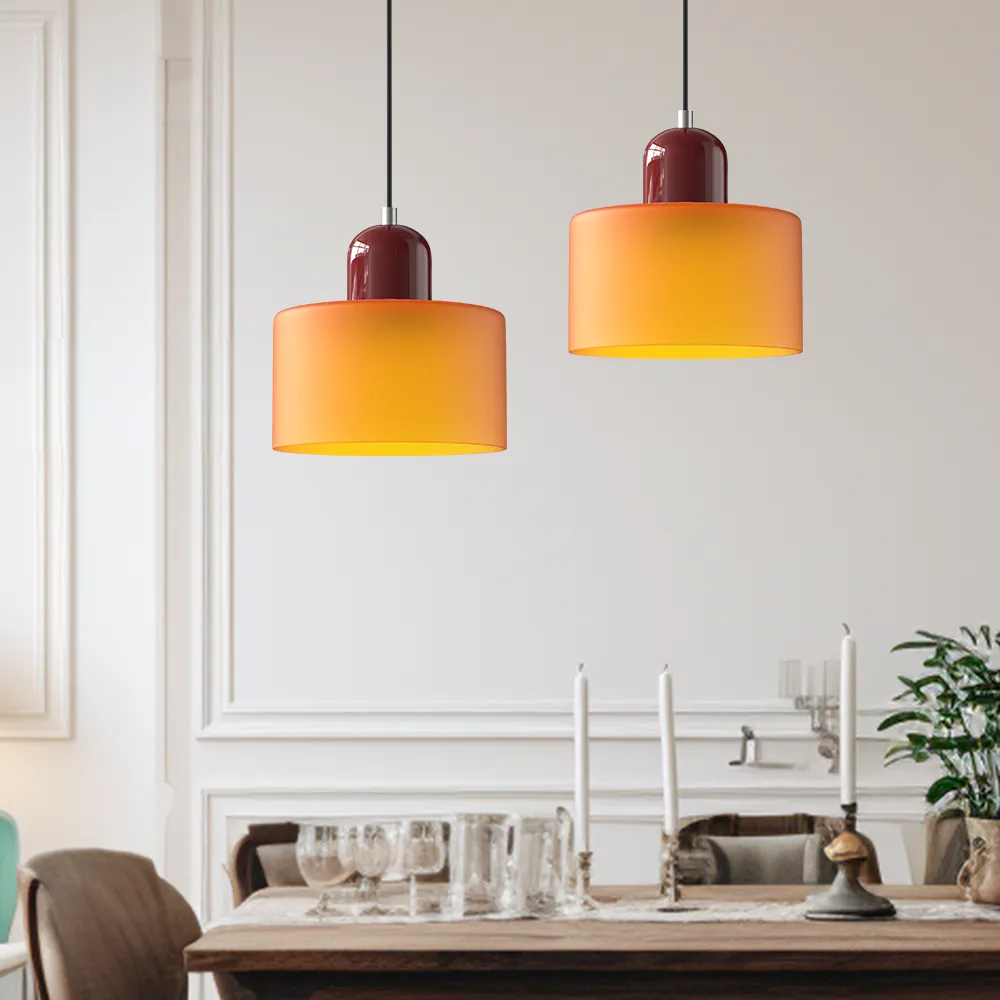
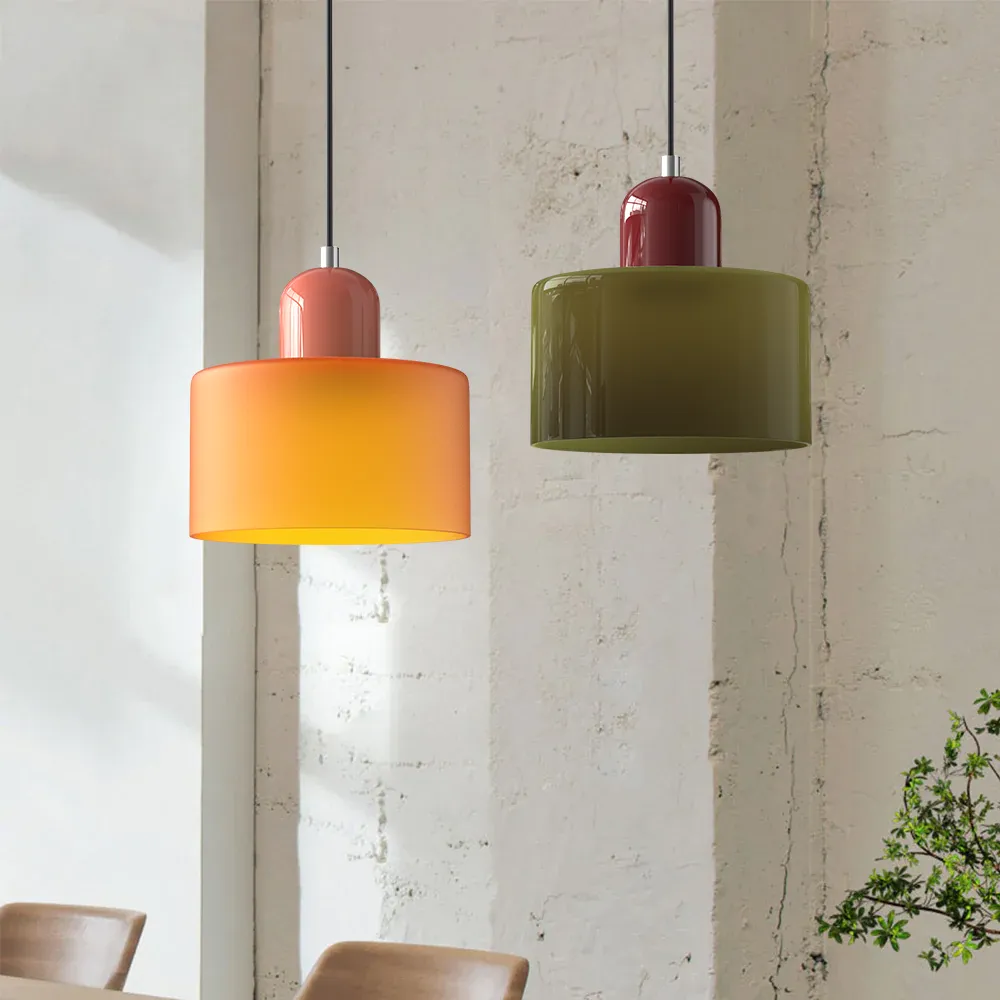
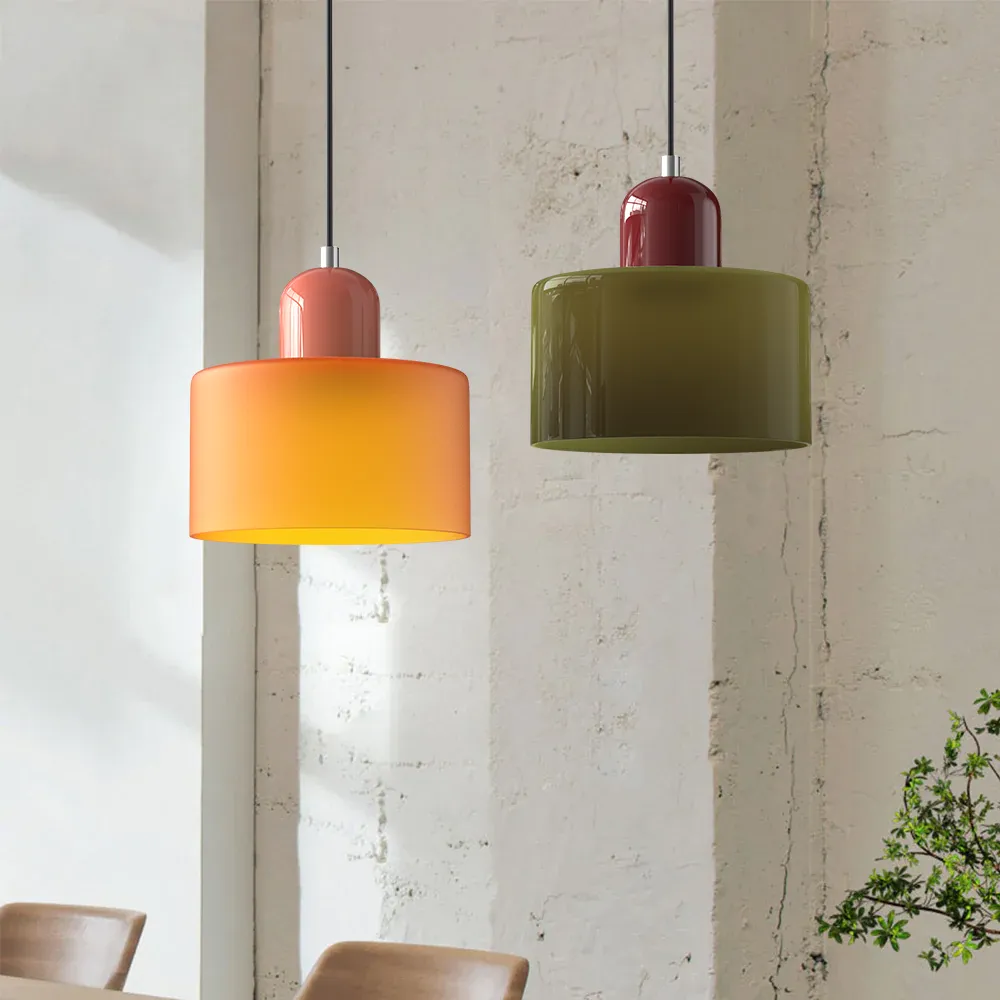
Glass shade comparison
Colored or Frosted Glass? Choose the Softer Pendant Without Guessing
Quick verdict: if your main goal is to hide a visible bulb and soften a concentrated bright point, frosted glass is the stronger starting choice because it scatters light. Colored glass changes the light's tint and may reduce some transmitted light, but a smooth colored shade can still leave the bulb clearly visible. For color plus diffusion, choose a shade that is both colored and frosted, then test it with the intended bulb.
The comparison becomes confusing because “soft light” can describe three different experiences: a warmer or more colored appearance, a blurred light source, or a lower contrast between the pendant and the room. Colored and frosted glass can contribute to those experiences in different ways, but neither label tells you the bulb output, the exact transmission of the shade or the view from your kitchen stools.
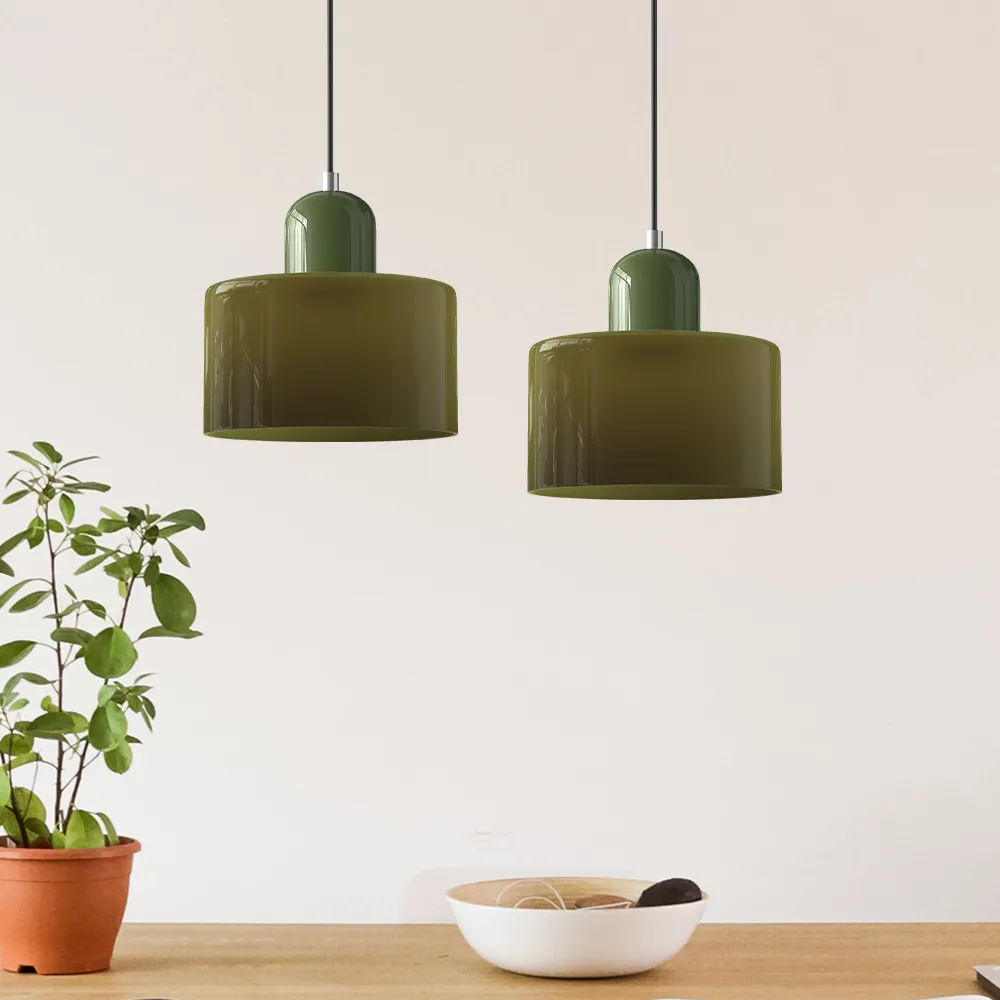
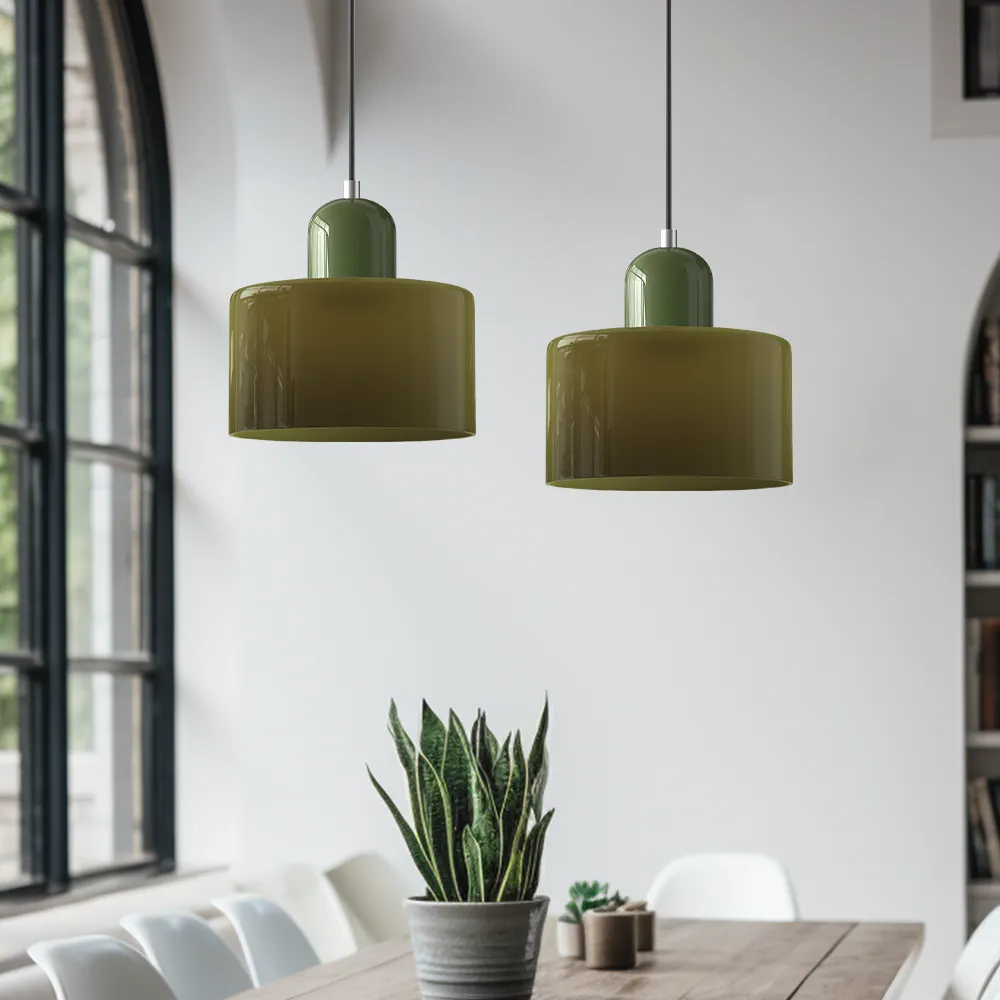
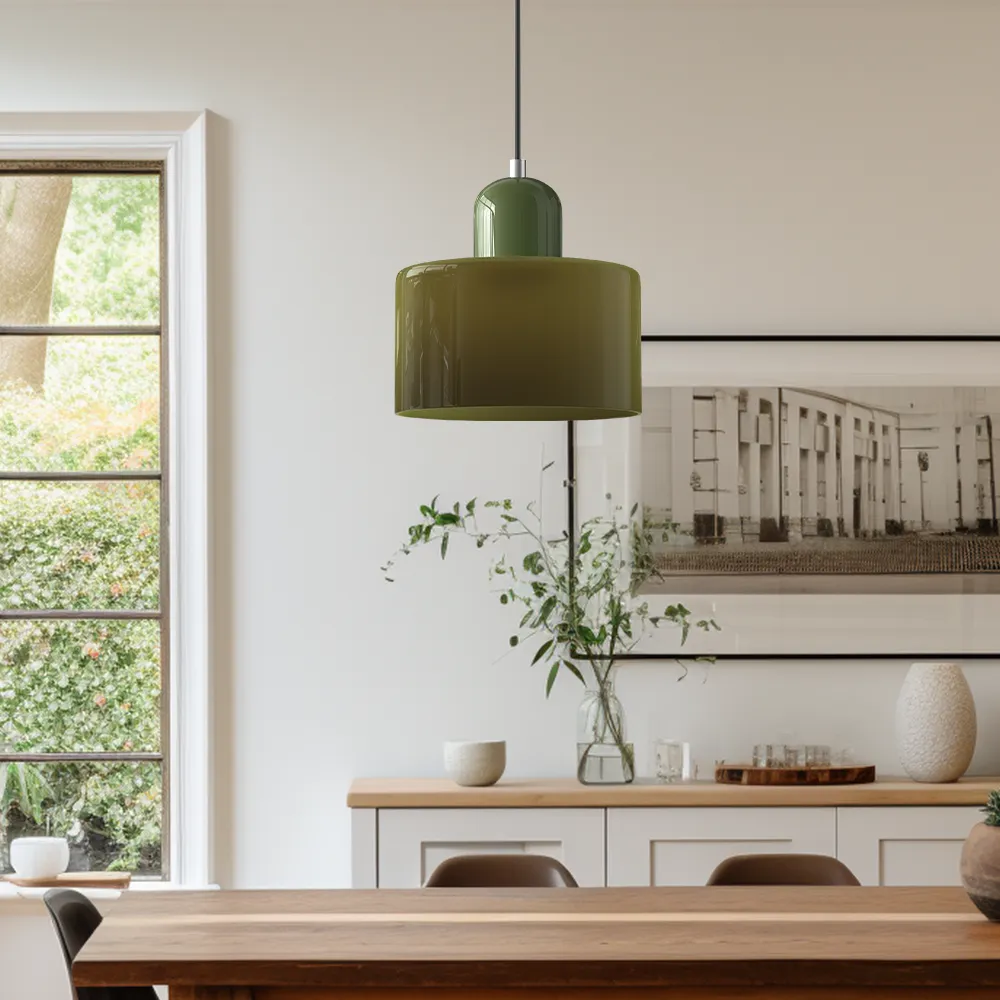
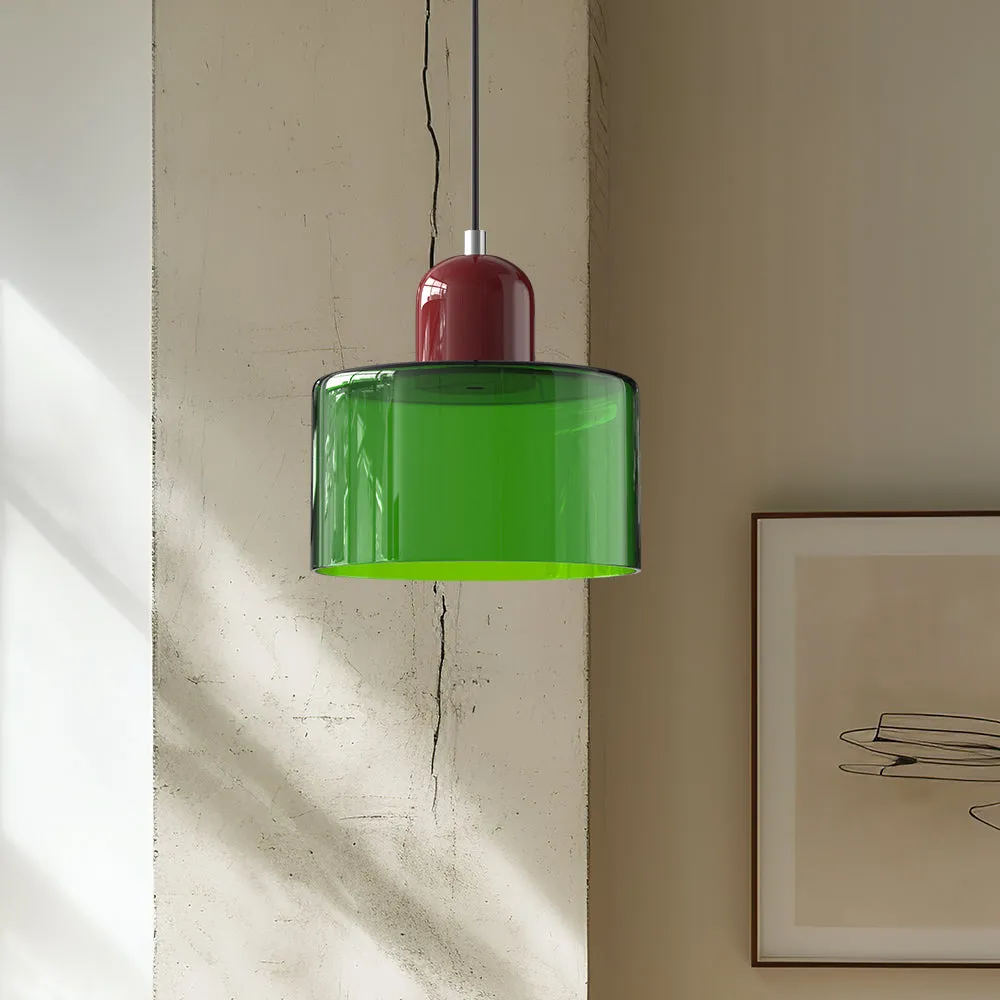
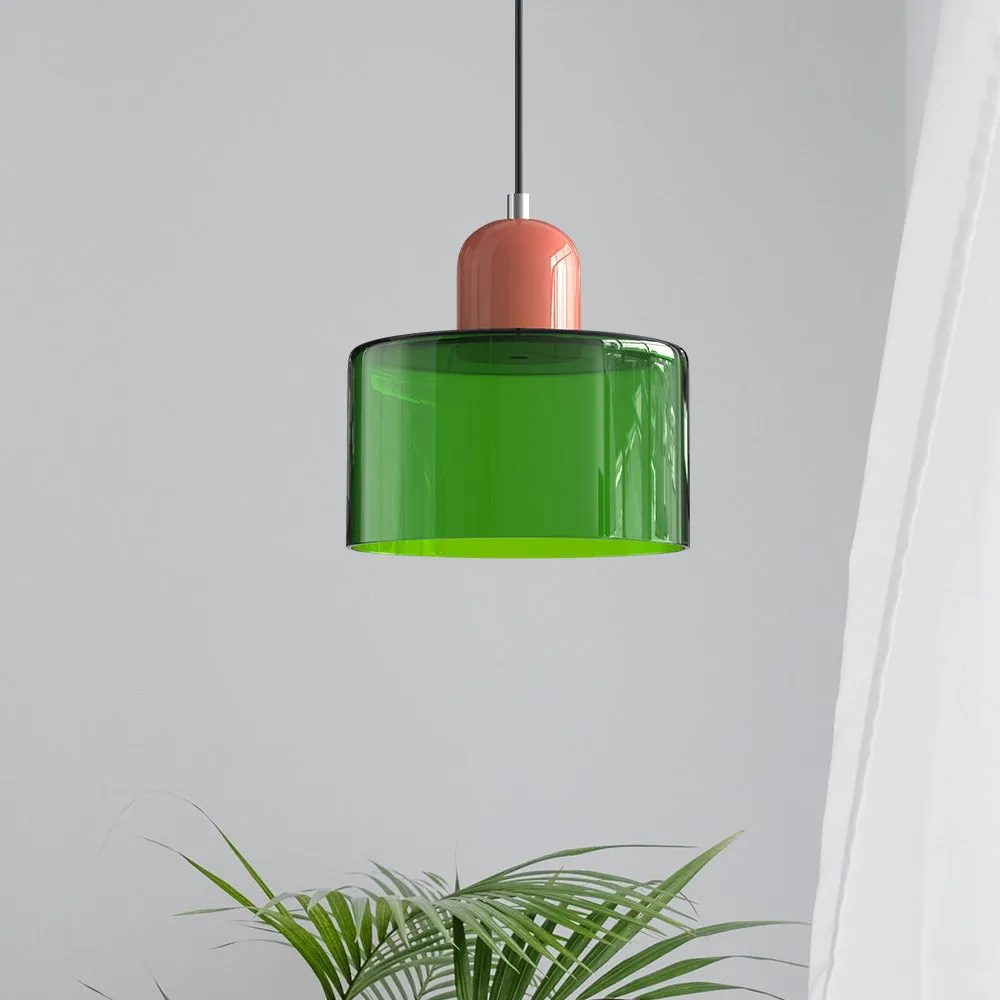
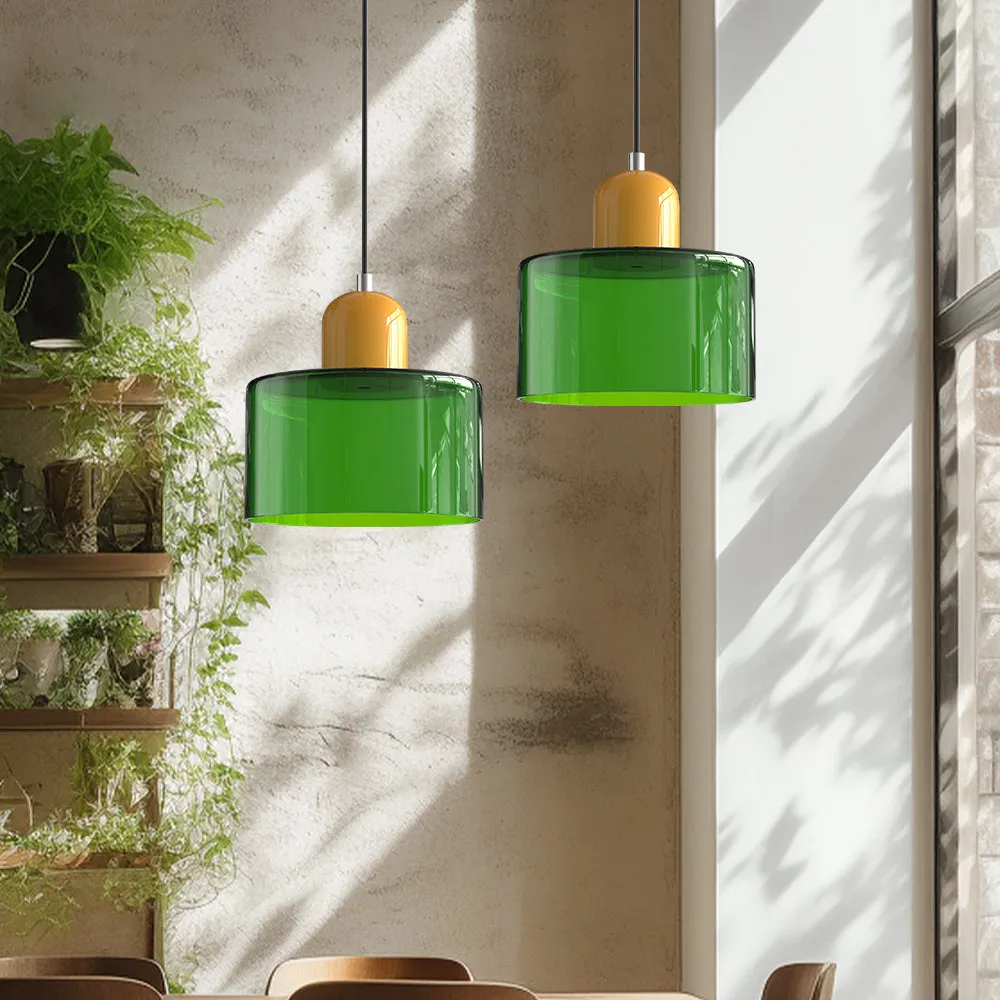
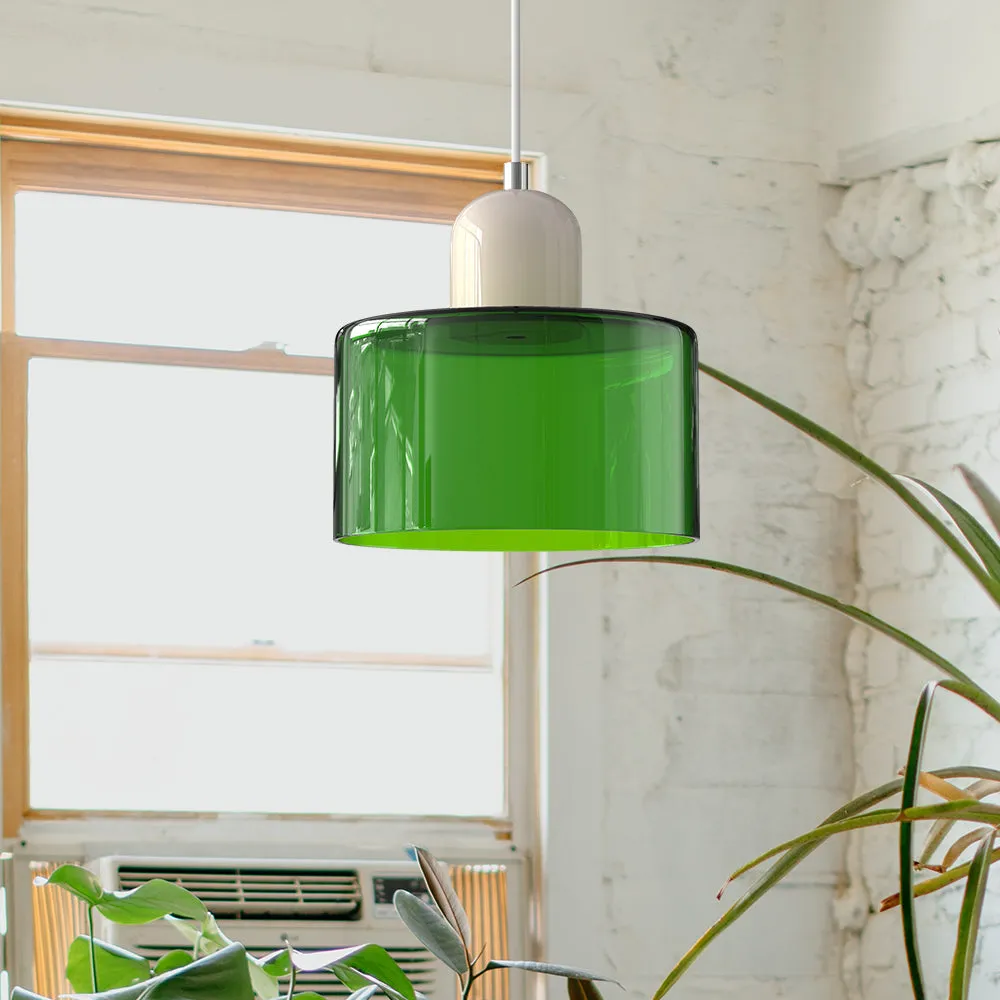
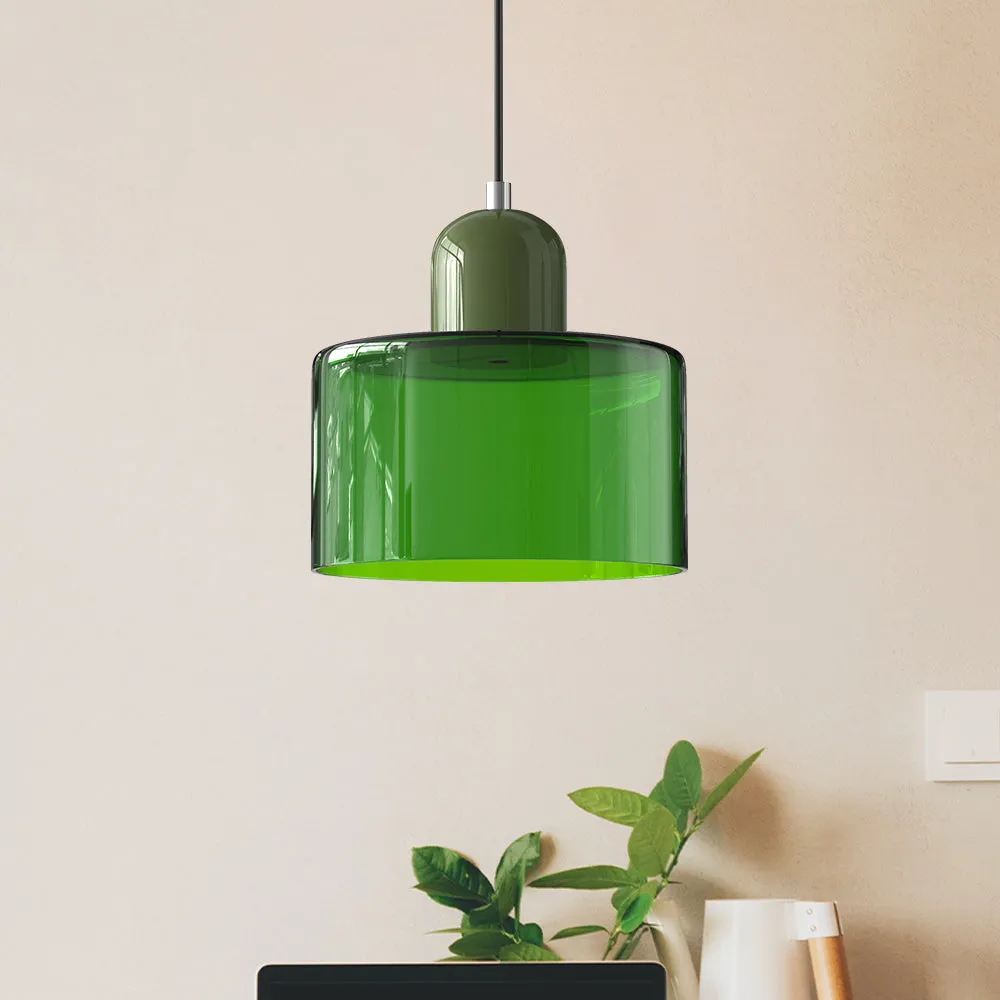
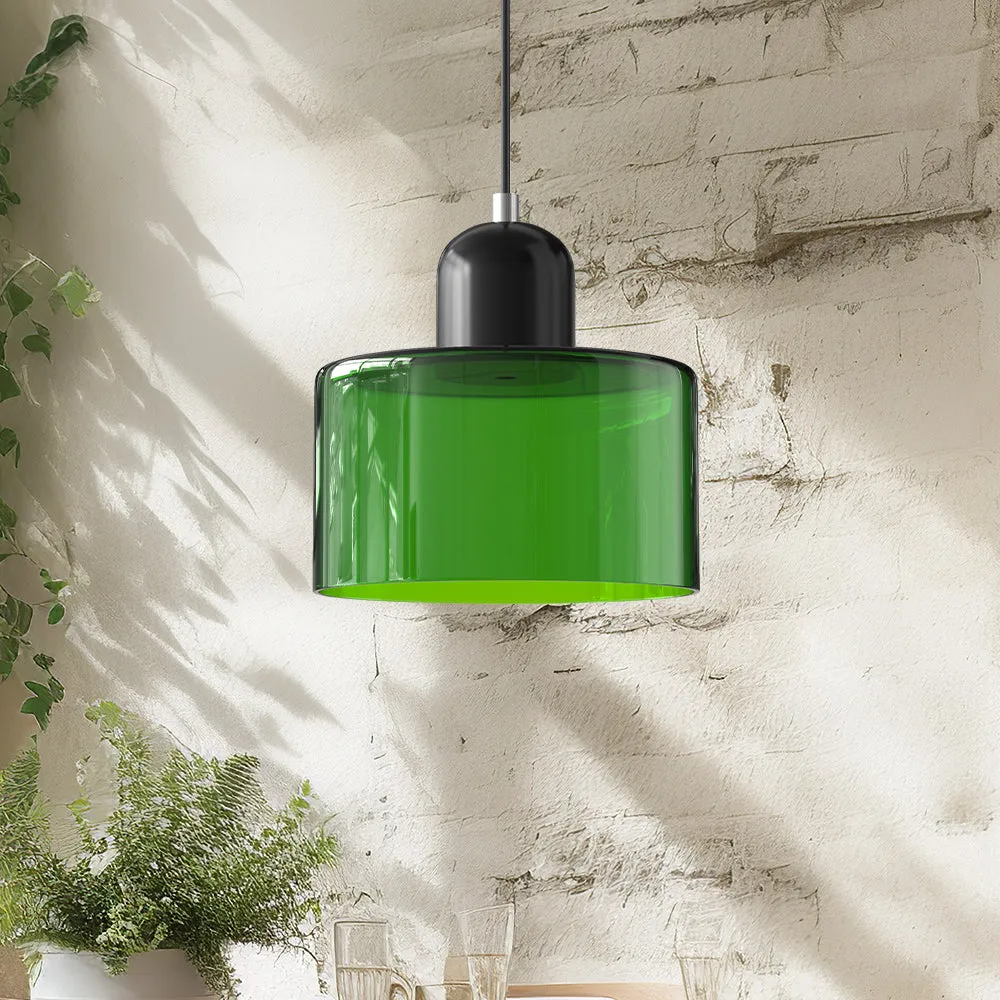
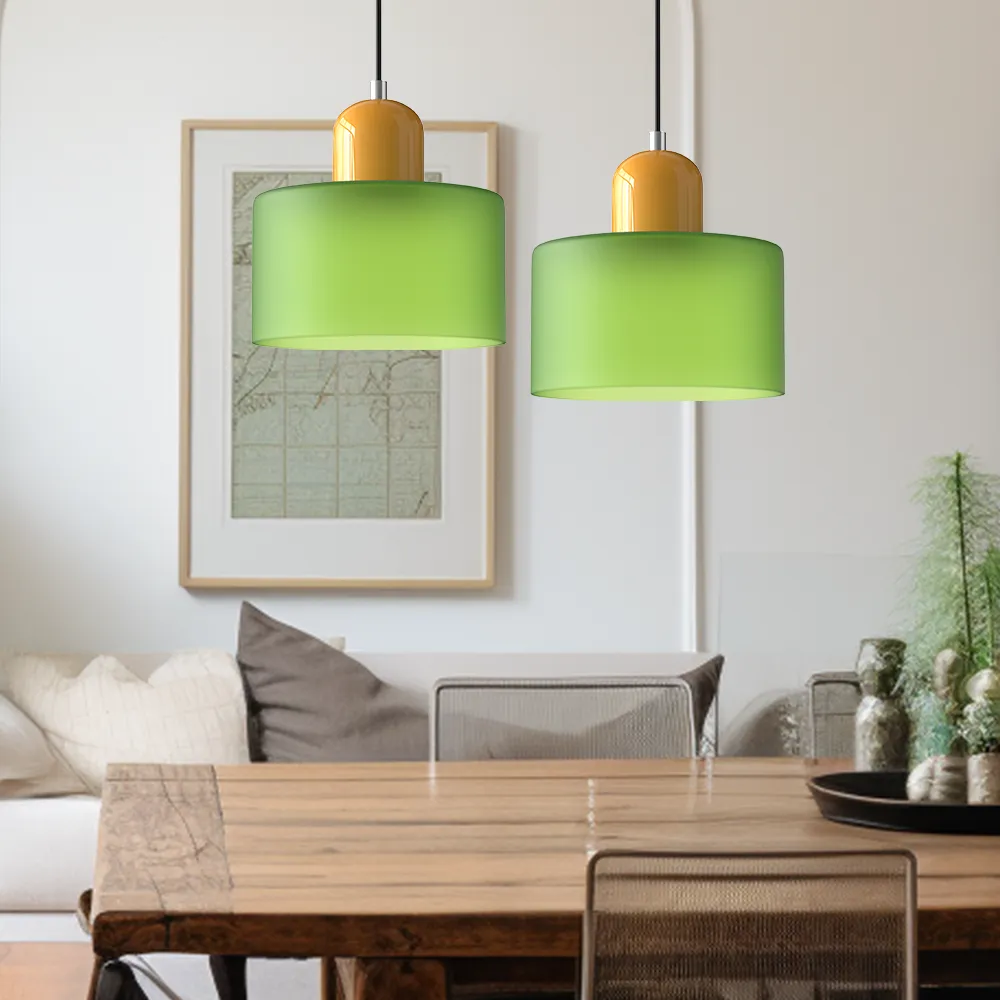
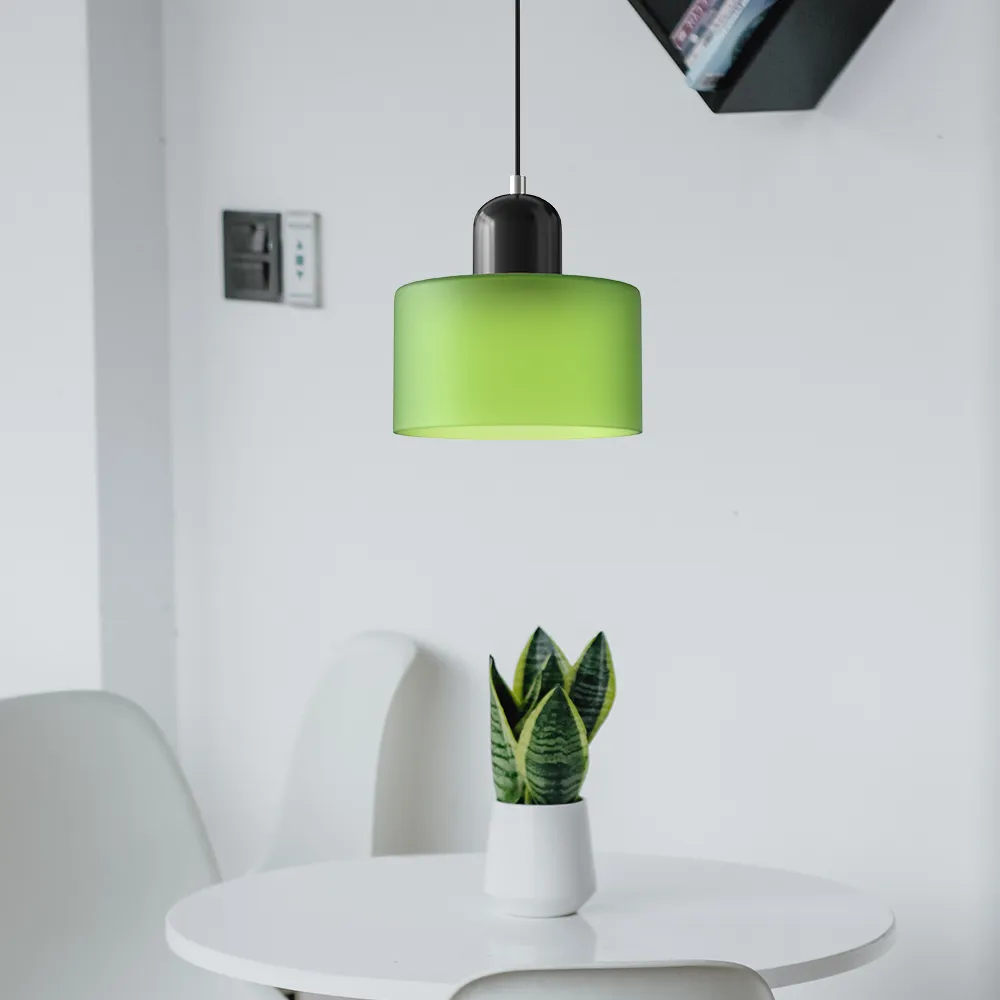
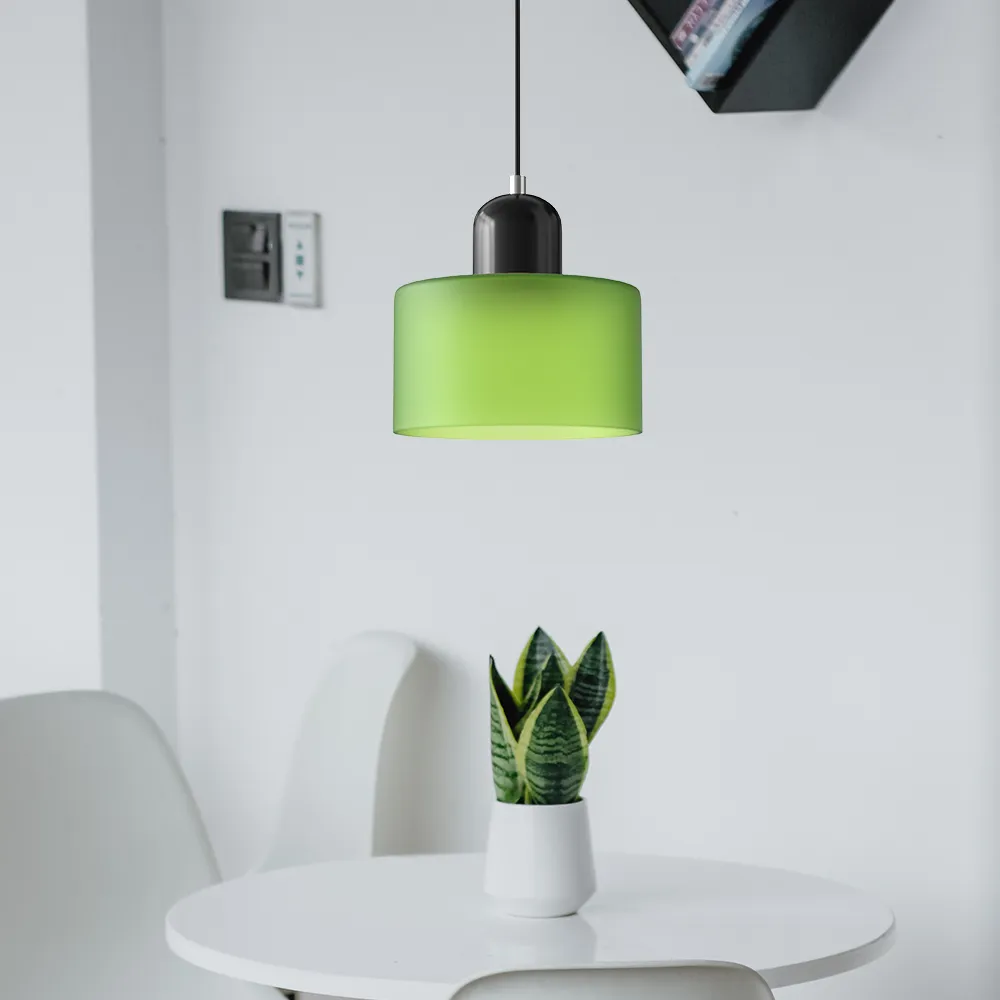
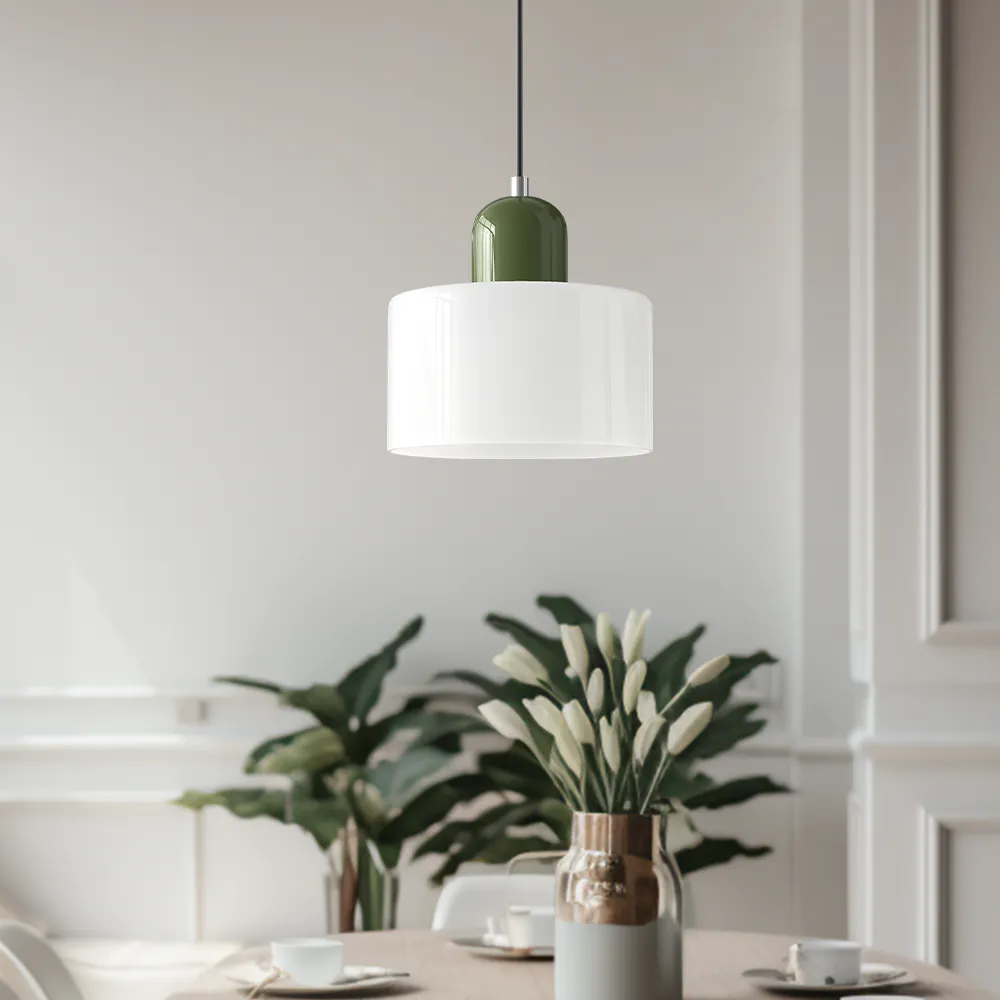
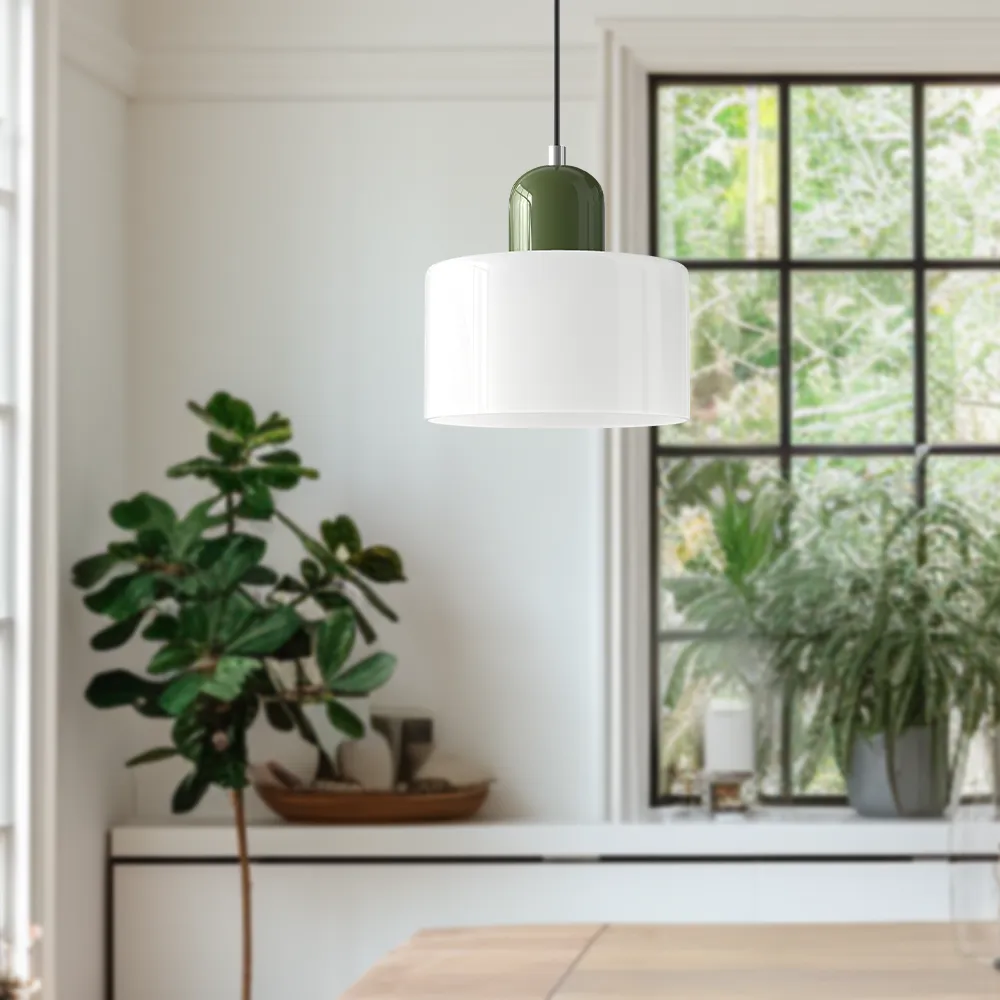
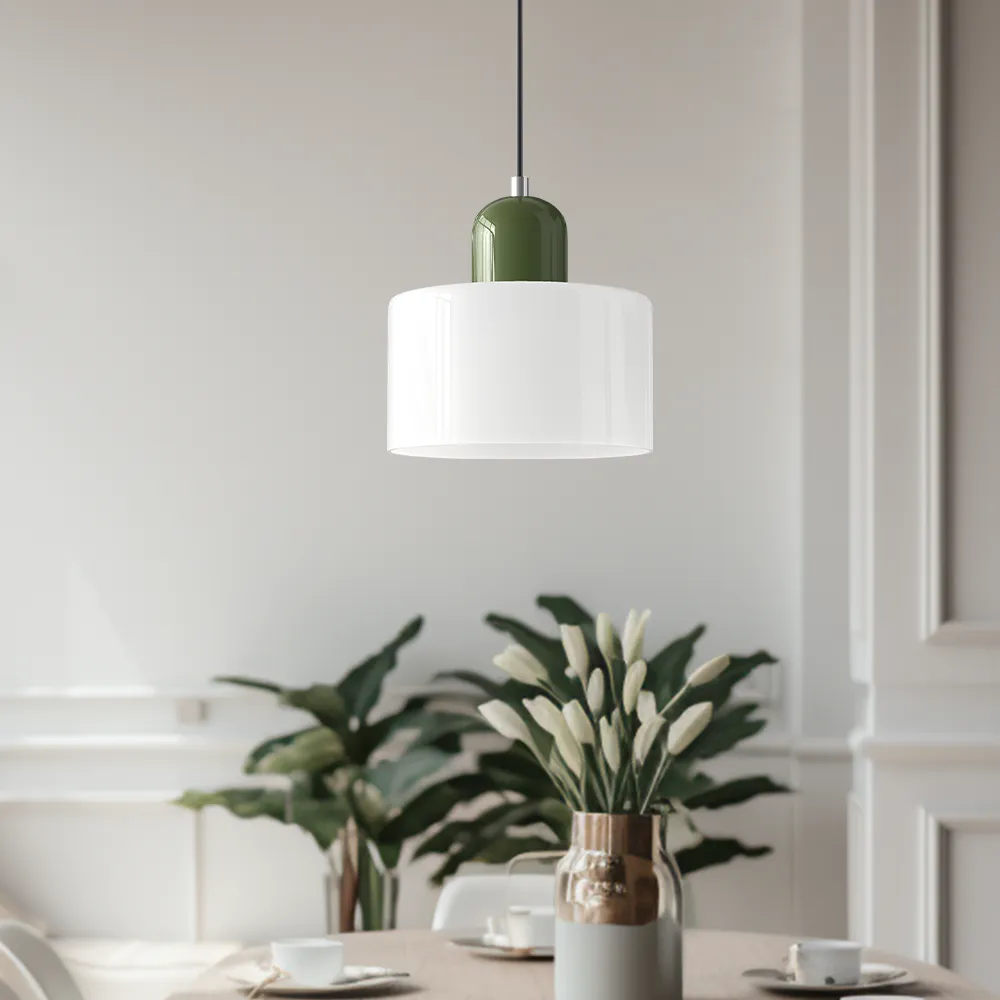
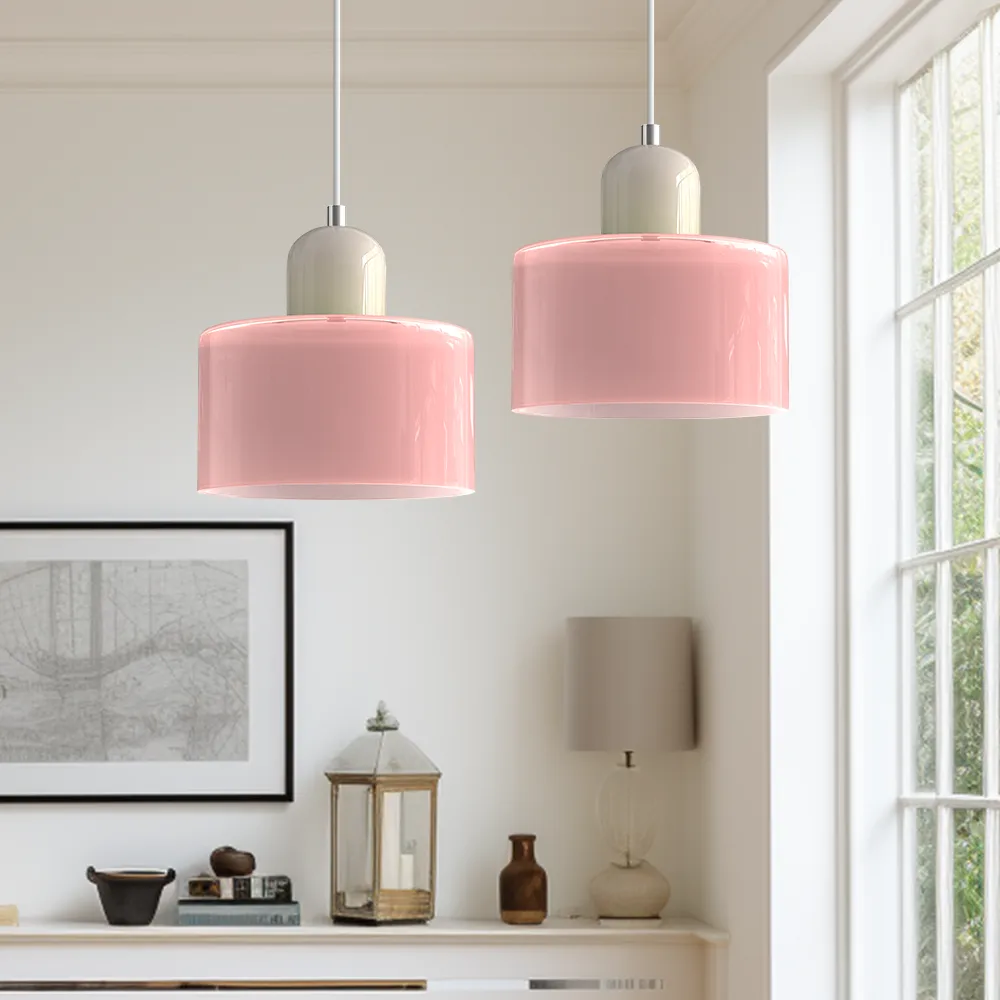
The Bauhaus Nordic Morandi Cylinder Glass Pendant Light offers smooth-looking colored options and a Frosted Green option. Its range is a practical reminder that color and surface finish should be evaluated as separate properties, even when both appear in one shade.
1. Colored Glass Filters the Light
A colored shade is selective about the light it transmits. The CIE defines a colour filter as a selective filter that makes a significant change in the chromaticity of radiation. Put simply, the light leaving an Orange, Green or Pink shade can take on that color direction because the glass alters the balance of the bulb's output.
That shift can make a pendant feel visually warmer, cooler or more decorative, but color alone does not tell you whether the source is hidden. If the glass is smooth and the lamp remains sharply visible, the eye can still encounter a small bright point. A darker tint is also not a precise glare rating. Without measured transmission data, you cannot infer how much light is lost or how comfortable a particular bulb will be.
2. Frosted Glass Scatters the Light
Frosting changes where light travels rather than merely giving it a hue. The CIE describes a diffuser as a device that predominantly uses scattering to alter the spatial distribution of radiation. On a pendant, that scattering can spread the visible brightness over more of the shade and make the bulb outline less distinct.
This is why frosted glass is usually the better first option when a bare filament or LED point is uncomfortable at seated eye level. It does not mean the fixture is automatically dim, nor does it prove that glare will disappear from every angle. The bulb, shade shape, hanging position and brightness of the surrounding room remain part of the result.
when the shade's daytime color and the evening tint are central to the design, and the intended bulb is already comfortable when viewed through the glass.
when obscuring the light source and reducing a concentrated bright point are more important than seeing a crisp bulb or sparkling reflections.
Compare the Morandi's colored and Frosted Green shade options as two optical decisions: the hue affects the transmitted color, while the frosted surface affects how distinctly the bulb is seen.
3. “Less Glaring” Depends on the View
The CIE definition of glare focuses on discomfort or reduced visibility caused by unsuitable luminance distribution, range or extreme contrast. This explains why a pendant cannot be judged only by looking up at it in a bright showroom. At home after sunset, the same lamp may sit against a dark ceiling and become the highest-contrast object in the room.
Look across the island rather than directly underneath it. A shade can distribute useful light onto the counter and still expose the lamp to a seated person. Check the shortest adult eye line, the standing prep position and the approach from the adjacent room. Then look for reflections in windows and polished surfaces.
If a smooth colored shade produces a distracting point, a softer-finish bulb may help without changing the daytime appearance of the pendant. If the entire glowing area feels too dominant, reduce the source output or increase surrounding light. Moving the pendant much higher can change its relationship to the island, so treat height as one variable rather than the automatic fix.
4. Compare the Choices by Function
| Question | Smooth colored glass | Frosted glass |
|---|---|---|
| Primary optical effect | Changes the balance and apparent color of transmitted light | Scatters light and blurs the direct view of the source |
| Bulb visibility | Can remain distinct, depending on tint and glass | Usually less distinct through the diffusing surface |
| Best starting use | Decorative color and a livelier light-source appearance | Reduced hotspot visibility and a more even glowing surface |
| What it cannot promise | A known lumen reduction or glare-free view | A specific brightness, color or glare result |
| Combined option | Colored frosted glass can filter the spectrum and scatter the light at the same time. | |
5. Match the Bulb to the Actual Shade
The Morandi uses an E27 bulb, does not include one and has a listed maximum of 40W. The product page does not publish shade transmission, lumen output or a dimming specification. Choose a bulb by its physical fit, lumen output, color appearance and surface finish while staying within the fixture's limit.
The U.S. Department of Energy's overview of LED light quality distinguishes color appearance, color fidelity and light distribution. Keep those dimensions separate. A warm-looking bulb can still be glaring. A frosted bulb inside frosted glass may hide the source well but produce a different visual texture from a clear lamp. A high-CRI label describes color fidelity under the source; it is not a promise that a strongly colored shade will leave every surface unchanged.
Use the Morandi product specifications to confirm the E27 socket, 40W maximum and chosen shade finish before buying bulbs for the complete group.
6. Run a Three-Scene Evening Test
- Preparation scene: switch on the other task lighting and check whether the island surface remains clear without a distracting source.
- Dining scene: sit at every stool and look toward the people opposite, not up at the fixture.
- Background scene: dim or switch off surrounding lights and check the pendant's contrast from the next room.
Use the same bulb type and output when comparing shades. Otherwise you are testing two variables at once. Photograph each scene with unchanged camera exposure if possible, but trust direct comfort more than a phone image: cameras process highlights differently from human vision.
Final Recommendation
Choose frosted glass when source concealment is the priority. Choose smooth colored glass when visible color and a clearer, more animated bulb appearance are intentional and comfortable. Choose colored frosted glass when you want both effects, while remembering that the actual bulb and viewpoint still decide the result. “Frosted” is a useful starting signal, not a laboratory guarantee.
If Frosted Green or one of the smoother colored shades fits that decision, review the current Morandi combinations and order only after checking the chosen bulb and viewing conditions together.
FAQ
Does colored glass reduce glare as well as frosted glass?
Not necessarily. Color changes transmitted light, while frosting scatters it and is more directly useful for obscuring a bright source.
Does frosted glass make a pendant dim?
It changes light distribution and may reduce transmission, but the label alone does not reveal the final lumen output. Test the actual shade and bulb.
Can a shade be both colored and frosted?
Yes. The Morandi's Frosted Green option combines a colored filter effect with a diffusing surface.
Can I use a clear bulb behind frosted glass?
It may work, but judge the visible hotspot from normal seating positions. Bulb shape, output and shade coverage all matter.
Which option is safest for a bulb near eye level?
Frosted glass is the better starting point, but confirm comfort from every seat rather than relying on the finish name alone.