Create Depth: How to Balance Overhead and Accent Lighting in Your Dining Area
Have you ever sat down for dinner and felt like you were either under a harsh interrogation lamp or trapped in a gloomy cavern? You are not alone. The dining room is notoriously one of the trickiest spaces to light because it demands a rare design duality: it needs to be functional enough for Sunday brunch or kids' homework, yet intimate enough for late-night conversations over wine.
The secret to a dining space that feels high-end, cozy, and architectural isn’t just about adding more light. It’s about creating depth.
When a dining room relies on a single light source, the space feels flat, shadows fall harshly on guests' faces, and the room’s boundaries shrink. To fix this, you need to master the delicate dance between your overhead statement fixture and your perimeter accent lighting. Here is how to layer them like a seasoned interior designer.
1. The Anchor: Establishing Visual Gravity with Overhead Lighting
Think of your overhead lighting as the anchor of the entire room. It defines the focal point, centers the dining table, and sets the baseline for the room’s design identity.
A common mistake is choosing an overhead light that is too timid. In a dining area, your central fixture needs what designers call "visual weight." It should command the air space above the table and draw the eye upward, which instantly makes the room feel taller.
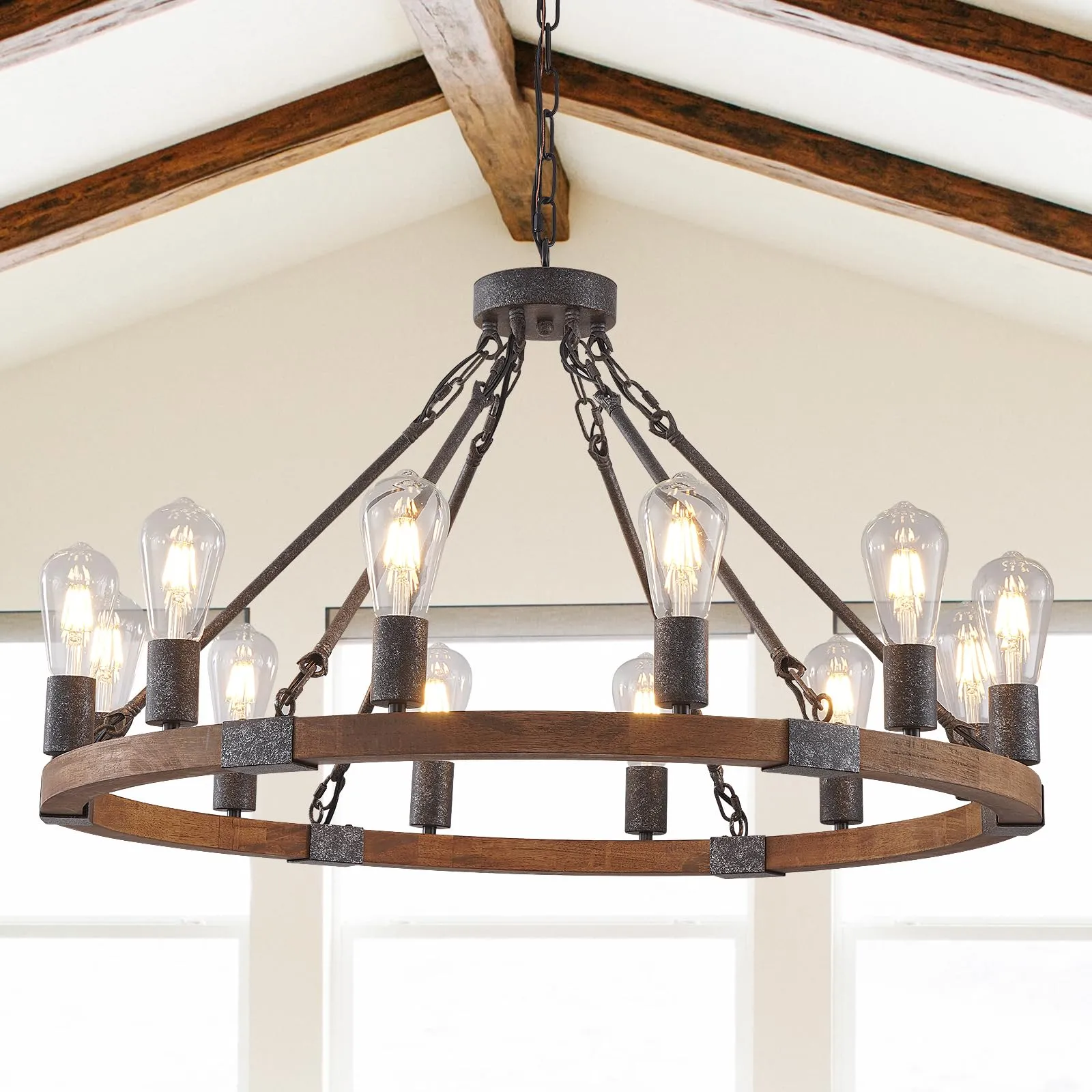
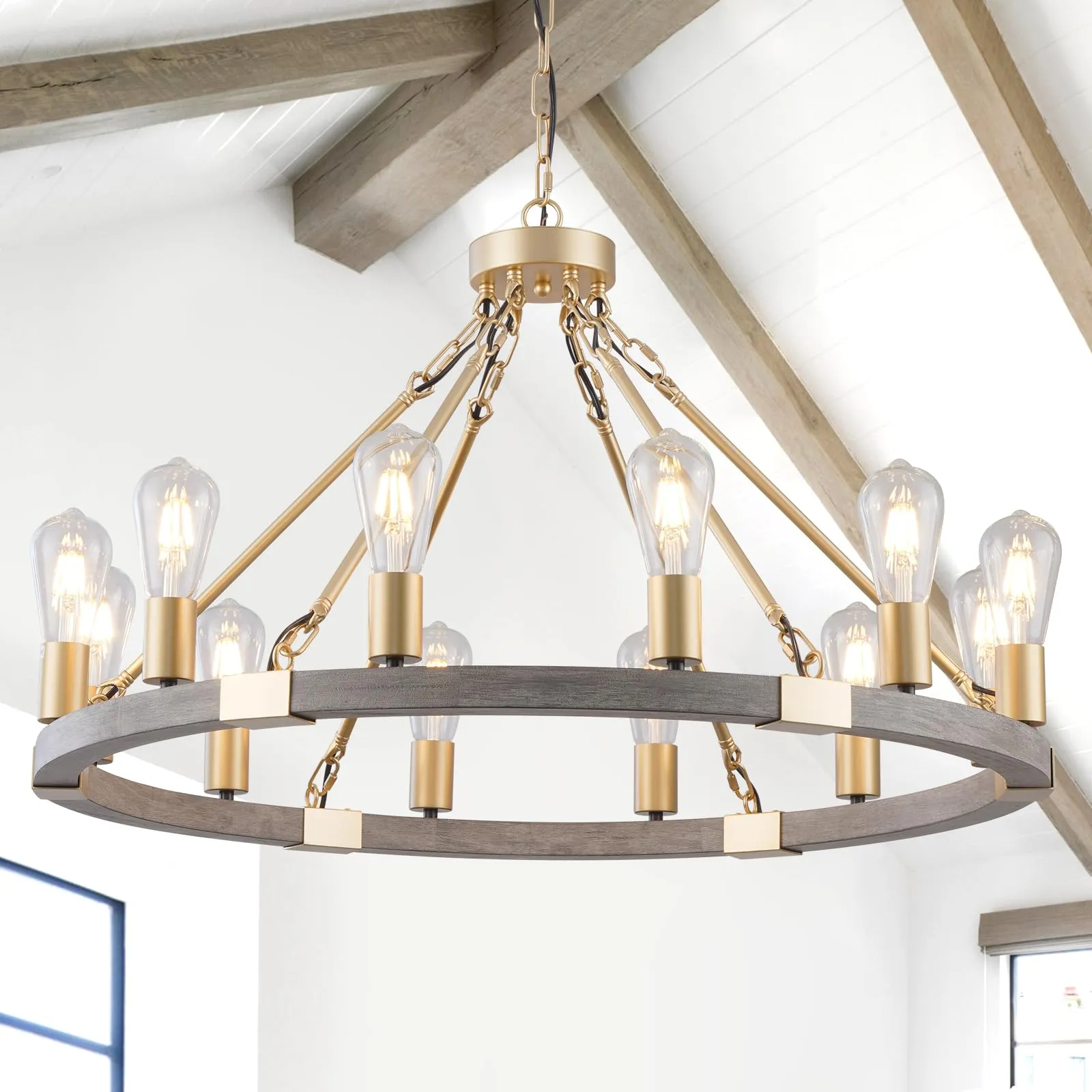
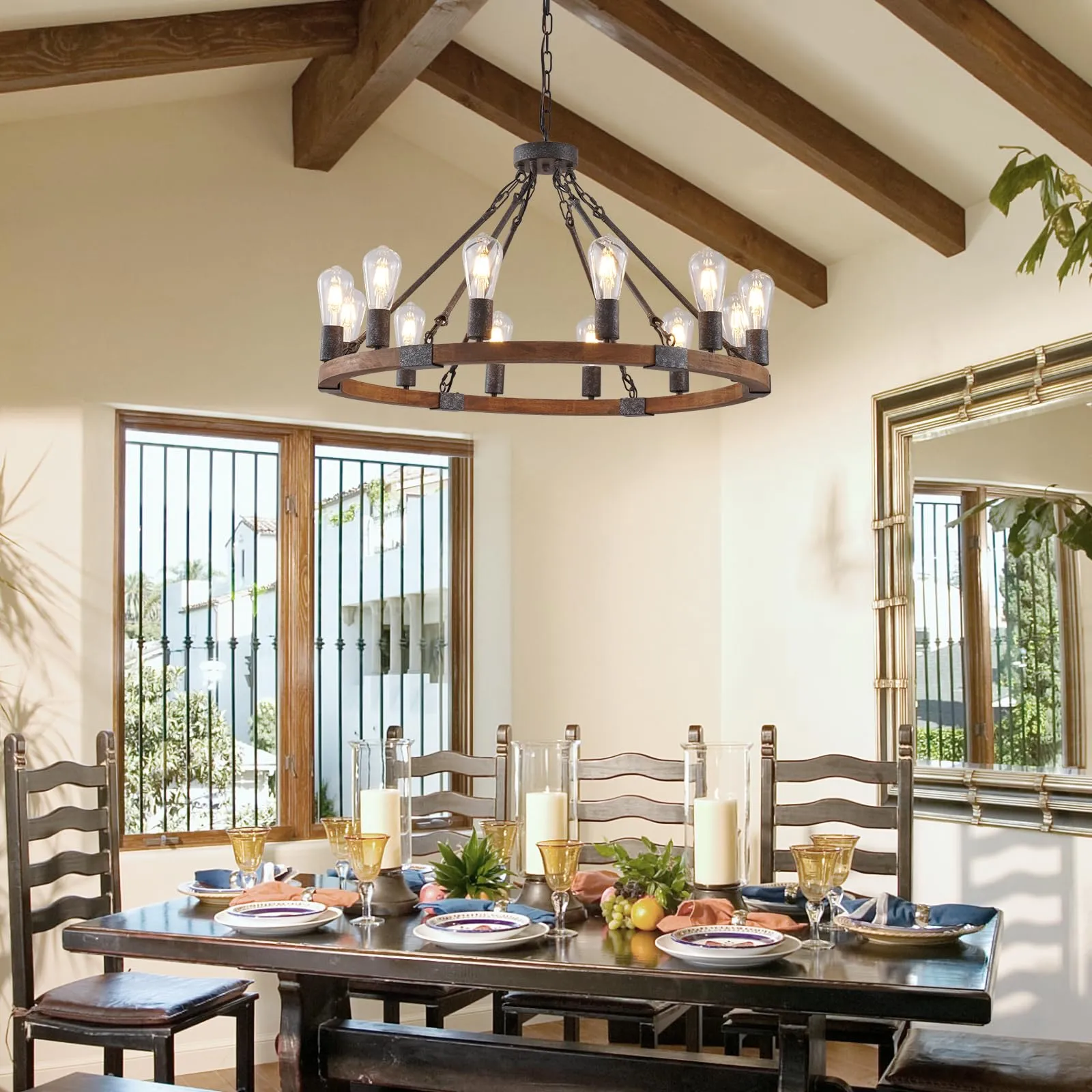
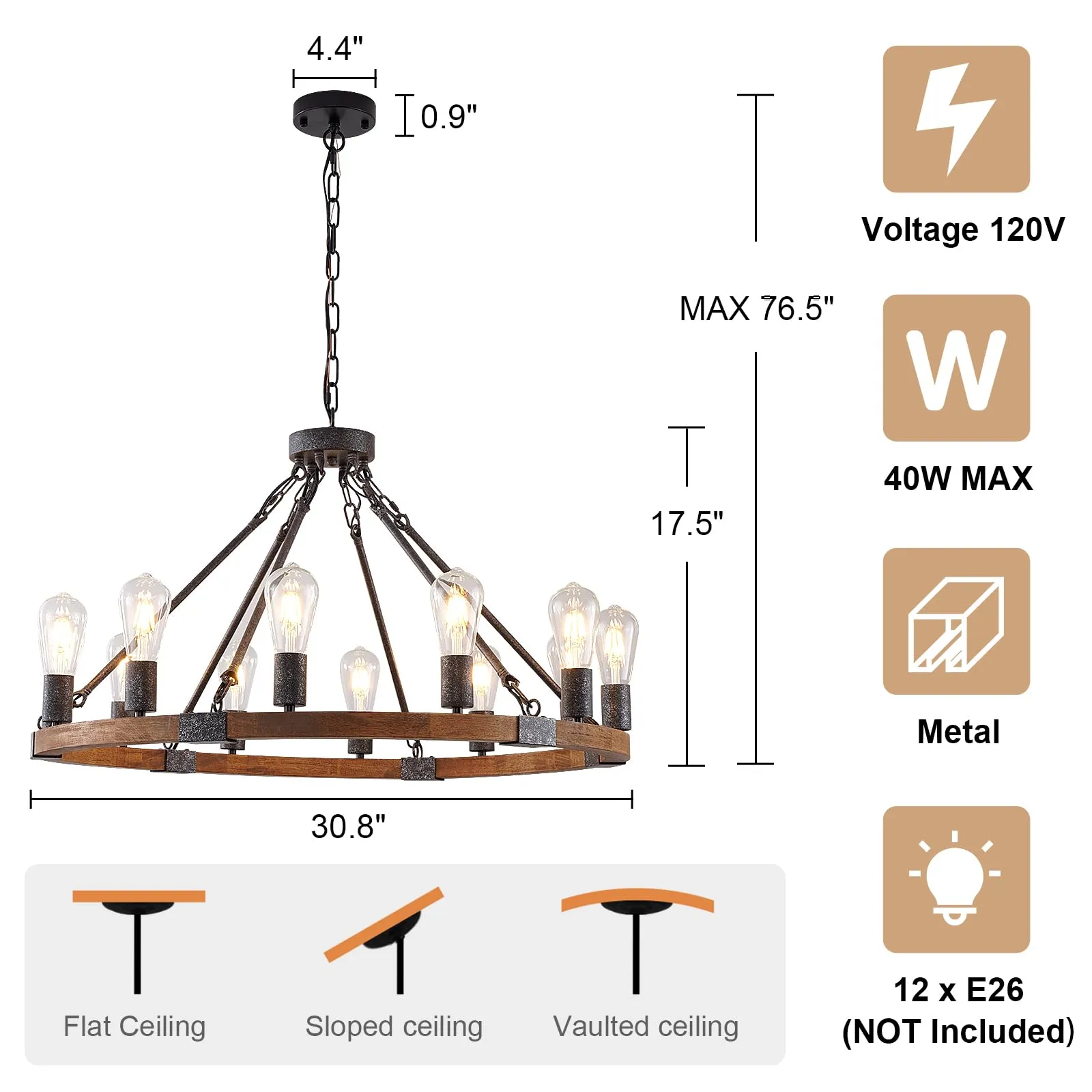
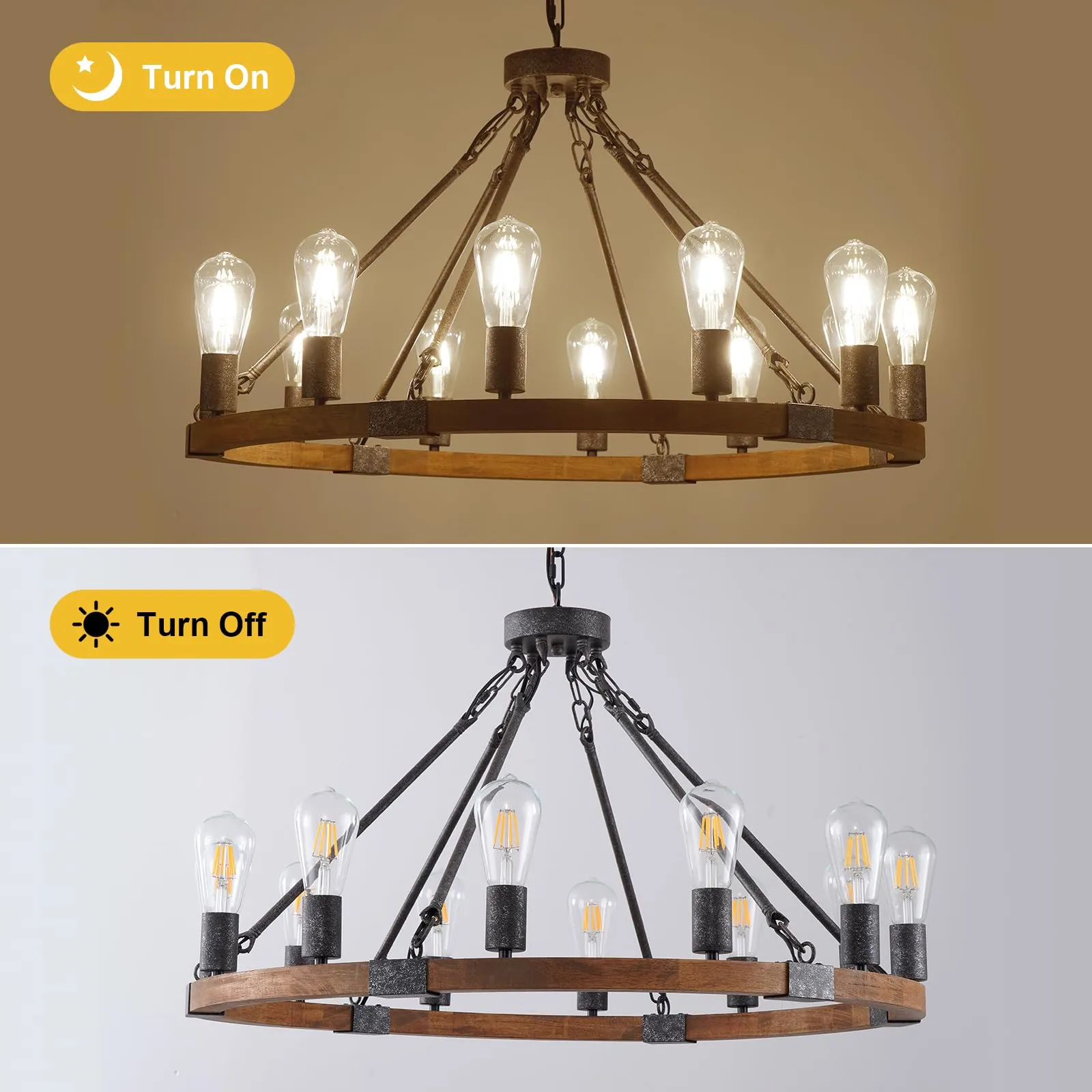
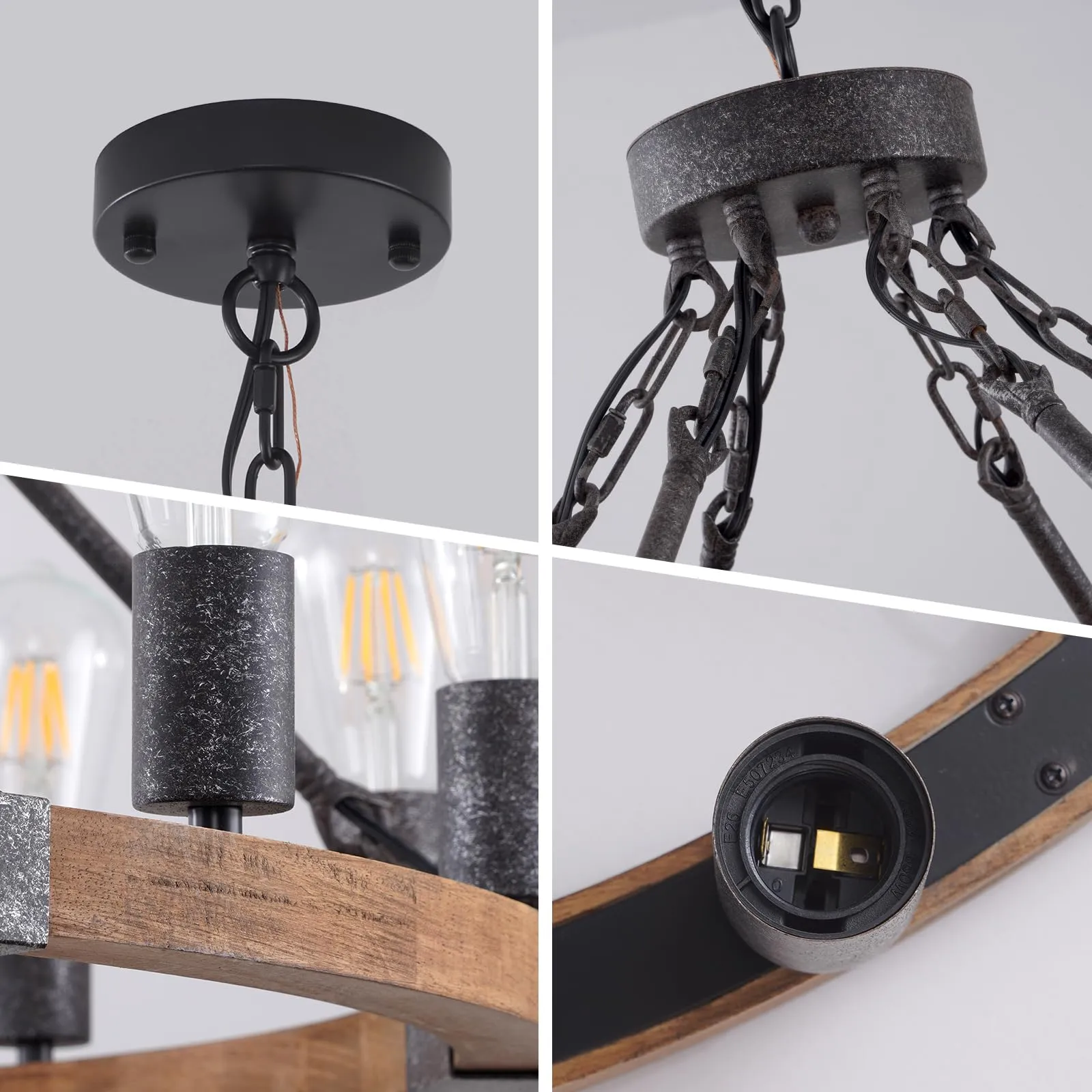
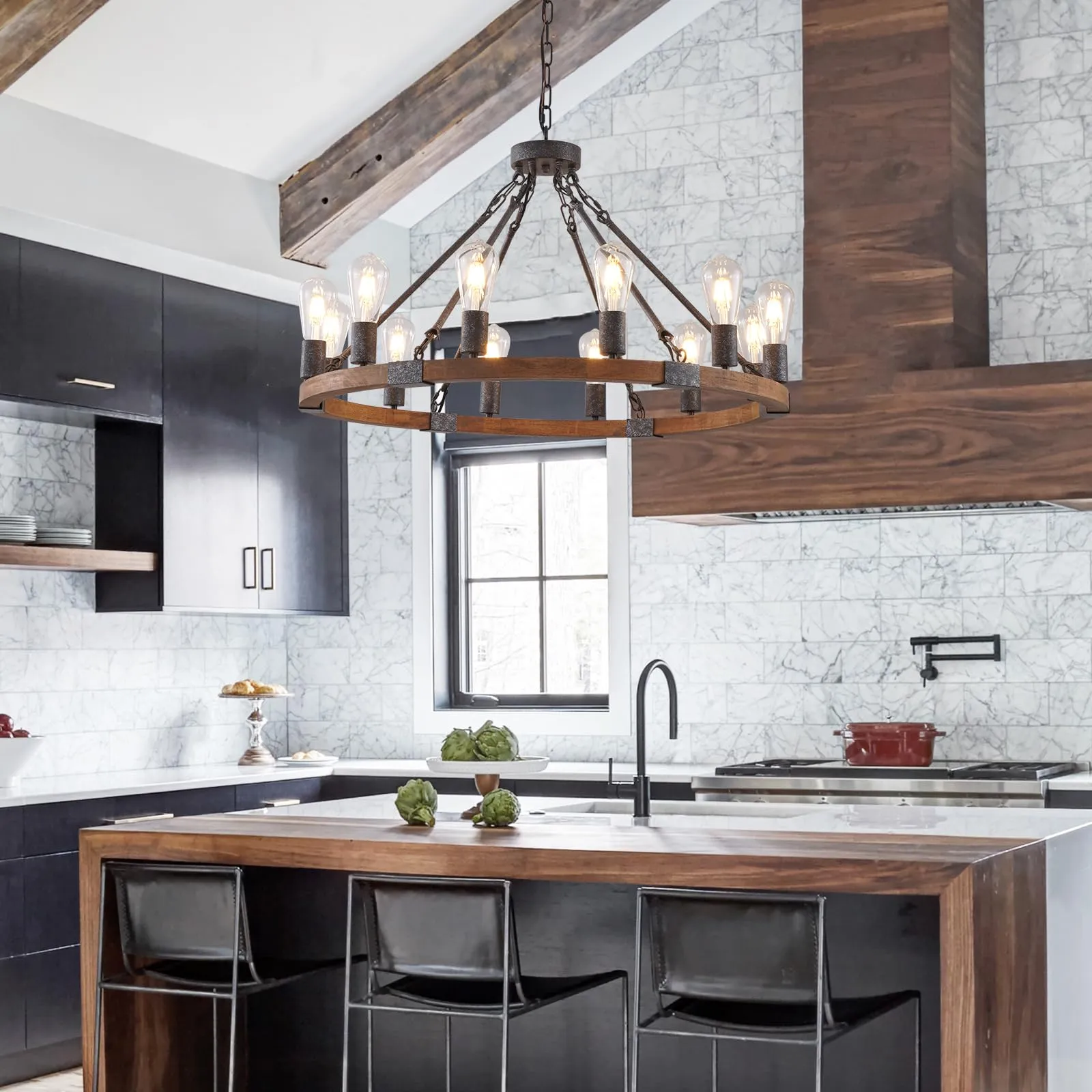
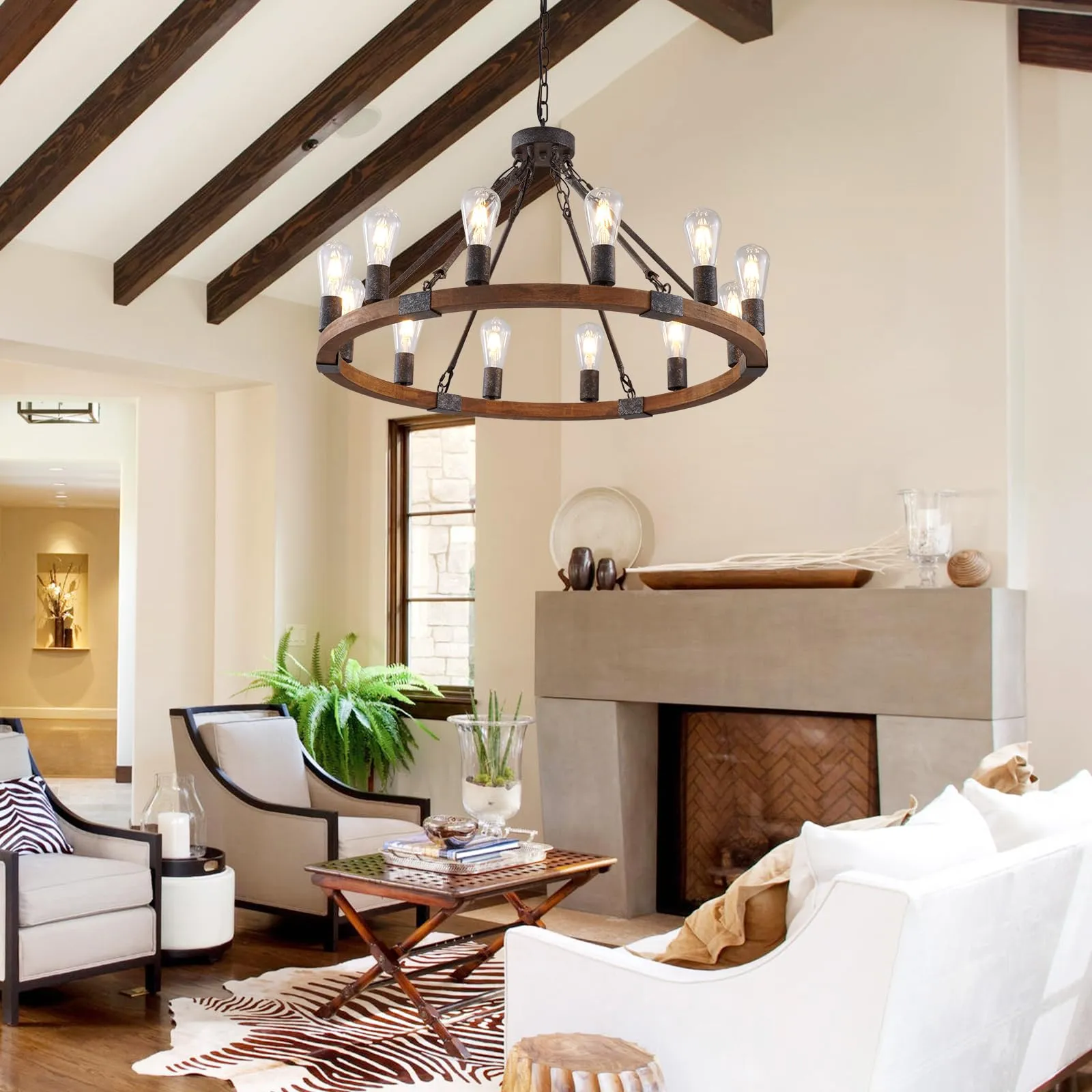
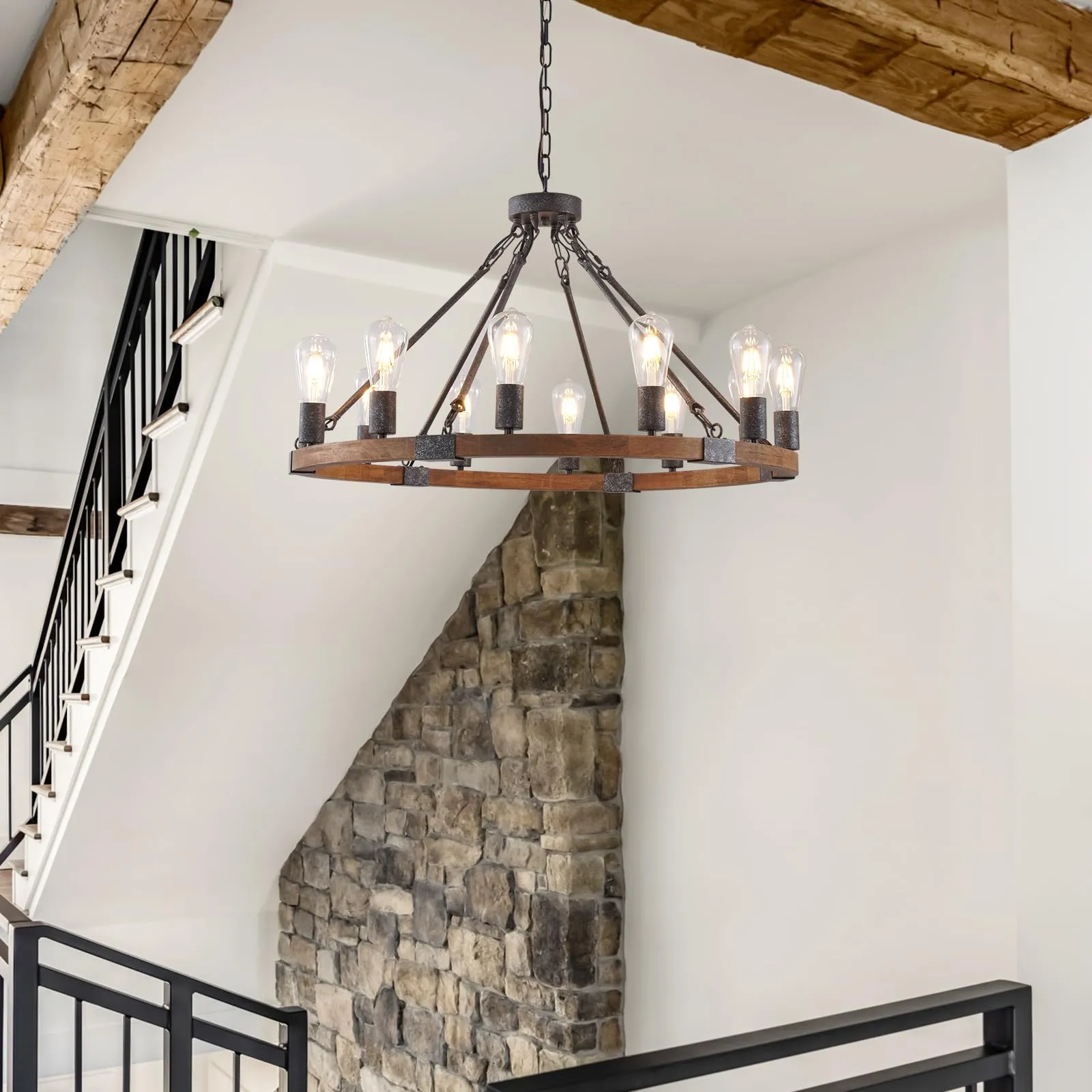
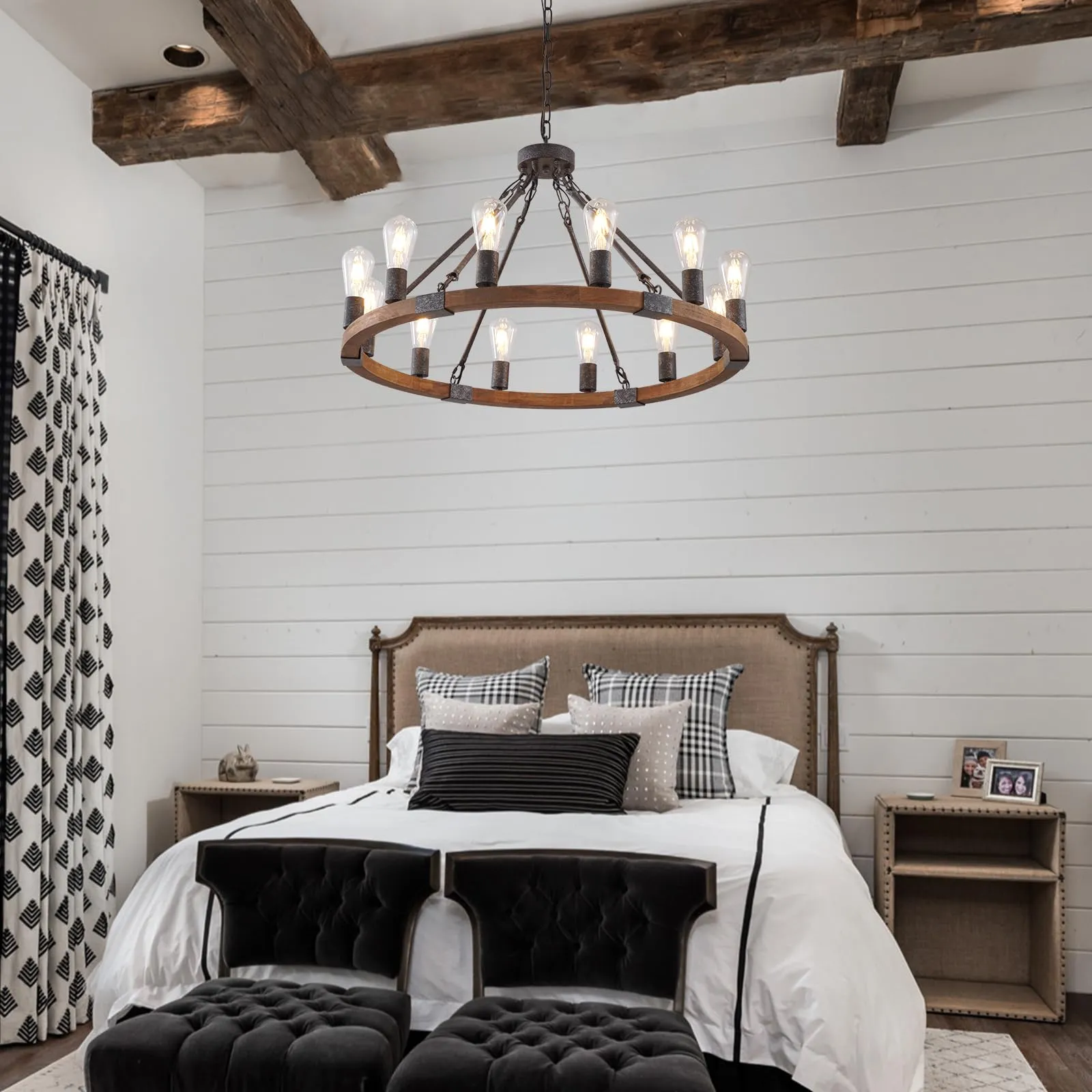
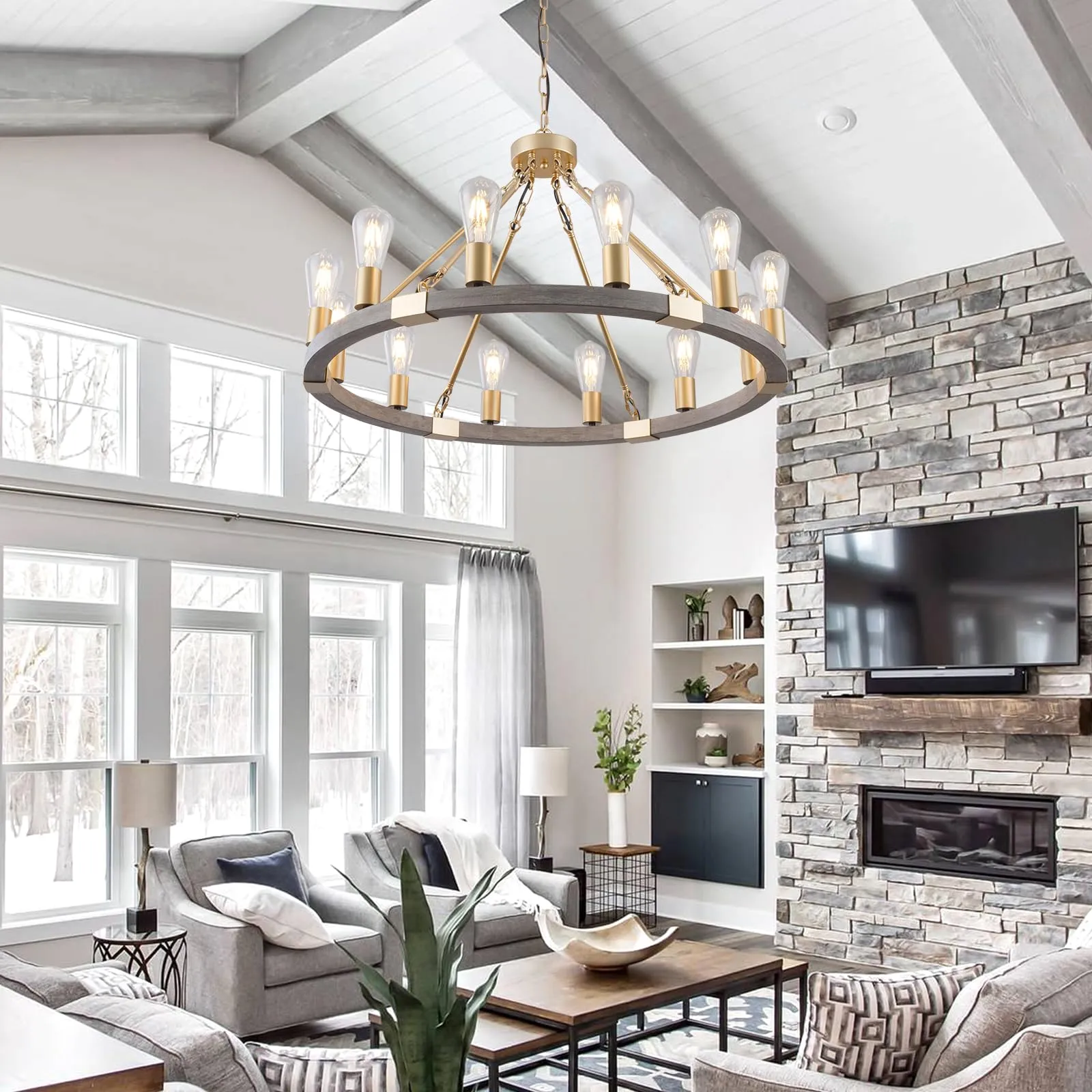
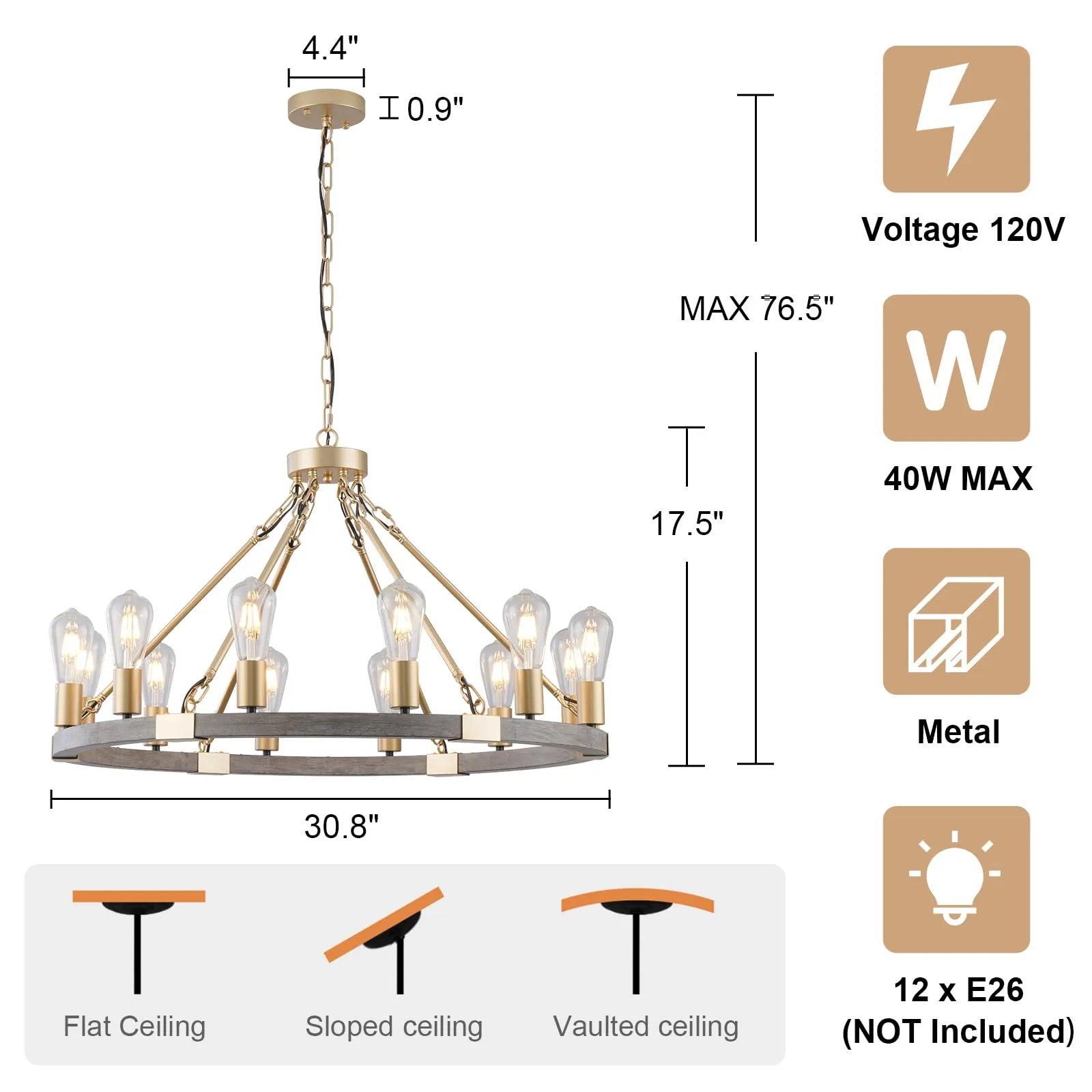
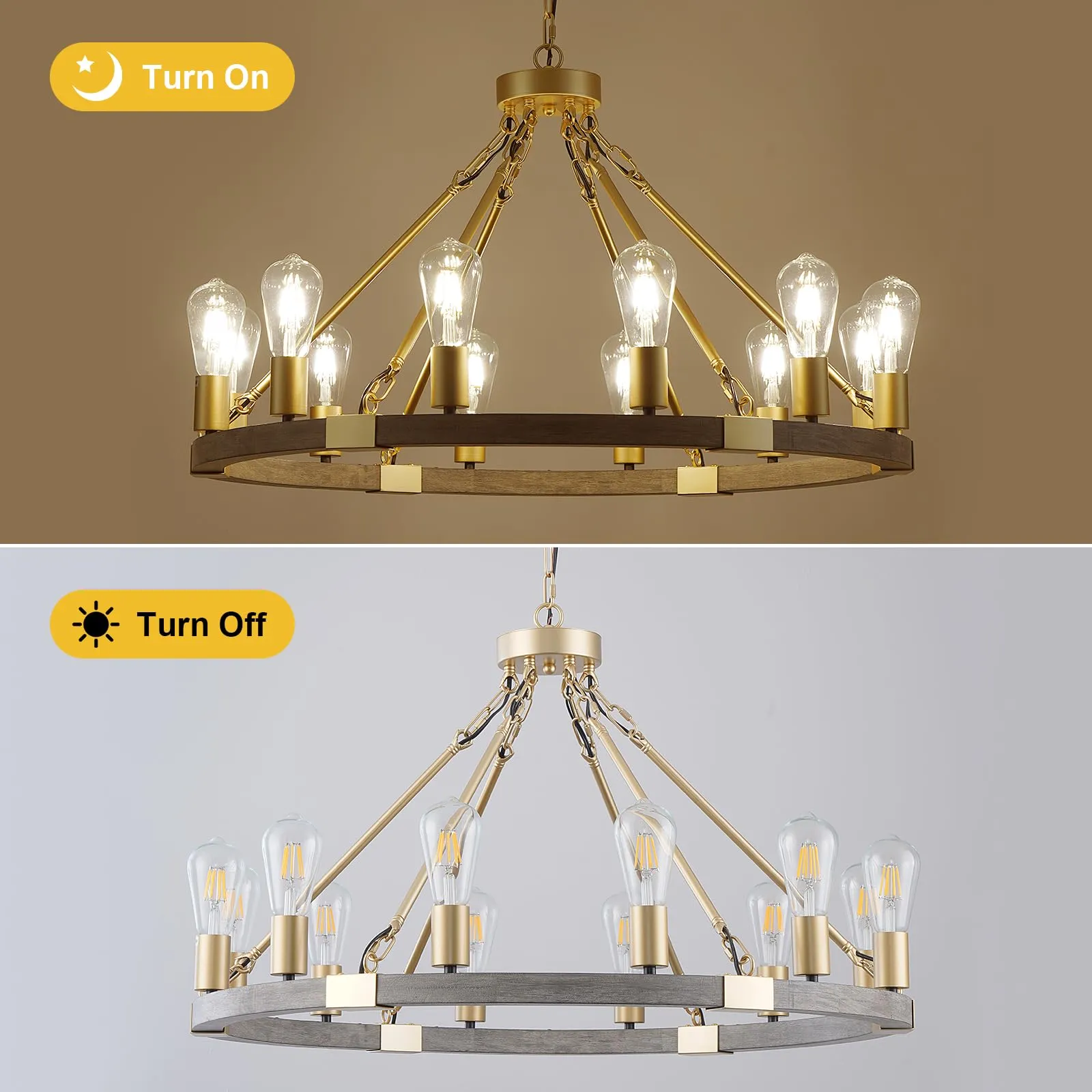
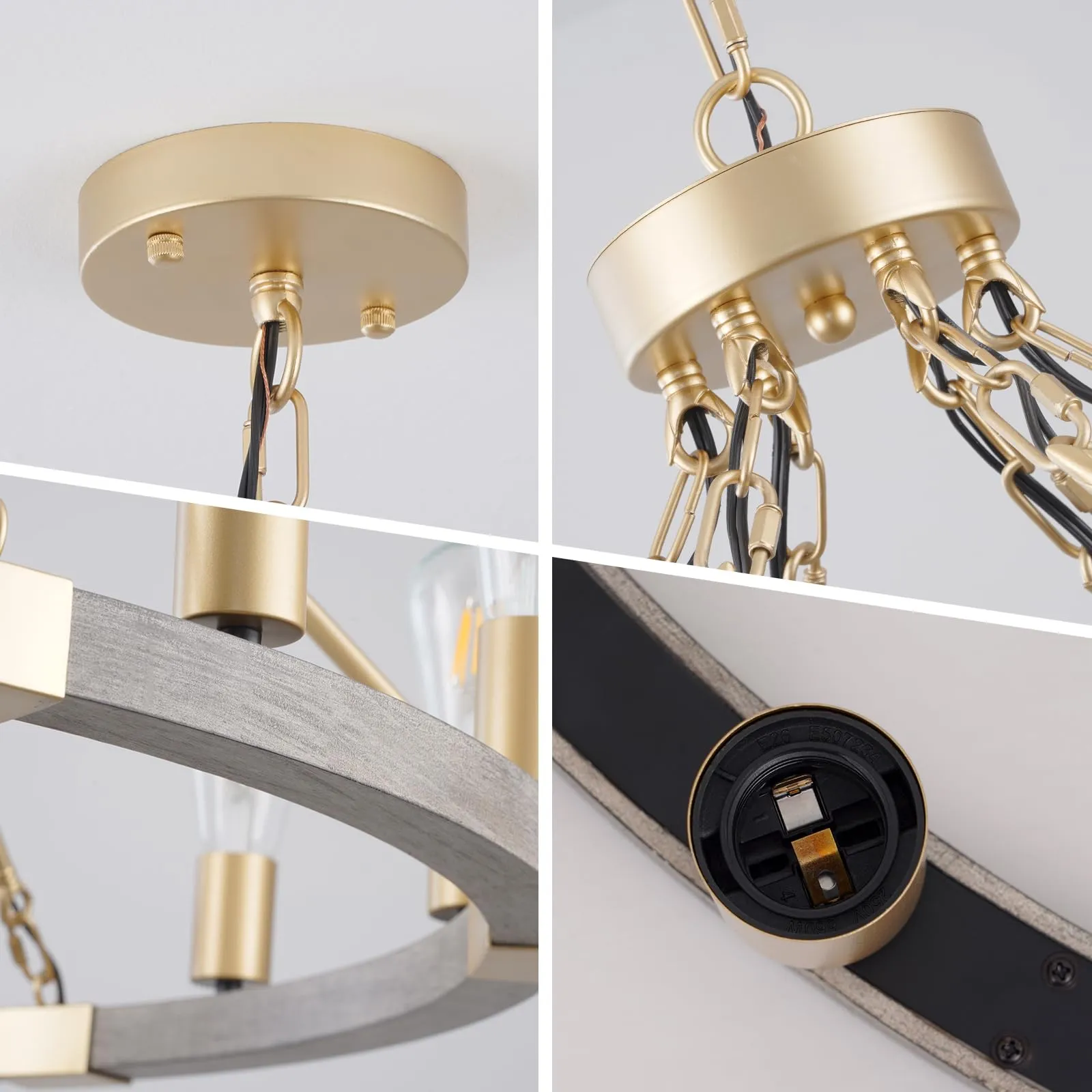
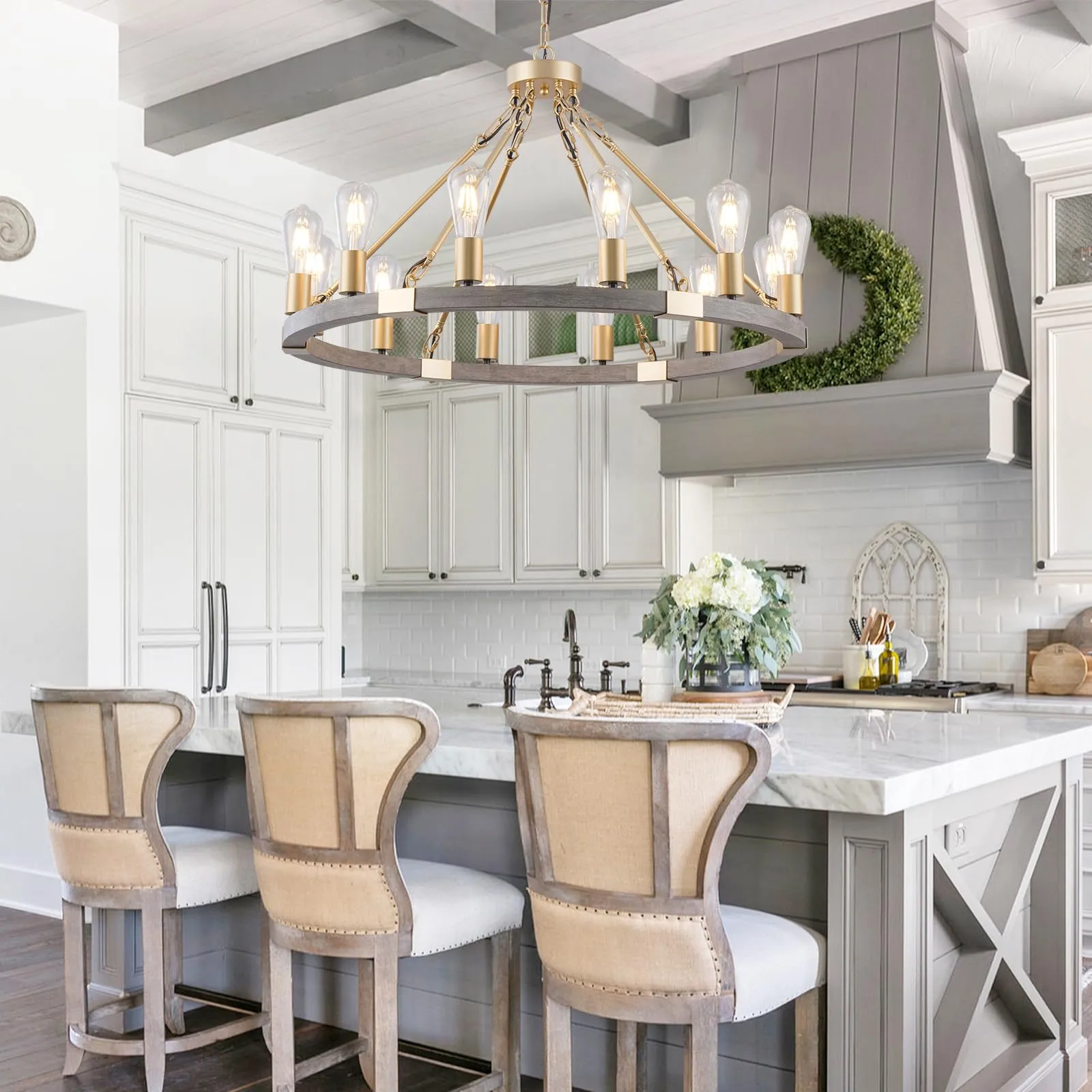
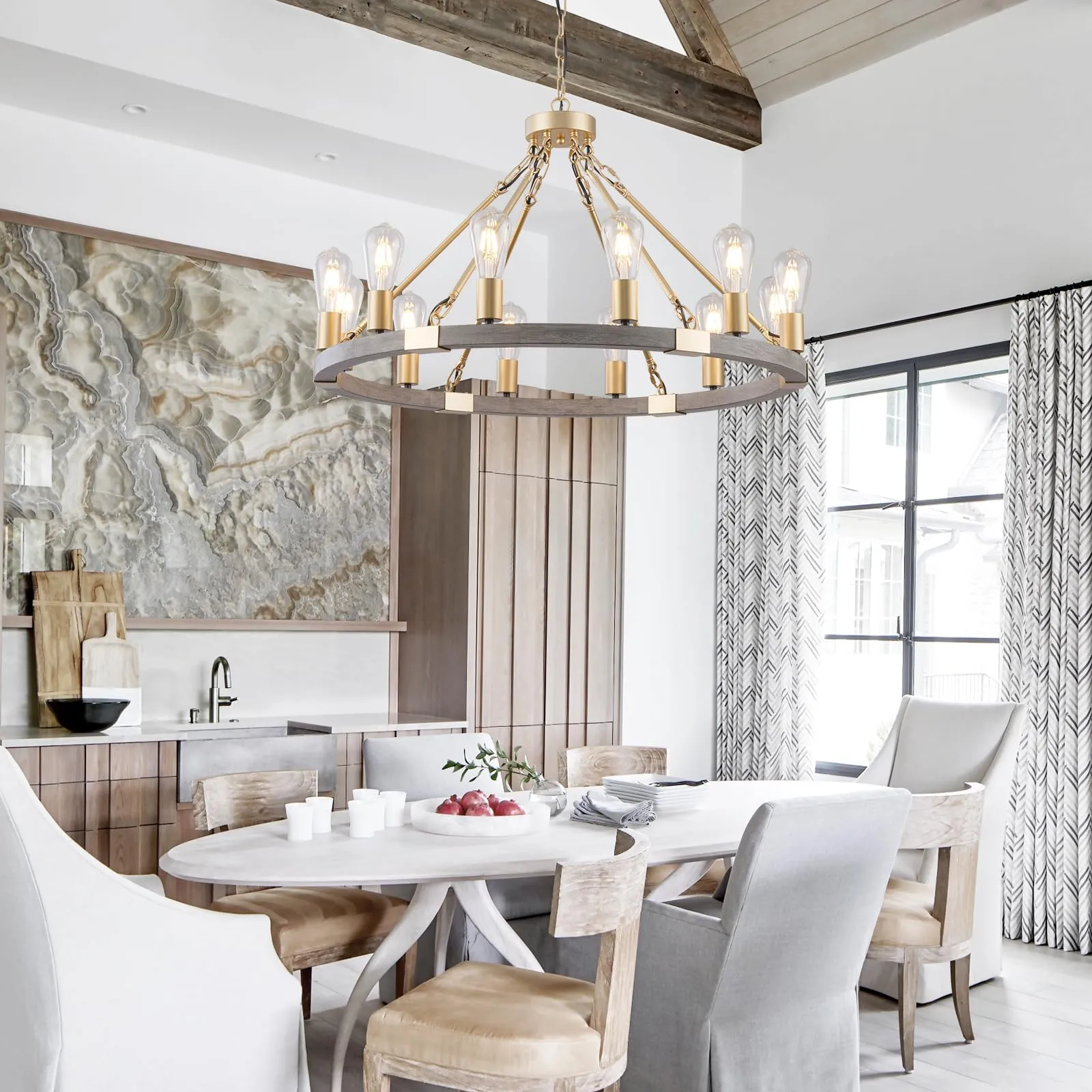
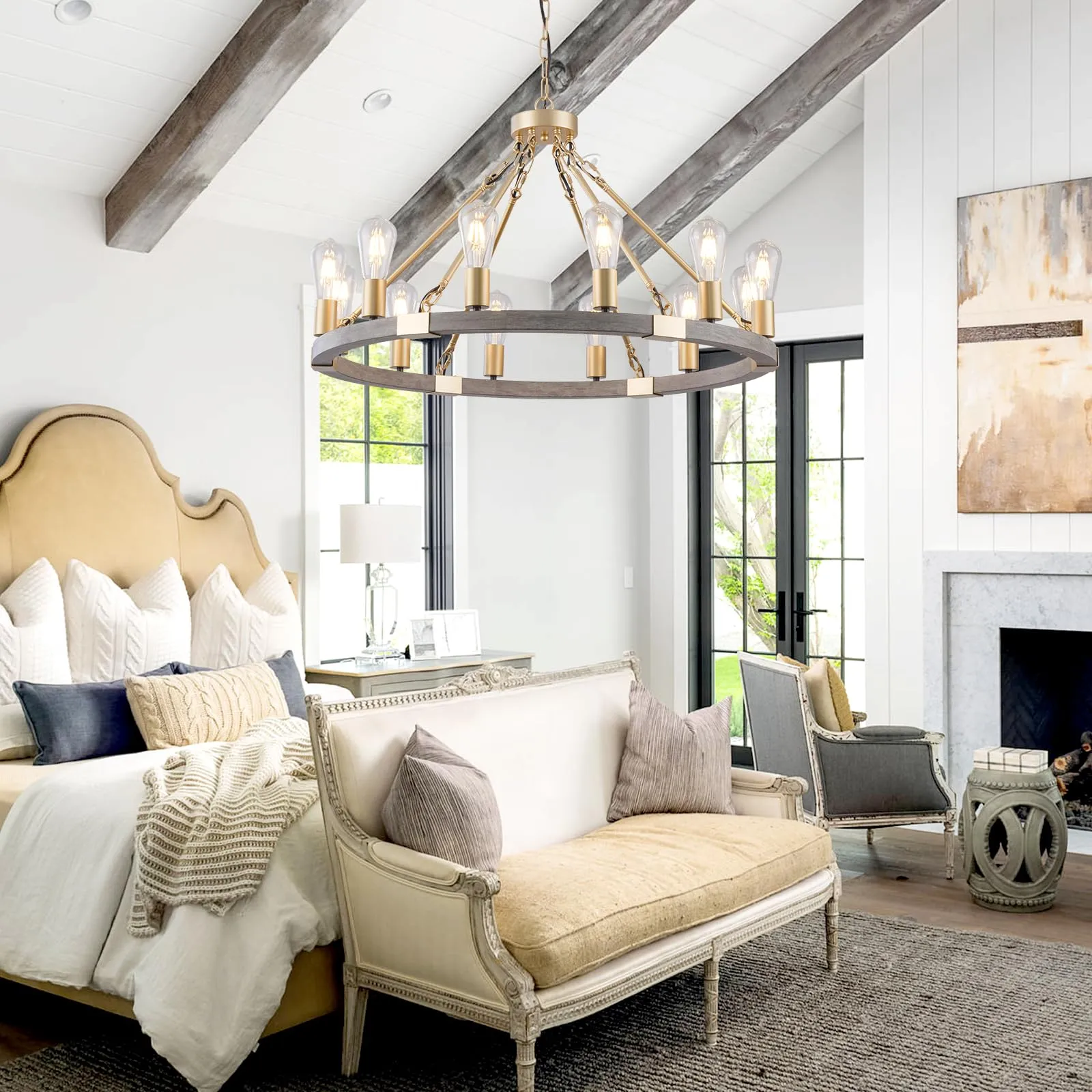
If you are working with a long rectangular table, a high ceiling, or a space that needs a dose of architectural character, a multi-light focal piece is unmatched. For instance, a fixture like the 12-Light Wood Wagon Wheel Chandelier serves as a perfect textbook anchor.
The Proportions to Watch:
- The Size Rule: Your chandelier's diameter should ideally be between 1/2 to 2/3 the width of your dining table. Anything smaller looks lost; anything larger feels claustrophobic. The Perfect Glow: How to Choose and Position Pendant light for a Long Dining Table
- The Hanging Height: Hang the bottom of the fixture 30 to 36 inches above the tabletop. This keeps the sightlines clear across the table while keeping the light intimate.
With its 12 exposed E26 bulbs and heavy, rustic-brown wooden ring, a wagon-wheel style fixture provides a massive amount of ambient light without feeling like a solid, blocking mass. It lets the room breathe while establishing a clear, commanding "melody" for the space.
2. The Perimeter: Pushing the Walls Out with Accent Lighting
If the overhead chandelier is the melody, accent lighting is the harmony. If you turn on only your magnificent chandelier, you will notice that the corners of your room recede into darkness, making the room feel smaller than it actually is.
To counteract this, you need vertical surface illumination—a fancy design term for lighting up your walls. When you cast a gentle glow onto the perimeter of a room, it creates a visual illusion that literally pushes the walls outward, making the entire dining area feel deeper and more expansive.
Wall sconces are the ultimate weapon here. By flanking a sideboard, a piece of art, or a large mirror with fixtures like these sleek Modern Wooden Wall Lights, you introduce light at eye level. This breaks up the downward shadows cast by the overhead chandelier, casting an incredibly flattering, soft glow right where your guests are sitting.
3. The Secret Sauce: Balancing the Drama of Material and Style
Many design blogs will tell you to buy lighting in matching "sets" to keep things cohesive. Honestly? That is a fast track to a boring, sterile room. True depth comes from contrast—pairing elements that feel slightly unexpected but share a common DNA.
Look at how our two example fixtures interact. At first glance, a rugged, industrial wagon-wheel chandelier and a minimalist, geometric Nordic wall sconce might seem like they belong in different houses. But look closer at their materials:
The Power of Material Continuity: The chandelier features a rough-hewn, rustic dark wood that feels historic and grounded. The wall sconces feature a smooth, light-toned, clean-lined natural wood.
By utilizing the "wood element" in both fixtures, they instantly talk to each other. The heavy visual weight of the overhead iron and dark timber is beautifully balanced and softened by the airy, Scandinavian lightness of the wall sconces. You get the drama of the industrial look without the coldness, and the clean lines of modern design without the starkness.
The Dining Room Lighting Balance Sheet
To keep your layering strategy scannable, use this quick-reference blueprint when planning your layout:
| Design Dimension | Overhead Chandelier (The Anchor) | Wall Sconces (The Perimeter) | How They Balance Each Other |
|---|---|---|---|
| Primary Role | Directs focus to the center; provides overall ambient light. | Softens shadows; extends the room's visual boundaries. | No Flat Zones: One handles the center stage; the other handles the backdrop. |
| Visual Weight | Heavy, architectural, and rich in texture. | Light, geometric, and minimalist. | Scale Contrast: The sleekness of the sconces keeps the large chandelier from feeling overbearing. |
| Placement Secret | Centered precisely over the dining table, 30–36 inches high. | Mounted at eye level (approx. 60 inches from the floor) on adjacent walls. | Level Layering: Light is distributed across both the vertical and horizontal planes. |
4. The Technical Blueprint: Dimmers and Color Temperature
You can buy the most beautiful fixtures on the planet, but if you put the wrong bulbs in them, your design efforts will instantly fall flat. To wrap up your lighting ecosystem, memorize these two non-negotiable rules:
1. Match Your Color Temperatures
Never pair a cool, bluish-white bulb with a warm, amber bulb. For dining areas, stick strictly to Warm White (2700K to 3000K). This range mimics the golden, inviting glow of candlelight, making food look appetizing and skin tones look radiant. Ensure both your E26 chandelier sockets and your E27 wall lamp bases are outfitted with bulbs from the exact same color temperature family.
2. Put Everything on Dimmers
This is where the magic happens. During a lively holiday dinner, you might want your overhead wagon wheel chandelier dimmed down to a mere whisper of light while your Nordic wall sconces run a bit brighter to illuminate the buffet spread. On a quiet weekday morning, you might flip the chandelier up to full brightness to read the morning paper. Dimmers give you total control over the atmosphere.
(Confused about K-values and brightness? Check out our easy-to-follow guide:Brightness and color temperature to choose when working from home.
Ready to Transform Your Space?
By stepping away from matchy-matchy lighting kits and intentionally balancing a high-character, heavy-textured anchor light with clean, perimeter accent fixtures, you create a dining room that doesn't just look designed—it feels alive.
If you're ready to start building your room's new depth, explore our curated collections to find your perfect mix:
- Shop the featured 12-Light Wagon Wheel Chandelier and Nordic Minimalist Sconces to recreate this look at home.